You are standing in the middle of your living room, staring at the old, worn-out carpet. You’ve finally decided to renovate. You have the paint colors picked out, the furniture arrangement in your head, and a Pinterest board full of ideas. But then, you hit a wall—the floor.
You want that warm, timeless look of wood. But as you start browsing, you realize it’s not that simple. You are torn between the classic appeal of real timber and the modern, budget-friendly allure of laminate. It is a debate that has puzzled homeowners from New York to Lahore.
We aren’t just going to throw technical terms at you. We are going to dive deep into costs, durability, aesthetics, and the latest 2026 trends. Whether you are looking for a sustainable option or just trying to maximize your budget, we have you covered. By the end of this article, you’ll know exactly which material fits your budget, your lifestyle, and your home.
What is Laminate Flooring?
Before we start battling them out, let’s define the contenders. First up: Laminate flooring.
If you were around in the 1980s, you might remember laminate as that cheap, plastic-looking fake wood. Well, forget that image. The technology has come a long way.
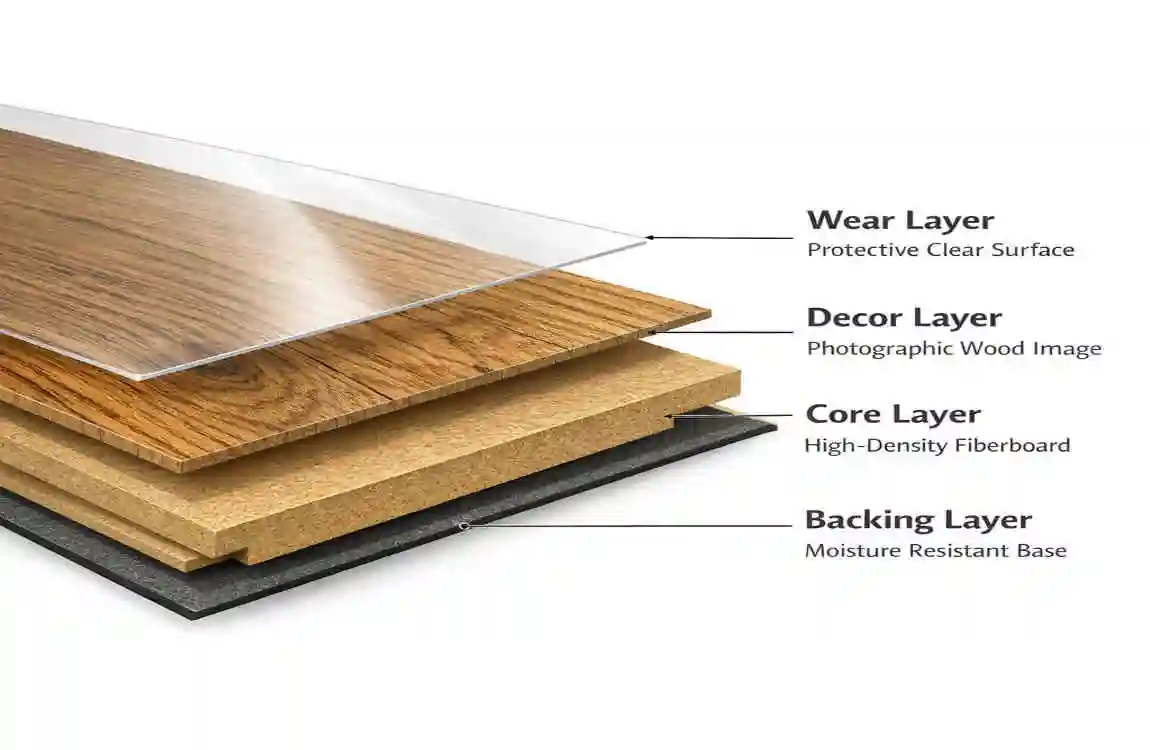
Think of laminate flooring as a high-tech sandwich. It isn’t a solid piece of material; it is a multi-layer synthetic product fused with a lamination process. Here is what is usually inside:
- The Backing Layer: The bottom crust of the sandwich. It protects your floor from moisture rising from the subfloor and keeps the board from warping.
- The Core Layer: This is the “meat.” It is usually made of High-Density Fiberboard (HDF). This gives the floor its strength and stability.
- The Design Layer: This is the magic part. It is a high-resolution photograph of real wood (or stone/tile). It gives the floor its look.
- The Wear Layer: The top crust. This is a clear, super-tough coating made of aluminum oxide that protects the floor from scratches, stains, and fading.
Laminate has become incredibly popularity because it lets you have the “look” of expensive mahogany or oak without emptying your bank account. It is the chameleon of the flooring world.
What is Hardwood Flooring?
Now, let’s look at the heavyweight champion: Hardwood flooring.
When people talk about hardwood, they are usually referring to one of two types, but the core concept is the same: it is real wood. There is no photography involved here; what you see is what you get.
There are two main types you need to know about:
Solid Hardwood
This is exactly what it sounds like. Each plank is a solid piece of wood, milled from a single log. It is usually made from species like Oak, Maple, Walnut, or Cherry. It is the “traditional” floor found in historic homes. It is thick (usually 3/4 of an inch) and can be sanded down and refinished many times.
Engineered Hardwood
This is the modern cousin of solid wood. It is still real wood, but it is constructed differently. It has a thin slice of real hardwood on top (the veneer) bonded to layers of high-quality plywood underneath.
Why do they do this? Because plywood is more stable than solid wood. It handles changes in humidity better. However, because the top layer is thin, you can’t sand and refinish it as often as you can with solid wood.
Core Differences Between Laminate Flooring and Hard Floorings
Now that we know who is who, let’s get into the nitty-gritty. This is where you need to pay attention, because the difference between laminate flooring and hard flooring can drastically change how you live in your home.
We have broken this down into seven critical categories to help you make the best choice.
Material and Construction Differences
The fundamental difference lies in what these floors are actually made of.
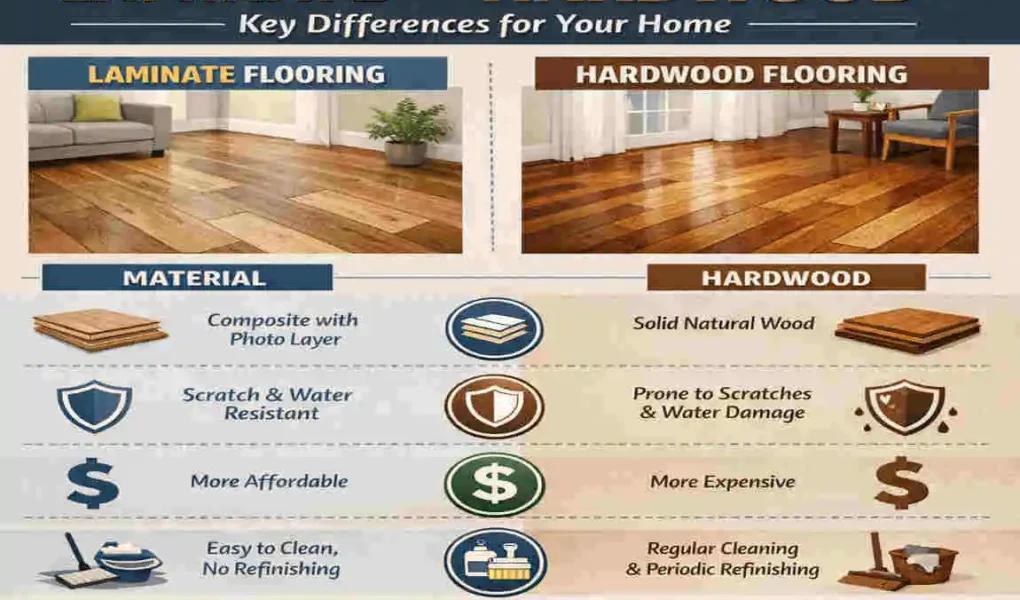
Laminate is synthetic. While it contains wood byproducts (in the fiberboard core), the surface you walk on is plastic and melamine resin. It is an imitation. It’s a very good imitation, but it is manufactured. This means the boards are uniform. If you buy 50 boxes of a specific laminate, they will all fit together perfectly, and the color will be consistent.
Hardwood is natural. It is harvested from trees. Because it is organic, no two planks are exactly alike. You will see knots, mineral streaks, and variations in grain patterns. For many, this “imperfection” is the whole point—it adds character and warmth that a factory can’t replicate.
Here is a quick spec check:
- Laminate Thickness: Usually ranges from 6mm to 12mm.
- Hardwood Thickness: Solid is usually 3/4 inch (about 19mm). Engineered varies but is generally thicker than laminate.
Cost Differences Between Laminate Flooring and Hard Floorings
Let’s be honest: budget is usually the biggest deciding factor. If money were no object, most people would choose hardwood. But in the real world, costs matter.
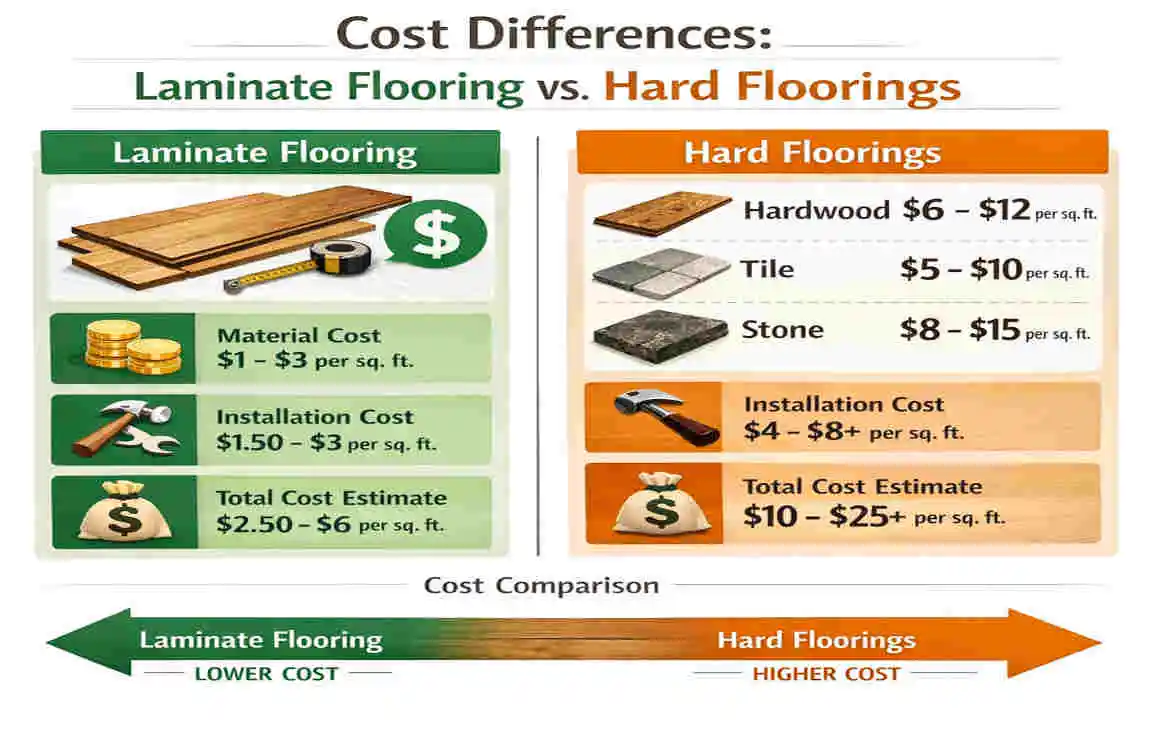
Laminate is the budget-friendly winner. You can generally find laminate flooring ranging from $1 to $5 per square foot. Because it is easier to install (more on that later), professional installation is also cheaper, usually costing between $2 and $8 per square foot. If you are handy, you can install it yourself and save even more.
Hardwood is a Premium investment. Material costs for hardwood usually start around $5 per square foot for lower-grade material and can reach $15 or more per square foot for exotic woods. Installation is much more labour-intensive, costing $4 to $10+ per square foot.
The Bottom Line on Cost: To floor a 200-square-foot room:
- Laminate: Might cost $600-$1,500 total.
- Hardwood: Could run you $1,800-$4,000+ total.
However, you have to think about Return on Investment (ROI). Hardwood increases your home’s value. Laminate generally does not add significant resale value.
Durability and Lifespan Comparison
How long do you want this floor to last? And who is walking on it?
Laminate: The Scratch Fighter Laminate is incredibly resistant to scratches, moisture, and wear and tear. That top “wear layer” is tough. If you have big dogs with claws, or kids who like to drive toy trucks across the living room, laminate takes a beating without showing it.
- Lifespan: typically 15 to 25 years.
- Downside: Once it is damaged, it is done. You cannot sand it down. If a board gets a deep gouge, you have to replace that specific board.
Hardwood: The Long-Term Survivor Hardwood is softer than the aluminum oxide coating on laminate. It will scratch. It will dent if you drop a heavy pot on it.
- Lifespan: Solid hardwood can last 100+ years. Engineered can last 25 to 50 years.
- The Secret Weapon: You can refinish it. When hardwood gets scratched after 10 years, you hire someone to sand off the top layer and reseal it. It looks brand new. You can do this 3-5 times with solid wood.
Rating Systems:
- Laminate uses an AC Rating (AC1 to AC5). For a home, look for AC3 or AC4.
- Hardwood uses the Janka Hardness Scale. Hickory is very hard; Pine is very soft.
Aesthetic and Style Differences
This is subjective, but important.
Laminate: Modern digital printing is amazing. From a distance, high-quality laminate looks exactly like wood. You can get “hand-scraped” textures and distressed looks. However, as you get closer, you might spot repeating patterns. If you have a large room, you might see the same “knot” appear on the floor every few feet.
Hardwood: Nothing beats the real thing. The depth of color, the texture of the grain, and the way it reflects light are unique. It has a warmth and elegance that elevates a room. As the wood ages, it often develops a “patina” (a slight change in color) that many people find beautiful.
- Style Tip: Laminate is great for modern, minimalist, or high-traffic homes. Hardwood is better for historic renovations, luxury villas, or homes where you want to create a cozy, organic atmosphere.
Installation Process: Laminate vs Hardwood
Are you a DIY warrior or hiring a pro?
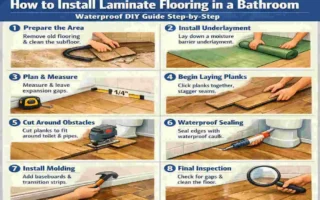
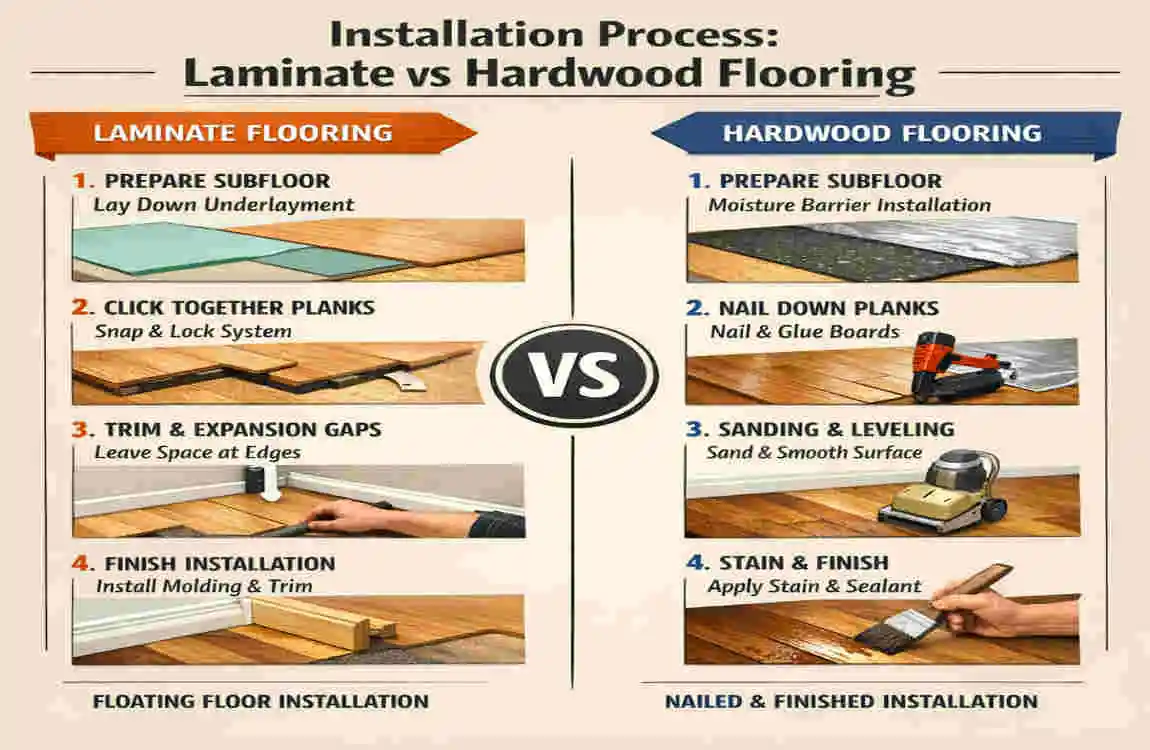
Laminate (DIY Dream): Laminate is designed as a “floating floor.” The planks have tongue-and-groove edges that “click” and lock together. You don’t nail them down. You don’t glue them to the subfloor. You just lay them on top of a foam underlayment.
- Time: You can floor a room in a single weekend.
Hardwood (Leave it to the Pros):
- Solid Hardwood: This usually needs to be nailed or stapled into a wooden subfloor. It requires specialized tools (like a flooring nailer) and a lot of skill to keep the rows straight.
- Engineered Hardwood: Can sometimes be glued down or floated, but gluing is messy and difficult for beginners.
- Time: This creates a construction zone for 3 to 5 days, especially if it needs to be finished on-site (stained and sealed).
Maintenance and Cleaning Differences
Laminate: It is low maintenance. Sweep it. Vacuum it. Use a damp mop (never soaking wet). That’s it. You never have to wax or polish it. In fact, waxing it will ruin the finish.
Hardwood: Requires a bit more love. You need special wood cleaners. You should avoid water at all costs. Over time, apply a screen and recoat to keep the shine. And eventually, you will need the full refinishing process we mentioned earlier.
Water Resistance and Moisture Handling
This is the Achilles’ heel for both, but for different reasons.
Laminate: While the top is waterproof, the seams are not. If water sits on laminate, it seeps into the cracks. The fiberboard core drinks up that water and swells like a sponge. Once it swells, it does not shrink back. The floor is ruined.
- Note: Newer “water-resistant” laminates are hitting the market in 2026, offering better protection for bathrooms and kitchens.
Hardwood: Wood hates water. It will warp, cup (edges curl up), or crown (center bubbles up) if exposed to moisture.
- Solid Wood: Terrible for basements or concrete slabs due to moisture.
- Engineered Wood: Better stability. It can handle minor humidity changes, making it a better choice for basements, but it is still not “waterproof.”
Comparison Table: Laminate vs. Hardwood
Here is a quick snapshot to help you compare laminate flooring and hard flooring side by side.
Feature Laminate Flooring Hardwood Flooring (Solid/Engineered)Winner
Primary Material Composite wood pressed at high temperatures Natural timber planks Hardwood (Natural)
Average Cost $1 – $5 per sq. ft. $5 – $15+ per sq. ft. Laminate (Budget)
DIY Friendly? Yes (Click-lock system) No (Requires nailing/gluing) Laminate
Lifespan 15 – 25 Years 25 – 100+ Years Hardwood
Scratch Resistance High (Good for pets) Low (Scratches easily) Laminate
Refinishing? No Yes (Multiple times) Hardwood
Resale Value Low to Moderate High Hardwood
Water Resistance Moderate (swells at seams) Low (warps easily) Tie (Both weak)
Pros and Cons: Laminate Flooring
Let’s summarize why you might choose—or avoid—laminate.
The Pros
- Affordability: It is the best bang for your buck. You get a wood look for a fraction of the price.
- Durability: The wear layer is incredibly tough. High heels, dog claws, and dropped toys rarely leave a mark.
- Easy Installation: It is the perfect project for a weekend warrior. The “click-lock” mechanism is intuitive.
- Variety: You can find laminate that mimics anything—from oak to slate to marble.
- Consistency: No surprises. Every board looks exactly how you expect it to.
The Cons
- Artificial Feel: It feels harder and colder underfoot. It can sound “hollow” when you walk on it (though a good underlayment helps reduce this noise).
- Not Repairable: If a board is damaged, you cannot sand it. You have to replace it, which can be tricky if the floor is older and the click-system has changed.
- Moisture Sensitivity: It does not handle standing water well.
- Lower Resale Value: Homebuyers generally prefer real wood.
Pros and Cons: Hardwood Flooring
Now, let’s look at the real deal.
The Pros
- Timeless Beauty: There is an elegance to real wood that never goes out of style. It brings nature indoors.
- Long-Term Value: It is an investment. It significantly boosts your home’s resale value (statistics suggest a 3-5% increase).
- Refinishable: This is the biggest selling point. You can change the color! If you get tired of dark wood in 10 years, you can sand it and stain it lighter.
- Warmth: Real wood is naturally insulating and feels warmer and softer underfoot than laminate.
The Cons
- Price: It is expensive to buy and expensive to install.
- High Maintenance: You have to be careful. No high heels, trim the dog’s nails, and wipe up spills immediately.
- Noise: Old wood floors can squeak.
- Humidity Sensitivity: Wood moves. In very dry winters, it shrinks (leaving gaps). In humid summers, it expands.
Which is Best for Your Home? Buyer’s Guide
So, we have analysed the differences between laminate flooring and hard flooring, but which one is best for your house?
Choosing the right floor isn’t just about what looks pretty; it is about how you live. Here is a guide to help you pick.
The Busy Family Home
If you have two toddlers, a Golden Retriever, and a cat, Laminate is likely your best friend.
- Why? You need a floor that won’t panic when a juice box is spilled or a toy car is smashed into the ground. You don’t want to spend your life screaming, “Don’t scratch the floor!” Laminate lets you relax.
The “Forever” Home
If you are renovating the house you plan to retire in, or a high-end property you want to increase the value of, choose Hardwood.
- Why? It ages gracefully. Even if it gets dinged up, that becomes part of the character. Plus, the ability to refinish it means it will last as long as you do.
The Basement Renovation
If you are flooring a basement (below ground level), choose Engineered Hardwood or specific waterproof Laminate.
- Why? Solid hardwood is a no-go here because of concrete moisture. Engineered wood is stable enough to handle the humidity fluctuations found in basements.
The Budget Flip
If you are fixing up a house to rent, go with Laminate.
- Why? It looks clean and modern for photos, it’s durable against tenants who might not care for the floor, and it keeps your renovation costs down.
2026 Flooring Trends
- Eco-Laminate: We are seeing a huge rise in sustainably sourced laminate cores and recyclable materials.
- Wide Planks: Whether laminate or wood, wider planks (7 inches or more) are the trend. They make rooms look bigger and more modern.
- Light Woods: Dark, heavy woods are out. Light oaks, blonde woods, and “greige” (gray-beige) tones are dominating the market in 2026.
Cost Calculator and Savings Tips
Let’s do some quick math to help you budget.
The Simple Formula:(Total Square Footage + 10% for waste) x (Material Price + Installation Price) = Total Cost
Example: A 500 sq. ft. Living Room
Option A: Laminate ($3/sq ft material + DIY install)
- Materials: 550 sq ft x $3 = $1,650
- Underlayment: ~$200
- Total: ~$1,850
Option B: Hardwood ($8/sq ft material + $4/sq ft pro install)
- Materials: 550 sq ft x $8 = $4,400
- Labor: 550 sq ft x $4 = $2,200
- Total: ~$6,600
How to Save Money:
- Do It Yourself: Even if you choose hardwood, you can save money by ripping out the old carpet yourself. Labor is expensive—don’t pay a pro to do the demolition.
- Shop Local: If you are in a major city, check local surplus warehouses. Sometimes you can find high-end hardwood leftovers from big commercial jobs at a discount.
- Check the “Waste”: When buying hardwood, you can buy “cabin grade” or “tavern grade.” These planks have more knots and color variations (imperfections) but are much cheaper. If you like the rustic look, this is a steal.
Real Home Examples and Case Studies
Visualizing the result helps.
The “Modern Apartment” Look: Picture a sleek, downtown apartment. The owner chose a cool-toned, grey laminate with a matte finish. It matches the stainless steel appliances perfectly. Because it’s an open-concept space, the uniform laminate finish makes the apartment feel massive. It’s chic, durable, and didn’t cost a fortune.
The “Classic Villa” Vibe: Now imagine a large family home in the suburbs. The owners installed wide-plank, honey-colored solid oak. When the sunlight hits the floor in the afternoon, you can see the grain. There are a few dog-scratches near the door, but they blend in. It feels solid, quiet, and expensive. This floor anchors the room and tells a story of quality.
Think about celebrity homes you see in magazines. They almost exclusively use hardwood (or very high-end engineered wood) because it signals luxury. If you want that “Architectural Digest” feeling, wood is the way to go.
FAQ (Frequently Asked Questions)
What is the main different between laminate flooring and hard floorings? The main difference is the material. Hardwood is made of real timber (natural), while laminate is a synthetic product made of fiberboard with a photographic image of wood on top.
Is laminate always cheaper than hardwood? Almost always. High-end laminate might overlap in price with very cheap, low-grade hardwood, but generally, laminate is 50-70% cheaper than solid hardwood when you factor in installation.
Can you refinish laminate flooring? No. Laminate creates its look with a printed image layer. If you sand it, you will destroy the image and hit the fiberboard core. Hardwood, however, can be sanded and refinished multiple times.
Which is best for humid climates (like coastal areas)? Neither loves water, but engineered hardwood or high-quality water-resistant laminate is best. Solid hardwood is the worst choice for humid climates because it expands and warps significantly with moisture in the air.
Which floor is better for pets? Laminate is generally better for pets. Its wear layer is highly resistant to scratches from claws. Hardwood provides better traction for dogs, but it will get scratched up very quickly unless you keep nails trimmed short.
Does laminate lower home value? It doesn’t necessarily lower it, but it doesn’t raise it like hardwood does. If you are selling a high-end home, buyers expect hardwood. If you put laminate in a luxury home, some buyers might see it as a “downgrade” that needs to be replaced.