
You have finally found the home of your dreams. It is a sprawling suburban property that, according to the real estate agent, boasts a massive 3,500 square feet of living space. You walk through the front door, tour the open-concept kitchen, admire the bedrooms, and then head downstairs to a beautifully finished basement that feels just like the rest of the house. You are ready to make an offer.
Suddenly, that 3,500-square-foot palace is listed officially as only 2,200 square feet. You stare at the paper in confusion. Where did the other 1,300 square feet go? Did the appraiser make a mistake? Did the seller lie?
Understanding how square footage is calculated is crucial, whether you are pricing your home for sale or analyzing the price per square foot on a new purchase. Misunderstanding these rules can lead to overpricing a listing or overpaying for a property.
Is a Basement Included in a House’s Square Footage? The Short Answer
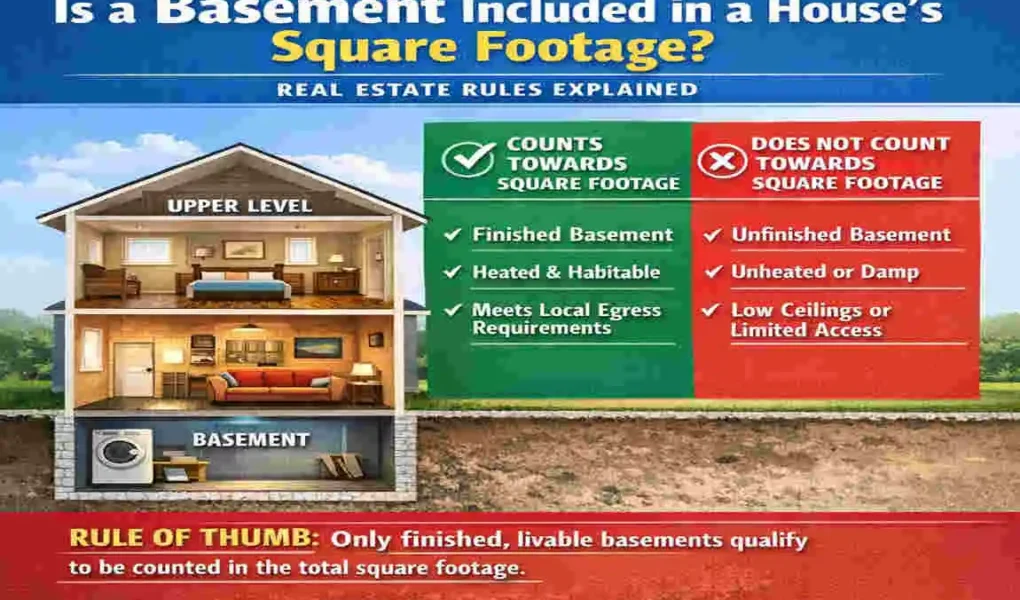
If you are looking for the quick, takeaway answer, here it is: In most cases, the answer is no.
Generally, real estate agents and appraisers follow a set of standards that exclude below-grade spaces from the home’s Gross Living Area (GLA). Even if your basement is fully finished with plush carpet, drywall, a bathroom, and a wet bar, if it is partially or fully underground, it usually does not count toward the official square footage number you see on the top line of an MLS listing.
However, just because it isn’t “counted” in the official number doesn’t mean it doesn’t exist. Basements often increase a home’s usable space by 20% to 50%. While that space might not boost the official stats, it absolutely improves the home’s livability and market value.
The confusion stems from the fact that different entities (tax assessors, appraisers, and real estate agents) sometimes use different yardsticks to measure a home. This guide is here to clear up that confusion so you can navigate the market like a pro.
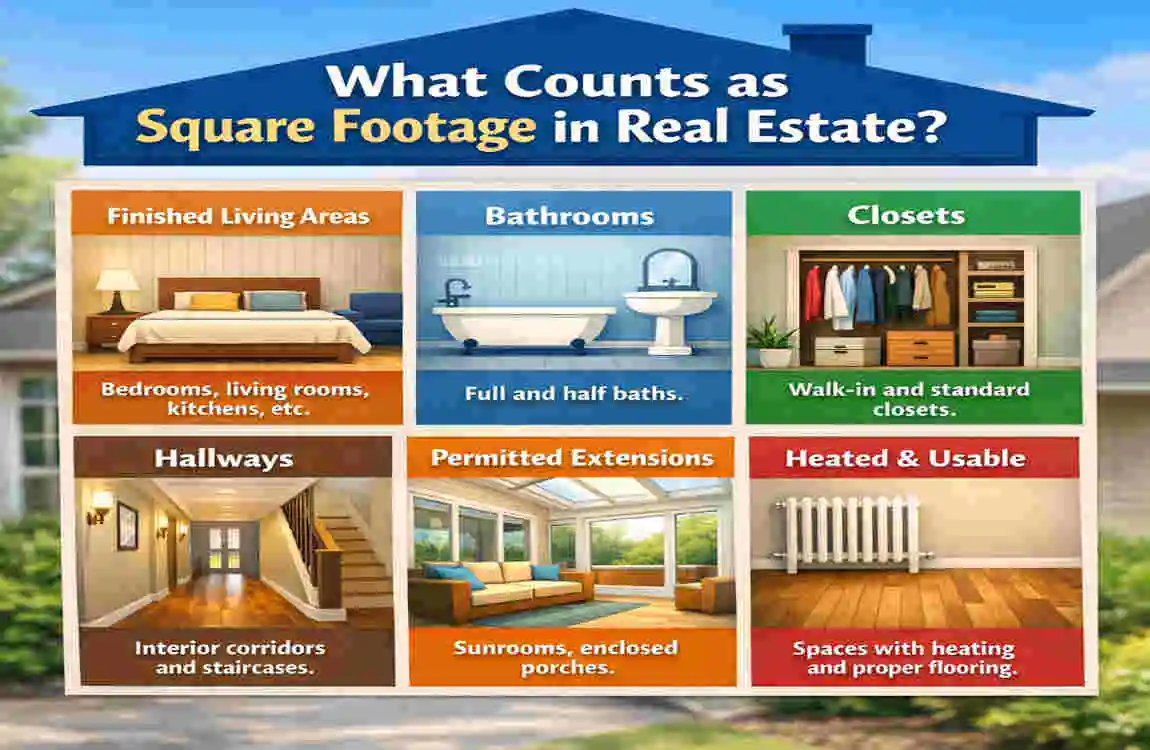
What Counts as Square Footage in Real Estate?
To understand why the basement often gets the cold shoulder, we first need to define what “square footage” means to a professional. In the real estate industry, not all square feet are created equal.
Defining House Square Footage: GLA vs. Total Sq Ft
When you look at a listing, you are usually looking at the GLA, or Gross Living Area. This is the gold standard for real estate listings and appraisals.
Gross Living Area (GLA) generally refers to the finished, livable space that is above grade. “Grade” is just a fancy construction term for the ground level.
- Above-Grade: Any floor of the house that is entirely above the ground.
- Below-Grade: Any floor where any part of the floor is below the ground line. Even if the back of the house is open to the yard (a walk-out basement), if the front is buried in the ground, it is often considered below grade.
Contrast this with Total Square Footage. This number is a broader estimate that includes everything under the roof that is enclosed. This can include the garage, the unfinished basement, the attic, and sometimes even enclosed porches.
While you might live in and use the “Total Square Footage,” the bank and the appraiser are primarily focused on the GLA.
The Criteria for “Livable” Space
For an area to even be considered for inclusion in the GLA, it typically must meet three criteria:
- It must be finished: This means it has walls, floors, and ceilings (no exposed beams or concrete).
- It must be heated: It needs to be connected to the home’s heating system (space heaters don’t count).
- It must be above grade: As mentioned, it must be above the dirt line.
Here is a quick comparison table to help you visualize the difference:
GLA (Gross Living Area) Above-grade, finished, heated living areas (Bedrooms, Kitchen, Living Room). MLS listings, Bank Appraisals, Comparable Sales.
Basement Square Footage Rules: The Core Answer
Now, let’s dive deeper into the nuances. Why are the rules so strict? Much of it comes down to standardization.
For years, real estate was the Wild West. One agent would measure from the outside; another would measure from the inside. One would count the basement; another wouldn’t. This made it impossible to accurately compare House A to House B.
To fix this, the industry largely adopted the ANSI Z765 standard (American National Standards Institute). While compliance is voluntary in some places, it is the rule of law for most appraisers and standardized MLS systems.
Is a Basement Included in a House’s Square Footage? By Finish Type
Whether a basement counts depends heavily on what that basement looks like and where it sits in the earth.
Unfinished Basements
This is the easiest category. Unfinished basements are rarely included in the Gross Living Area.
If you walk downstairs and see exposed floor joists above your head, concrete walls, or a concrete slab floor, that is storage space. It is valuable storage space, but it is not “living” space. Even if you throw a rug down and put a TV in the corner, if the walls and ceiling aren’t finished to the same quality as the upstairs, it doesn’t count.
Crawl spaces fall into this category as well. They are purely functional areas for plumbing and wiring access and are never included in square footage calculations.
Finished Basements
This is where the controversy usually starts. You have spent $30,000 finishing your basement. It has drywall, recessed lighting, and a beautiful laminate floor. It looks exactly like your living room.
Does it count? According to ANSI standards: No, not as GLA.
The ANSI rule is strict regarding the “grade.” If any part of that floor level is below the earth line, the entire level is considered below grade.
- Scenario: You have a “garden level” basement. The windows are large, and you can see the sky. However, the window sills are at ground level, and the floor is four feet down. Verdict: Below grade. Not in GLA.
- Scenario: You have a walk-out basement. The back wall is fully exposed with sliding glass doors to a patio. The side walls slope up, and the front wall is underground. Verdict: Still technically below grade according to strict ANSI rules.
However, this doesn’t mean the space is worthless. In listing data, this is often separated. You will see “Above Grade Sq Ft: 2,000” and “Below Grade Finished Sq Ft: 1,000.”
Regional Variations
Real estate is incredibly local, and rules can bend depending on where you live.
- Northeast & Midwest: These regions are very strict. Basements are common, but they are almost universally excluded from the primary square footage number. If you are buying in Ohio or Pennsylvania, expect the basement to be a “bonus” separate line item.
- West & South: In states like California or Texas, full underground basements are rarer due to soil types and water tables. However, homes built into hillsides often have lower levels that function as main living areas. In these areas, local custom sometimes allows walk-out basements to be included in the total, or at least marketed much more aggressively as primary space.
Appraisal Standards (FHA, VA, Conventional)
When you are buying a home with a mortgage, the appraiser is the most important person in the process. They work for the lender, and they follow strict guidelines.
FHA and VA Guidelines
Government-backed loans like FHA (Federal Housing Administration) and VA (Department of Veterans Affairs) are very specific about safety and “livability.”
For a basement room to be counted as a bedroom in an FHA appraisal, it must have an egress window. This is a window large enough for a person to crawl out of (and a firefighter to crawl into) in case of a fire. If you have a “bedroom” in the basement with no window, or a tiny glass-block window, the appraiser cannot call it a bedroom, and it adds less value.
Even if it meets safety standards, FHA appraisers typically separate the value. They will assign a price per square foot for the above-grade space (say, $200/sq ft) and a lower price for the below-grade space (say, $100/sq ft), even if the finish quality is identical.
The “Contributory Value” Concept
Appraisers use a method called “Contributory Value.” They might say, “This house is 2,000 sq ft, but it has a finished basement that contributes $50,000 to the total value.”
Example: Imagine two identical homes next to each other.
- Home A: 2,000 sq ft, no basement. Price: $500,000.
- Home B: 2,000 sq ft, plus a 1,000 sq ft finished basement.
Home B will not be priced at $750,000 (adding full value for the basement). Instead, it might appraise for $550,000 or $575,000. The basement adds value, but rarely at the same rate as the upstairs space.
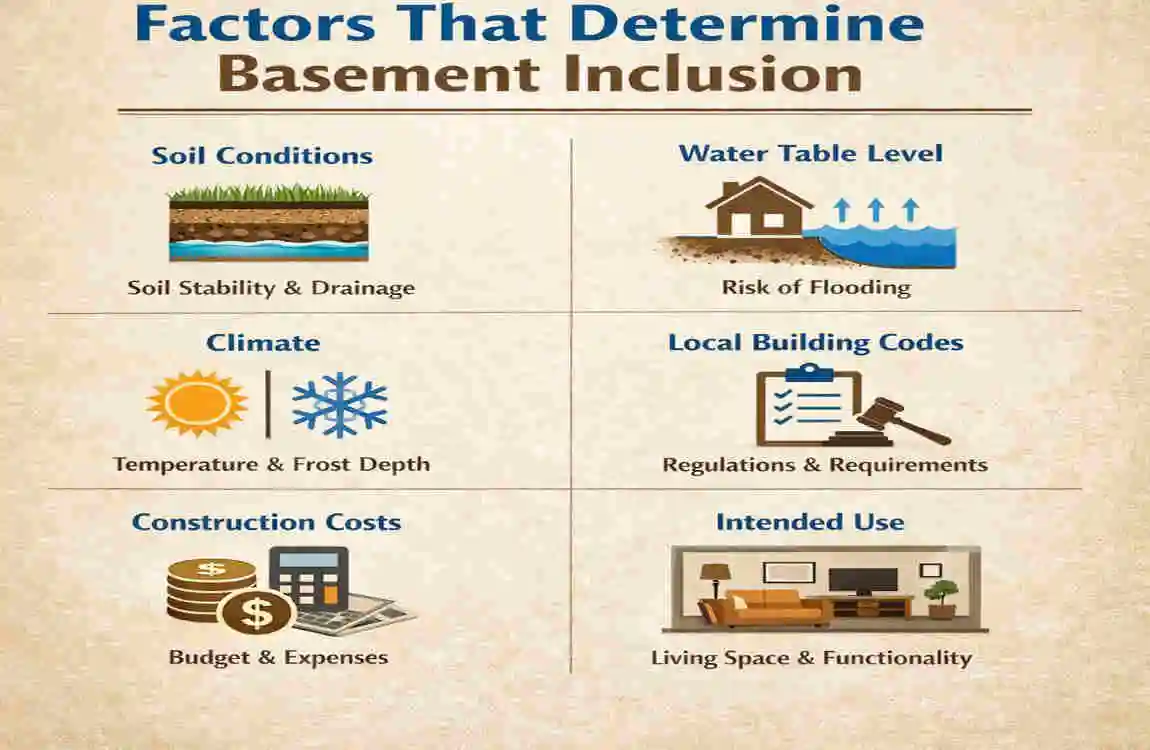
Factors That Determine Basement Inclusion
If you are renovating a basement or listing a home, you need to know exactly what technical specifications define “livable space.” It isn’t just about putting up drywall.
Key Rules for Basement Square Footage Inclusion
If you want your basement to be taken seriously by buyers and appraisers—even if it is listed separately—it needs to meet these standards:
- Ceiling Height: The standard requirement is a minimum ceiling height of 7 feet. If you have ductwork dropping down, there are usually allowances for beams (often 6’4″), but the majority of the room must be full height. If you have to duck to walk around, it’s not square footage; it’s a crawl space.
- Heating and Cooling: The space must be heated by a permanently installed heating system. Plugging in a space heater doesn’t count. It must maintain a temperature of at least 50°F. Ideally, it should be integrated into the home’s central HVAC system.
- Finish Quality: The “Workmanlike Manner” rule applies. The walls, floors, and ceilings must be finished to a standard similar to the rest of the house. If the upstairs has hardwood and crown molding, and the basement has cheap paneling and stick-on tiles, appraisers will devalue it.
- Egress and Light: As mentioned, bedrooms need egress windows. General living spaces usually require some form of natural light or ventilation, though code varies on this for media rooms.
Common Myths Busted
Let’s take a moment to debunk some persistent real estate myths regarding basements.
- Myth: “If I pay taxes on it, it counts as square footage.”
- Fact: Tax assessors often use total square footage to calculate your tax bill because they want to tax every inch of improved space. However, real estate listings use GLA. Just because the tax man counts it doesn’t mean the MLS will.
- Myth: “It’s a walk-out, so it’s above grade.”
- Fact: Under ANSI Z765, if the front of the house is buried, the level is below grade. Even if the back is wide open to the golf course.
- Myth: “I can just add the basement square footage to the listing myself.”
- Fact: Doing this as a seller can get you in legal trouble for misrepresentation. Always separate the numbers.
State-by-State Breakdown
While national standards exist, local customs influence how buyers perceive value. Here is a look at how major markets handle the question: “Is a basement included in a house’s square footage?”
State Basement Inclusion Rule Notes & Nuances
California Mixed. Walk-outs often count in total; full below-grade usually doesn’t. In hilly areas (LA, SF), “downslope” homes often have lower levels counted as main living space because they have full views. High demand for ADUs (Accessory Dwelling Units) has made converted basements very valuable.
Texas Flexible. Finished space is okay if egress exists; often lumped into total. Texas has fewer basements generally due to limestone and water tables. When they do exist, they are often treated as bonus recreational space.
New York Strict. Rarely included in GLA. In NYC and the surrounding suburbs, basements are strictly regulated. “Garden apartments” are common, but for single-family homes, the basement is almost always excluded from the top-line sq ft.
Florida Rare. Above-grade only; flood zone exceptions. Basements are incredibly rare in Florida due to the sea level. If a home has a lower level, it is scrutinized heavily for flood insurance purposes and is rarely included in GLA.
Colorado Segregated. Basements are standard but listed separately. Listings here almost always show “Total Sq Ft” and “Finished Sq Ft” separately. Buyers expect finished basements and are willing to pay a Premium for them, even if they aren’t in the GLA.
Impact on Home Value and Sales
So, if the basement doesn’t count toward the official square footage, is finishing it a waste of money? Absolutely not.
How Basement Rules Affect Your Home’s Value and Sale Price
While the math might exclude the basement, the market loves them.
According to data from Zillow and the National Association of Realtors (NAR), finished basements are a massive selling point. In the post-2020 world, where people need home offices, home gyms, and separate play areas for kids, the basement has become the MVP of the house.
The “Bonus Space” Psychology When a buyer sees a home listed as “2,000 sq ft + 1,000 sq ft finished basement,” they mentally calculate “3,000 sq ft of living space.”
This allows sellers to market the home as having the utility of a larger house without the higher tax bracket or price-per-square-foot of a fully above-grade mansion.
Price Per Square Foot Adjustments: Buyers need to be savvy here.
- If you are looking at a home priced at $200/sq ft based on GLA, that is standard.
- If a seller tries to price their home at $200/sq ft based on the Total square footage (including the basement), they are likely overpricing the home. Basement space is generally valued at 50% to 70% of the value of above-grade space.
Case Study: The Renovation Return. Let’s look at a hypothetical comparison.
- House A (Unfinished Basement): Sells for $400,000.
- House B (Finished Basement): The owner spent $40,000 finishing the basement. It likely won’t sell for $440,000 (dollar-for-dollar return). It might sell for $425,000 or $430,000.
- However, House B will likely sell faster. A finished basement is a “tie-breaker” feature. If a buyer is choosing between two homes, the one with the ready-made “Man Cave” or guest suite wins every time.
How to Measure and Verify Basement Sq Ft
Whether you are a seller listing accurately or a buyer double-checking a suspicious listing, knowing how to measure is key.
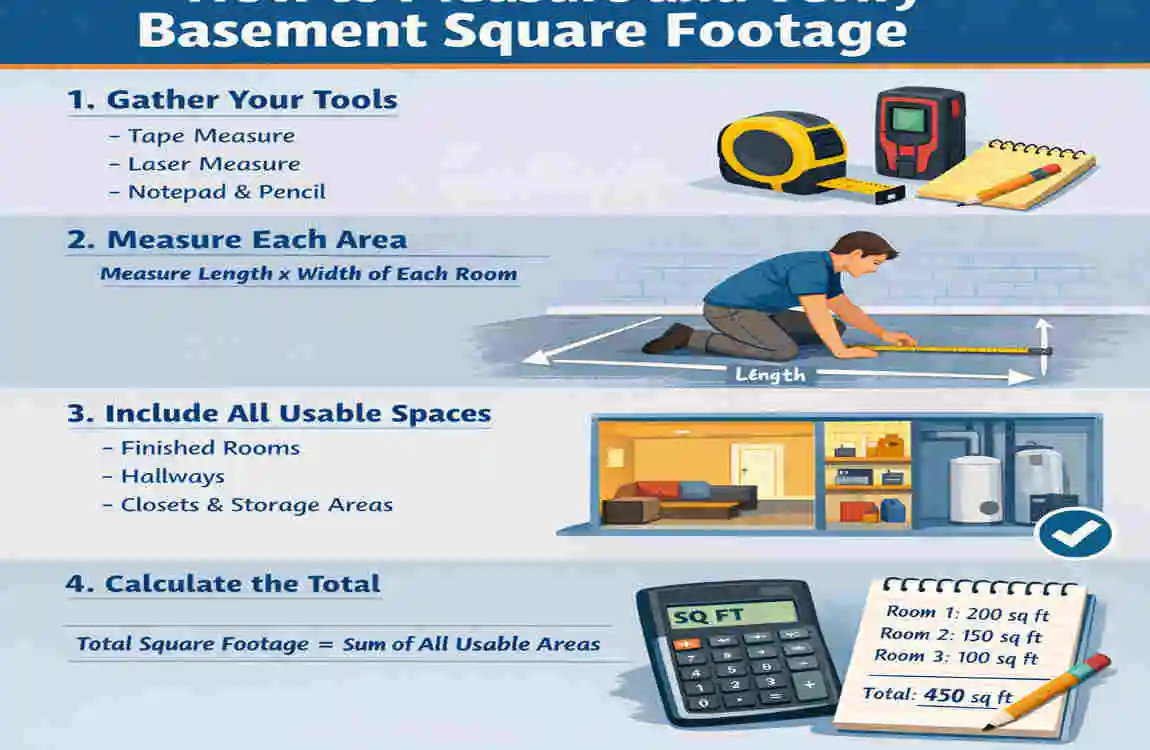
Step-by-Step: Measuring Your Basement for Listings
If you want to get a rough idea of your basement’s size, you don’t need to be an architect. However, for an official listing, you should always defer to a professional.
- Get the Right Tools: A standard tape measure works, but a laser measure (available at hardware stores for $20-$40) is much faster and more accurate.
- Measure the Exterior (If possible): Appraisers usually measure the exterior of the foundation to get the gross footage.
- Measure the Interior: If measuring from the inside, measure wall-to-wall.
- Subtract the “Dead” Space: This is crucial. You cannot count the area taken up by the furnace, the water heater, the stairwell opening, or the unfinished storage room. Only measure the parts you can actually live in.
- Calculate: Length x Width = Area. Add up your rooms.
Red Flags to Watch For: If you are touring a home and the listing says “3,000 sq ft,” but the house feels small, do a quick mental check.
- Ask the agent: “Is this GLA or Total?”
- Look for the tell-tale signs of a flip: Did they finish the basement to inflate the square footage number?
- Check the tax records (usually available online via the county assessor). If the tax record says 1,500 sq ft and the listing says 2,500 sq ft, the agent has likely added the basement.
Appraiser Verification: The only number that truly matters for the bank is the one on the appraisal. If you are selling a house with a complex layout, it is worth spending $300- $500 to hire a licensed appraiser before listing. They will give you a sketch and an official square footage count. This protects you from lawsuits and price reductions later.
FAQs: Quick Answers to Common Questions
Basement Square Footage FAQs
Q: Is a basement included in a house’s square footage in Texas? A: It depends. In Texas, if the basement is a walk-out and fully finished, it is sometimes included in the total marketing square footage. However, for strict appraisals, the rules below grade still apply. Given that basements are rare in Texas, they are often highlighted as special bonus features.
Q: Does finished basement sq ft count in appraisals? A: Yes, but not in the way you might think. It counts toward the home’s value (adding dollar value), but it usually does not count toward the Gross Living Area (GLA). It is a separate line item on the appraisal report.
Q: What are the walkout basement square footage rules?A: Even though a walk-out basement has doors to the outside and plenty of light, if the front of the house is underground, it is technically considered below-grade by ANSI standards. However, local real estate markets often treat walk-outs as “equivalent” to above-grade space in terms of desirability.
Q: How does this affect property taxes? A: This varies by municipality. Most tax assessors count all finished square footage to calculate your tax bill. Finishing your basement will likely increase your property taxes, even if it doesn’t increase your official MLS square footage.
Q: Can I list my basement as a bedroom? A: Only if it has an egress window (a window big enough to escape through) and a closet. If it doesn’t have an egress window, you must list it as an “office,” “den,” or “bonus room”—never a bedroom. This is a major safety liability.