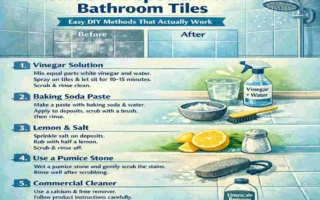
Have you ever walked into your bathroom and felt a pang of frustration at the sight of those pesky white stains on your tiles? You’re not alone. White stains on bathroom tiles are a common problem that can make even the most pristine bathroom look unkempt. But what exactly are these stains, and why do they seem to appear out of nowhere?
Understanding White Stains on Bathroom Tiles

What Are White Stains?
White stains on bathroom tiles can be caused by a variety of factors, including mineral buildup, soap scum, mold, and hard water stains. Let’s take a closer look at each of these culprits:
- Mineral Buildup: When water evaporates from your tiles, it can leave behind minerals like calcium and magnesium. Over time, these minerals can accumulate and form unsightly white stains.
- Soap Scum: Soap residue can combine with minerals in the water to create a filmy, white substance that sticks to your tiles. This is especially common in areas with hard water.
- Mold: In humid environments, mold can grow on your tiles and grout, often appearing as white or gray stains.
- Hard Water Stains: Hard water contains high levels of minerals like calcium and magnesium. When this water comes into contact with your tiles, it can leave behind stubborn white stains.
Common Causes of White Stains in Bathrooms
Several factors can contribute to the formation of white stains on your bathroom tiles:
- Hard Water: As mentioned earlier, hard water is a primary cause of white stains. If you live in an area with hard water, you may notice more stains on your tiles.
- Poor Ventilation: Bathrooms with inadequate ventilation can trap moisture, creating an ideal environment for mold and mineral buildup.
- Infrequent Cleaning: If you don’t clean your bathroom regularly, stains can accumulate and become more difficult to remove over time.
How Water Hardness Affects Stain Formation
Water hardness plays a significant role in the formation of white stains on your bathroom tiles. Hard water contains higher levels of minerals like calcium and magnesium, which can leave behind more stubborn stains. If you live in an area with hard water, you may need to take extra steps to prevent and remove white stains.
Signs That Indicate Your Tiles Have White Stains
It’s essential to identify white stains on your tiles early on to prevent them from becoming permanent. Here are some signs to look out for:
- White or Gray Discoloration: White stains often appear as a white or gray film on your tiles.
- Rough Texture: Mineral buildup can create a rough texture on your tiles, making them feel gritty to the touch.
- Stains in Specific Areas: White stains may be more prominent in areas where water tends to splash or pool, such as around the shower or sink.
Why Timely Cleaning Is Important to Prevent Permanent Damage
If left untreated, white stains can cause permanent damage to your bathroom tiles. The minerals in hard water can etch into the surface of your tiles, creating pits and scratches that are difficult to remove. Additionally, mold and mildew can grow beneath the stains, causing further damage and potential health concerns. By regularly cleaning your tiles and promptly addressing white stains, you can prevent permanent damage and keep your bathroom looking its best.
Preparing Your Bathroom for Tile Cleaning
Gather Necessary Cleaning Supplies and Tools
Before you begin cleaning your bathroom tiles, gather the right supplies and tools. Here’s a list of what you’ll need:
- Cleaning Agents:
- White vinegar
- Baking soda
- Lemon juice
- Essential oils (optional)
- Commercial tile cleaners (for stubborn stains)
- Tools:
- Scrub brushes (soft and stiff bristles)
- Microfiber cloths
- Buckets
- Gloves
- Steam cleaner (optional)
Safety Tips and Precautions Before Starting Cleaning
When cleaning your bathroom tiles, prioritize safety. Here are some tips to keep in mind:
- Wear Protective Gear: Always wear gloves when handling cleaning agents to protect your skin. If you’re using strong chemicals, consider wearing a mask and eye protection.
- Ventilate the Area: Open windows and doors to ensure proper ventilation while cleaning. This will help prevent the buildup of fumes and keep the air fresh.
- Read Labels Carefully: Always read the labels on your cleaning products and follow the instructions carefully. Some products may require special handling or precautions.
How to Protect Bathroom Surfaces and Fixtures Before Cleaning
Before you start cleaning your tiles, take a moment to protect your bathroom surfaces and fixtures:
- Cover Sensitive Areas: Use plastic wrap or painter’s tape to cover any sensitive areas, such as metal fixtures or delicate surfaces, to prevent damage from cleaning agents.
- Remove Loose Items: Clear your bathroom of any loose items, such as bath mats or toiletries, to give yourself ample space to work.
- Test Cleaning Agents: If you’re using a new cleaning product, test it on a small, inconspicuous area of your tiles first to ensure it won’t cause any damage or discoloration.
Step-by-Step Methods to Remove White Stains from Bathroom Tiles
Natural Cleaning Solutions
If you prefer to use natural cleaning methods, you’re in luck! Several household items can help you remove white stains from your bathroom tiles effectively.
Vinegar and Water Solution: Uses and Application Steps
Vinegar is a powerful natural cleaner that can help dissolve mineral deposits and soap scum. Here’s how to use it:
- Mix the Solution: Combine equal parts white vinegar and water in a spray bottle.
- Spray the Tiles: Generously spray the vinegar solution onto the stained tiles.
- Let it Sit: Allow the solution to sit on the tiles for 5-10 minutes to help break down the stains.
- Scrub and Rinse: Use a soft-bristled brush to gently scrub the tiles, then rinse thoroughly with clean water.
Baking Soda Paste Method: How to Prepare and Apply
Baking soda is another excellent natural cleaner that can help remove white stains. Here’s how to use it:
- Make the Paste: Mix baking soda with just enough water to create a thick paste.
- Apply the Paste: Use a cloth or sponge to apply the baking soda paste to the stained areas of your tiles.
- Let it Sit: Allow the paste to sit on the tiles for 15-20 minutes to help break down the stains.
- Scrub and Rinse: Use a soft-bristled brush to gently scrub the tiles, then rinse thoroughly with clean water.
Lemon Juice for Spotting Stains and Removing Soap Scum
Lemon juice is a natural acid that can help break down soap scum and mineral deposits. Here’s how to use it:
- Apply Lemon Juice: Squeeze fresh lemon juice directly onto the stained areas of your tiles.
- Let it Sit: Allow the lemon juice to sit on the tiles for 5-10 minutes to help break down the stains.
- Scrub and Rinse: Use a soft-bristled brush to gently scrub the tiles, then rinse thoroughly with clean water.
Essential Oils for Fresh Scent After Cleaning
If you want to add a fresh scent to your bathroom after cleaning, consider using essential oils. Add a few drops of your favorite essential oil to your cleaning solution or rinse water for a pleasant aroma.
Commercial Cleaning Products
If natural cleaning methods aren’t cutting it, you may need to turn to commercial cleaning products. Here are some options to consider:
Best Tile Cleaners Specifically for White Stains and Mineral Deposits
When shopping for commercial tile cleaners, look for products specifically designed to tackle white stains and mineral deposits. Some top-rated options include:
- CLR: A popular cleaner that effectively removes calcium, lime, and rust stains.
- Lysol Bathroom Cleaner: A versatile cleaner that can help remove soap scum and mineral deposits.
- Kaboom Shower, Tub & Tile Cleaner: A powerful cleaner that can tackle tough stains and grime.
How to Use Store-Bought Cleaners Safely and Effectively
When using commercial cleaning products, always follow the instructions on the label carefully. Here are some general tips:
- Please read the Label: Always read the label before using any cleaning product to ensure you’re using it correctly and safely.
- Wear Protective Gear: Wear gloves and other protective gear as recommended on the product label.
- Ventilate the Area: Open windows and doors to ensure proper ventilation while using cleaning products.
- Test on a Small Area: If you’re using a new product, test it on a small, inconspicuous area of your tiles first to ensure it won’t cause any damage or discoloration.
When to Opt for Stronger Chemical Cleaners
If natural cleaning methods and mild commercial cleaners aren’t cutting it, you may need to opt for stronger chemical cleaners. However, these products should be used with caution and only when necessary. Always follow the label instructions carefully and take appropriate safety precautions.
Tools and Techniques

In addition to the right cleaning agents, using the proper tools and techniques can make a big difference in removing white stains from your bathroom tiles.
Proper Scrubbing Techniques, Including Use of Soft vs. Hard Brushes
When scrubbing your tiles, it’s essential to use the proper technique and the appropriate brush:
- Soft-Bristled Brushes: Use soft-bristled brushes for everyday cleaning and for delicate tile surfaces. These brushes are gentle enough to clean without causing damage.
- Hard-Bristled Brushes: For tougher stains, you may need to use a hard-bristled brush. However, be cautious when using these brushes, as they can scratch or damage certain types of tiles.
When scrubbing, use gentle circular motions to avoid scratching your tiles.
Using Steam Cleaners for Stubborn Stains
If you’re dealing with particularly stubborn white stains, a steam cleaner can be a game-changer. Steam cleaners use high-temperature steam to break down and remove stains without harsh chemicals. Follow the manufacturer’s instructions for your specific steam cleaner model.
Tips for Cleaning Grout Alongside the Tiles
When removing white stains from your bathroom tiles, don’t forget about the grout! Grout can be a breeding ground for mold and mildew, and it can also become stained with mineral deposits and soap scum. Here are some tips for cleaning grout alongside your tiles:
- Use a Grout Brush: Invest in a grout brush with stiff bristles to help scrub away stains and grime from your grout lines.
- Apply Cleaning Solution: Apply your chosen cleaning solution directly to the grout lines, then let it sit for a few minutes before scrubbing.
- Rinse Thoroughly: After scrubbing, rinse the grout lines thoroughly with clean water to remove any remaining cleaning solution and debris.
For Severe or Persistent White Stains
If you’re dealing with severe or persistent white stains, you may need to take extra measures to remove them effectively.
Using Specialized Descaling Products
For particularly stubborn mineral deposits, you may need to use a specialized descaling product. These products are designed to break down and remove mineral buildup without damaging your tiles. Always follow the manufacturer’s instructions carefully when using descaling products.
How to Handle Mold and Mildew if Present with Stains
If you notice mold or mildew alongside your white stains, it’s essential to address this issue promptly. Here’s how to handle mold and mildew:
- Use a Mold and Mildew Cleaner: Choose a cleaning product specifically designed to kill and remove mold and mildew. Follow the manufacturer’s instructions carefully.
- Scrub the Affected Areas: Use a stiff-bristle brush to scrub the mold and mildew from your tiles and grout lines.
- Rinse Thoroughly: After scrubbing, rinse the affected areas thoroughly with clean water to remove any remaining cleaning solution and debris.
- Prevent Future Growth: To prevent future mold and mildew growth, ensure your bathroom is well-ventilated and consider using a dehumidifier if necessary.
When to Consult Professional Cleaning Services
If you’ve tried all the above methods and still can’t remove the white stains from your bathroom tiles, it may be time to consult professional cleaning services. Professional cleaners have access to specialized equipment and cleaning solutions that can tackle even the toughest stains. They can also provide guidance on preventing future stains and maintaining your bathroom’s appearance.
Post-Cleaning Care and Maintenance
How to Rinse and Dry Tiles After Stain Removal
After removing white stains from your bathroom tiles, it’s crucial to rinse and dry them properly to prevent future stains and damage:
- Rinse Thoroughly: Use clean water to rinse your tiles thoroughly, removing any remaining cleaning solution and debris.
- Dry the Tiles: Use a clean, dry cloth or a squeegee to thoroughly dry your tiles. This will help prevent water spots and mineral deposits from forming.
Tips for Preventing Recurrence of White Stains in Bathrooms
To keep your bathroom tiles looking their best, follow these tips to prevent the recurrence of white stains:
Water Softeners and Filtration Systems
If you live in an area with hard water, consider investing in a water softener or filtration system. These systems can help reduce the mineral content in your water, making it less likely to leave behind stains on your tiles.
Regular Cleaning Schedules and Products
Establishing a regular cleaning schedule is key to preventing white stains on your bathroom tiles. Aim to clean your tiles at least once a week, using a mild cleaning solution and a soft-bristled brush. For tougher stains, you may need to clean more frequently or use a stronger cleaning product.
Best Daily and Weekly Cleaning Routines
Here’s a sample daily and weekly cleaning routine to help keep your bathroom tiles looking their best:
- Daily:
- Wipe down tiles with a damp cloth after each use
- Squeegee shower walls and doors to remove excess water
- Weekly:
- Clean tiles with a mild cleaning solution and a soft-bristled brush
- Scrub grout lines with a grout brush and cleaning solution
- Rinse and dry tiles thoroughly
Recommended Bathroom Ventilation Practices to Reduce Moisture Buildup
Proper ventilation is crucial for preventing mold and mildew growth in your bathroom. Here are some tips to improve ventilation:
- Use an Exhaust Fan: Turn on your bathroom’s exhaust fan during and after showers to help remove excess moisture from the air.
- Open Windows: If possible, open a window during and after showers to allow fresh air to circulate.
- Consider a Dehumidifier: If your bathroom is particularly humid, a dehumidifier can help control moisture levels.
Common Mistakes to Avoid When Removing White Stains
When removing white stains from your bathroom tiles, it’s essential to avoid these common mistakes:
Avoiding Harsh Abrasives That Damage Tiles
While it may be tempting to use harsh abrasives to scrub away stubborn stains, these products can damage your tiles. Stick to soft-bristled brushes and gentle cleaning solutions to avoid scratching or etching your tiles.
Not Ignoring Grout Cleaning During Stain Removal
As mentioned earlier, grout can be a breeding ground for mold and mildew and can also become stained with mineral deposits and soap scum. Don’t ignore your grout lines when removing white stains from your tiles. Use a grout brush and appropriate cleaning solution to keep your grout looking its best.
Overuse of Chemical Cleaners and Safety Risks
While chemical cleaners can be effective at removing tough stains, overuse can pose safety risks. Always follow the manufacturer’s instructions carefully and use these products sparingly. If you have concerns about the safety of a particular cleaning product, consider using a natural alternative instead.
Using Inappropriate Tools That Scratch Tile Surfaces
Using the wrong tools can scratch or damage your bathroom tiles. Always use soft-bristled brushes for everyday cleaning and reserve hard-bristled brushes for tougher stains. Avoid using metal scouring pads or other abrasive tools that can scratch your tiles.