
Under the Florida Building Code (FBC) Section R310.1, every sleeping room in a home must have at least one operable emergency escape and rescue opening, such as a window. This isn’t just a recommendation—it’s a legal requirement designed to protect lives during fires, hurricanes, and other emergencies. Failing to comply with these regulations can lead to fines, failed inspections, or worse, putting lives at risk.
Florida Egress Code Basics for Bedrooms
What is an Egress Window?
An egress window is a window designed to provide an emergency exit in case of a fire or other life-threatening situation. It also serves as a point of entry for rescue teams. In Florida, every bedroom or sleeping room must have at least one egress window, whether the home is new construction or being remodeled.
Legal Mandates Under the Florida Building Code
The Florida Building Code (FBC) adopts the International Residential Code (IRC) R310 to govern egress requirements. These rules mandate that:
- Each bedroom must have one operable egress window.
- Newly added bedrooms or remodeled ones also need to comply with these standards.
- Bedrooms in homes built before the current codes may require upgrades to meet modern safety standards.
Why Are Egress Windows So Strictly Regulated in Florida?
Florida’s building codes are shaped by the state’s unique challenges, including frequent hurricanes and extreme weather conditions. This is why the FBC enforces some of the nation’s strictest safety standards. By ensuring that every bedroom has a compliant egress window, Florida minimizes risks during emergencies like fires or hurricanes.
Exact Window Size and Dimension Requirements
To ensure safety, the Florida Building Code specifies precise dimensions and operational rules for egress windows. Here’s what you need to know:
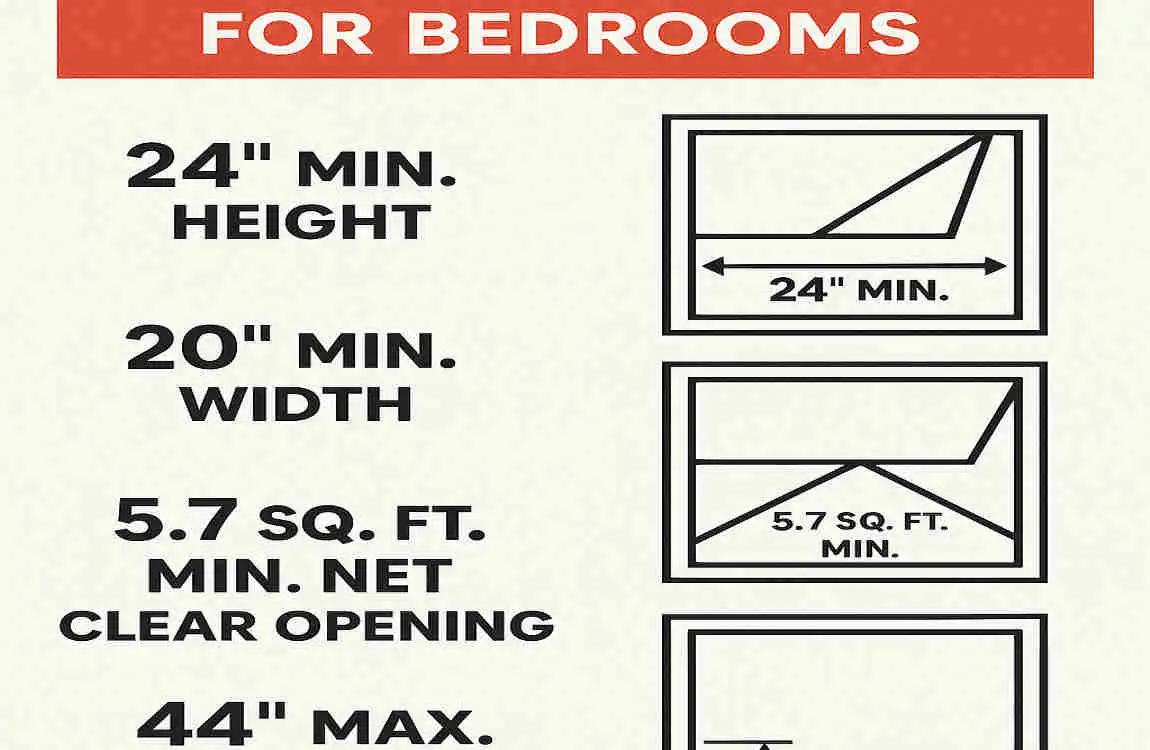
Minimum Clear Opening Size
- Above-grade floors (e.g., upper stories): The window must have a minimum clear opening of 5.7 square feet.
- Ground-level floors: The minimum clear opening is slightly reduced to 5.0 square feet.
Minimum Opening Height and Width
- Height: The clear opening must be at least 24 inches tall. With a 5% allowance for replacements, this can be reduced to approximately 22 13/16 inches.
- Width: The clear opening must be at least 20 inches wide, which can be reduced to approximately 19 inches with the 5% allowance.
Sill Height Limit
The maximum height of the window sill from the finished floor cannot exceed 44 inches. This ensures the window is easily accessible in an emergency.
Operational Rules
- The window must open easily from the inside without requiring any keys, tools, or special knowledge.
- Casement and awning windows are often preferred due to their ease of operation. Sliding windows, while allowed, may not always provide the required clear opening space.
A Quick Reference Table for Egress Window Requirements:
Requirement Above Grade Floors Ground-Level Floors Notes
Clear Opening Area 5.7 sq ft 5.0 sq ft Allowance for replacements available
Minimum Height 24 inches 24 inches Reduced to ~22 13/16 inches
Minimum Width 20 inches 20 inches Reduced to ~19 inches
Maximum Sill Height 44 inches 44 inches Measured from finished floor
Exceptions, Basements, and Multi-Story Homes
While the Florida egress window code is strict, there are some exceptions and considerations for unique situations, such as basements and historic homes.
Grade Floor Exceptions
Windows installed at ground level are allowed a smaller clear opening of 5 square feet, as they are easier to access in emergencies.
Basements with Bedrooms
If a basement includes a bedroom, it must have its own egress window. For windows located below grade, window wells may be necessary. The well must:
- Have a maximum depth of 44 inches.
- Include a ladder or steps if the depth exceeds 44 inches.
Upper Floors and Multi-Story Homes
For windows on upper floors, the complete 5.7-square-foot requirement applies. No size reductions are permitted, even for smaller homes.
Historic and Older Homes
Older homes may qualify for “like-for-like” window replacements under grandfathering rules. However, upgrading to modern egress standards is highly recommended for safety and resale value.
Pros and Cons of Compliant vs. Non-Compliant Windows:
- Compliant Windows:
- Improve safety and provide peace of mind.
- Increase property value and pass inspections.
- Non-Compliant Windows:
- Risk fines and failed inspections.
- Endanger lives during emergencies.
Checking and Upgrading Your Bedroom Windows
DIY Inspection Steps
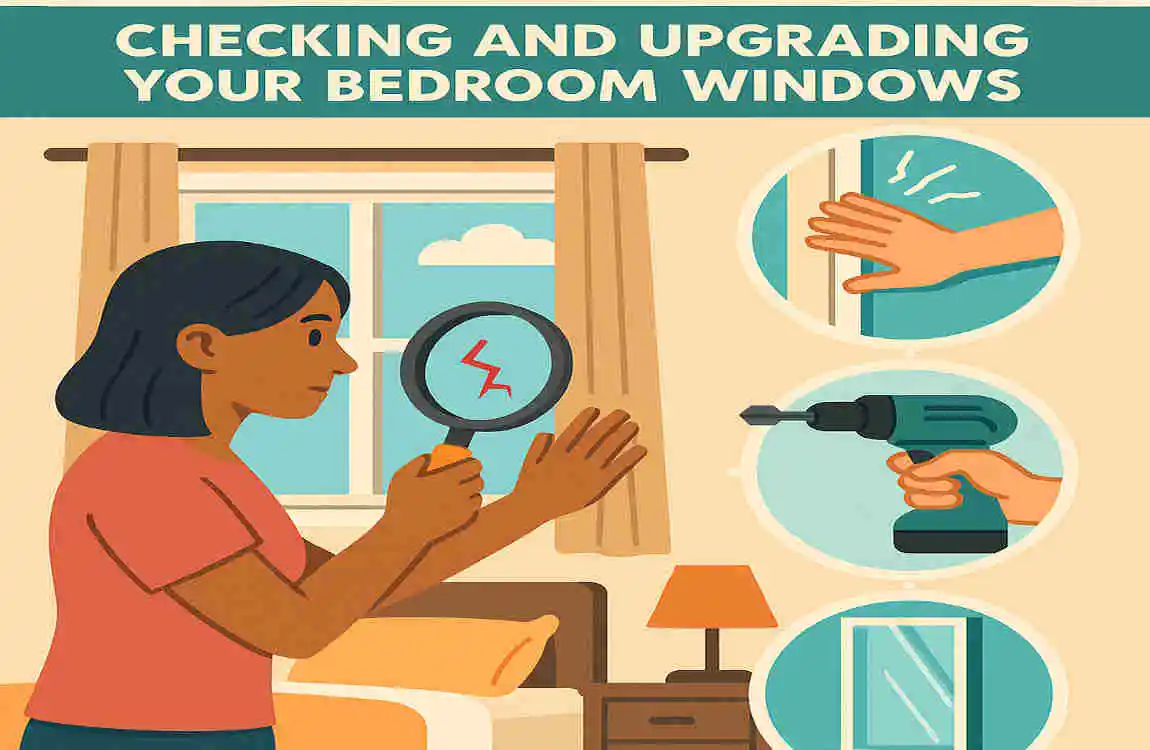
Want to check if your bedroom windows are compliant? Follow these simple steps:
- Measure the Clear Opening: Open the window entirely and measure the height and width of the unobstructed space.
- Test the Operation: Make sure the window opens smoothly from the inside without any tools.
- Verify Room Compliance: Ensure every bedroom has at least one operable egress window.
Upgrade Options
If your windows don’t meet the code, consider the following upgrades:
- Impact-Resistant Casement Windows: Ideal for Florida homes, they comply with egress and hurricane codes. Costs range from $500 to $2,000 per window.
- Sliding Windows: Ensure they provide the required precise opening dimensions.
Hiring Professionals
For major upgrades, it’s best to hire a contractor certified under the Florida Building Code. Keep in mind:
- Permits are required for window replacements or modifications.
- Certified professionals ensure compliance and quality.
Compliance Benefits and Common Mistakes
Benefits of Compliance
- Improved Safety: Egress windows provide a faster, safer escape route during emergencies.
- Higher Property Value: Homes with compliant windows are more attractive to buyers and pass inspections easily.
- Reduced Insurance Costs: Many insurance companies offer discounts for homes that meet safety standards.
Common Mistakes to Avoid
- Assuming Small Windows Are Acceptable: Egress windows must meet the minimum size requirements.
- Relying on Doors Alone: Bedroom doors are not a substitute for compliant windows.