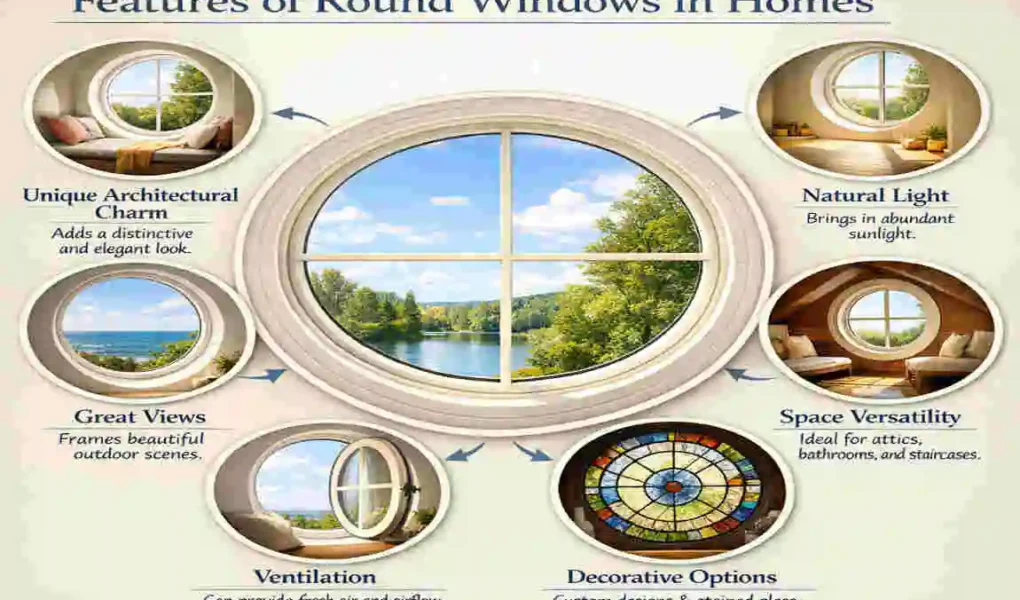
Round windows are distinctive architectural elements that add both style and function to homes. They break the visual monotony of traditional rectangular windows by introducing curved shapes, which soften harsh lines and create a unique focal point on both the exterior and the interior of a house. These windows often enhance curb appeal by adding character and elegance, making a home stand out.
Functionally, round windows allow natural light to flood interior spaces, brightening rooms and creating inviting atmospheres. While many round windows are fixed and do not open, some designs include operable options for ventilation. They come in various sizes and shapes, including full circles, ellipses, and speciality arches, allowing for versatile placement and design integration.
A Brief History of Round Windows in Architecture
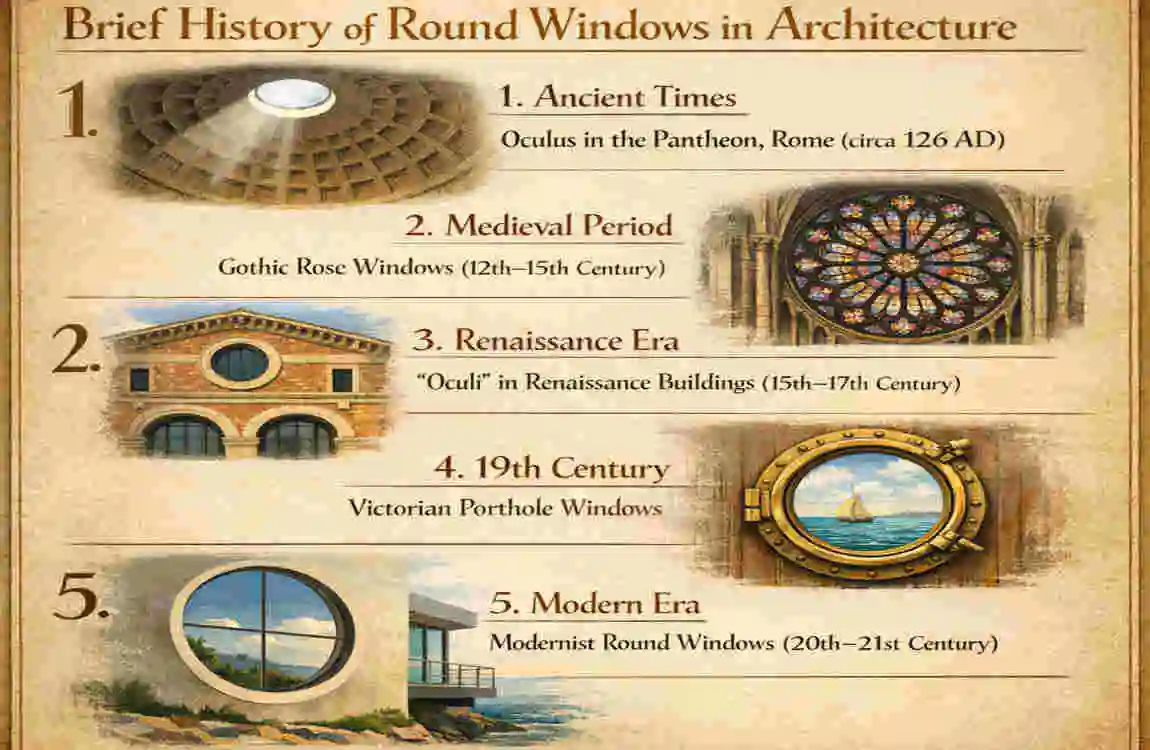
- Explain the origins of round windows:
- Medieval Europe – Rose windows in cathedrals.
- Maritime history – Circular portholes used on ships for functionality.
- Highlight how these styles influenced modern architecture:
- Church-inspired designs in luxury homes.
- Ship-inspired porthole windows in coastal and contemporary homes.
- Mention the evolution from practical to aesthetic use and explain their lasting popularity.
Types of Round Windows
Full-Circle Round Windows
- Define full-circle windows as perfectly circular with no flat sides.
- Describe their placement in homes:
- Attic rooms
- Stairwells
- Bathrooms
- Feature walls
- Note that they are often fixed windows, though operable options exist.
Half-Round (Semi-Circular) Windows
- Explain that half-round windows are semi-circular and often used above doors or rectangular windows.
- Discuss their popularity in craftsman, cottage, and traditional home designs.
Quarter-Round and Segmental-Round Windows
- Define quarter-round and segmental windows as partial arcs of a circle.
- Explain their use in tight spaces (e.g., gables, stair landings).
Rose Windows
- Highlight the ornate, decorative appeal of rose windows.
- Mention their use as statement features in luxury homes, foyers, and living rooms.
Porthole Windows
- Define porthole windows as round or near-round windows inspired by ships.
- Discuss their popularity in:
- Bathrooms
- Coastal homes
- Modern beach houses
Key Features of Round Windows
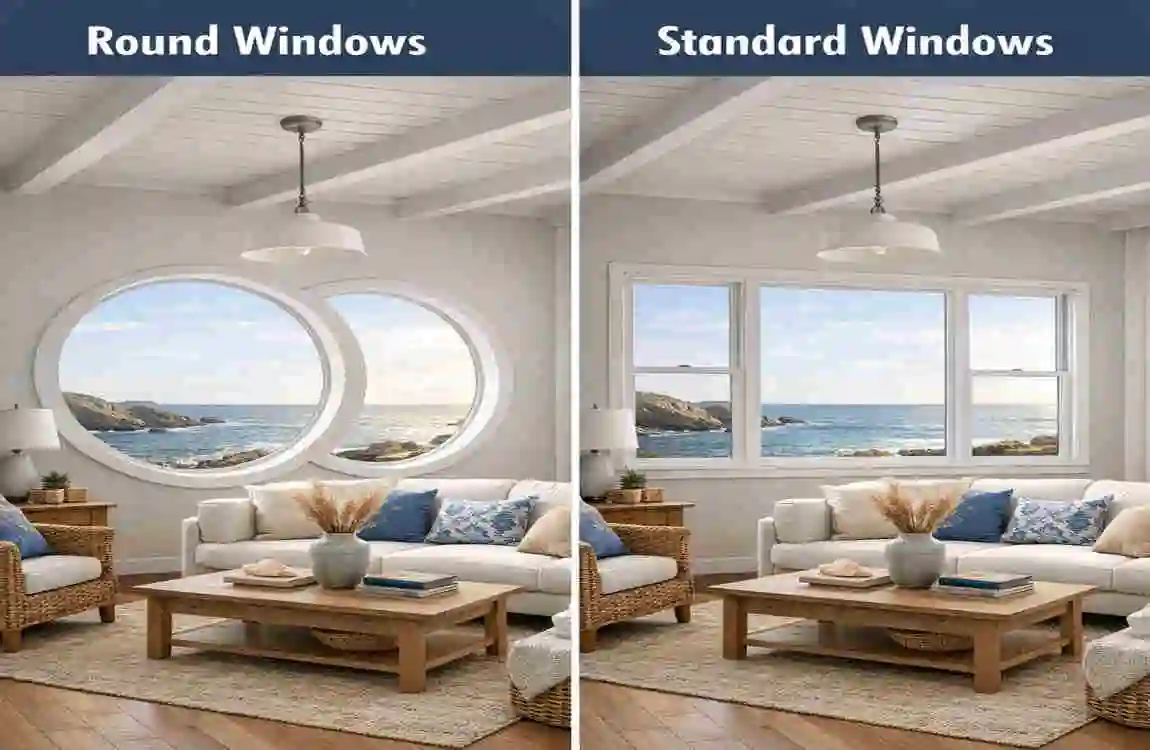
Aesthetic Appeal and Architectural Impact
- Explain how round windows break the monotony of straight lines and add visual interest.
- Describe their ability to act as focal points in a room or exterior design.
Natural Lighting Benefits
- Discuss how round windows disperse natural light more evenly than rectangular ones.
- Highlight their ability to brighten small, dark spaces, such as hallways or bathrooms.
Ventilation Options
- Discuss operable round windows, such as:
- Pivot windows
- Tilt-and-turn windows
Energy Efficiency
- Explain how fixed round windows can reduce energy loss due to fewer seams and gaps.
- Mention modern glazing options, such as low-E coatings and insulated glass.
Materials and Customisation
- List common materials:
- UPVC – Affordable and low-maintenance.
- Aluminium – Sleek and modern.
- Wood – Traditional and warm.
- Highlight customisation options, such as:
- Divided-lite patterns
- Frosted or stained glass
Where to install Round Windows in a House
Bathrooms
- Explain how small round windows provide privacy and natural light.
Attics and Lofts
- Discuss their use in dormers, gables, and attics to create a cosy, well-lit feel.
Living Rooms and Foyers
- Describe how large circular or rose windows can act as statement pieces.
Pros and Cons of Round Windows
Advantages
- Add architectural uniqueness.
- Provide better light diffusion.
- Require less maintenance for fixed models.
Disadvantages
- Higher costs due to custom fabrication.
- Limited size options compared to rectangular windows.
- Round Windows vs Rectangular Windows
Feature Round Windows Rectangular Windows
Aesthetic Impact: Unique and eye-catching, Neutral and functional
Light Distribution: Even, soft light, Focused light, depending on placement
Cost Usually higher (custom-made) More affordable (standard sizes)
Installation requires skilled professionals. Easier installation
Design Tips for Using Round Windows in Your Home
Choosing the Right Style
- Align window styles with your home’s architecture (e.g., porthole for coastal homes).
Incorporating Window Treatments
- Recommend curtains, blinds, or shutters for privacy and style.
Maintenance Tips for Round Windows
Cleaning Curved Glass
- Provide tips for cleaning with microfiber cloths and non-abrasive cleaners.
Inspecting Seals and Frames
- Suggest regular inspections to check for air leaks or condensation.
How to Choose a Supplier for Round Windows
- Ask about materials, glazing options, and warranties.
- Ensure the supplier offers customisation and professional installation services.
Why Round Windows Are Trending
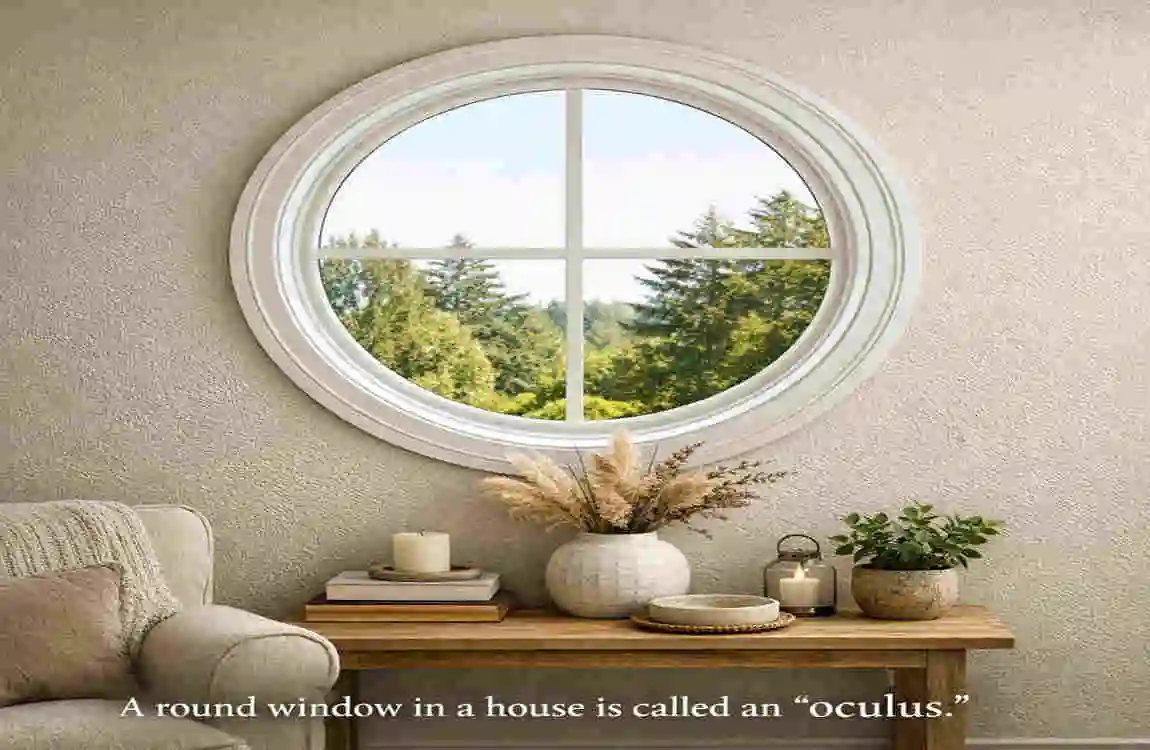
- Discuss how round windows align with modern minimalist and luxury trends.
- Highlight their popularity in social-media-friendly home designs.
FAQ (Short)
Q: What is an oculus window?
A: An oculus is a circular (round) window often used for decorative light and architectural style.
Q: Are round windows ever called something else?
A: Yes, they can also be called:
- Bullseye window
- Porthole window (especially in nautical-style homes)
Q: Where are oculus windows usually installed?
A: They are often placed in attics, stairwells, gables, or above doors for natural light and design appeal.
Q: Are round windows functional or just decorative?
A: They can be both—some open for ventilation, while others are fixed for aesthetics.
Q: What architectural styles use round windows?
A: Common in classical, Victorian, and modern designs.
| Feature | Description |
|---|---|
| Unique visual style | Circular shape breaks up straight‑lined façades and creates a focal point. |
| Soft, even natural light | Curved edges spread light more evenly, reducing harsh shadows in rooms. |
| Space‑efficient placement | Fits well in stairwells, hallways, attics, and small walls where squares don’t. |
| Often fixed (non‑opening) | Most round windows are fixed, which boosts energy efficiency and reduces drafts. |
| Strong curb appeal | Adds artistic detail and raises exterior visual interest on many home styles. |
| Design flexibility | Works with traditional, craftsman, Victorian, or modern designs. |
| Low maintenance | Fewer moving parts mean less wear and simpler cleaning versus standard windows. |