It is a busy night in Lahore, and the sounds of the city are buzzing just outside your window. You are exhausted from a long day at work, but the moment your head hits the pillow, your brain decides it is time to run a marathon. You toss. You turn. The room feels a little too warm, the glow from a streetlamp is sneaking through the curtains, and your phone keeps buzzing with late-night notifications.
If you are wondering how to make a smart bedroom, you are in the perfect place. A smart bedroom transforms your standard sleeping quarters into a deeply restful, highly efficient, and energy-saving sanctuary. We are not talking about complicated wiring or tearing down walls. We are talking about simple, affordable tech additions that almost anyone can set up in minutes.
The Brilliant Benefits of a Smart Bedroom: Sleep, Savings, and Style
Before we look at the specific gadgets, let us talk about why you should care. Upgrading your bedroom is about much more than just showing off cool gadgets to your friends. It is about actively improving your daily life.
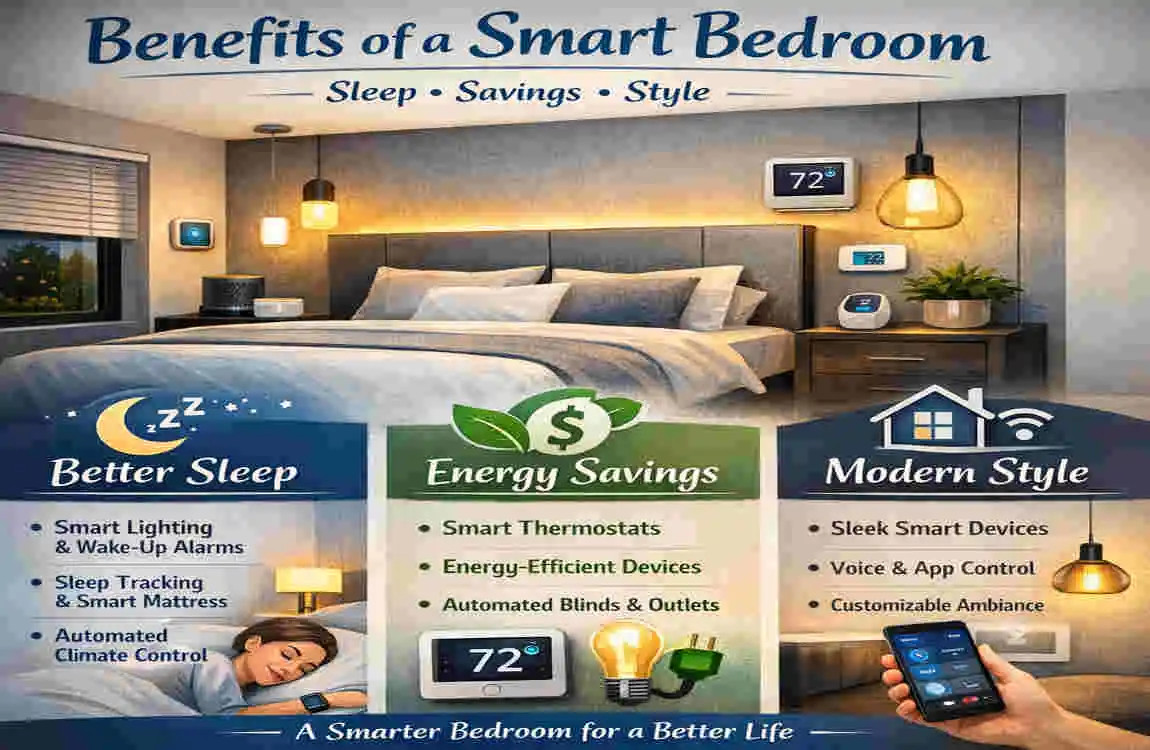
When you learn how to make a smart bedroom, you unlock three incredible benefits.
Experience Deeper, Better Sleep
Your body runs on a natural internal clock called the circadian rhythm. Bright, artificial lights at night confuse this clock. They trick your brain into thinking the sun is still up.
Smart bedroom tech fixes this problem. By reducing harsh blue light and automating your nighttime routines, you tell your brain it is time to rest. In fact, studies show that people using automated sleep environments can fall asleep up to 25% faster.
Keep More Money in Your Pocket
Smart devices are masters of energy savings. We all know the pain of leaving a light on by accident or letting the air conditioner run on full blast when nobody is in the room.
Smart gadgets cut down your utility bills effortlessly. For instance, a smart thermostat can save you 10% to 15% on cooling costs during those sweltering Punjab summers. Over time, these devices pay for themselves.
Elevate Your Room’s Aesthetic Style
Nobody likes a messy room full of tangled cords and bulky machines. The beauty of modern smart technology is its invisible nature.
Sleek, hidden tech elevates your space. It gives your home a modern, minimalist vibe that looks straight out of a luxury interior design magazine.
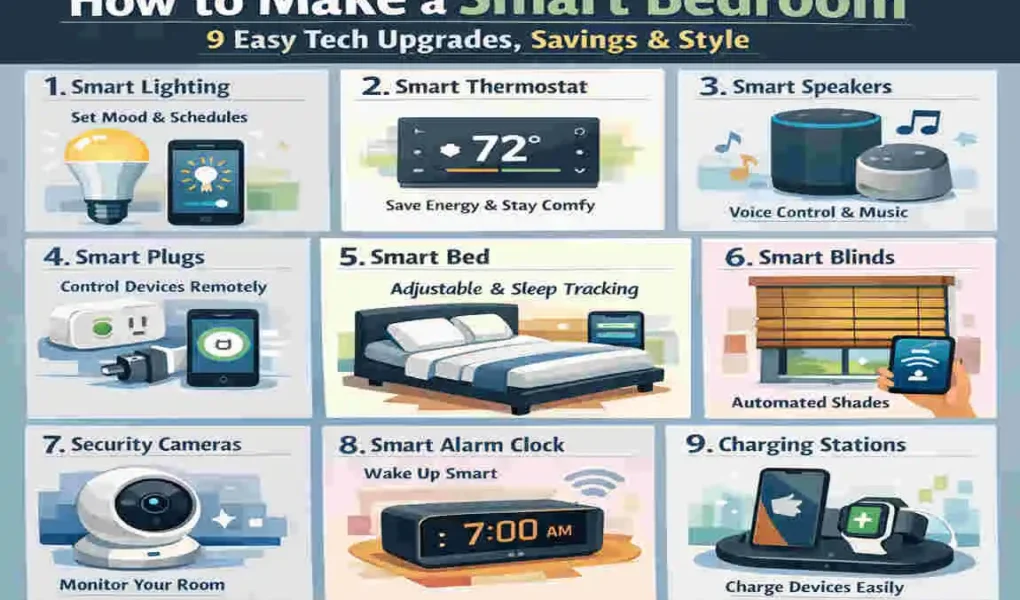
These incredible perks come from easy, straightforward upgrades. Let us break down the nine best ways to transform your room.
Smart Lighting for Perfect Ambiance
If you want to know how to make a smart bedroom on a tight budget, you should start with the lights. Lighting has a massive impact on your mood and your ability to fall asleep.
Why Smart Lighting Helps
Standard lightbulbs only do two things: turn on and turn off. Smart bulbs do so much more. You can dim them to boost your natural melatonin production (the sleepy hormone). You can also schedule them to slowly brighten in the morning, creating a gentle “sunrise” wake-up call that pulls you out of sleep naturally.
Top Product Picks
- Philips Hue Smart Bulbs: The industry standard for brilliant, reliable smart lighting.
- Govee LED Strips: Perfect for adding a soft, glowing backlight behind your headboard or television.
How to Set It Up Quickly
You do not need an electrician for this. You can do it yourself in just a few steps:
- Screw in the bulb: Replace your old bulb with the smart bulb.
- Install the app: Download the matching app on your phone (takes about 5 minutes).
- Set your sleep routines: Program the lights to shift to warm, dim tones after 9 PM.
- Connect your voice assistant: Link the lights to Alexa or Google Assistant so you can turn them off from bed with your voice.
Savings and Style
Adding motion sensors to your smart lights ensures they turn off the second you leave the room. This simple trick can cut your lighting bill by 10% to 20%. Plus, you can change the colors to match your mood, creating a clean, customizable look for your minimalist bedroom.
Smart Thermostat for Ideal Sleep Temps
Waking up in a pool of sweat is the worst way to start the day. Temperature plays a massive role in how well we sleep.
Why a Smart Thermostat Helps
Sleep experts agree that the optimal temperature for deep, uninterrupted sleep is between 18°C and 22°C (65°F to 72°F). A smart thermostat automatically adjusts the climate to keep you right in this sweet spot. It even adapts to variable weather, which is perfect for places with unpredictable temperature swings.
Top Product Picks
- Nest Learning Thermostat: A sleek device that actually learns your daily schedule over time.
- ecobee Smart Thermostat: Comes with extra room sensors to ensure your specific bedroom is the perfect temperature.
How to Set It Up Quickly
- Mount the device: Follow the simple instructions to replace your old wall thermostat and connect the new one to your home Wi-Fi.
- Program a “sleep Mode”: Use the app to ensure the temperature drops right before your bedtime.
- Use geofencing: This cool feature tracks your phone’s location. If you leave the house, the AC turns off. When you drive back into your neighborhood, it turns the AC back on to cool your room before you arrive.
- Link bedroom sensors: Place a small sensor on your nightstand so the thermostat reads the temperature right where you sleep.
Savings and Style
By cutting out wasted cooling and heating, you can slash up to 15% off your electricity bill. This makes it an incredibly eco-friendly choice for urban homes. Design-wise, these wall-mounted devices feature beautiful glass displays that blend seamlessly into any modern wall.
Blackout Smart Blinds for Light Control
Light pollution from streetlamps and early morning sun rays can completely ruin your rest. Smart blinds offer the ultimate solution.
Why Smart Blinds Help
Smart blackout blinds physically block out the morning sun. If you work late shifts and need to sleep during the day, these are absolute game-changers. You can also program them to close slowly at dusk, mimicking the natural setting sun to help your brain wind down faster.
Top Product Picks
- Somfy Motorized Blinds: High-end, custom-fit blinds with whisper-quiet motors.
- IKEA FYRTUR: A highly affordable, battery-operated option that looks fantastic.
How to Set It Up Quickly
- Choose your style: You can buy entirely new motorized blinds, or buy special retrofit kits that attach a smart motor to the beaded chain of your existing blinds (no drilling required!).
- Schedule via the app: Set your blinds to open automatically at 7:00 AM to wake you up with natural sunlight.
- Add weather integration: You can actually connect your blinds to local weather reports. If a massive heatwave hits your city, the blinds will automatically close to keep the hot sun out of your room.
Savings and Style
Keeping the harsh afternoon sun out of your bedroom reduces the amount of work your air conditioner has to do. This simple action reduces your daily AC usage by roughly 10%. Furthermore, these blinds come in sleek fabrics and neutral tones that look incredibly Premium.
Smart Speakers for Soothing Sounds
Sometimes, the silence of a bedroom is too loud. Every creaking floorboard or distant car horn can jolt you awake. This is where a smart speaker shines.
Why Smart Speakers Help
According to the Sleep Foundation, listening to steady white noise, soft rainfall, or guided sleep meditations can improve your overall sleep quality by up to 38%. A smart speaker provides high-quality Audio without requiring you to look at the bright, stimulating screen of your smartphone.
Top Product Picks
- Amazon Echo Dot: A compact, affordable speaker with a built-in digital clock.
- Google Nest Mini: A tiny, pebble-shaped speaker that blends into your decor perfectly.
How to Set It Up Quickly
- Find the perfect spot: Place the speaker right on your bedside table.
- Create a sleep routine: Use the app to create a “Goodnight” command. When you say, “Alexa, goodnight,” the speaker can turn off your smart lights, lower your smart thermostat, and start playing a calming rainstorm playlist.
- Use it as a hub: This speaker acts as the voice command center for all the other gadgets in your room.
Sleep-Tracking Wearables & Mats
You cannot improve what you do not measure. If you want to master how to make a smart bedroom, you need to understand exactly how your body sleeps.
Why Sleep Trackers Help
Sleep trackers monitor your heart rate, body temperature, and nighttime movements. They figure out exactly how much light sleep, deep sleep, and REM (dreaming) sleep you get. By analyzing this data, you can make personalized tweaks to your daily routine.
Top Product Picks
- Oura Ring: A tiny, stylish ring that tracks an incredible amount of health data from your finger.
- Eight Sleep Pod: A smart cover that goes over your mattress, tracking your sleep without you having to wear anything at all.
How to Set It Up Quickly
- Sync the device: Connect your wearable or mat to its dedicated smartphone app.
- Review your morning data: Check your “sleep score” every morning while you drink your coffee. Find out if that late-night cup of tea actually ruined your deep sleep.
- Set smart alarms: These devices know what stage of sleep you are in. They will wake you up during your “lightest” sleep phase, ensuring you never wake up feeling groggy.
Savings and Style
Tracking your sleep prevents you from overspending on useless sleep aids or heavy medications. You will discover exactly what natural fixes your body needs. The Oura ring, in particular, looks just like a piece of high-end jewelry.
Smart Plugs for Clutter-Free Charging
Smart plugs are the unsung heroes of the smart home world. They turn “dumb” appliances into highly intelligent devices in seconds.
Why Smart Plugs Help
Do you charge your phone overnight? Do you have a fan or a reading lamp that you always forget to turn off? Smart plugs allow you to schedule power shutoffs. You can easily cut power to devices that emit electromagnetic fields (EMF) or annoying blue standby lights while you sleep.
Top Product Picks
- TP-Link Kasa Smart Plug: Reliable, incredibly affordable, and easy to connect.
- Meross Smart Wi-Fi Plug: Great for Apple HomeKit users who want seamless integration.
How to Set It Up Quickly
- Plug it into the wall: Push the smart plug into your standard wall outlet.
- Connect your device: Plug your phone charger, fan, or lamp directly into the smart plug.
- Automate the power: Set a timer on your phone so the plug completely cuts power to your charger at 2:00 AM, protecting your phone’s battery health.
Savings and Style
Did you know that appliances still drain electricity even when they are turned off? This is called “phantom power” or “vampire energy.” By using smart plugs to cut the power completely, you can reduce your monthly energy bills by 5% to 10%. They also help hide messy cords, keeping your room’s aesthetic clean and sharp.
Air Quality Monitors & Purifiers
We breathe deeply when we sleep. If the air in your bedroom is full of dust, pollen, or pollution, your body has to work overtime, leading to snoring, dry mouths, and restless tossing.
Why Air Purifiers Help
Clean air combats heavy city pollution—an especially big issue in bustling cities like Lahore. A smart air purifier actively monitors the air quality in your room. When it detects an increase in dust or allergens, it automatically kicks into high gear to scrub the air clean, aiding your breathing for a much better rest.
Top Product Picks
- Dyson Pure Cool: A stunning, bladeless fan that purifies the air and reports data directly to your phone.
- Awair Element: A dedicated monitor that tracks toxins, humidity, and temperature in real-time.
How to Set It Up Quickly
- Find an open space: Place the purifier near your nightstand or in the corner of the room where air flows freely.
- Enable auto-mode: Let the machine do the thinking. It will run quietly in the background and only speed up when the air quality drops.
- Check app alerts: Your phone will notify you if humidity drops too low or if allergens spike, allowing you to close your window before things get worse.
Savings and Style
Healthier sleep in a clean environment means you wake up feeling refreshed. You will experience fewer allergies, fewer headaches, and ultimately, fewer sick days taken off from work. These modern purifiers boast sleek, futuristic designs that look like pieces of modern art.
Smart Mattress Toppers for Supreme Comfort
If you love the feeling of flipping your pillow to the “cool side,” you are going to love a smart mattress topper absolutely.
Why Smart Toppers Help
These high-tech covers feature active temperature-regulating layers. If you are a naturally “hot sleeper,” the topper pumps cool water or air underneath your body all night long. If your partner is always freezing, dual-zone toppers allow them to turn up the heat on their side of the bed without affecting yours.
Top Product Picks
- Perfectly Snug: A topper that uses gentle airflow to keep your body dry and perfectly chilled.
- ChiliPad: A water-based system that offers extreme temperature control, from freezing cold to toasty warm.
How to Set It Up Quickly
You do not need to buy a brand-new mattress for this upgrade.
- Strap it down: Place the topper over your current mattress and zip it or strap it into place like a fitted sheet.
- Connect the hub: Plug the small control hub into the wall and slide it under your bed.
- Set your temperature: Use your smartphone app to set your ideal sleep temperature. The bed will be perfectly cool before you even pull back the covers.
Central Smart Hub for Seamless Control
Now that you have all these amazing gadgets, you need a way to control them effortlessly. You do not want to open five different apps to get ready for bed.
Why a Smart Hub Helps
A central smart hub unifies all of your new devices into one, easy-to-use digital dashboard. It serves as the “brain” of your smart bedroom, allowing your lights, thermostat, blinds, and speakers to talk to one another seamlessly.
Top Product Picks
- Amazon Echo Show: Features a bright touchscreen and excellent voice recognition.
- Samsung SmartThings Hub: A powerful system that connects hundreds of different gadget brands together behind the scenes.
How to Set It Up Quickly
- Connect your accounts: Log into the hub and link your Philips, Nest, and smart plug accounts.
- Build a master routine: Create the ultimate “Bedtime Mode.” With a single tap on the screen, your door locks, your blinds roll down, your lights fade to zero, and your white noise begins to play.
- Use voice or gesture control: Control your entire room just by speaking or waving your hand in front of the screen.
Implementation Tips: Budget, Compatibility & Setup
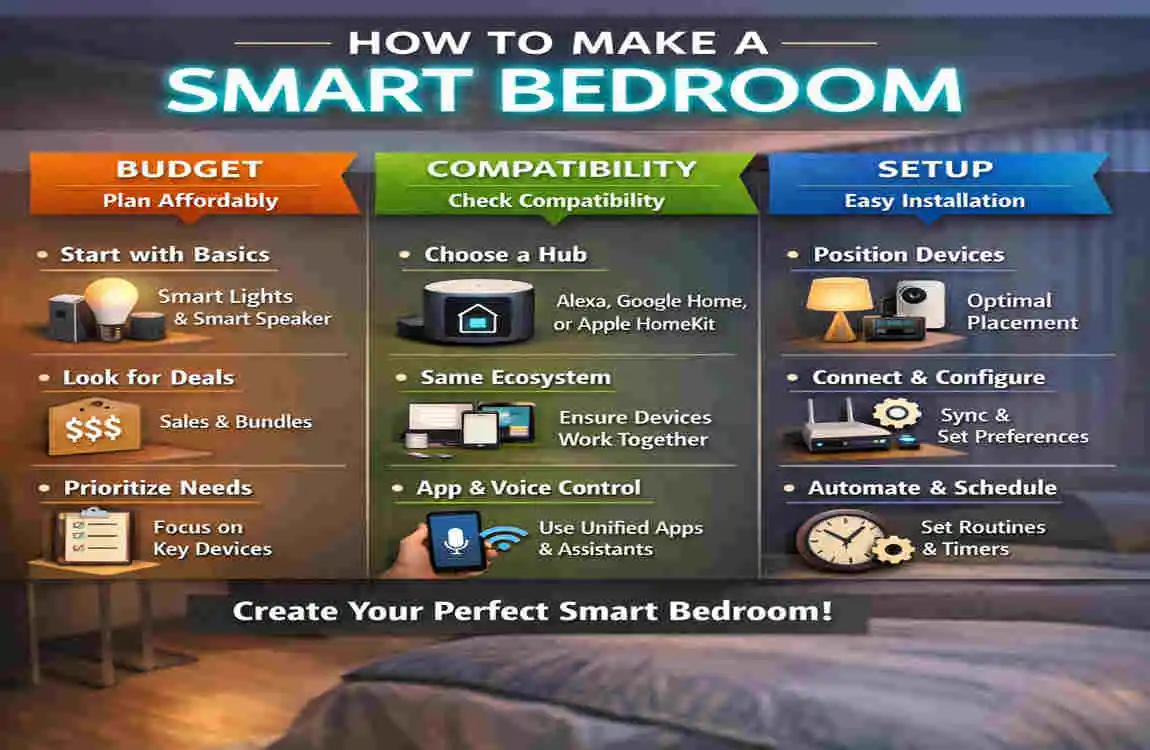
Learning how to make a smart bedroom seems overwhelming at first. You might be wondering how much all of this is going to cost and how hard it is actually to run.
Do not worry! You do not have to buy everything at once. The smartest approach is to build your room step-by-step.
Here is a quick breakdown to help you plan your smart bedroom transformation.
Estimated Budget & Setup Breakdown
Smart Device Estimated Cost Range Setup Time Difficulty Level
Smart Bulbs (2-pack) $25 – $80 5 mins Very Easy
Smart Plugs (2-pack) $15 – $30 5 mins Very Easy
Smart Speaker/Hub $40 – $100 10 mins Easy
Smart Thermostat $130 – $250 30 mins Medium
Smart Blinds $150 – $400 45 mins Medium
Sleep Tracker $200 – $350 10 mins Easy
Air Purifier $150 – $400 5 mins Very Easy
Smart Mattress Topper $400 – $800 20 mins Medium
Crucial Compatibility Checklist
Before you hit the checkout button, you must pick an “ecosystem.” Decide early on if you want to use Amazon Alexa, Google Assistant, or Apple HomeKit.
Always look at the product box (or online description) to make sure the gadget works with your chosen system. Mixing and matching ecosystems can lead to frustrating setup processes.
Watch Out for Common Pitfalls
The most common mistake people make is ignoring their internet connection. Smart devices rely heavily on Wi-Fi.
If you live in a home with thick brick walls, your bedroom might have a weak internet signal. Before installing your new gadgets, check the Wi-Fi bars on your phone while lying in bed. If the signal is weak, consider buying an affordable Wi-Fi extender and plugging it into the hallway outside your bedroom door.
Frequently Asked Questions
What is the cheapest way to start a smart bedroom? The absolute best starting point is a combination of a smart plug and a smart bulb. For under $40, you can automate your bedroom lighting and protect your phone charger from draining phantom power. It gives you an instant taste of the smart home life.
Do I need an electrician to install these devices? Not at all! Over 90% of modern smart bedroom gadgets are “plug-and-play.” Smart bulbs screw in like regular bulbs, and smart plugs push into your wall outlet. The only device that requires a screwdriver is the smart thermostat, but the apps provide foolproof, step-by-step video guides.
Is it safe to have Wi-Fi devices in my bedroom while I sleep? Yes, it is entirely safe. The radio frequency emissions from standard smart home gadgets are incredibly low—much lower than the cellular signal coming from the smartphone sitting on your pillow. If you are still worried, use a smart plug to completely cut the power to your Wi-Fi router or devices at midnight.
Will my smart gadgets stop working if the internet goes down? It depends on the device. Your smart bulb will still work like a normal bulb if you flick the physical wall switch. However, you will temporarily lose the ability to change colors or use voice commands until the Wi-Fi comes back online.
Can smart tech really cure my insomnia? While technology is not a medical cure for chronic insomnia, it absolutely creates the perfect environment for sleep. By controlling light, temperature, and noise, you remove the environmental triggers that keep your brain awake, making it drastically easier for you to drift off naturally.