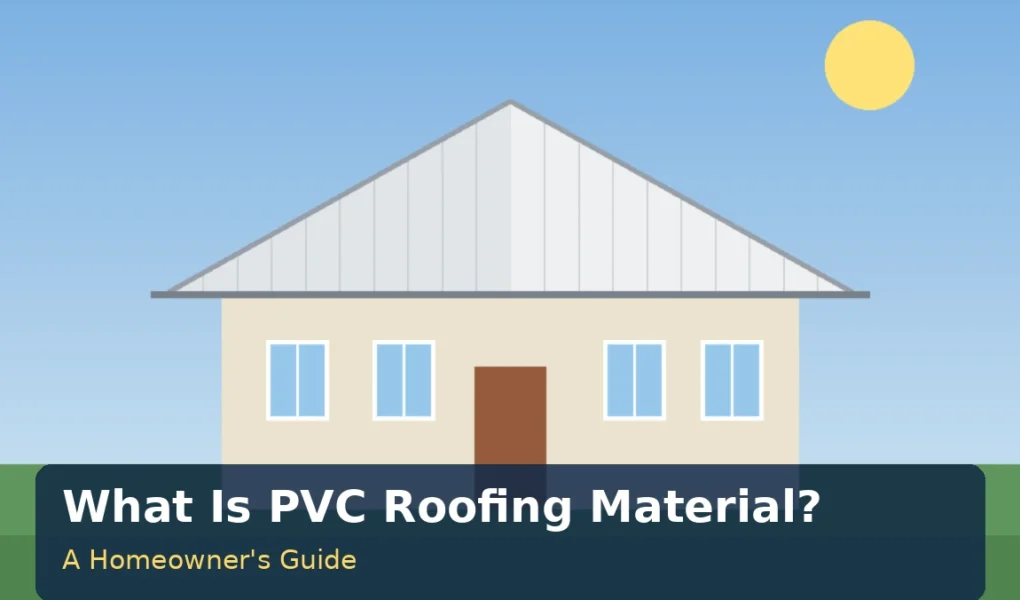
PVC roofing material is a single-ply waterproof membrane made from polyvinyl chloride, used mainly on flat and low-slope roofs. Sheets are laid over the roof and their seams are heat-welded into one continuous, watertight layer. A well-installed PVC roof typically lasts 20 to 30 years.
PVC roofing is a single-ply membrane designed for flat or low-slope roofs, installed in sheets and heat-welded to form a continuous waterproof barrier. It is a thermoplastic, which means it softens with heat and fuses back together as it cools. GAF, one of North America’s largest roofing manufacturers, notes this gives PVC heat-welded seams similar to TPO.
How Does PVC Roofing Work?
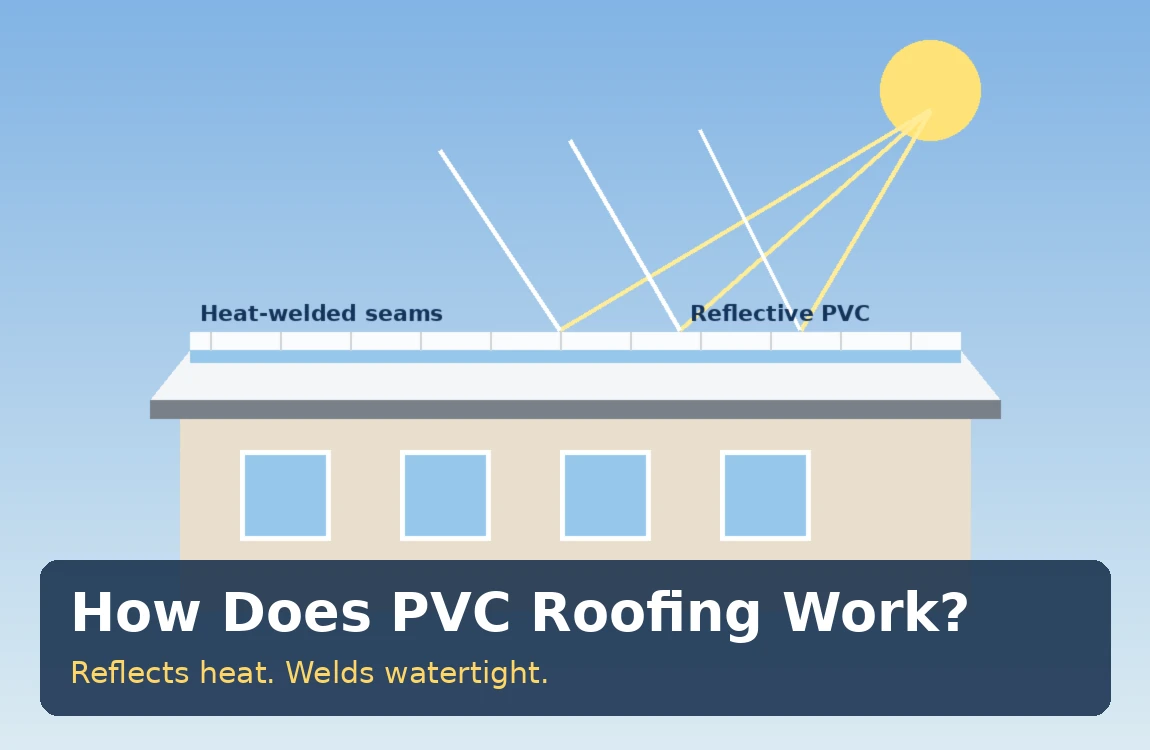
Installers roll out the membrane over roof insulation, then use hot-air tools to melt the overlapping edges and press them together with a roller. Roof Online reports these tools heat the edges to roughly 1,100°F. Once cooled, the seam becomes one piece of material.
The membrane can be fully adhered, mechanically fastened, or induction-welded. Flashings around vents, chimneys, and roof edges are welded the same way, which is why PVC handles tricky details so well.
Main Benefits of PVC Roofing
- Strong seams: According to Sika Sarnafil, welded seams don’t break down over time like glued or taped seams.
- Chemical and grease resistance: Roofing Contractor magazine lists chemical resistance, fire resistance, and energy efficiency among PVC’s key advantages.
- Energy efficiency: White PVC reflects sunlight, which helps keep the home cooler in hot weather. The U.S. Department of Energy explains how cool roofs lower roof surface temperatures and cooling demand.
- Long life: A properly installed and maintained 60-mil fully adhered membrane can last around 25 to 30 years.
- Low maintenance: Routine inspections and occasional cleaning are usually enough.
Drawbacks to Consider
- Higher upfront cost: PVC generally costs more than TPO, the other major heat-welded membrane.
- Plasticizer loss: Over many years, plasticizers can migrate out of some older, non-reinforced membranes, making them brittle, as Roofing Contractor explains.
- Skilled installation needed: Poor welding shortens roof life regardless of membrane quality.
- Not for steep roofs: It suits flat and low-slope areas, not pitched shingle-style roofs.
PVC vs TPO vs EPDM
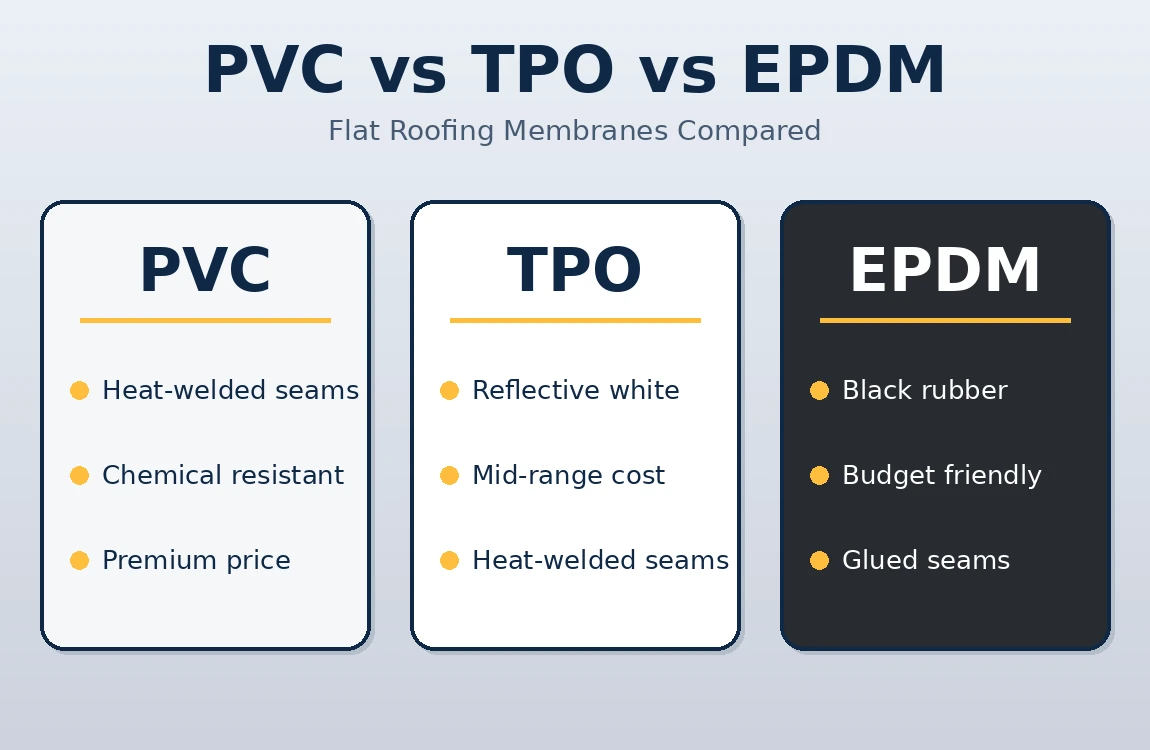
| Feature | PVC | TPO | EPDM |
|---|---|---|---|
| Material type | Thermoplastic | Thermoplastic | Thermoset (rubber) |
| Seams | Heat-welded | Heat-welded | Glued or taped |
| Typical lifespan | 20-30 years | 15-20+ years | Varies by thickness |
| Upfront cost | Higher | Mid | Often lowest |
| Chemical resistance | Excellent | Good | Moderate |
Per GAF’s building science team, EPDM seams must be glued or taped, which can mean more ongoing repairs. Lifespan estimates for TPO come from Homedit.
How Much Does PVC Roofing Cost?
Costs vary by region, roof size, and condition. Labor alone typically runs $3 to $7 per square foot, and total installed prices are usually higher than EPDM or TPO. Get at least three quotes and ask each contractor about weld testing and warranty terms.
Where Is PVC Roofing Used at Home?
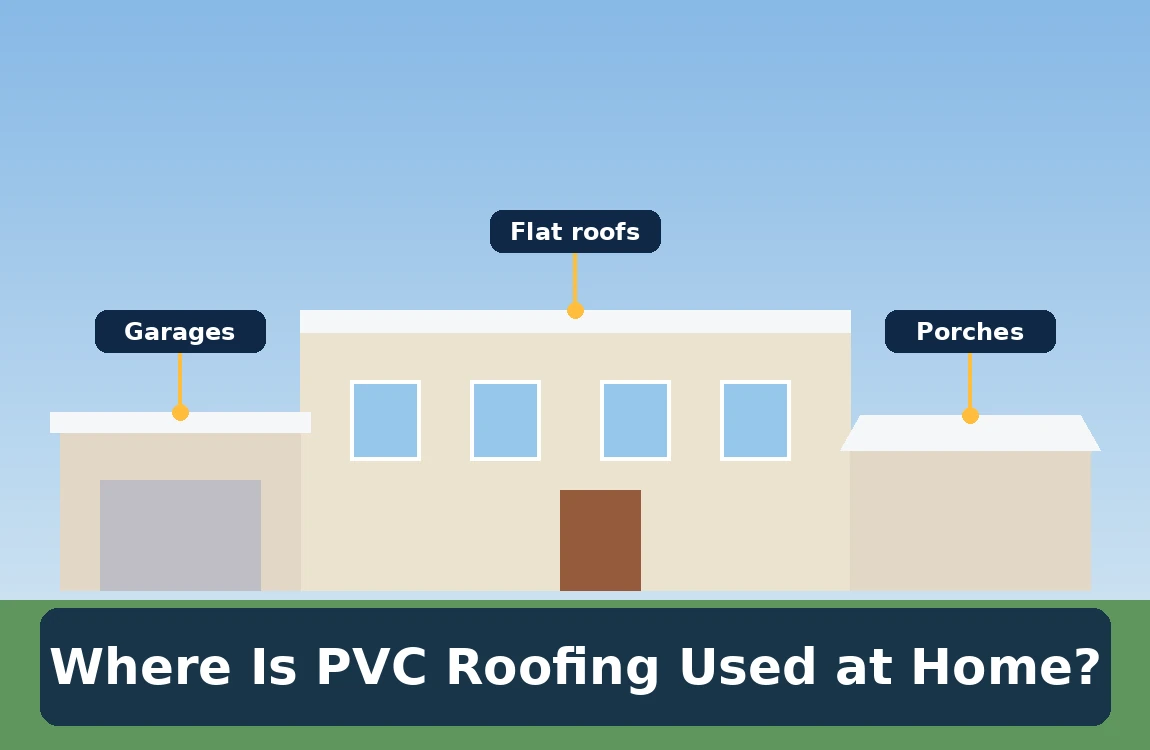
- Flat roofs on extensions and garages
- Low-slope porch and patio roofs
- Dormer and balcony roofs
- Rooftop terraces and green roof bases
How to Make a PVC Roof Last Longer
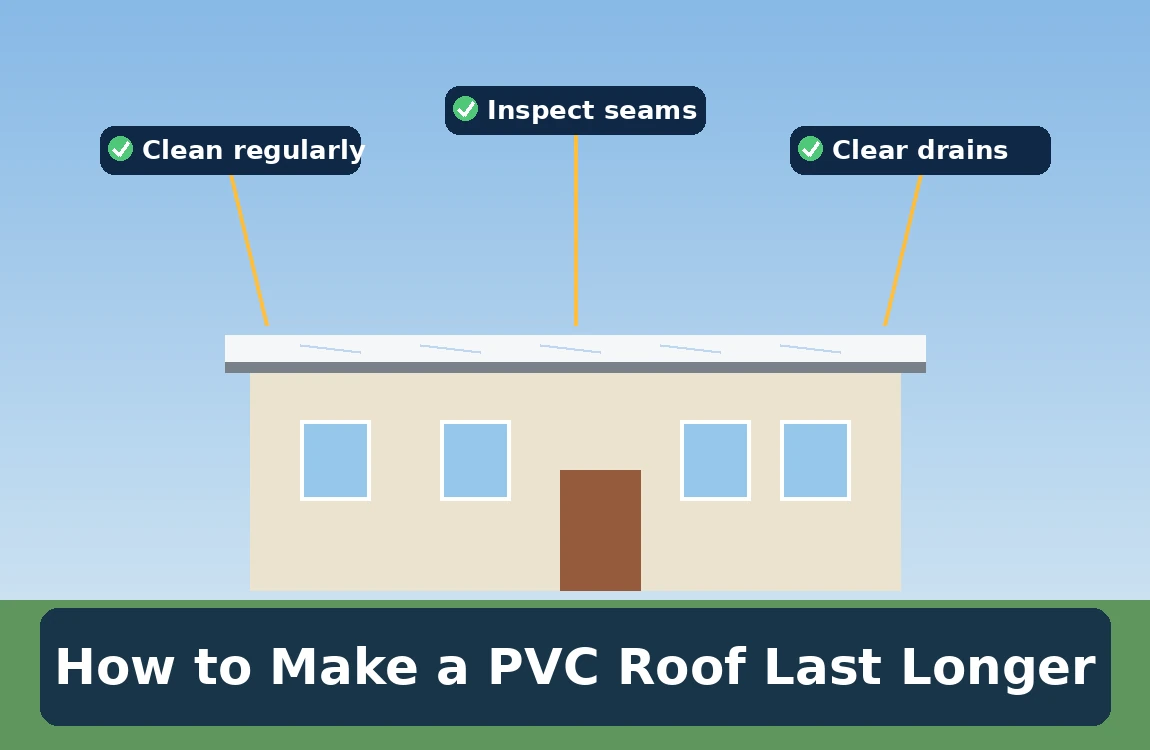
- Hire a certified installer who tests weld quality.
- Inspect the roof twice a year and after major storms.
- Keep drains, gutters, and scuppers clear to avoid ponding water.
- Repair punctures quickly with heat-welded patches.
- Limit foot traffic and use walkway pads where needed.
Frequently Asked Questions
What is PVC roofing material made of?
It is made from polyvinyl chloride, reinforced with polyester or fiberglass and blended with plasticizers for flexibility and UV stabilizers for sun protection.
How long does a PVC roof last?
Typically 20 to 30 years with proper installation and maintenance, according to EngineerFix.
Is PVC roofing waterproof?
Yes. Heat-welded seams form a continuous waterproof layer, which is why PVC is widely used on flat roofs.
Is PVC roofing better than TPO?
PVC usually offers better chemical resistance and a longer track record, while TPO costs less. The better choice depends on your budget, climate, and roof design.
Can PVC roofing be used on a house?
Yes, on flat or low-slope sections such as extensions, garages, and porches.
Is PVC roofing fire resistant?
PVC has natural fire-resistant properties, noted by Building Enclosure among the key reasons it performs well. Check the specific product’s fire rating for your local code.
Final Thoughts
PVC roofing material is a durable, heat-welded membrane that suits flat and low-slope roofs. It costs more upfront than some options, but its strong seams, chemical resistance, and long lifespan make it a smart choice for many homes. Compare quotes, choose a qualified installer, and keep up with inspections.