

Have you ever stepped into your home after a dry day outside, only to feel like you’ve walked into a sauna? If you’ve found yourself asking, “Why is it more humid in my house than outside?”, you’re not alone. This is a common issue, especially in regions with fluctuating climates.
High indoor humidity can make your home uncomfortable, increase energy bills, and even pose health risks, such as mold growth and allergies. According to experts, indoor humidity levels above 60% can create the perfect environment for these problems to thrive. But don’t worry—this guide will help you uncover the 7 hidden causes of excess indoor humidity and provide easy fixes to restore comfort in your home.
Before we dive into the causes, here’s a quick tip: Start by measuring your indoor humidity with a hygrometer. These devices are affordable (around PKR 2,000) and can give you a clear picture of the problem. Let’s explore the science behind indoor humidity and how to tackle it effectively.
Understanding Relative Humidity Indoors vs. Outdoors
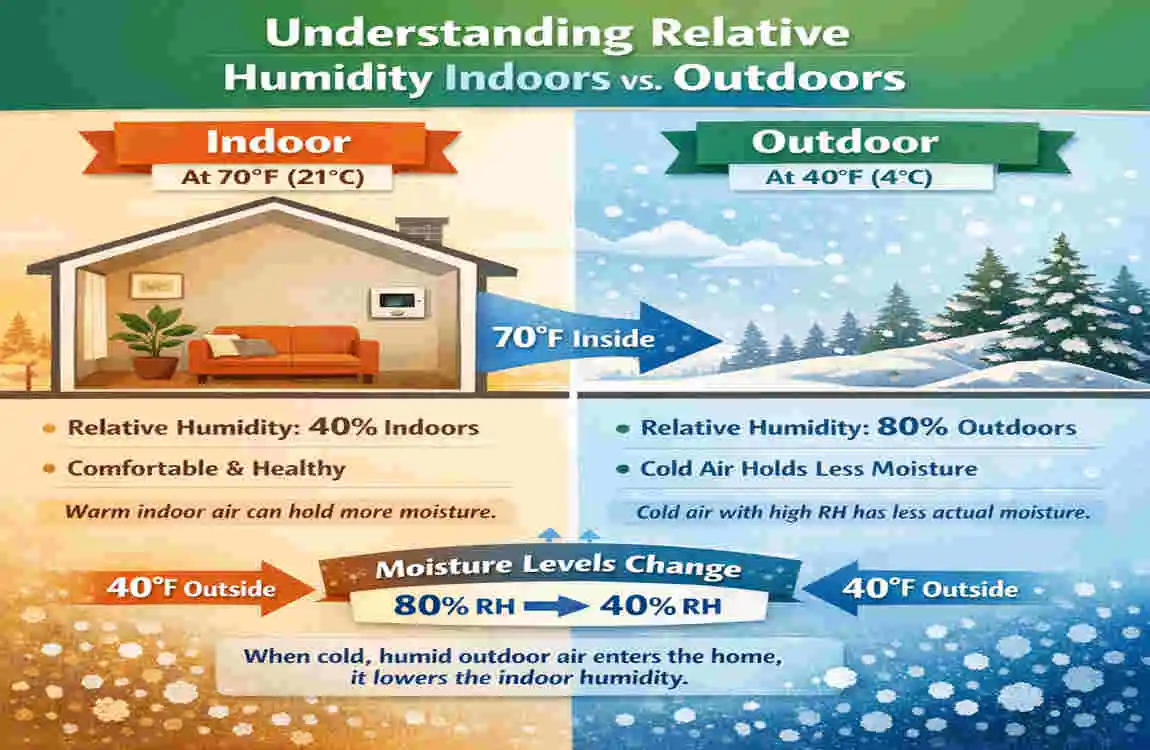
What Is Relative Humidity?
To understand why your home feels more humid than the outdoors, it’s essential to understand relative humidity (RH). RH is the amount of moisture in the air compared to the maximum amount the air can hold at a given temperature. Cooler air holds less moisture, so even a small amount of water vapor can result in high RH indoors.
For example, if your air conditioner cools the air without properly dehumidifying it, the RH indoors can rise significantly—even if the outdoor air feels dry.
Ideal Humidity Levels
The Environmental Protection Agency (EPA) recommends maintaining indoor humidity levels between 30% and 50% for optimal comfort and health. However, during monsoon season, outdoor humidity can infiltrate your home, pushing indoor levels above 60%. This can lead to issues like mold growth, musty odors, and even structural damage.
Here’s a quick table to illustrate the effects of different RH levels:
RH Level Effects on Home & Health
<30% Dry skin, static electricity, cracking wood
30-50% Comfortable, healthy environment
>60% Mold growth, allergies, musty smells
7 Hidden Causes of High Indoor Humidity (And How to Fix Them)
Everyday activities like cooking, showering, and even breathing release moisture into the air. Without proper ventilation, this moisture gets trapped, making your home feel sticky and uncomfortable. Signs of poor ventilation include foggy windows, musty odors, and persistent dampness.
Easy Fix: install Exhaust Fans
- Use exhaust fans in bathrooms and kitchens for at least 20 minutes after use.
- Ensure fans vent air outside, not into the attic.
- For energy-efficient ventilation, consider installing a heat recovery ventilator (HRV) or energy recovery ventilator (ERV).
Cost Estimate: PKR 5,000–10,000
Air Leaks Let Outdoor Moisture In
Leaky windows, doors, and attic spaces can allow humid outdoor air to seep into your home. This is especially problematic in areas near water bodies, like canals, where outdoor humidity levels are naturally higher.
Easy Fix: Seal Gaps with Caulk & Weather stripping
- Perform a DIY smoke test to identify air leaks.
- Use caulk to seal gaps around windows and doors.
- Install weather stripping to improve insulation.
Cost Estimate: PKR 2,000–15,000
Energy Savings: Sealing leaks can reduce energy bills by 15-20%.
Undersized or Faulty AC/HVAC Systems
An oversized air conditioner cools your home quickly but doesn’t run long enough to dehumidify the air. Similarly, dirty filters and clogged drain lines can prevent your HVAC system from effectively removing moisture.
Easy Fix: Service Your AC Regularly
- Clean or replace air filters every 1-3 months.
- Check and unclog drain lines.
- Set your thermostat to 24-26°C for optimal performance.
Cost Estimate: PKR 10,000 for professional servicing
Upgrade Option: install a whole-home dehumidifier (PKR 50,000).
Hidden Plumbing & Pipe Leaks
Slow, undetected leaks from pipes or plumbing fixtures can add gallons of moisture to your indoor air. This is a common issue in older homes with outdated plumbing systems.
Easy Fix: Inspect & Insulate Pipes
- Use a moisture meter to detect hidden leaks.
- Repair leaks with epoxy or replace damaged pipes.
- Insulate cold water pipes to prevent condensation.
Cost Estimate: PKR 5,000–20,000
Damp Crawlspaces or Basements
Moisture from the soil can rise through your home’s foundation, especially if you have a crawlspace or basement. This is a significant issue in humid climates.
Easy Fix: install a Vapor Barrier
- Cover the crawlspace floor with 6-mil plastic sheeting to block moisture.
- Use a dehumidifier to keep the area dry.
Cost Estimate: PKR 20,000–30,000
Pro Tip: Ensure proper drainage around your home to prevent water accumulation.
Indoor Plants & Aquariums Overload
While indoor plants and aquariums add beauty to your home, they also release moisture into the air through transpiration and evaporation. Drying clothes indoors can further exacerbate the problem.
Easy Fix: Limit Moisture Sources
- Move plants outdoors or reduce their number.
- Vent your dryer outside and avoid line-drying clothes indoors.
- Use silica gel or moisture absorbers in closets.
Cost Estimate: Minimal (PKR 500–1,000 for moisture absorbers)
Pro Tip: Group plants in one area to keep humidity in check.
Poor Insulation Traps Humidity
Inadequate insulation allows humid air to condense inside your walls, leading to dampness and potential mold growth.
Easy Fix: Upgrade Insulation
- Focus on insulating your attic and walls with rigid or spray foam insulation.
- Check for specific rebates or incentives for energy-efficient upgrades.
Cost Estimate: PKR 50,000–100,000
Pro Tip: Combine insulation upgrades with air sealing for maximum impact.
Quick Comparison: Causes vs. Fixes
Cause Signs Fix Cost (PKR)Time to Fix
Poor Ventilation Foggy mirrors 5,000–10,000 1 day
Air Leaks Drafts, musty smells 2,000–15,000 Weekend
Faulty AC Short cycles 10,000 service 1 day
Plumbing Leaks Water stains 5,000–20,000 1–2 days
Damp Crawlspaces Musty odors 20,000–30,000 1–2 days
Indoor Plants Excess moisture 500–1,000 Same day
Poor Insulation Condensation 50,000–100,000 1–2 weeks
Prevention & Long-Term Solutions
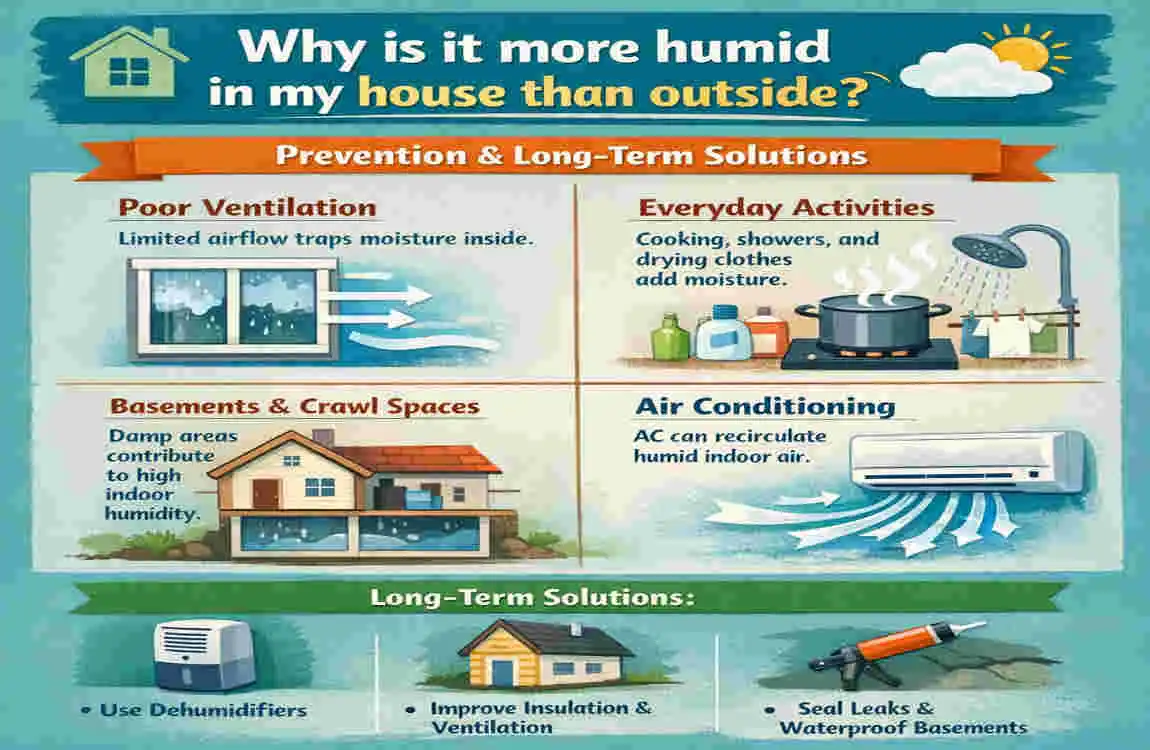
To keep your home’s humidity levels in check, consider these long-term strategies:
- Monitor Humidity: Use a hygrometer or smart sensor to track indoor levels.
- Invest in a Dehumidifier: A whole-home dehumidifier can be a game-changer in humid climate.
- Schedule Annual HVAC Tune-Ups: Regular maintenance ensures your system runs efficiently.
Frequently Asked Questions
Why is it more humid in my house than outside in winter?
Indoor heating systems can dry out the air, but poor ventilation can trap moisture, making it feel humid.
What is the normal humidity level for a home?
Aim for 40-50% RH for comfort and health.
Does an AC increase humidity?
An oversized AC can cool the air too quickly, skipping the dehumidification process.