Rolled roofing is a simple and budget-friendly option for many homeowners. It is often used on sheds, garages, workshops, and low-slope roofs because it is easy to handle and usually costs less than many other roofing materials.
| Cost Factor | Details | Average Price Range |
|---|---|---|
| Material Type | Asphalt, mineral-surfaced, rubberized rolls | $30 – $200+ per roll |
| Cost per Roll | Price of one standard rolled roofing roll | $30 – $120 (typical range) |
| Coverage Area | Area covered by one roll | 100 – 200 sq ft |
| Cost per Sq Ft | Average installation material cost | $0.50 – $1.50 per sq ft |
| Installation (DIY) | Basic tools and adhesives | $50 – $150 (tools/materials) |
| Professional Installation | Labor cost per sq ft | $2 – $5 per sq ft |
| Total Project Cost | Small roof (shed/garage) estimate | $300 – $1,500+ |
If you are planning a small roofing project, one of the first things you may ask is how much a roll of rolled roofing costs. That question matters because the price can change based on material type, thickness, and quality. Some rolls are very affordable, while others cost more because they offer better protection and last longer.
What Is Rolled Roofing?
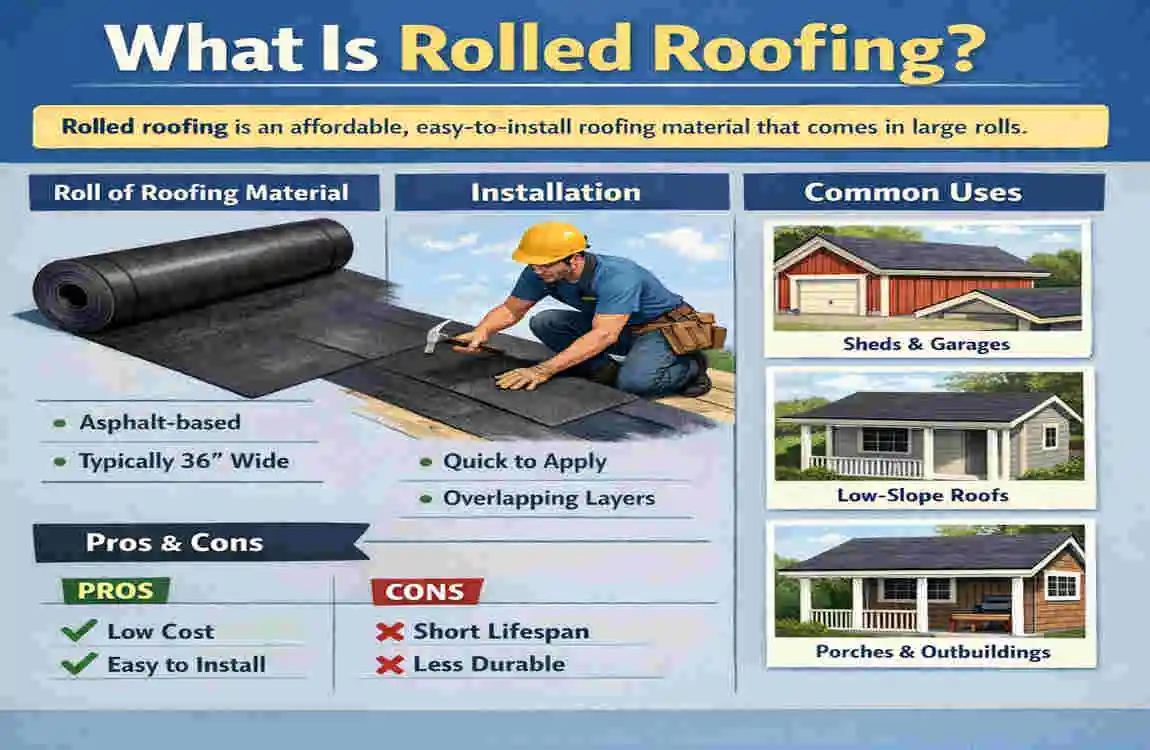
Rolled roofing is a roof covering sold in large rolls rather than individual pieces, such as shingles. It is usually made from asphalt-based material and designed for roofs that do not have a steep slope.
Compared with traditional shingles, rolled roofing is faster to install and less expensive. However, it is also less durable and not as attractive for visible home roofs.
Common Materials Used
- Asphalt-based roofing rolls
- Mineral-surfaced rolls
These materials are often chosen for utility buildings and low-slope surfaces where appearance is less important than cost and function.
Typical Uses
Rolled roofing works well on:
- Sheds
- Garages
- Workshops
- Low-slope residential roofs
Its biggest advantage is price. Its biggest limitation is that it usually does not last as long as more traditional roofing systems.
Average Cost of Rolled Roofing
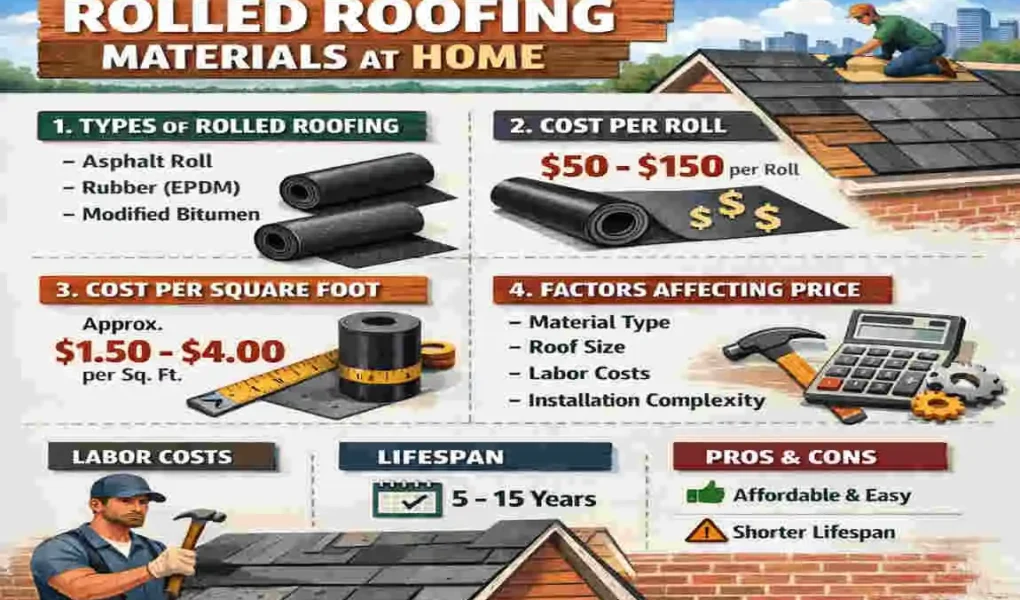
So, how much does a roll of rolled roofing cost on average? The answer depends on the type you choose, but most rolls fall into a wide price range.
Basic rolls may cost around $30 to $60, mid-range options often fall between $60 and $120, and Premium rolls can reach $120 to $200 or more—the more durable the material, the higher the cost.
The price also depends on how much area a roll covers. Many products cover close to 100 square feet, though some larger or thicker rolls may cover more. When you break it down, the cost is often around $0.50 to $1.50 per square foot.
Quick Comparison
Type of Rolled Roofing Price per Roll Coverage Area Durability
Basic asphalt roll Low About 100 sq ft Low
Mineral surface roll Medium 100–200 sq ft Medium
Premium rubberized roll High 100–200 sq ft High
This table makes it easier to compare value, not just price.
Types of Rolled Roofing Materials
There are a few common types of rolled roofing, and each one works a little differently.
Asphalt-Saturated Felt
This is one of the most common and affordable choices. It is simple, lightweight, and best for short-term roofing needs.
Mineral-Surfaced Rolled Roofing
This roof type has a rough, protective surface that helps improve durability and weather resistance. It usually costs more than basic felt.
Rubberized Asphalt Rolls
These are stronger and more flexible. They often cost more, but they handle weather changes better.
Smooth-Surface Roofing Rolls
These are easy to install and often used where appearance is not a major concern. They are usually one of the simpler options.
The main differences between these materials are weather resistance, lifespan, ease of installation, and cost.
Factors That Affect Rolled Roofing Cost
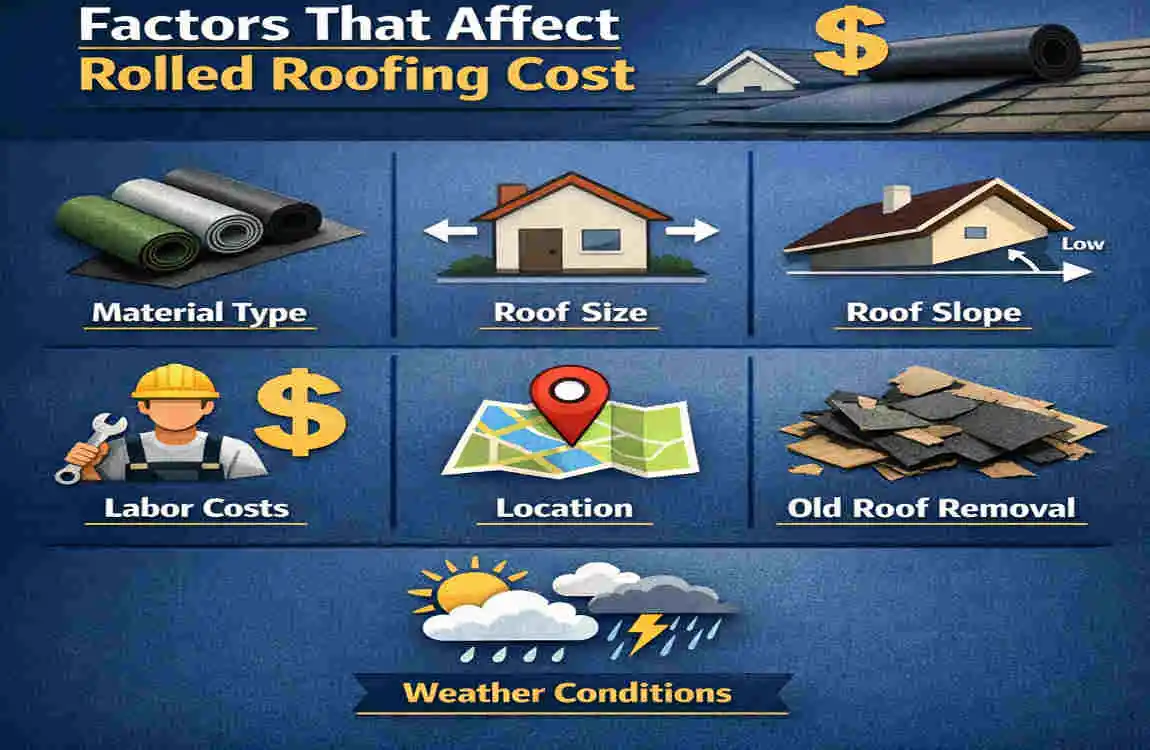
Several things can change the final price of rolled roofing.
Material Quality
Better materials usually cost more, but they often last longer and resist damage better.
Roof Size and Slope
A larger roof needs more material. A steeper or unusual roof can also raise the cost because it takes more time and effort to cover properly.
Labor vs DIY Installation
If you install the roof yourself, you can save money. If you hire a contractor, labor adds to the total cost.
Location and Transport
Prices can change depending on where you live. Delivery and local demand may also affect what you pay.
Brand and Season
Some brands charge more because of their reputation. Prices may also rise during busy roofing seasons and drop during slower months.
Installation Costs of Rolled Roofing
Installation is another major part of the total cost.
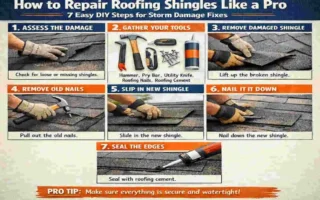
If you choose DIY installation, you may need only basic tools and supplies, such as nails, adhesive, and sealant. This can save money, especially for small projects. Still, you need to be careful with alignment and sealing.
If you hire a professional, labor often costs around $2 to $5 per square foot. This can be worth it if you want a cleaner finish or if the roof is difficult to work on.
Extra materials may include:
- Underlayment
- Roofing nails
- Sealants
- Adhesives
DIY is best for simple projects and experienced homeowners. A contractor is better when the roof is larger, harder to reach, or in poor condition.
Rolled Roofing vs Other Roofing Materials
Rolled roofing is often compared with shingles, metal, and rubber roofing.
Asphalt Shingles
Shingles usually cost more, but they last longer and look better on homes.
Metal Roofing
Metal costs much more upfront, but it offers excellent durability and a much longer life.
Rubber Roofing
Rubber roofing is often more durable than rolled roofing but also more expensive.
Main Differences
- Rolled roofing is cheaper and faster to install.
- Shingles offer better appearance and longer use.
- Metal roofing offers strong long-term value.
- Rubber roofing gives solid weather protection.
If your goal is low upfront cost, rolled roofing is attractive. If you want a longer life, other materials may be better.
How Long Does Rolled Roofing Last?
Rolled roofing usually lasts around 5 to 10 years. That is shorter than many other roofing systems, but it can still be a practical solution for the right project.
Its lifespan depends on the climate, installation quality, and maintenance. Hot sun, heavy rain, and poor sealing can all reduce durability.
Signs it may need replacement include:
- Cracks
- Leaks
- Curling edges
If you notice these problems early, you may be able to repair small damage before it becomes a bigger issue.
Pros and Cons of Rolled Roofing
Rolled roofing has some clear strengths, but it also has limits.
Pros
- Affordable
- Easy to install
- Lightweight
- Good for low-slope roofs
Cons
- Short lifespan
- Less attractive appearance
- More vulnerable to weather damage
- Limited impact on resale value
For small structures, the benefits often outweigh the drawbacks. For a main house roof, many homeowners prefer a longer-lasting option.
Tips to Save Money on Rolled Roofing
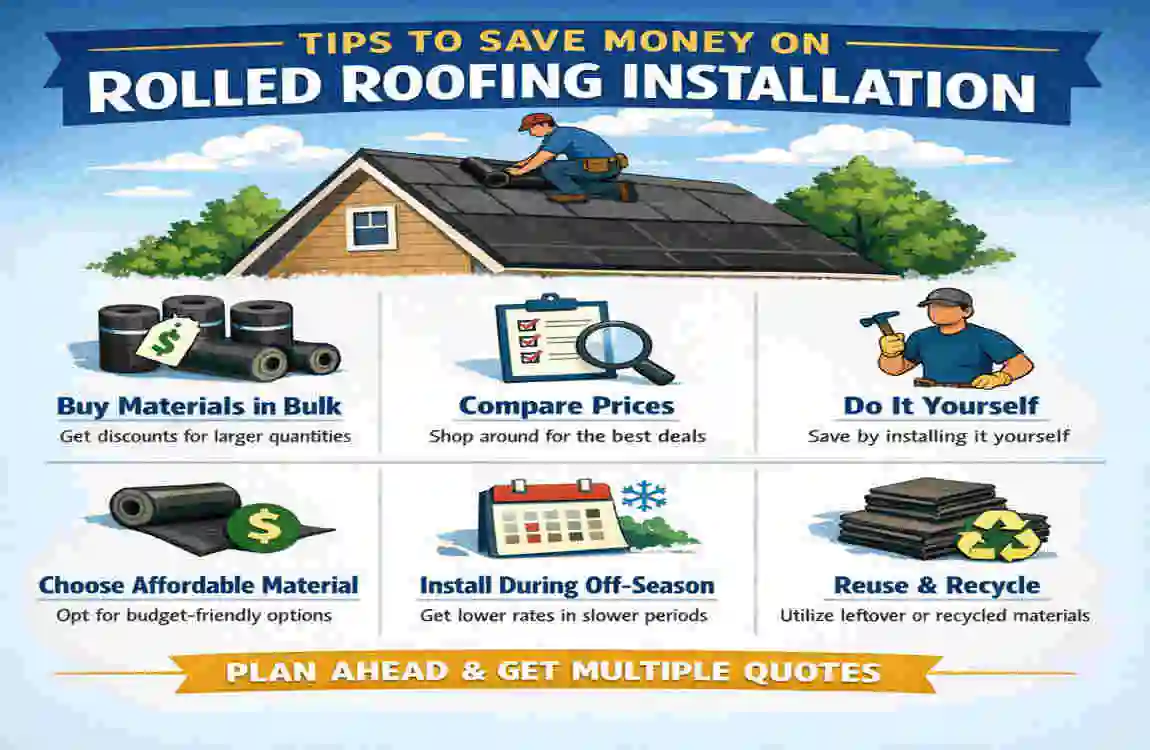
There are a few smart ways to lower your roofing costs.
- Compare suppliers before buying
- Choose mid-grade materials for better balance
- Buy during off-season sales
- Consider DIY if you have the skills
- Maintain the roof regularly to extend its life
Buying the cheapest product is not always the best deal. A slightly better roll may save money later by lasting longer and needing fewer repairs.
Common Mistakes to Avoid
Some roofing problems arise from avoidable mistakes.
- Choosing the lowest price without checking quality
- Skipping surface preparation
- Ignoring slope needs
- Poor sealing or overlapping
- Leaving out underlayment
These mistakes can lead to leaks, weak spots, and a shorter roof life. Good preparation makes a big difference.
Frequently Asked Questions (FAQ)
Q: How much does a roll of rolled roofing cost on average?
Most rolls cost between $30 and $200+, depending on quality, material, and size.
Q: Is rolled roofing cheaper than shingles?
Yes, rolled roofing is usually cheaper upfront than shingles.
Q: Can rolled rbeginners install roofing
Yes, it can be, especially on small and simple roofs. Still, careful measuring and sealing are important.
Q: How many years does rolled roofing last?
It usually lasts 5 to 10 years, depending on the weather and maintenance.
Q: Is rolled roofing waterproof?
It is designed to resist water, but proper installation is key to its performance.