Solar lights are becoming a popular choice for modern homes because they are simple, useful, and energy-saving. Many homeowners now want to know how to install solar lights at home in a way that gives the best results without extra hassle. The good news is that solar lights are easy to set up and can provide bright lighting to your outdoor spaces without increasing your electricity bill.
| Step | What to Do | Key Tip for Best Results |
|---|---|---|
| Choose Location | Select outdoor area with direct sunlight | Avoid shade from trees, walls, or buildings |
| Check Sunlight Hours | Ensure 6–8 hours of sunlight daily | South-facing areas work best |
| Mark Installation Spot | Measure and mark where the light will go | Keep alignment straight and balanced |
| Install Bracket | Drill holes and fix mounting bracket | Use strong screws for stability |
| Attach Solar Light | Mount the light securely on bracket | Adjust angle toward sunlight |
| Position Solar Panel | Set panel for maximum sun exposure | Tilt properly for efficiency |
| Test Light | Cover panel to check automatic ON/OFF | Ensure sensor is working correctly |
| Final Adjustments | Tighten fittings and adjust direction | Ensure waterproof and firm setup |
If you want a clean, affordable, and easy-to-manage lighting option, solar lights are a smart choice. They work by collecting sunlight during the day and using that stored energy at night. This makes them a practical solution for gardens, pathways, walls, driveways, and security areas.
Understanding Solar Lights
What Are Solar Lights?
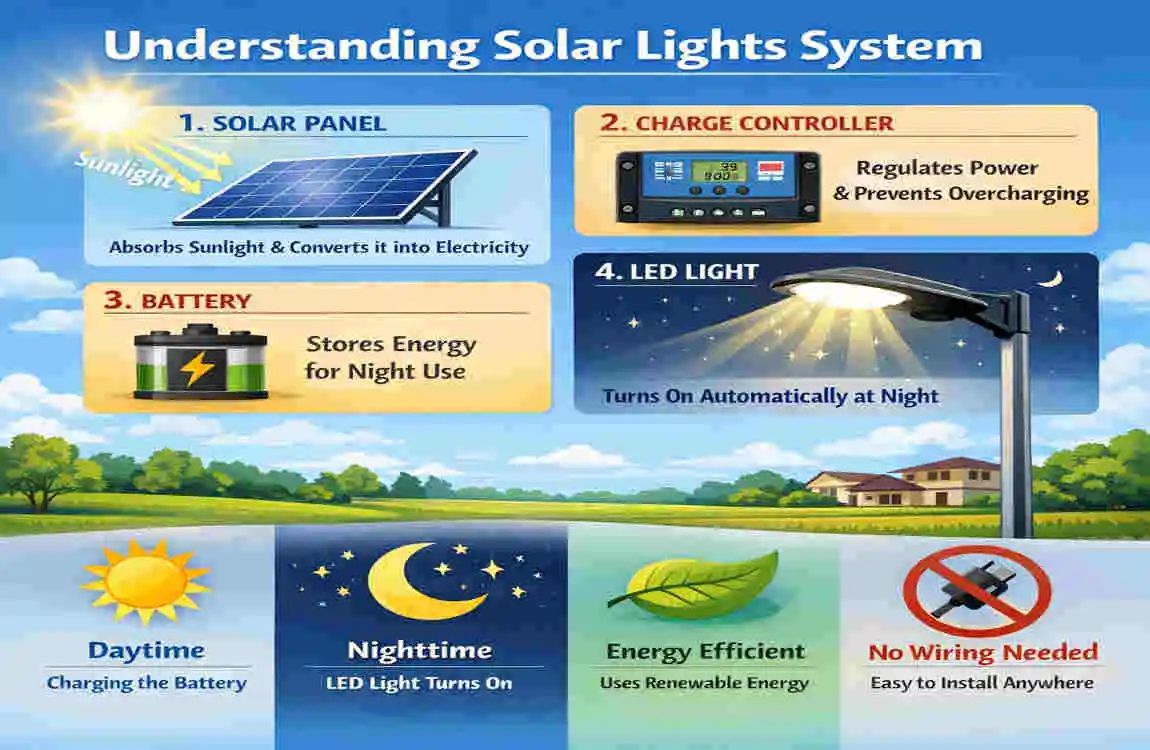
Solar lights are outdoor lights that use sunlight as their power source. They usually include a solar panel, a battery, an LED light, and sometimes a sensor. The solar panel collects sunlight, the battery stores energy, and the LED gives off light after dark.
Types of Solar Lights for Home Use
Type Best Use
Solar garden lights Decorative outdoor spaces
Solar wall lights Walls, porches, and entrances
Solar security lights Safety and motion detection
Solar pathway lights Walkways and driveways
Solar floodlights Large outdoor areas
How Solar Lights Work
During the day, the panel absorbs sunlight and charges the battery. At night, the light turns on automatically and draws power from the stored supply. Some models also have motion sensors, which help save even more energy.
Benefits of Installing Solar Lights at Home
Solar lights offer many useful benefits. They can help lower electricity bills because they do not rely on home power. They are also very easy to install since most models do not need wiring.
Another big benefit is that they are eco-friendly. They use renewable energy, which makes them a better choice for the environment. They also need very little maintenance and can improve home security by lighting dark areas around your house.
Tools and Materials Required
Before you begin, gather the basic tools and check the solar light quality.
You may need:
- Drill machine
- Screws and wall plugs
- Measuring tape
- Screwdriver
- Mounting brackets
- Safety gloves
- Ladder, if needed
When choosing a light, check the battery capacity, brightness, and weather resistance. A strong outdoor light should handle rain, heat, and dust well.
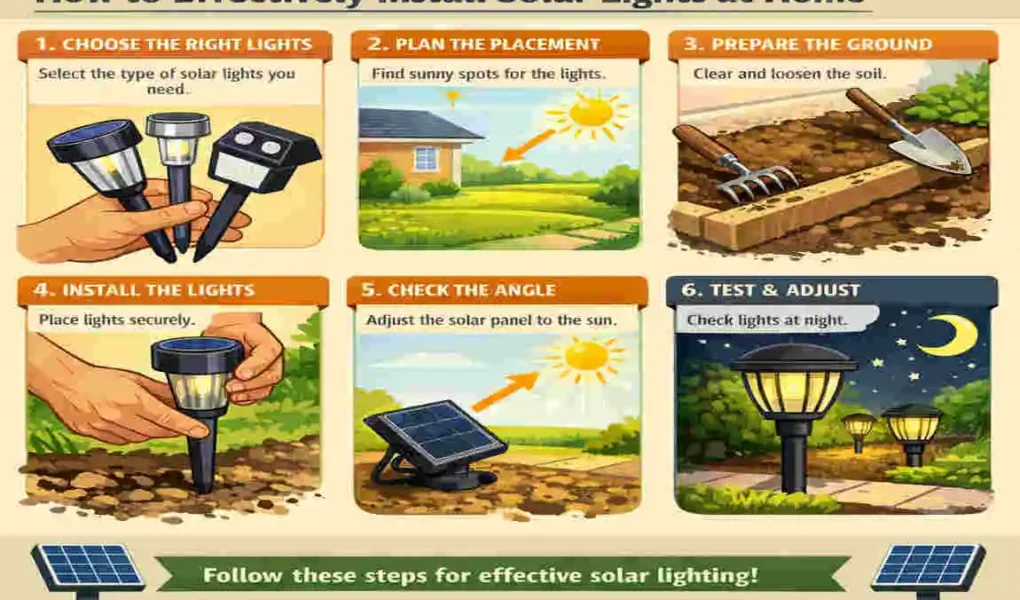
How to install Solar Light at Home
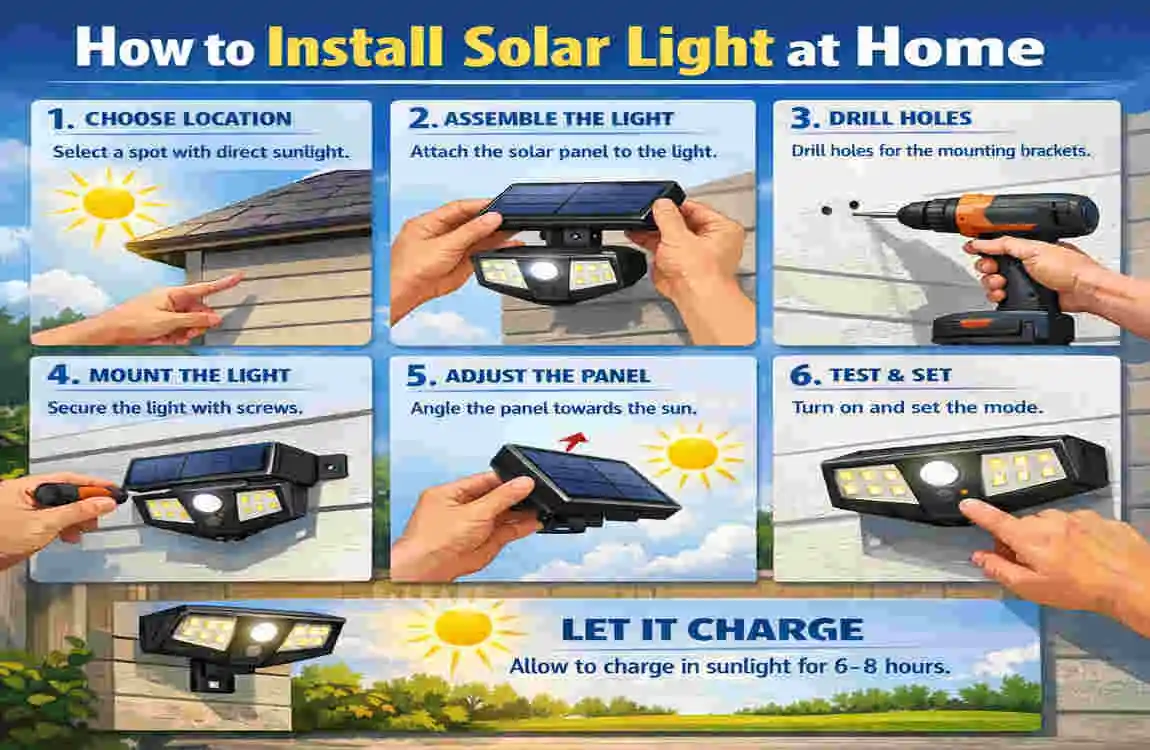
Choose the Right Location
Pick a place that gets enough sunlight every day. Avoid areas blocked by trees, roofs, or walls. A south-facing spot is often best because it usually gets good sunlight for longer hours.
Check Sunlight Hours
Most solar lights need about 6 to 8 hours of direct sunlight. Before installing, watch the area during the day and see how much sunlight it gets. This helps you avoid weak charging later.
Mark the Installation Points
Use a measuring tape to mark the exact spot where the light or bracket will go. Make sure the placement looks even and is at the right height. Good alignment helps the light work better and look neat.
Install the Mounting Bracket
Drill holes carefully, then place the wall plugs and screws. Fix the bracket tightly so the solar light stays stable. A strong grip is important, especially for outdoor use.
Attach the Solar Light
Once the bracket is secure, attach the solar light to it. Adjust the angle so the panel faces the sun directly. This helps it charge properly during the day.
Secure Solar Panel Position
If the panel can be adjusted, tilt it to catch the most sunlight. Keep it free from shadows, dust, and other objects. Even a small obstruction can reduce performance.
Test the Light
Cover the solar panel with your hand or a cloth to simulate night. The light should switch on automatically. This quick test helps you confirm that the system is working properly.
Final Adjustments
Check the brightness, angle, and fit one more time. Make sure the light is sealed well against water and dust. A final check now can prevent problems later.
Common Mistakes to Avoid
Many people make simple mistakes when setting up solar lights. One common mistake is placing them in shady areas. Another is setting the panel at the wrong angle, which reduces charging.
You should also avoid buying very cheap lights with poor-quality batteries. These often stop working too soon. Cleaning the panel is also important because dust can block sunlight. Finally, always check the weather resistance rating before installing outdoor lights.
Best Places to install Solar Lights Around the House
Outdoor Areas
Solar lights work well along garden paths, driveways, and backyard corners. These spots need soft lighting and are often perfect for solar power.
Security Areas
Front doors, garage entrances, and boundary walls are smart places for solar security lights. These areas become safer when they stay bright at night.
Decorative Areas
You can also place solar lights on balcony railings, near landscaping features, or around poolside spaces. These lights add beauty and a warm evening look to your home.
Maintenance Tips for Long-Term Performance
Solar lights are low-maintenance, but they still need regular care. Wipe the solar panel often so that dust and dirt do not reduce charging. Check the battery periodically, especially if the light dims.
It is also wise to inspect the light after heavy rain or strong wind. If any part looks damaged, fix it early. In some cases, replacing the LED or battery can help the light work like new again.
Cost of Installing Solar Lights at Home
The cost depends on the type of light you choose. Simple garden lights are usually cheaper, while security lights and floodlights cost more. If you install them yourself, you can save money on labor.
Over time, solar lights also help cut electricity costs. That means they often pay for themselves slowly through savings. For many homeowners, this makes them a practical and budget-friendly choice.
Advantages Over Traditional Lighting Systems
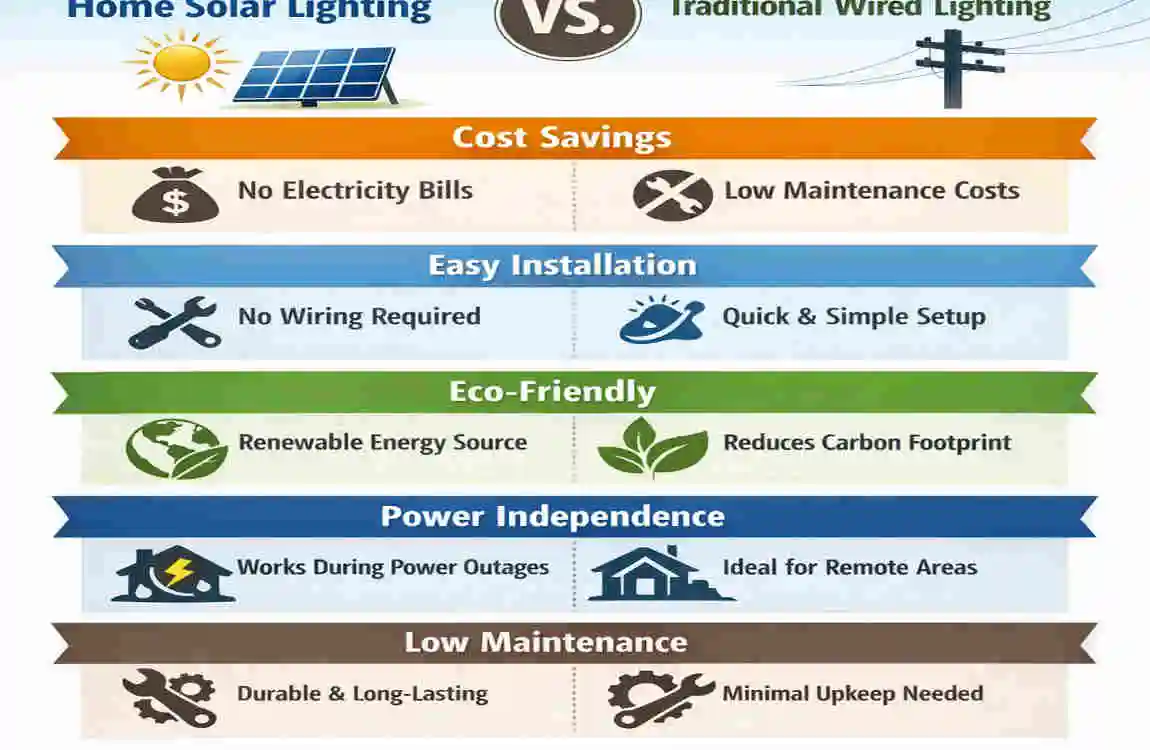
Solar lights have several clear advantages over traditional lights. They do not use grid electricity, so they help reduce monthly bills. They also do not need complex wiring, which makes setup easier.
They are also better for remote outdoor areas where wiring may be difficult. Since they use sunlight, they are a cleaner and more sustainable lighting option.
FAQs
Q: How long do solar lights last?
Most solar lights can last for several years if you maintain them well. Battery life and build quality play a big role.
Q: Do solar lights work in winter or cloudy weather?
Yes, but they may not charge as strongly as they do in full sun. Good-quality models can still work with reduced light.
Q: Can I install solar lights without professional help?
Yes, many solar lights are designed for easy DIY installation. You usually only need basic tools.
Q: How bright are solar lights compared to electric lights?
Solar lights are often dimmer than wired electric lights, but many modern models are bright enough for home use.
Q: What is the best angle for solar panels?
The best angle depends on your location, but the panel should face direct sunlight for most of the day.