Deciding if now is a good time to build a home depends on more than just the market. It also depends on your budget, your timeline, and how comfortable you feel with risk.
For some people, building now makes sense because they want a custom layout, better energy efficiency, and a home that fits their life exactly. For others, waiting may be smarter because construction costs, mortgage rates, and delays can add pressure.
Current Market Snapshot
Housing Market and Construction Trends Now
The housing market changes from place to place, so local conditions matter a lot. In one city, land may be easy to find, and labor may be available. In another, both may be limited and expensive.
That is why building a home now can feel very different depending on where you live. National trends give you a broad picture, but local pricing, permit delays, and contractor availability matter more when you are ready to start.
Mortgage rates also affect builders. Even if you are not buying an existing home, rates still influence how much house you can afford and how much pressure you feel during the process.
Material and Labor Costs
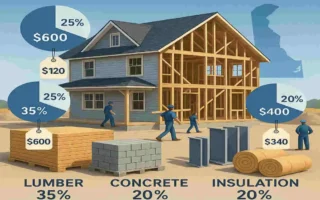
Construction costs are often influenced by materials such as lumber, steel, drywall, and concrete. Labor can also be tight when builders are busy.
This means prices may not drop just because you wait a few months. Sometimes they do ease, but often they move slowly. If you are trying to decide if now is a good time to build a home, it helps to remember that timing the market perfectly is hard.
Financial Considerations
Mortgage Rates and Financing Options
One of the biggest questions is how you will pay for the build. A construction loan is different from a regular mortgage. In many cases, it covers the building phase first, then changes into a long-term mortgage later.
That can make the process more complex. Rates may change before your home is finished, so there is some interest-rate risk. If rates worry you, ask lenders about rate locks, construction-to-permanent loans, or other financing options that can reduce surprises.
Budgeting and Cost Overruns
A good budget is not just about the house itself. You also need to plan for permits, land work, utility hookups, landscaping, and unexpected changes.
A simple way to think about the budget is this:
Cost Area: What It Covers, Why It Matters
Land Lot purchase. You need a suitable site first
Hard costs: framing, roofing, materials, labor. This is the main build cost
Soft costs: design, permits, inspections. These are easy to forget
Contingency Extra money for surprises Helps protect your budget
A contingency fund of 10% to 20% is often a smart idea. When people ask how to budget for building a home, this is one of the most important steps.
Long-Term Value and Resale
Building a home can add value when the design fits local demand. For example, a well-planned home in a desirable area may retain its value over time.
But resale is not guaranteed. If you build a very custom home in a niche style, it may be harder to sell later. So when considering whether it’s a good time to build a home, ask yourself not only what you want today, but also what future buyers may want.
Timing and Timeline
How Long Does Building Take?
A custom build usually takes time. The process often includes:
- Design and planning
- Permits and approvals
- Site preparation
- Construction
- Interior finish work
- Final inspection and move-in
Even a smooth project can take months, and delays can occur due to weather, permit backlogs, or material shortages. If you need to move quickly, building may not be the best fit right now.
When to Wait vs Move Forward
You may want to wait if:
- Your income is uncertain
- You need to sell another home first
- You do not have a strong emergency fund
- You want to move in very soon
You may want to move forward if:
- You have stable savings and income
- You are willing to wait for the right home
- You want more control over the design
- You plan to stay long-term
Pros and Cons of Building Now
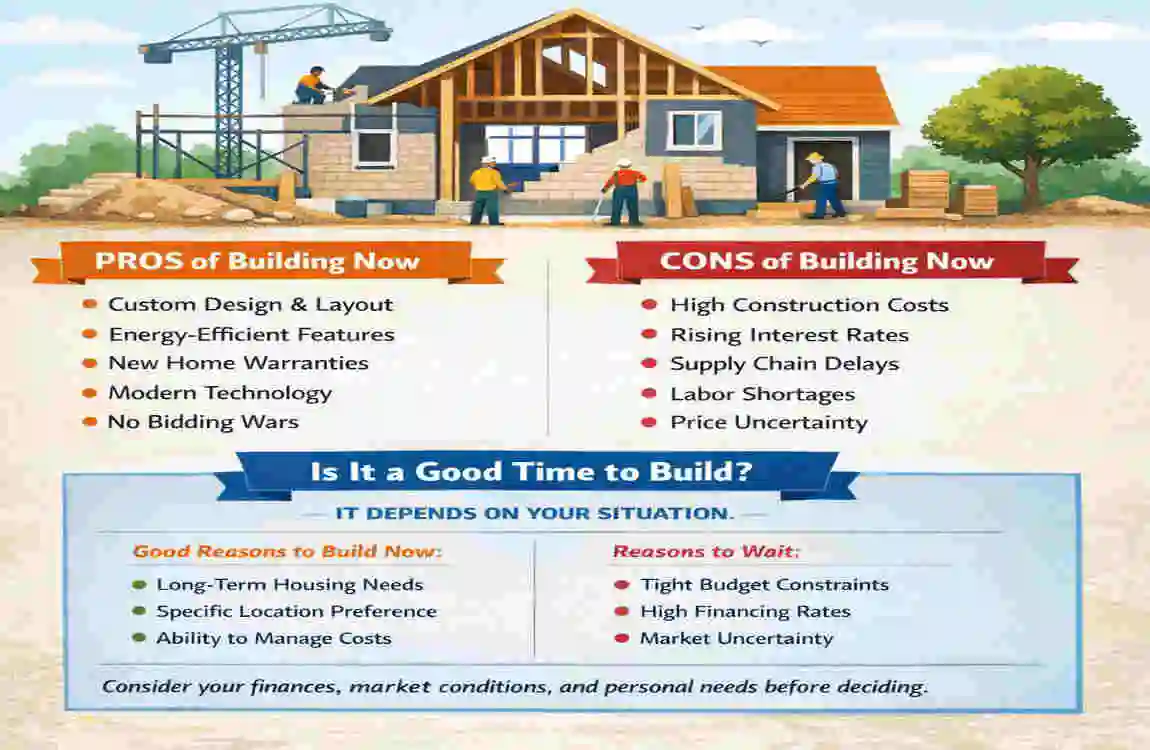
Pros
- Customization: You get the layout, style, and features you want.
- Energy efficiency: New homes often use better materials and systems.
- Less repair work: You start with a fresh home rather than an old one.
- Personal fit: The home can match your family’s current needs.
Cons
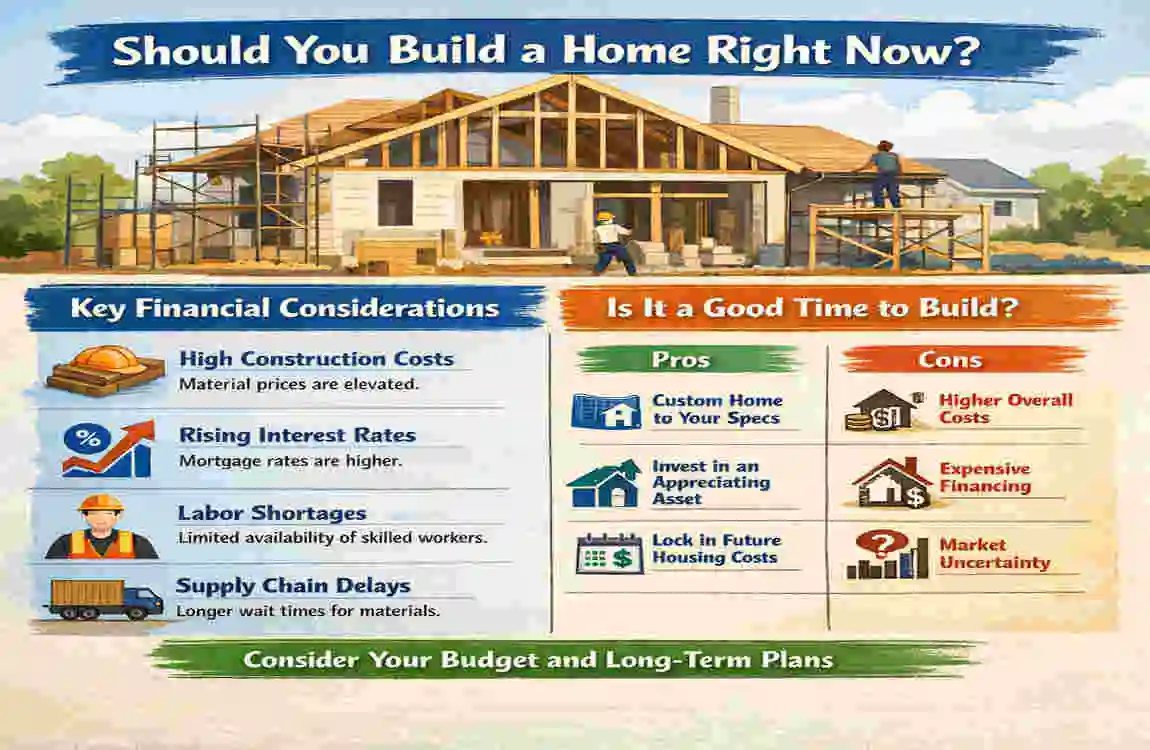
- Higher costs: Building can be expensive, especially with land and labor.
- Delays: Weather, permits, and supply issues can slow things down.
- Financing risk: Loan terms may change during the project.
- Stress: Many choices and moving parts can feel overwhelming.
For a young family, the biggest benefit may be function and space. For a retiree, comfort and low maintenance may matter most. For an investor, resale value and cost control are key.
Practical Steps If You Decide to Build
If you decide that it is now a good time to build a home for your situation, start with a clear plan.
- Review your finances and get prequalified.
- Decide whether you already own land or need to buy it.
- Choose a plan or work with a designer.
- Ask for a detailed cost estimate.
- Check permits, zoning, and utility access.
- Compare builders and review contracts carefully.
- Set aside a contingency fund before work begins.
Also, ask about warranties, payment schedules, and what happens if prices change. Clear terms now can save you stress later.
Alternatives to Building Right Now
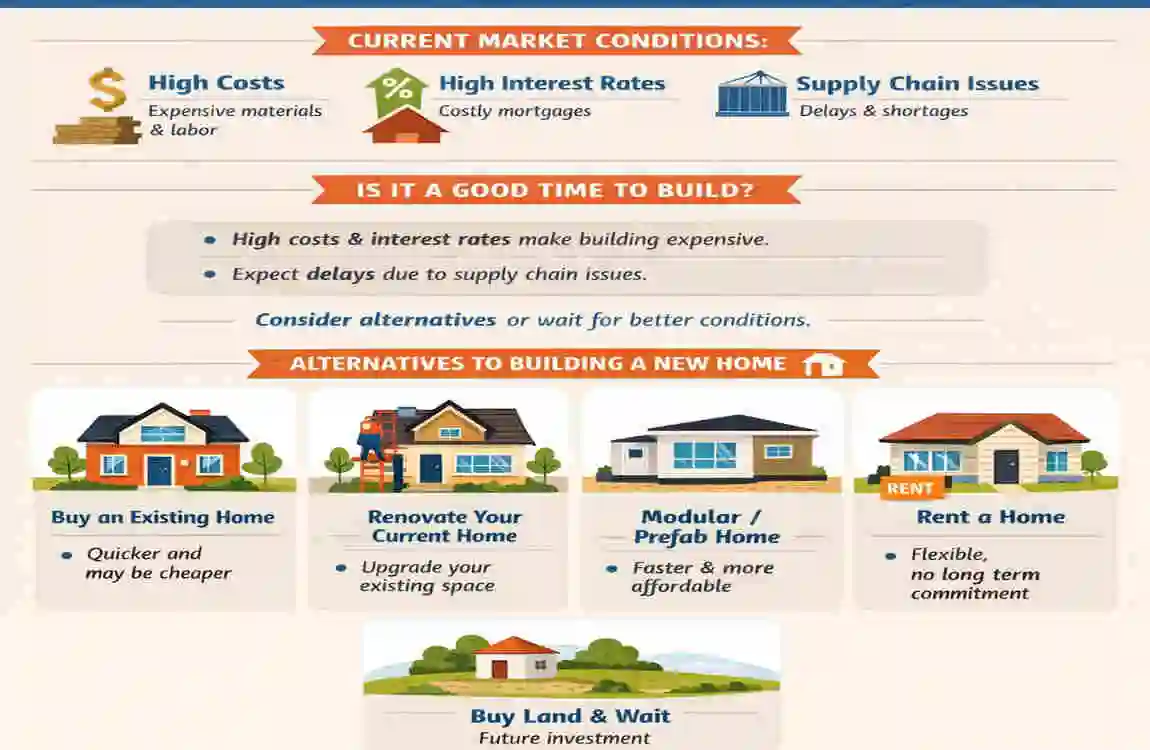
If the building feels too big right now, you still have options.
Renovation
If you already own a home, renovation may be cheaper and faster than building from scratch.
Buying Existing or New Construction
You may find a home that already fits most of your needs. That can save time and reduce uncertainty.
Modular or Prefab Homes
These can be faster to build and sometimes cost less. They are worth considering if your goal is speed and simplicity.
FAQ
Is now a good time to build a home with high mortgage rates?
It can be, but only if your finances are strong and your budget can handle higher borrowing costs. If not, waiting may be safer.
How long does it take to build a custom home?
Many custom homes take several months to over a year, depending on design, permits, weather, and contractor schedules.
Will building costs drop soon?
They might change, but no one can promise a drop. Materials and labor can stay high or move slowly over time.
Do construction loans have higher rates than mortgages?
Often, yes. They can also work differently from standard mortgages, so it helps to compare options carefully.
What unexpected costs should I plan for?
Permits, site work, utility connections, upgrades, and last-minute changes are common surprises. A contingency fund is important.
| Factor | Yes, likely the right time if… | Proceed with caution if… |
|---|---|---|
| Your finances are stable | You have a strong credit score, steady income, and enough savings for a down payment plus a 3–6‑month buffer. | You’re living paycheck to paycheck, have high‑interest debt, or low emergency savings. |
| Interest rates are favorable | Rates are moderate or near‑historic lows, and you can lock in an affordable long‑term mortgage. | Rates are high and your monthly payment would stretch your budget too thin. |
| You’re emotionally ready | You’ve clearly defined your lifestyle needs (family size, work‑from‑home, aging‑in‑place), and you’re prepared for construction timelines and decisions. | You’re unsure about long‑term plans or open to renting or renovating instead. |
| Market conditions support building | Local demand is stable, land is available, and you can work with a reputable builder or contractor. | There’s a construction‑cost spike, material shortages, or very limited suitable land. |
| Your timeline is flexible | You can tolerate 6–18 months from planning to move‑in and some unexpected delays. | You need to move in immediately or on a very tight schedule. |