Are you wondering if you can use builders’ sand in the home garden and still keep your plants happy? It is a common question, especially when you want a quick, cheap fix for heavy soil that holds too much water. Many gardeners look at builders’ sand because it is easy to find and usually costs less than special garden products.
The short answer is: yes, sometimes. But it depends on the sand type, your soil, and the plants you are growing. Builder’s sand can help improve drainage in the right situation, but it can also cause problems if you use the wrong kind or add too much.
What Is Builders’ Sand?
A basic definition
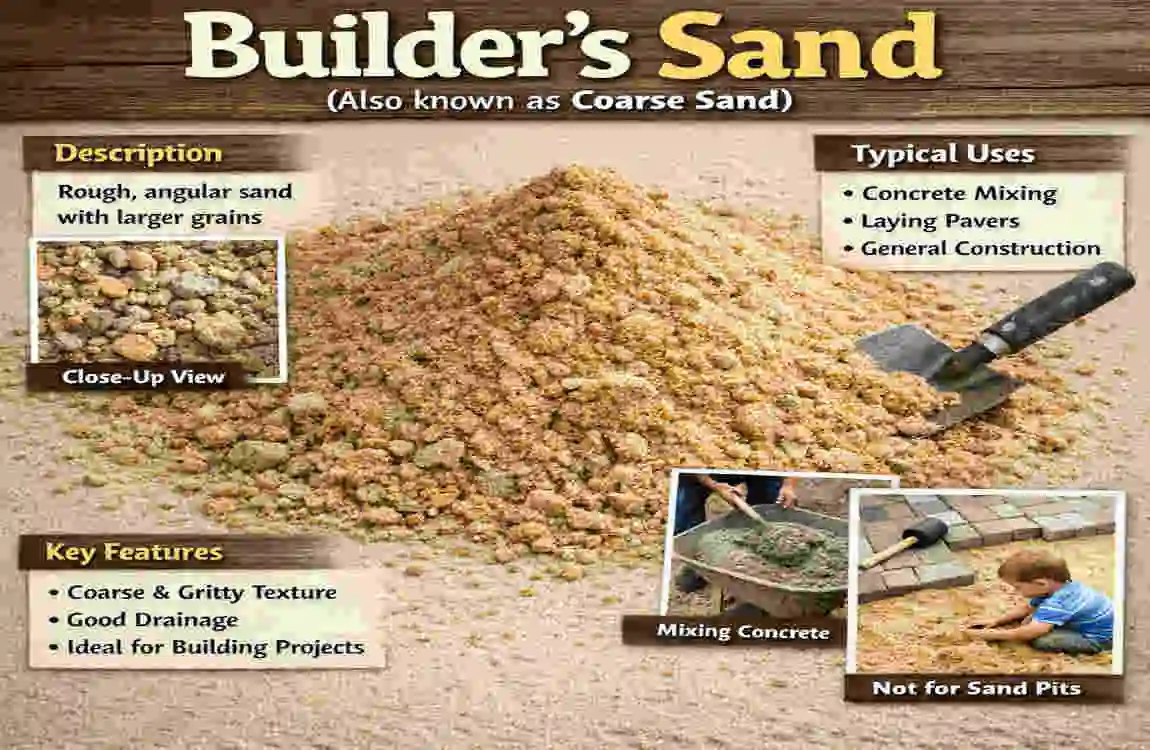
Builders’ sand is a type of sand often used in construction, such as mixing mortar or laying bricks. It is usually coarser than very fine sand, but it is not always clean or evenly sized. That matters in the garden because soil health depends on texture, drainage, and purity.
How is it different from garden sand
Not all sand is the same. Builders’ sand, sharp sand, and horticultural sand may look similar, but they behave differently in soil. Builders’ sand may contain dust, salt, lime, or other small particles left over from construction use. Horticultural sand is usually washed and prepared for plant use, making it cleaner and safer.
Why gardeners consider it
Many people choose builders’ sand for gardening because it is affordable and readily available. If you have a heavy clay patch or a small area that stays wet, adding the right sand can seem like a quick fix. That is why the question, “Can you use builders’ sand in the home garden?” comes up so often.
Benefits of Using Builders’ Sand in Gardening
It can improve drainage.
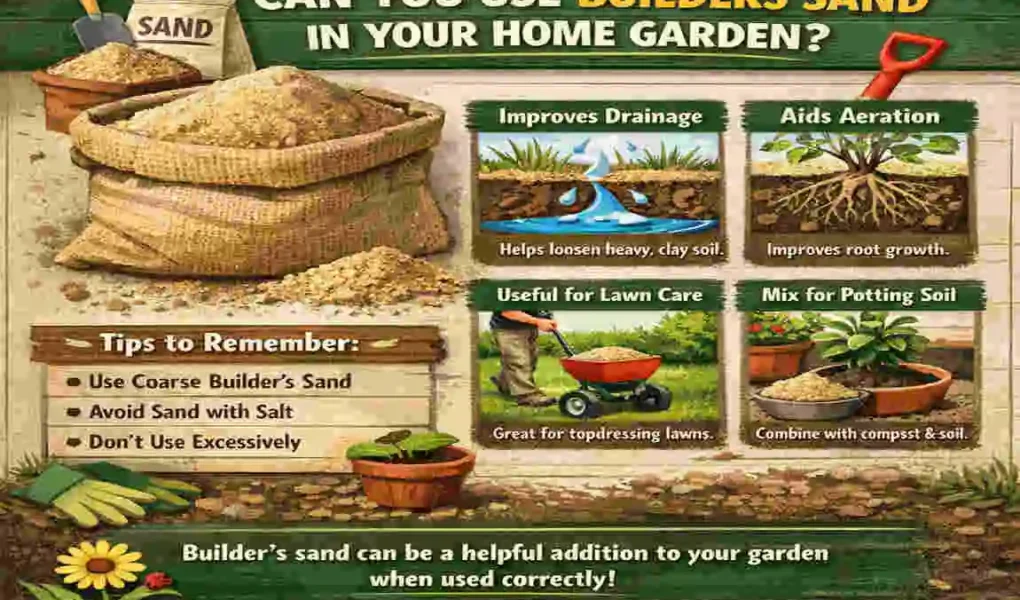
One of the biggest reasons gardeners add sand is to help water move through the soil faster. In clay-heavy soil, water can accumulate near the roots, causing rot or weak growth. A little builders’ sand can help loosen the soil and reduce that soggy feeling.
This can be useful for plants that prefer well-drained soil, such as lavender, rosemary, thyme, and many succulents. These plants do not like wet roots so better drainage can make a real difference.
It can improve soil aeration.
Soil needs air as much as it needs water. When soil gets packed down, roots struggle to spread and absorb nutrients. Builder’s sand can help loosen compacted soil, allowing roots to grow more freely.
This is especially helpful in a small home garden where foot traffic, rain, or heavy clay may have made the soil dense. Better air movement around the roots often leads to healthier plants.
It can be a budget-friendly option.
Another reason people ask, ‘Can you use builders’builders’ sand in the home garden?’ is cost. Horticultural products can be expensive, while builders’ sand is often cheaper and sold in larger amounts. If you need to improve a larger area, that lower price can be very appealing.
Still, cheaper does not always mean better. The key is using the right type in the right way.
It can help in certain garden setups.
Builder’s sand may work well in raised beds, cactus pots, rock gardens, and other areas where drainage matters more than water retention. In these cases, a small amount mixed with compost or soil can improve conditions without causing too many issues.
Potential Risks of Using Builders’ Sand in Your Home Garden
Chemical or mineral contaminants
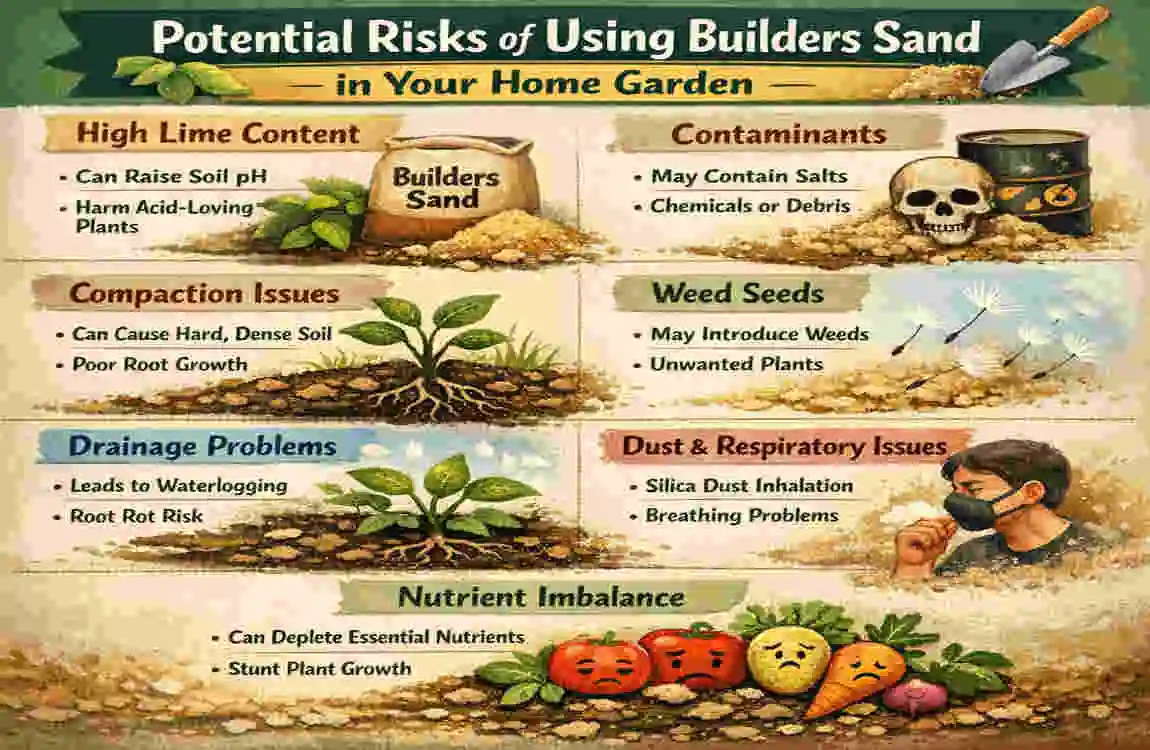
One major concern is that builder’s sand may contain unwanted materials such as salts, lime, dust, or construction residue. These can affect plant health, especially in delicate flower beds or vegetable patches.
If the sand is not washed well, those extra materials can build up in the soil and stress your plants over time.
Changes in soil pH
Some builders’ sand can raise the soil pH, especially if it contains lime. That means the soil may become more alkaline. Some plants tolerate this, but others prefer slightly acidic soil.
If your garden already has a pH imbalance, adding the wrong sand can make the problem worse. That is why it is important to test before and after adding it.
Not ideal for every plant
Not every garden plant likes sandy soil. Moisture-loving plants, such as ferns, hydrangeas, and many vegetables, may suffer if the soil dries out too quickly. Builder’s sand can also be a poor choice for seed starting because young roots need gentle, even moisture.
It can be compacted if used incorrectly.
A common mistake is mixing too much fine sand into clay soil. Instead of improving the texture, it can create a dense, cement-like mix. That means less drainage, not more. This is one reason you cannot use builders’ sand in the home garden; it is not a simple yes-or-no question.
How to Safely Use Builders’ Sand in Your Home Garden
Step-by-step guide
If you want to try builders’ sand, use it carefully. Here is a simple way to do it:
- Choose washed sand if possible.
- Washed sand has less dust and fewer unwanted minerals.
- Test a small area first.
- Do not mix it into the whole garden right away. Try a small bed or pot first.
- Mix it with organic matter.
- Blend builders’ sand with compost, leaf mold, or quality garden soil. This helps balance drainage and nutrition.
- Use the right ratio.
- A safe starting point is 1 part builders’ sand to 2 or 3 parts soil or compost. For clay soil, go slowly and test the result before adding more.
- Water and observe.
- Check how fast water drains and how the plants respond over a few weeks.
What to look for when buying it
Choose sand that looks clean, gritty, and free from visible debris. Avoid sand that smells odd, looks dusty, or contains a lot of fine powder. If the product label gives no clear details, ask the supplier whether it is washed and suitable for garden use.
Test your soil afterward.
After mixing, check whether the soil drains better but still holds enough moisture for roots. You can also test the pH if your plants are sensitive to it. A simple soil test can save you from bigger problems later.
Builders Sand vs Other Options
Material Best Use Main Benefit Main Concern
Builders sand. Some garden beds, raised beds, and drainage improvement. Cheap and easy to find. May contain salts, lime, or dust.
Horticultural sand, General gardening and potting mixes, clean and plant-safe. Often more expensive.
Sharp sand Improving drainage in soil Coarser and better for aeration Must be used in the right amount.
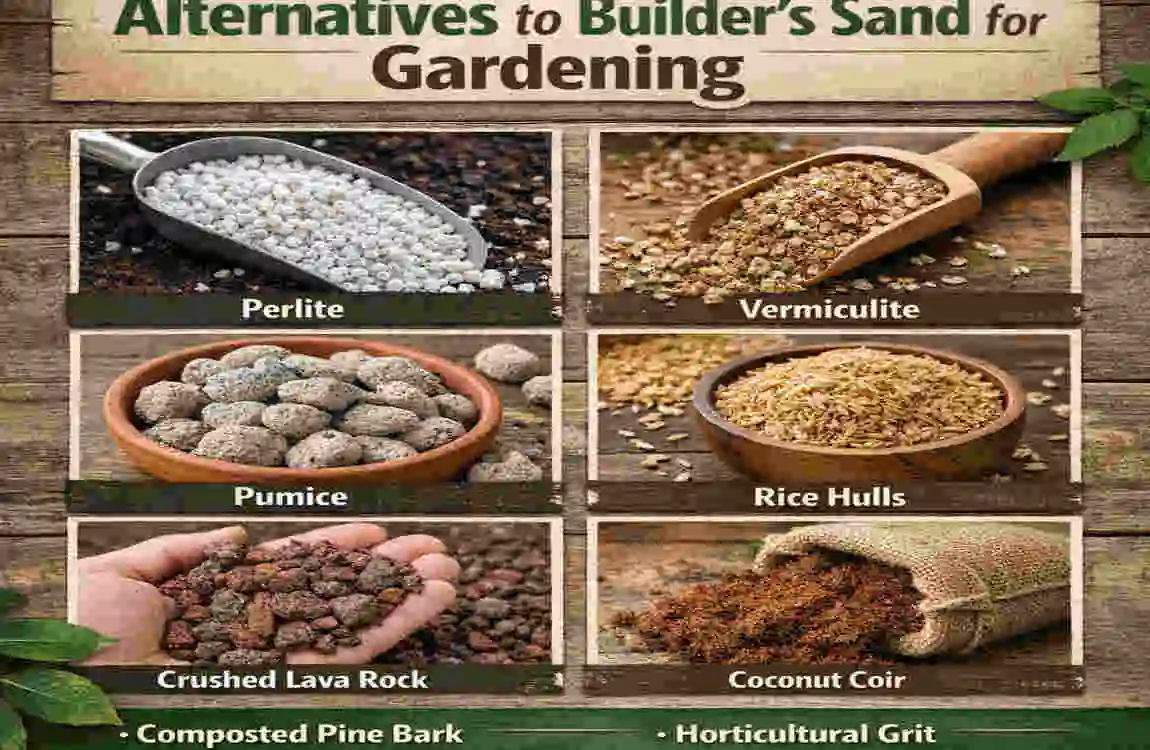
Perlite Potting mixes and containers. Very light and improves airflow. Not ideal for large outdoor beds.
Alternatives to Builders Sand
Horticultural sand
This is usually the safest sand choice for gardens. It is washed, clean, and made for plant use. If you want a reliable option and do not mind paying a little more, this is often better than builders’ sand.
Sharp sand
Sharp sand, sometimes called grit sand, has larger grains than builders’ sand. It helps open up the soil more effectively and is less likely to turn sticky or compact. Many gardeners prefer it for drainage work.
Perlite and vermiculite
These are light, airy materials used mostly in pots and seed mixes. They improve drainage without adding weight. If you grow plants in containers, they may be better than any soil.
Organic amendments
Sometimes the best fix is not sand at all. Compost, leaf mold, and coconut coir can improve soil structure while also feeding the soil. These materials help the earth hold moisture in a balanced way and support healthy microbes.
Frequently Asked Questions
Can builders’ sand harm my plants?
Yes, it can if it contains salt, lime, or too much fine dust. It can also harm plants if you add too much or use it with the wrong soil type.
Is washed builders’ sand better for gardening?
Yes. Washed sand is usually safer because it has fewer contaminants and less dust. If you do use builders’ sand, washed is the better choice.
How do I know if my garden soil needs sand?
If your soil stays soggy for days, feels heavy, or turns into hard clumps, it may need better drainage. A simple soil test can also help you decide.
What are the signs that builders’ sand is not working?
Look for poor drainage, crusty soil, yellow leaves, weak growth, or roots that look unhealthy. If the soil becomes harder instead of looser, the sand mix may be wrong.
| Topic | Quick Answer | Best Practice |
|---|---|---|
| Can you use builders sand in your home garden? | Yes, but only in the right soil and in small amounts. | Mix it carefully with compost or garden soil. |
| Main benefit | Helps improve soil drainage and reduce waterlogging. | Use it in clay soil or raised beds. |
| Main risk | May contain salt, lime, dust, or other contaminants. | Choose washed builders sand if possible. |
| Best for | Drainage-focused areas like rock gardens and some containers. | Test a small patch first. |
| Not ideal for | Seedlings, moisture-loving plants, and very sandy soils. | Use horticultural sand instead. |
| Safe mixing ratio | Start with 1 part sand to 2–3 parts soil or compost. | Check drainage before adding more. |