
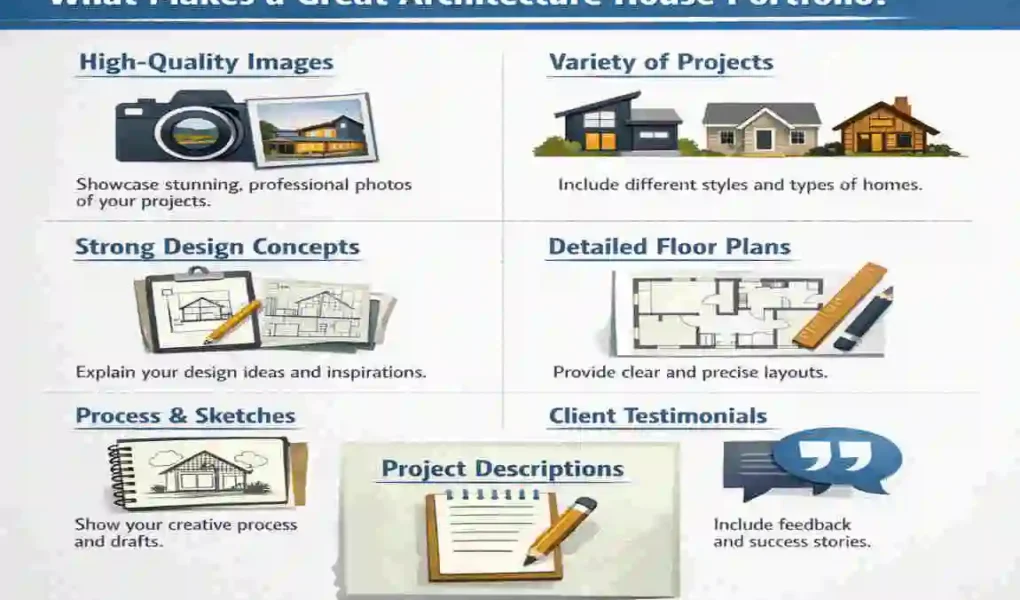
A strong architecture house portfolio does more than show your work. It tells a story, builds trust, and helps clients clearly see your style. If you design houses, your portfolio should feel polished, simple to follow, and easy to remember.
In today’s world, many architects start online. That helps. But when it comes to meetings, interviews, and client presentations, architecture house portfolio printing can make a big difference. A printed portfolio feels more real, more professional, and more personal. Essential Elements of a Standout Architecture House Portfolio
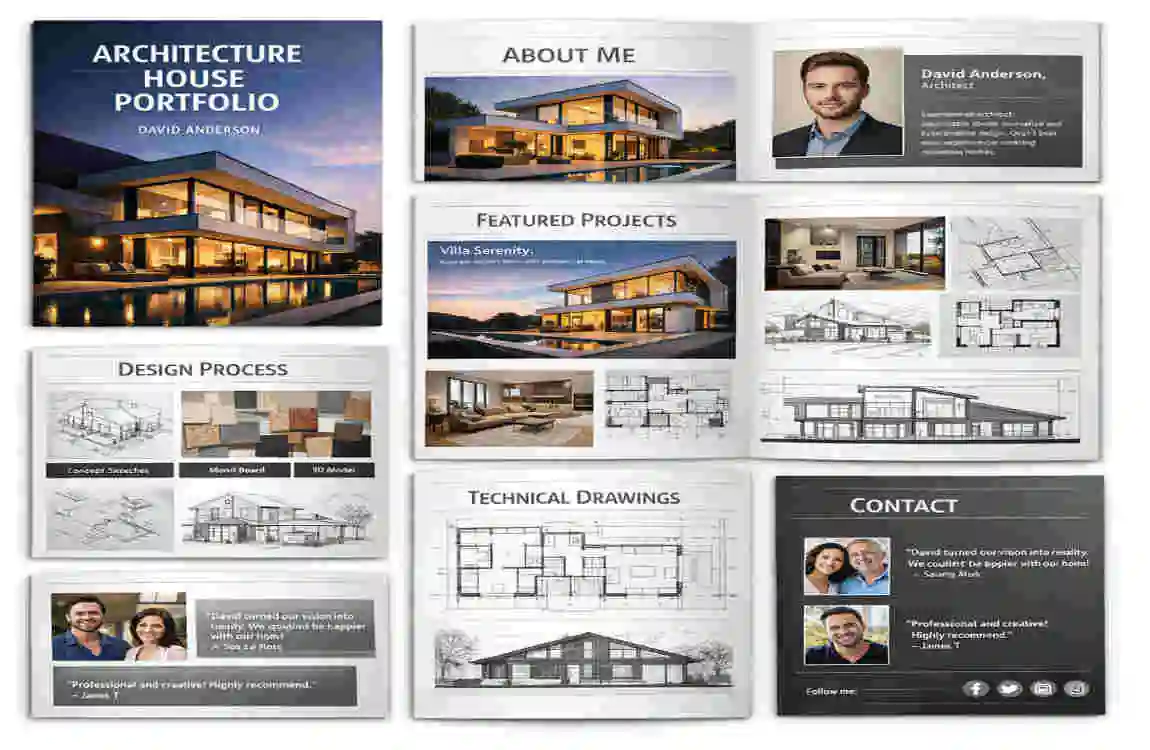
Start with strong visuals. Use high-resolution photos, renders, and visuals of your house projects. Blurry or pixelated images can make even excellent design work look weak.
Make sure your images are print-ready. If you plan to use an architectural house portfolio printing, the quality must stay sharp on paper, not just on screen.
Project Stories and Client Feedback
Clients want to know how you think. Short project stories help explain your design choices, problem-solving process, and final results.
You can also include a few client comments. Even one or two positive lines can make your portfolio feel more credible and human.
Variety in House Designs
Show different kinds of projects if you can. For example:
- Modern homes
- Minimalist spaces
- Sustainable house designs
- Luxury villas
- Small residential plans
This variety helps people understand your range and style.
Floor Plans and Technical Drawings
Do not skip technical details. Floor plans, elevations, and section drawings show that you understand both the creative and practical sides of design.
A strong portfolio balances beauty with function. That balance matters in an architecture house portfolio printing because it shows your full skill set.
Why Printing Elevates Your Architecture House Portfolio
Digital portfolios are useful, but print creates a stronger first impression. When someone holds your work in their hands, they engage with it differently.
Print Feels More Professional
A printed portfolio gives your work weight. It feels deliberate and polished. That matters in interviews, client meetings, and presentations where first impressions count.
With architecture house portfolio printing, you can choose paper, binding, and finish to match your style. That extra care shows that you value quality.
Print Makes Your Work Easier to Review
Screens can be distracting—notifications, glare, and scrolling all interrupt attention. A printed portfolio keeps the focus on your projects.
People can flip pages, pause on details, and compare house designs without strain. That makes your work easier to remember.
Print Offers More Design Freedom
Print opens the door to special touches like:
- Thick cover stock
- Matte or glossy finishes
- Fold-out plans
- Spot UV details
- Foil accents
These options can make your portfolio feel unique and Premium. That is why architectural house portfolio printing is still a smart choice for serious professionals.
Quick comparison
Feature Digital Portfolio Printed Portfolio
First impression Good Stronger
Tactile feel None Professional and memorable
Viewing comfort depends on the screen, easy, and focused
Custom finish, Limited, Many options
Meeting use Shared on devices, great for in-person review
Step-by-Step Guide to Creating Your Portfolio for Printing
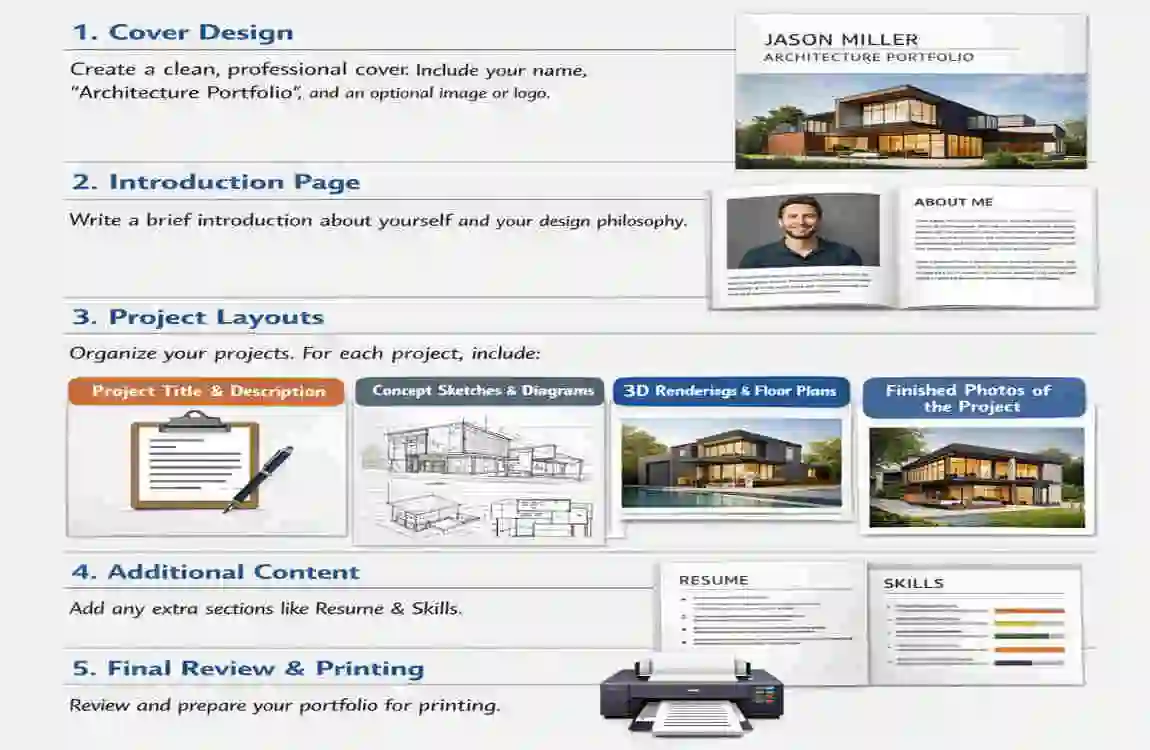
If you want a clean final result, plan your portfolio from the start with print in mind.
Choose Your Best Projects
Do not include everything. Pick 10 to 15 strong projects that show your best work and your design range.
Try to choose projects that feel complete and visually strong. A smaller, focused portfolio is often more effective than a large one.
Organize the Story
Place your projects in a simple order. You can begin with your strongest work and move on to other examples afterward.
For each project, include:
- Project name
- Location
- Short description
- Your role
- Key visuals
- Final result
This keeps the portfolio easy to read and smooth to follow.
Design for Print, Not Just Screen
Use print settings from the beginning. This means working in CMYK, using 300 DPI images, and adding proper bleed margins.
If you use software like Adobe InDesign, you can build a layout that is clean, balanced, and easy to print. Good layout design is a big part of a successful architecture house portfolio printing.
Pick the Right Format
Think about how your portfolio will be used. Common formats include:
- A4 booklet for easy handling
- Wire-o binding for smooth page turns
- Perfect-bound books for a neat, finished look
- Presentation folders for custom project sets
Choose the one that matches your style and the type of client you want to impress.
Review a Printed Proof
Never skip the proof stage. What looks good on your screen may look different in print.
Check for image quality, spacing, page order, and color balance. A test print helps you fix mistakes before producing the full set.
Top Printing Tips for Professional House Portfolios
Good design needs good printing. Small details can make a big difference in the final result.
Choose the Right Paper
Paper affects how your portfolio feels and looks. For architecture work, matte and silk stocks often work well because they look clean and professional.
If you want brighter renders, coated paper can help. If you want a softer and more refined look, matte paper is a safer choice.
Match the Binding to Your Style
Binding changes how people handle your portfolio. Wire-o binding is easy to flip through, while perfect binding gives a sleek book-like finish.
For house architecture portfolios, simple and sturdy often works best.
Keep Sustainability in Mind
If your work includes eco-friendly home design, choose recycled paper or low-impact inks where possible. That choice supports your message and shows care for the environment.
Save Money Without Losing Quality
You do not always need the most expensive option. If you are printing for a team or several interviews, bulk printing can lower the cost per copy.
You can also print a Premium master copy and a simpler version for everyday use.
Common Mistakes to Avoid in an Architecture House Portfolio Printing
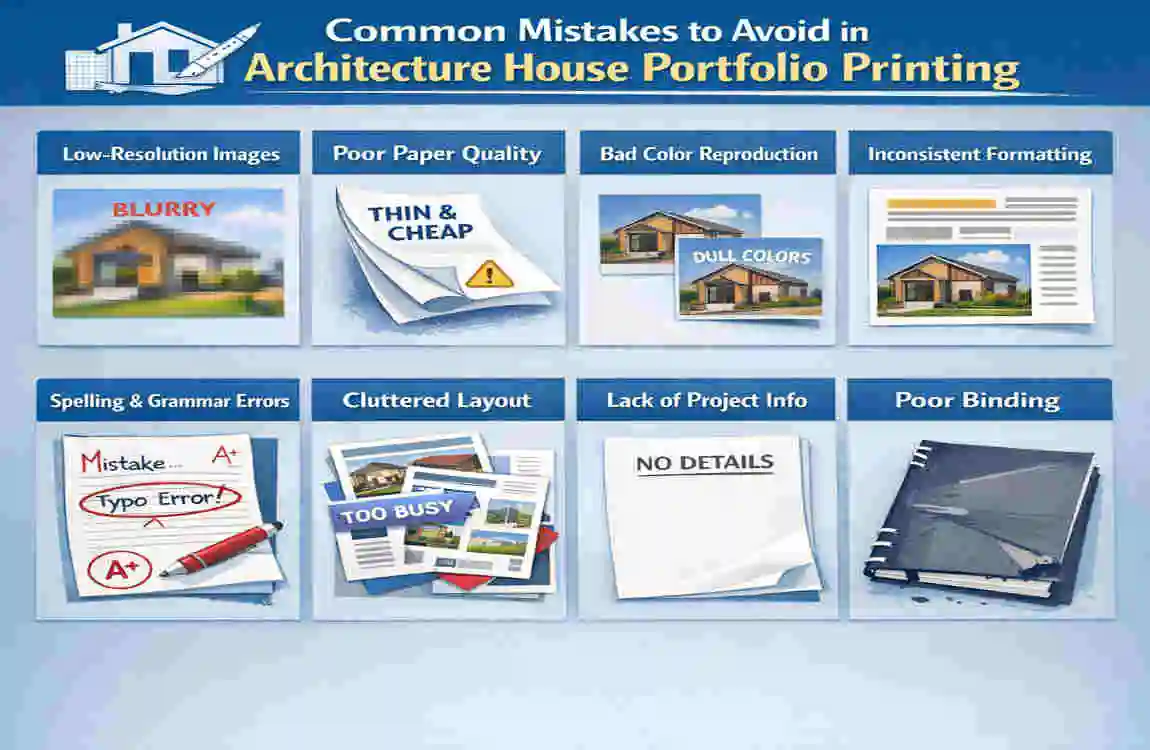
A few small mistakes can weaken an otherwise strong portfolio.
Using Low-Resolution Images
This is one of the biggest issues. Images that look fine on screen may print poorly if they are too small or blurry.
Always check the resolution before final export.
Forgetting Bleed and Margins
When elements go too close to the edge, printing can cut them off. Leave enough space around text and visuals, and add bleed where needed.
This keeps the final portfolio neat and professional.
Choosing a Weak Cover
Your cover matters. It is the first thing people see. A plain or generic cover can make the whole portfolio feel less impressive.
Use a clean title, strong finish, and a design that reflects your architectural style.
Case Examples of Strong Architecture House Portfolios
A good portfolio is not only about design. It is also about presentation.
Example 1: Modern House Portfolio
One architect showcased a series of modern residential projects using a clean layout, large images, and short captions. The printed version helped the work feel more Premium and easier to present in meetings.
Sustainable House Portfolio
Another portfolio focused on eco-friendly homes. The designer used recycled paper and a soft matte finish to support the sustainable message. The result felt thoughtful and aligned with the brand.
Minimalist Residential Portfolio
A third example used a simple black-and-white design with strong spacing and sharp drawings. The printed version made the work feel elegant and confident.
These examples show how architectural house portfolio printing can elevate good work into a memorable presentation.
FAQ: Architecture House Portfolio Printing
What is the best paper for an architecture house portfolio printing?
Matte or silk paper in the 250–400gsm range usually works well for a professional finish.
Is print better than digital for architecture portfolios?
For interviews and client meetings, print usually makes a stronger impact because it feels more personal and polished.
How many projects should I include?
Most portfolios work best with 10 to 15 carefully chosen projects.
Can I include QR codes?
Yes. QR codes can link to videos, 3D tours, or digital extras without cluttering the printed pages.
How long does printing usually take?
Turnaround depends on the service and finish, but custom printing often takes a few days.
| Element | Why It Matters | What to Include |
|---|---|---|
| Strong Visual Presentation | High-quality visuals attract clients and showcase design expertise. | Professional photos, 3D renders, before-and-after images, and project galleries. |
| Clear Project Descriptions | Helps visitors understand the concept, process, and outcomes of each project. | Project goals, design challenges, materials used, and client requirements. |
| Diverse Project Showcase | Demonstrates versatility across different architectural styles and project types. | Residential, commercial, modern, luxury, sustainable, and renovation projects. |
| User-Friendly Layout | Improves visitor experience and keeps users engaged longer. | Simple navigation, mobile-friendly design, and organized categories. |
| Unique Brand Identity | Builds trust and makes the portfolio memorable. | Firm story, mission statement, logo, and consistent visual style. |
| Client Testimonials | Adds credibility and social proof for potential clients. | Reviews, ratings, and successful client experiences. |
| Detailed Case Studies | Shows problem-solving skills and architectural expertise. | Design process, planning stages, sketches, and final outcomes. |
| SEO-Optimized Content | Helps the portfolio rank higher in search engines. | Relevant keywords, optimized image alt text, meta descriptions, and blog content. |
| Contact Information | Makes it easy for potential clients to connect quickly. | Contact forms, phone number, email, and social media links. |
| Awards & Certifications | Enhances professional reputation and authority. | Industry awards, certifications, memberships, and recognitions. |