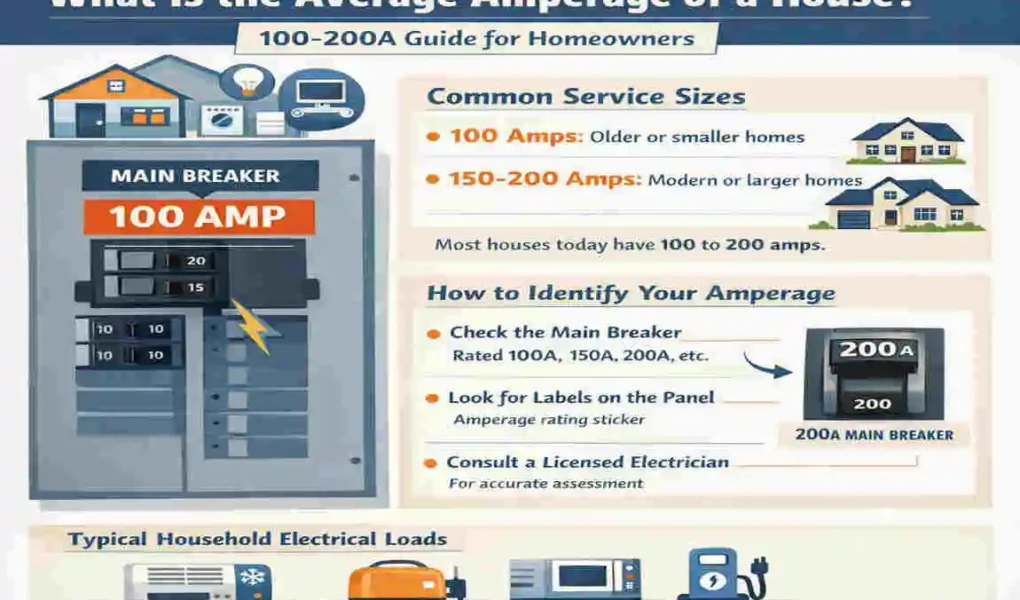
Most homes use 100-200 amp electrical service panels as the standard capacity today. This range supports typical household loads like lighting, appliances, and HVAC systems.
Modern single-family homes usually have 100-amp panels as a minimum, while 200 amps is now standard for new construction. Older homes from the 1960s-1990s often stick with 100 amps, sufficient for homes under 3,000 sq ft with basic needs
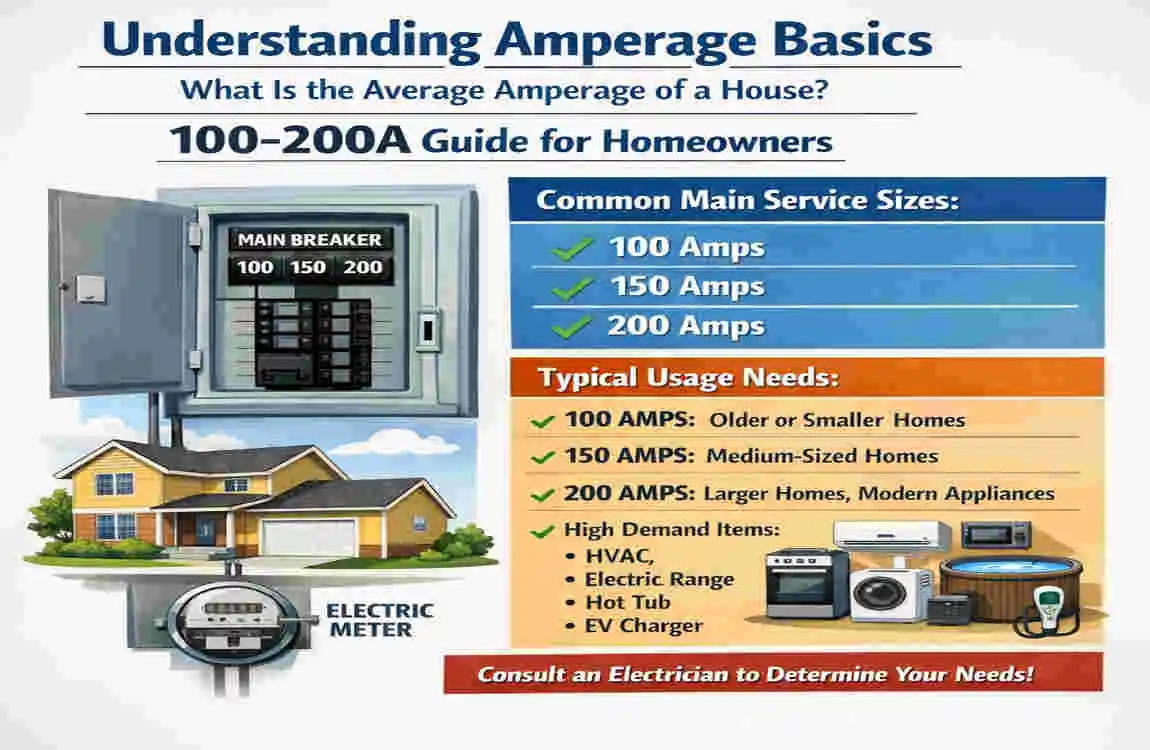
100 amps: Handles essentials like lights, fridge, and one high-power item (e.g., AC); common in smaller or older setups
150 amps: Transitional size for moderate upgrades
200 amps: Ideal for larger homes, EVs, or multiple appliances; required by many codes and insurers
Home size, appliance count, and future needs determine the right amperage—e.g., electric heat or EVs push toward 200 amps. Always check your panel label and consult an electrician to avoid overloads. Voltage is typically 240V, so 100 amps equals 24,000 watts max capacity.
Understanding Amperage Basics
What Is Amperage in Household Electricity?
Amperage, or amps, measures the amount of electrical current flowing through your home’s wiring. Think of it like water flowing through pipes — the more water (current) flowing, the bigger the pipe (amperage) needs to be to handle it safely.
In your house, electricity flows at a certain voltage (usually 120 or 240 volts in the U.S.), and the amperage tells you how much current is moving through the wires. The higher the amps, the more electrical devices you can safely run at once.
Difference Between Amps, Volts, and Watts
To understand amperage fully, it helps to know how it relates to volts and watts:
- Volts (V): The pressure pushing electricity through wires.
- Amps (A): The flow rate of electricity.
- Watts (W): The total power used.
The formula connecting them is:
Watts = Amps × Volts
For example, a 100-watt light bulb running on 120 volts uses about 0.83 amps (100 ÷ 120 = 0.83). This simple math helps you estimate how much current your appliances draw.
Average Amperage by Home Type
Historical Standards: 60-100 Amps
Older homes, especially those built before the 1960s, often have electrical panels rated for 60 to 100 amps. Back then, homes had fewer electrical devices — no air conditioners, electric dryers, or computers.
Today, a 60-amp service is considered risky because it can’t safely handle modern electrical loads. Many homeowners with older panels face frequent breaker trips or need costly upgrades to meet current demands.
Modern Minimum: 100 Amp Service
For many homes built between the 1970s and 1990s, 100 amps became the standard. This size suits smaller homes (around 1,000 square feet) with gas appliances and fewer high-power devices.
Insurance companies often require at least 100 amps for coverage, making it a baseline for safety and functionality.
Current Standard: 200 Amp Panels
In new construction and larger homes (2,000+ square feet), 200 amps is now the norm. This capacity supports:
- Electric vehicle chargers
- Central air conditioning
- Heat pumps
- Smart home systems
A 200-amp panel future-proofs your home for growing electrical needs.
Home Era/Size Typical Amps Key Limitations
Pre-1960s (<1000 sq ft) 60-100 Basic lighting, no AC
1970s-1990s (1500 sq ft) 100 Standard appliances
2000s+ (2000+ sq ft) 200 EVs, heat pumps, smart homes
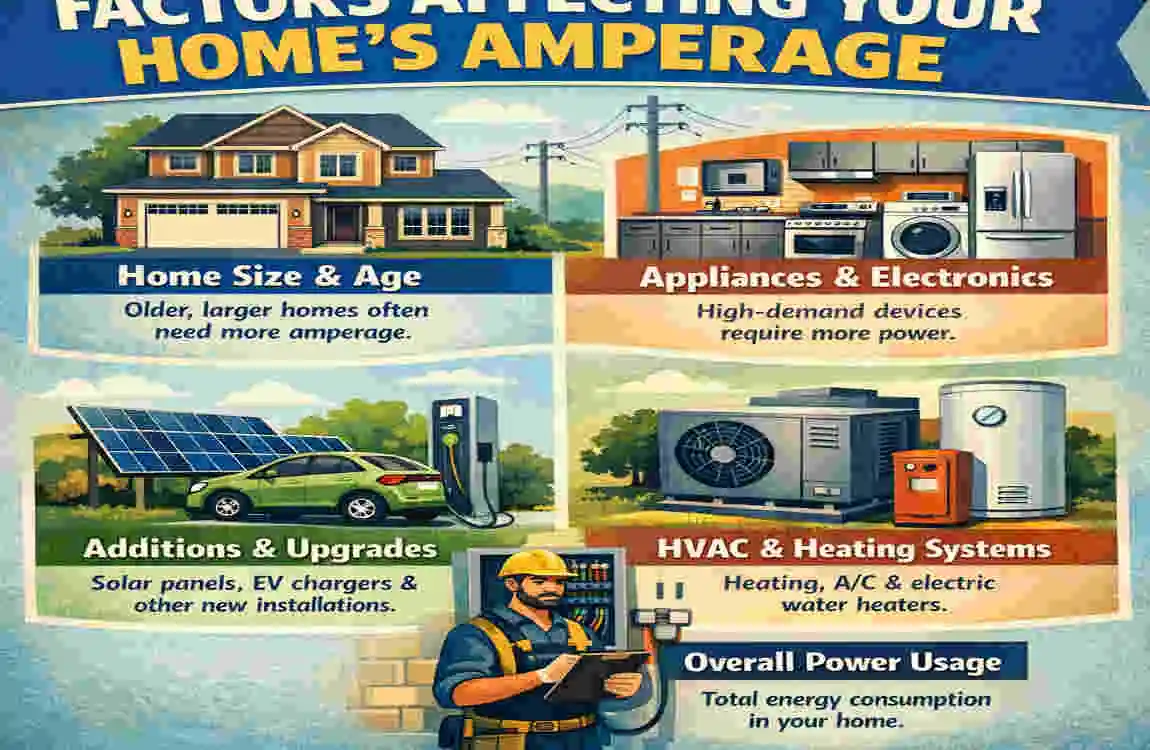
Factors Affecting Your Home’s Amperage
Home Size and Layout
The size of your home directly impacts the amperage you need. A small 1,000-square-foot house might get by with 100 amps, but as your home grows to 2,500 square feet or more, 200 amps becomes necessary to handle the increased electrical load.
Appliance and Load Demands
Certain appliances draw a lot of power and can quickly use up your available amperage:
- Electric vehicle chargers: ~40 amps
- Electric dryers: ~30 amps
- Electric ranges: ~50 amps
If you have multiple high-draw appliances running simultaneously, you’ll need a higher amperage service to avoid overloads.
Location and Regional Codes
Electrical codes vary by region. In the U.S., the National Electrical Code (NEC) sets minimum standards, often requiring 100 amps for new homes and 200 amps for larger or modern builds.
In other countries, such as Pakistan, urban apartments might have service ranging from 100 to 150 amps, depending on local regulations and typical appliance use.
Signs Your Amperage Is Insufficient
How do you know if your home’s amperage isn’t enough? Watch for these red flags:
- Frequent breaker trips: Your circuit breakers trip often during normal use.
- Flickering lights: Lights dim or flicker when you turn on appliances.
- Hot outlets or panels: Electrical outlets or your breaker panel feel warm to the touch.
- Buzzing sounds: Strange noises from outlets or the panel.
- Slow appliance performance: Devices take longer to operate or don’t work properly.
These signs indicate your electrical system is struggling to keep up, and it’s time to consider an upgrade.
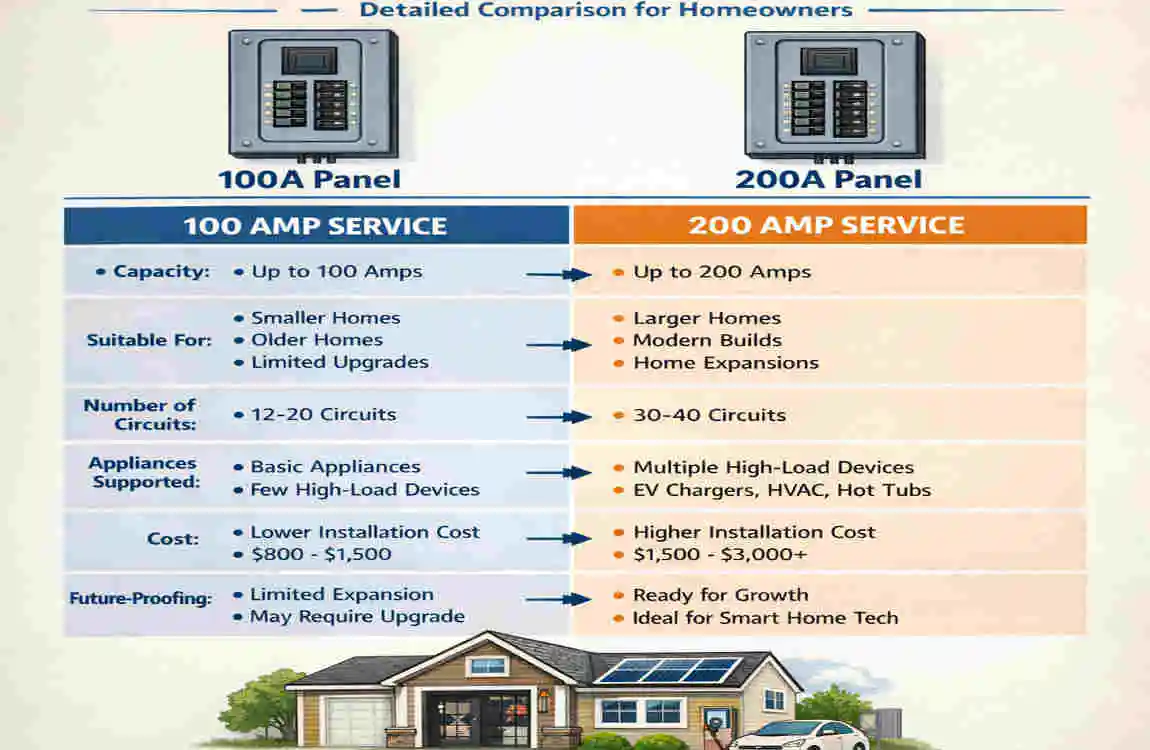
100A vs. 200A: Detailed Comparison
Feature100 Amp Service200 Amp Service
Capacity 12,000-24,000 Watts 24,000-48,000 Watts
Best For Small homes, gas appliances Large homes, EVs, smart tech
Cost to Upgrade Baseline $2,000-$5,000
Future-Proofing Limited High
Pros of 100 Amp Service:
- Lower initial cost
- Suitable for small homes with minimal electrical needs
Cons of 100 Amp Service:
- Limited capacity for modern appliances
- May require frequent breaker trips or upgrades soon
Pros of 200 Amp Service:
- Supports multiple high-power devices simultaneously
- Ideal for electric vehicles and smart home systems
- Better resale value and insurance compliance
Cons of 200 Amp Service:
- Higher installation and upgrade cost
When and How to Upgrade
Assessing Your Needs
To decide if you need an upgrade, calculate your total electrical load:
Total connected load × 80% demand factor = Required amperage
If your current service is below this number, it’s time to consider upgrading.
Upgrade Process Overview
Upgrading your electrical service involves:
- Inspection: A licensed electrician assesses your current panel and wiring.
- Permitting: Obtain necessary permits from local authorities.
- Panel swap: Replace your old panel with a new one rated for higher amperage.
- Testing: Ensure everything works safely and up to code.
Costs and ROI
Upgrading to 200 amps typically costs between $2,000 and $5,000, depending on your home and location. While it’s an investment, it can:
- Increase your home’s value
- Lower insurance premiums
- Prevent costly electrical issues
Safety Tips and Code Compliance
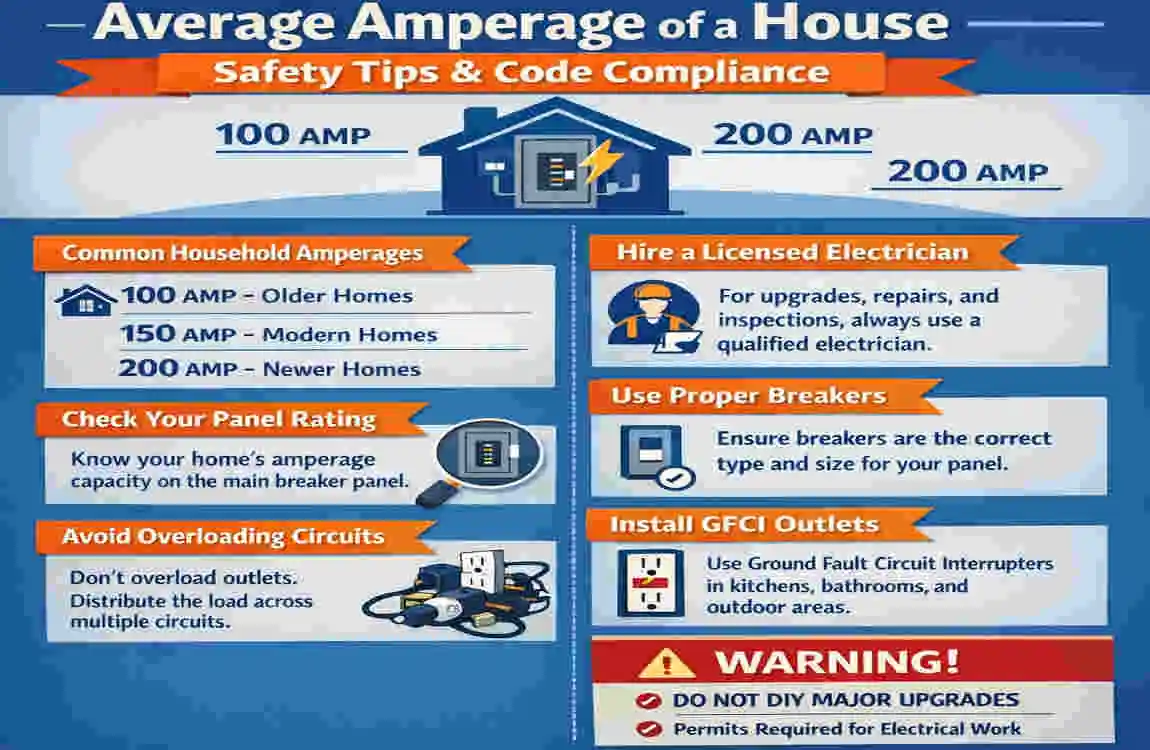
- Never overload circuits: Use circuit breakers rated between 6 and 32 amps for individual circuits.
- Schedule annual inspections: Regular checks catch problems early.
- Follow NEC 2023 updates: New builds require at least 200 amps to meet safety standards.
Staying compliant with electrical codes protects your family and property.
FAQs
Q: What is the average amperage of a house?
A: Most homes have between 100 and 200 amps, with 200 amps standard for new builds.
Q: Is 100 amps enough for my home?
A: It depends on your home size and appliances. Small homes with minimal electric use may be fine, but larger or modern homes usually need 200 amps.
Q: How do I know if I need to upgrade?
A: Frequent breaker trips, flickering lights, and hot outlets are signs that your amperage is insufficient.
Q: How much does upgrading to 200 amps cost?
A: Typically between $2,000 and $5,000, depending on your home and location.
Q: Can I install a 200-amp panel myself?
A: No, electrical work should always be done by a licensed professional for safety and code compliance.