
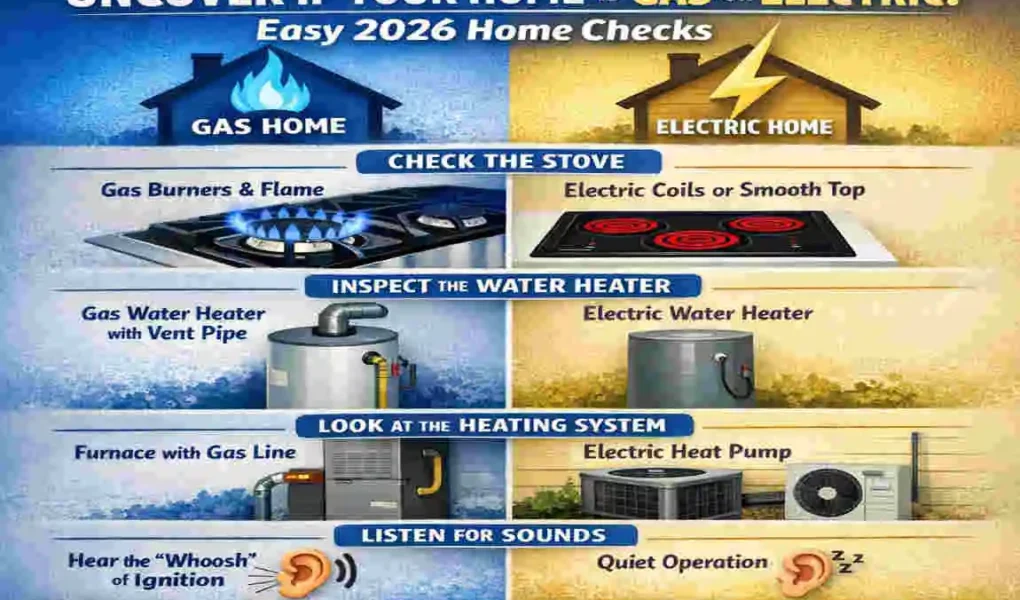
Congratulations on the new home! Whether you’ve just signed a lease, bought your first property, or you’re simply trying to budget better for the upcoming winter, settling into a new space is an exciting whirlwind. But amidst the unpacking and decorating, there is one nagging question that tends to pop up right when you are staring at a confusing thermostat or trying to set up your utilities: “Is my house gas or electric?”
It sounds like a simple question. But you would be surprised how many homeowners and renters aren’t 100% sure, especially in older homes that might have been retrofitted over the years. Knowing the answer is crucial. It doesn’t just determine who you pay your bills to; it impacts your monthly budget, safety protocols, and even how you cook your dinner.
Why Knowing Your Home’s Energy Source Matters
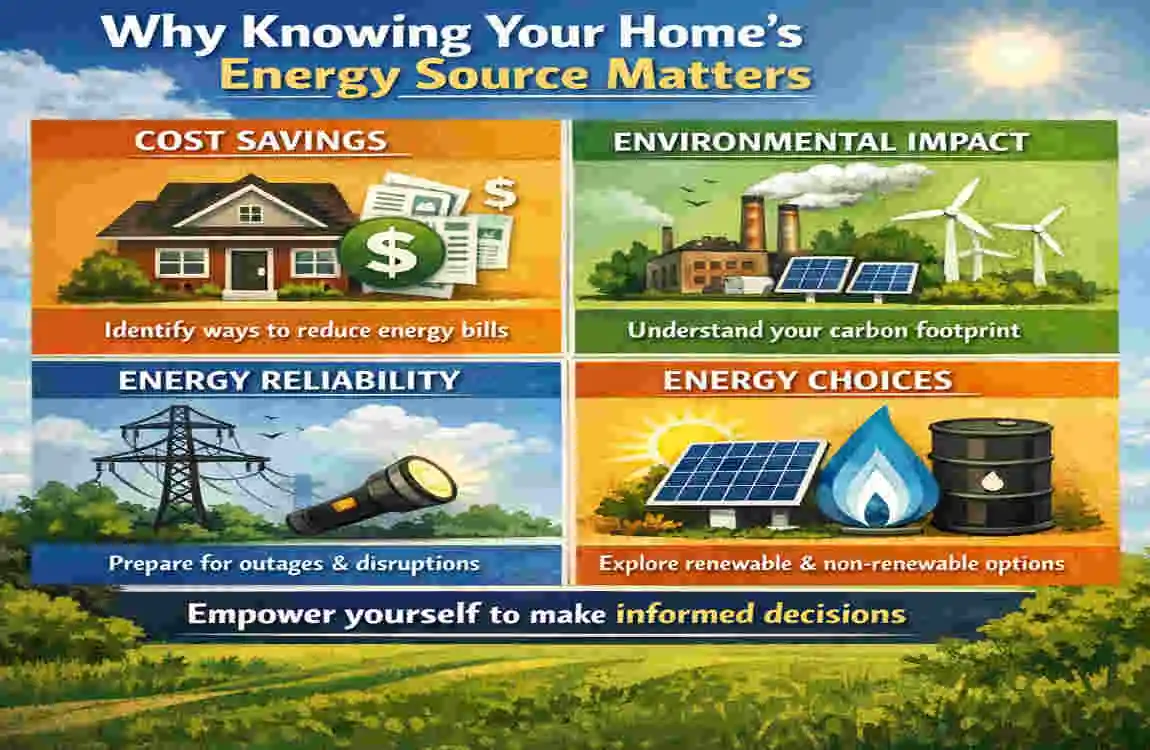
Before we start poking around the basement, let’s talk about why you are asking, “Is my house gas or electric?” It goes beyond just curiosity. Understanding your home’s energy source is the foundation of managing your household efficiently.
The Impact on Your Wallet
The most immediate impact is on your bank account. Generally speaking, natural gas has historically been cheaper than electricity for heating large spaces and water. If you are living in a colder climate, a gas furnace might save you significantly—sometimes up to 30%—compared to an electric resistance heater. However, electric heat pumps are changing the game with high efficiency. Knowing what you have helps you predict winter bills and decide if you need to budget extra for January and February.
Appliance Shopping and Upgrades
Imagine buying a stunning, professional-grade gas range for your kitchen renovation, only to have it delivered and realise you only have a 240-volt electric outlet behind the stove. Heartbreaking, right? Knowing if your home is set up for gas or electric prevents these costly mistakes. It also helps you decide on future upgrades. For example, if you run a home-based business, optimising your energy source is a tax-deductible strategy for your home office expenses.
Safety and Maintenance
Gas and electric homes require different safety mindsets.
- Gas Homes: You need to be vigilant about carbon monoxide (CO) detectors and annual inspections to prevent leaks.
- Electric Homes: The focus is more on breaker panel capacity and ensuring your electrical grid isn’t overloaded.
Currently, about 55% of U.S. homes use natural gas for heating, but the landscape is shifting. Knowing where you stand helps you maintain your home safely and effectively.
Quick Signs Your Home is All-Electric
If you suspect your home might be completely powered by the grid, there are some very obvious “tells.” An all-electric home is often simpler in terms of infrastructure—you won’t see pipes running along the exterior walls or hear the “whoosh” of a pilot light.
Here is what you should look for if you think the answer to “Is my house gas or electric?” is “100% Electric.”
The Missing Meter
The biggest giveaway is outside. Walk around the perimeter of your house. Every home connected to the grid has an electric meter (usually a glass globe with a spinning disc or a digital display). If that is the only meter you see, and there is no second, smaller meter with pipes coming out of the ground, your home is likely all-electric.
The Single Bill
When you set up your utilities, did you only have to call the electric company? If you aren’t receiving a bill from a separate gas provider (like Pacific Gas & Electric, Atmos, or your local equivalent), and your electric bill covers everything, that is a massive clue.
The “Heavy Duty” Plugs
Electric appliances that generate heat—like dryers and stoves—need a lot of power. They don’t plug into standard wall outlets. Instead, they use large, funny-looking plugs with three or four prongs that go into 240-volt outlets. If you see these behind your dryer and stove, and no metal pipes, you are looking at an electric setup.
Visual Checklist for Electric Homes
Use this table to quickly assess if your home leans toward being fully electric:
Sign: What to Look For: Likelihood of All-Electric
Meters Outside You only see one electric meter and absolutely no pipes entering the ground near it. Very High
Kitchen Appliances: Your stove has coil burners or a flat glass top, and there are no “Click-Click-Whoosh” sounds when turning them on. High
Laundry Room: There is a large 240V outlet (looks like a big face) and no flexible metal or yellow hose behind the dryer. Medium/High
Heating Vents The air coming from the vents feels “warm” but not “hot,” or you have baseboard heaters in every room. High
Quick Signs Your Home Runs on Gas
On the flip side, gas homes have distinct physical features. Gas is a physical fuel—it needs to be piped in, measured, and burned to create heat. This infrastructure is hard to hide.
If you are seeing the following signs, the answer to “Is my house gas or electric?” is likely “Gas” (or at least a hybrid system).
The Visible Gas Meter
This is the smoking gun. A gas meter usually looks like a metal contraption with pipes going into the ground and into the side of your house. It will have a regulator (looks like a flying saucer) and a dial or series of clock-like faces to measure usage. If you have this, you have gas service.
The Flame Game
Gas appliances burn fuel. This means they need a flame. If you can see a blue flame inside your water heater, furnace, or on your stove burners, you have gas. Even modern gas appliances with electronic ignitions will still produce a visible flame when operating.
The “Terms” on Your Bill
Take a close look at your utility bill. Electric usage is measured in Kilowatt-hours (kWh). Gas usage is measured in specific volume units. If you see line items for “Therms,” “CCF,” or “Cubic Feet,” you are definitely paying for natural gas.
Step-by-Step: 7 Easy Checks to Confirm “Is My House Gas or Electric”
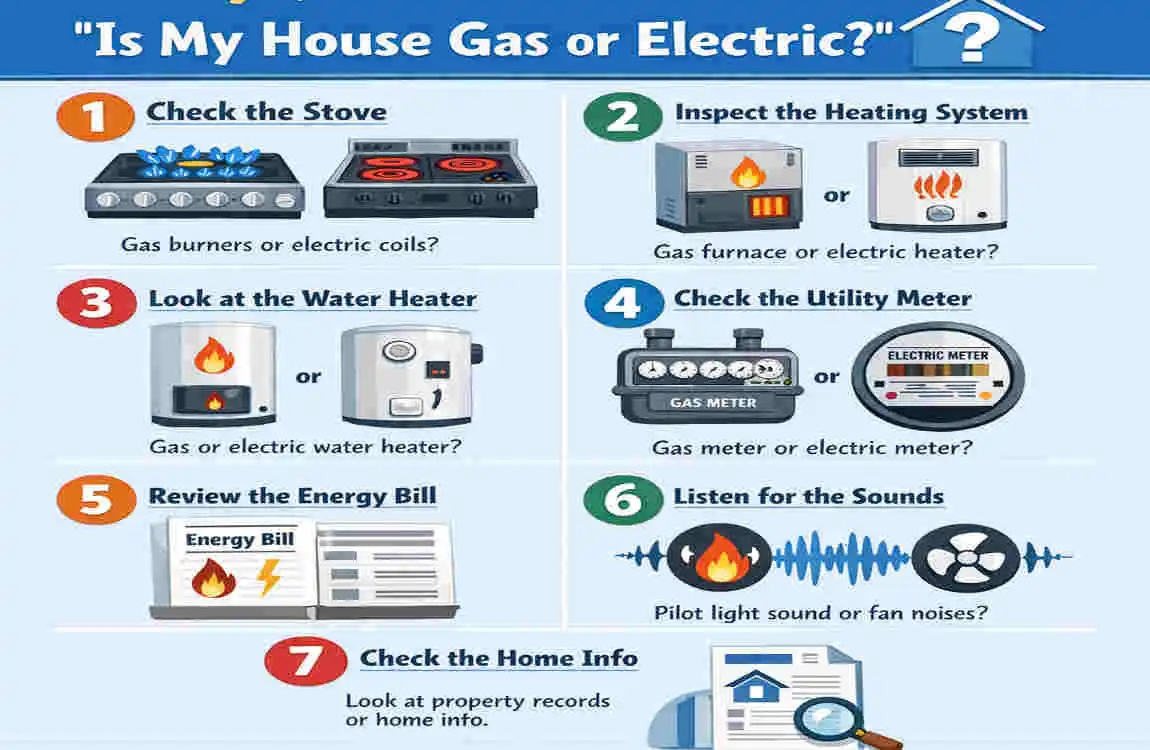
Still not 100% sure? You may have a mix, like a gas furnace but an electric stove. This happens frequently! To get a definitive answer for every part of your home, follow these 7 detailed steps. You don’t need to be a pro—just observant.
Inspect Your Utility Meters
This is the most reliable starting point. Put on your shoes and head outside. You are looking for where the energy enters your home.
- The Electric Meter: Every home has one. It is usually a square or round glass case mounted on a metal box. Inside, you’ll see a digital display of numbers or a spinning metal disc.
- The Gas Meter: Look for a second assembly of pipes. It is often located on the side of the house, but sometimes it is near the street or in the backyard. It looks more mechanical, often with visible pipes and valves. If you find this meter, your house is connected to a gas line. If you search the entire perimeter and only find the electric meter, you are likely in an all-electric home.
Review Your Bills and Statements
If it’s too cold to go outside, check your email or paperwork. Log in to your utility provider’s portal.
- Electric Bill: Look for the letters kWh. This stands for kilowatt-hour.
- Gas Bill: Look for the words Therm, CCF (centum cubic feet), or MCF.
- The “Combo” Bill: Some utility companies provide both services. If this is the case, the bill will be split into two distinct sections: “Electric Charges” and “Gas Charges.” If the “Gas Charges” section says $0.00 or “Service Unavailable,” you have your answer.
Check the Water Heater
Head to the basement, garage, or utility closet. Your water heater is a great truth-teller.
- Gas Water Heater: Look at the top of the tank. Is there a metal pipe (a flue) extending upward into the ceiling? That pipe is needed to vent exhaust fumes. Also, look at the bottom. You should see a small window or a metal kickplate where the burner is located. You might even hear the roar of the flame when the hot water is running.
- Electric Water Heater: Look for a thick, heavy-duty electrical cable connecting to the top or side of the tank. There will be no vent pipe at the top because electric heaters don’t produce exhaust.
Examine the Furnace/HVAC System
This is crucial for heating costs. Find your furnace (usually near the water heater).
- The Sound Test: Turn your thermostat up to trigger the heat. Stand by the unit.
- Gas: You will hear a click, then a whoosh sound as the burners ignite, followed by the fan.
- Electric: You will likely hear a click and then the immediate hum of the fan. It is generally quieter.
- The Label: Remove the front panel (if easy to do) or look for a manufacturer’s label. It will explicitly state “Gas Furnace” or list BTUs (for gas) vs kW (for electric).
The Kitchen Test: Stove and Oven
This is the easiest visual check. Go to your stove.
- Gas: Are there grates over burners? When you turn a knob, do you hear a click-click-click before a blue flame appears? That is undeniable proof of gas.
- Electric: Do you have spiral metal coils? Or a smooth, flat glass surface? When you turn them on, do they glow bright orange without a flame? That is electric.
- Note: It is possible to have a “Dual Fuel” range (gas cooktop, electric oven). If you have flames on top but the oven takes a long time to preheat and has an electric coil inside, you have a hybrid.
Dryer and Laundry Area
Pull your dryer away from the wall slightly (be careful!).
- Gas Dryer: You will see a flexible yellow or stainless steel corrugated hose connecting the dryer to a gas pipe in the wall. You will also see a standard 120-volt plug (like what you charge your phone with) because the gas does the heating, and electricity spins the drum.
- Electric Dryer: You will see a very thick, heavy grey or black cord ending in a large 3-prong or 4-prong plug. There will be no flexible gas hose.
Pro Tip: Check the Breaker Box
If you are still stumped, find your electrical panel (breaker box). Open the door and read the labels on the switches.
- Electric Heavy Hitters: Look for “double pole” breakers—these are two switches tied together. If you see double breakers labelled “Range,” “Dryer,” “Water Heater,” or “Furnace,” those appliances are likely electric.
- The Gas Clue: If you have a gas furnace or stove, the breakers labelled for them will be single, standard switches (usually 15 or 20 amps) because they only need enough electricity to run the clock or the fan, not the heating element.
Gas vs Electric: Costs, Efficiency, and Upgrades
Now that you have answered “Is my house gas or electric?” you might be wondering: Is one better than the other? The answer depends on your priorities, your location, and the current energy market.
The Cost of Heating
Historically, natural gas has been the budget champion. In many parts of the country, heating a home with gas costs significantly less than using an electric resistance furnace.
- Gas: Average annual heating costs often hover around $1,000 – $1,200 for a mid-sized home.
- Electric: Traditional electric heating can push annual costs upwards of $2,000 – $2,200, depending on rates in 2026.
However, this gap is closing with the adoption of Electric Heat Pumps. These devices are incredibly efficient and can often rival gas in operating costs, especially in moderate climates.
Environmental Impact and Efficiency
If your goal is a “greener” home, the debate is interesting.
- Gas: It is a fossil fuel. While cleaner than coal, it still produces carbon emissions at your home.
- Electric: This is as clean as the grid it comes from. If your electricity comes from wind or solar, an electric home is zero-emission. Plus, electric appliances are generally more energy-efficient at the point of use (less heat is wasted).
Upgrades and Switching
Can you switch from gas to electric? Absolutely. In fact, many governments and local utilities are offering massive rebates in 2026 to encourage homeowners to switch to electric heat pumps and induction stoves. This is part of the “electrification” movement. Switching from electric to gas is harder, as it requires installing new plumbing, which can be very expensive.
Quick Comparison: Gas vs Electric
AspectGas Pros/ConsElectric Pros/Cons
Cost Pro: Lower monthly operating costs for heating. Con: High installation fees for new lines. Pro: Rebates are often available for upgrades. Con: Higher monthly bills with older units.
Safety Con: Risk of Carbon Monoxide (CO) leaks. Pro: Reliable even if the grid is shaky (sometimes). Pro: No open flames, no CO risk. Con: High voltage risks if DIY-ing repairs.
Eco-Impact Con: Burns fossil fuels. Pro: Can pair with home solar panels for $0 bills.
Common Myths About Gas and Electric Homes
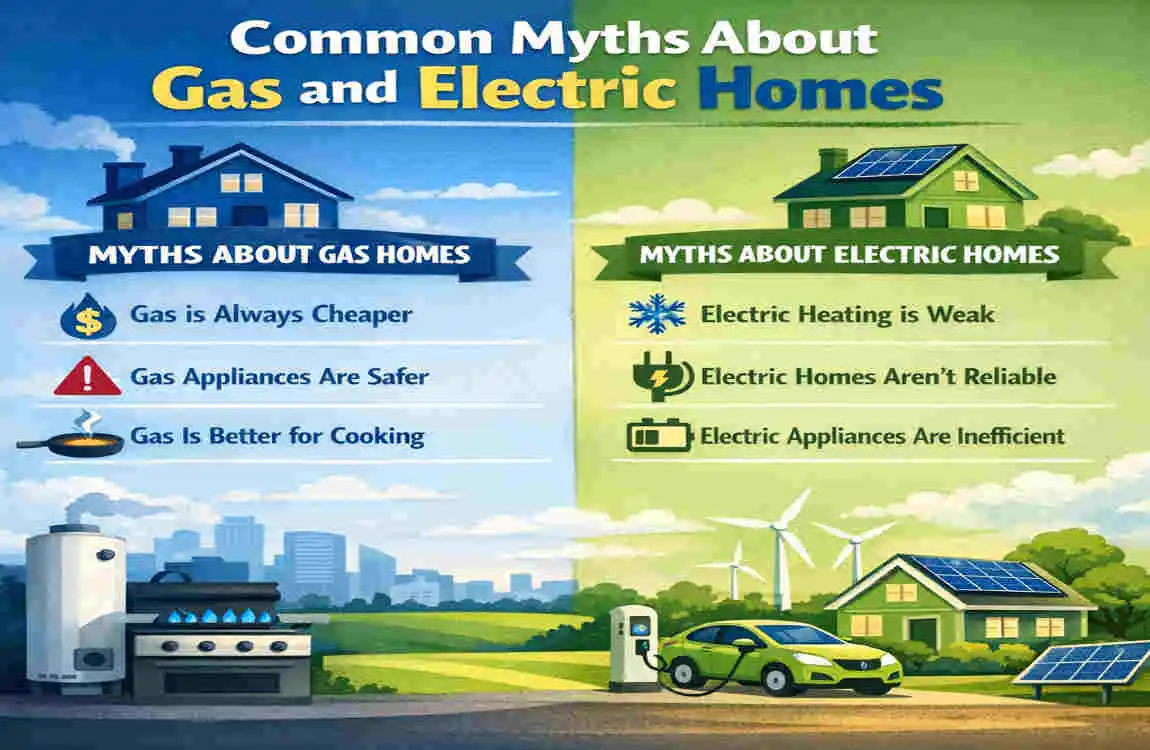
When asking “Is my house gas or electric?” you might encounter some stubborn myths from neighbours or family members. Let’s bust a few of them to give you clarity.
“Old Homes Are Always Gas”
False. While many Victorian or mid-century homes were built with gas lines, millions of older homes have been retrofitted. Landlords often convert rental properties to electric to avoid the liability of gas leaks and to simplify billing. Never assume the age of the house dictates the energy source.
“Electric Heating Can’t Keep Up in Winter”
False (mostly). This used to be true for old “resistance” baseboard heaters. But modern cold-climate heat pumps are engineering marvels. They can extract heat from the air even when it is below freezing outside, keeping your home toasty without the massive gas bill.
“Gas Stoves Are Essential for Good Cooking”
False. Professional chefs used to swear by gas, but the tide is turning toward Induction cooking (which is electric). Induction is faster, safer, and offers more precise temperature control than gas. If you find out your kitchen is electric, don’t despair—you can still cook like a pro.
Frequently Asked Questions (FAQs)
Here are some specific questions homeowners often ask when investigating their energy setup.
Is my house gas or electric if there is no meter outside?
If you have searched the entire exterior and cannot find a gas meter, it is highly likely that your house is electric. However, in some rare cases (like townhomes or condos), meters might be grouped together in a utility room or a basement bank. If you live in a multi-unit building, ask the property manager to be sure.
How to tell if my furnace is gas or electric?
The easiest way is the panel test. Remove the front access door of the furnace. If you see a blue flame, a pilot light, or a gas valve with a control knob, it is gas. If you see large heating coils (they look like the elements inside a toaster, but bigger) and heavy wiring, it is electric.
Does the water heater tell if the house is gas or electric?
Yes, it is often the easiest appliance to check. A gas water heater must have a vent pipe at the top to let dangerous fumes escape. An electric water heater is a sealed unit with no chimney or vent pipe on top.
Is home insurance cheaper for gas or electric homes?
Insurance premiums are slightly lower for electric homes. This is because gas homes carry the added risk of fire from open flames and explosions from gas leaks. However, the difference is usually minor compared to other factors like the age of the roof or location.
Can I switch my house from gas to electric?
Yes! This is becoming very common. It usually involves upgrading your electrical panel (to handle the extra load) and swapping out appliances. In 2026, check for federal and state incentives that cover a large chunk of the cost for switching to electric heat pumps or induction stoves.