Have you ever pulled into your driveway after a long day, stared at your garage, and wondered, “How wide is a double garage door, and will my new SUV actually fit next to the sedan?” You are definitely not alone! This is one of the most common questions we get from homeowners, renovators, and anyone tired of sucking in their stomach to squeeze out of their car door.
Whether you are building your dream home from scratch, planning a major renovation, or simply looking to upgrade your existing garage door, getting the dimensions right is absolutely critical. It’s not just about fitting two cars side-by-side; it’s about comfort, safety, and protecting your car’s paint job from accidental door dings.
Standard Double Garage Door Widths
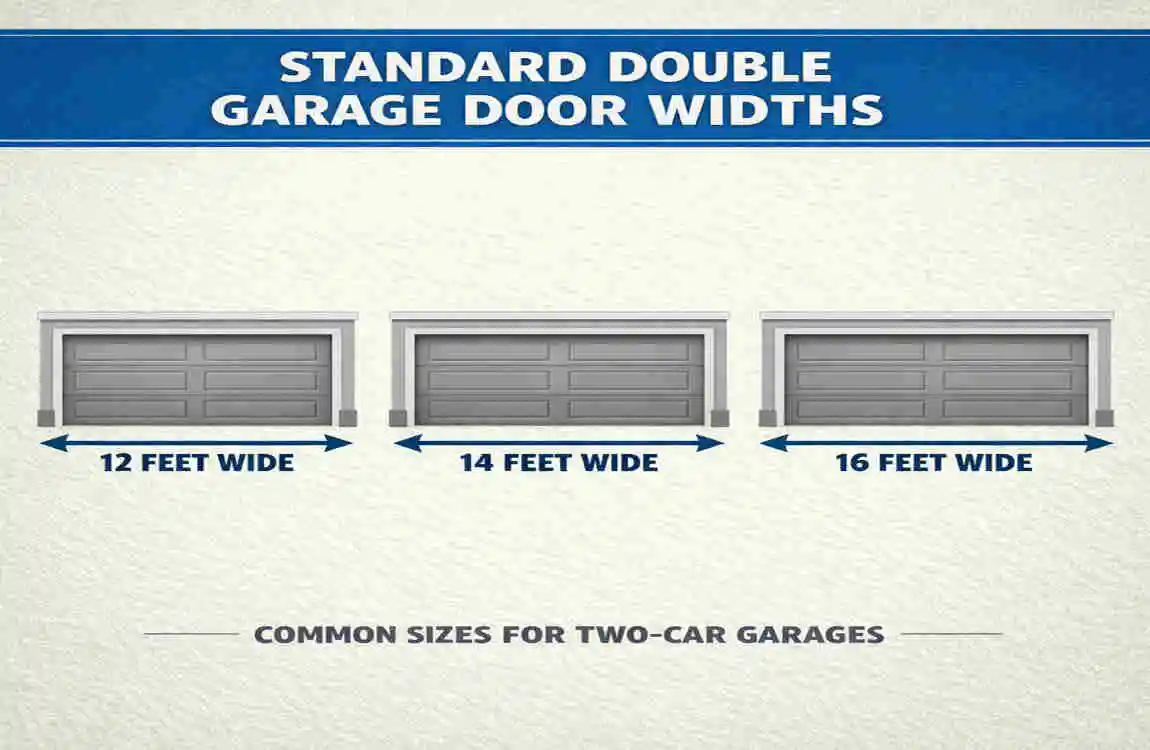
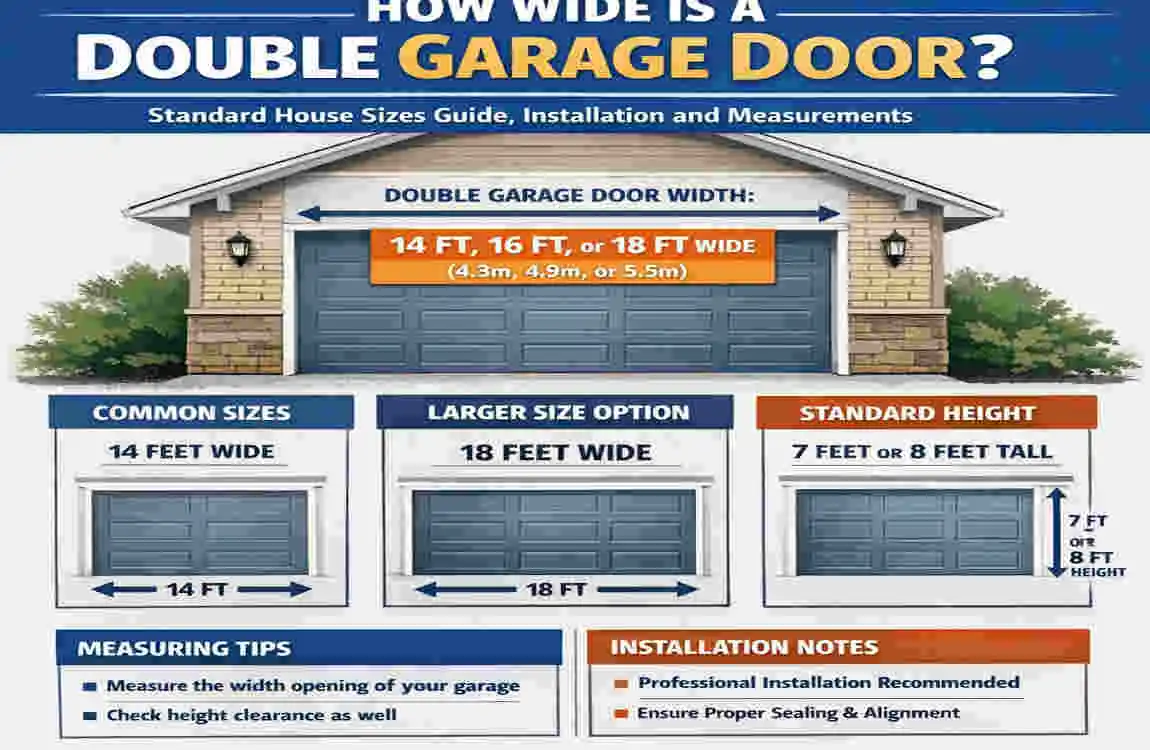
When it comes to the “gold standard” of residential construction in the United States, there is one number you need to memorise: 16 feet.
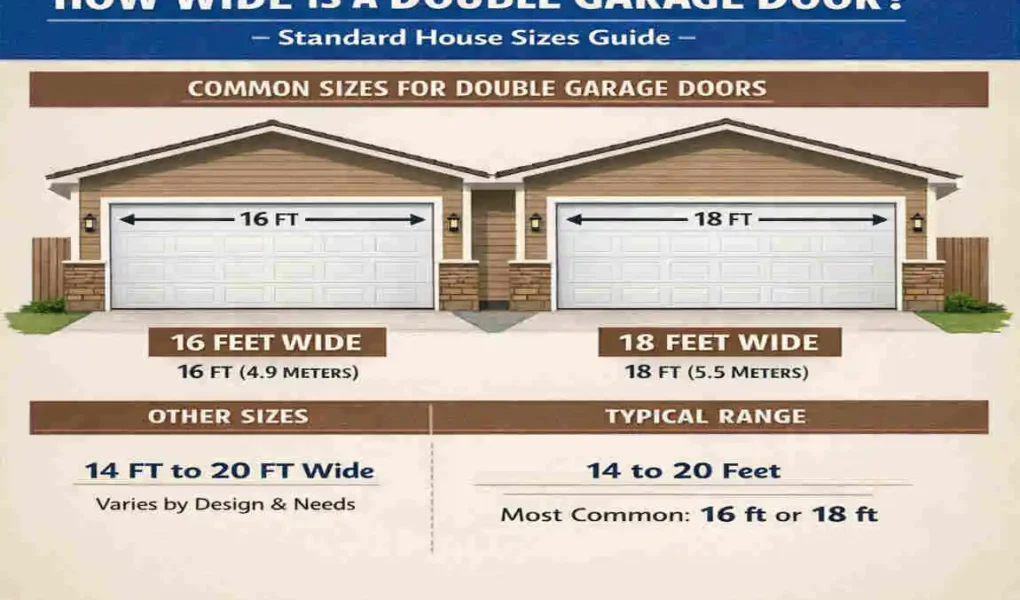
The vast majority of double garage doors installed in standard residential homes are 16 feet wide. This width is generally considered the sweet spot for accommodating two average-sized vehicles—think two Toyota Camrys or a small SUV and a sedan—parked side by side.
However, while 16 feet is the most common, the standard range actually varies between 14 and 18 feet, depending on when your home was built and its architectural style.
The Standard Height Factor
While we are focused on width, we can’t ignore height. The standard height for a double garage door is typically 7 feet. This is sufficient for most cars and standard SUVs. However, if you drive a lifted truck or have a roof rack carrier that you never take off, you might see doors that are 8 feet high.
To give you a better perspective on how US standards compare to our friends across the pond, take a look at this comparison table:
Region Width (ft)Width (m)Height (ft)Fits Vehicles
US Standard 16 4.88 7-8 2 sedans/SUVs
Australia 15.75 4.8 6.89 2 cars comfortably
UK/EU 14-16 4.3-4.9 7 Compact to mid-size
Why is 16 Feet the Magic Number? You might be wondering, “Why 16 feet?” It comes down to basic math and clearance. The average car is about 6 to 6.5 feet wide. Two cars equal roughly 12 to 13 feet of metal. A 16-foot door leaves you with about 3 to 4 feet of wiggle room. That splits into roughly 1.5 to 2 feet of space between the cars and the door frame, allowing you to open your doors without hitting the wall or the car next to you.
Factors Affecting Double Garage Door Size
While 16 feet is the standard, it isn’t a “one size fits all” law. Several factors should influence your decision on how wide a double garage door should be for your specific situation. Don’t just go with the default; consider your lifestyle.
Vehicle Types and Sizes
This is the biggest variable. If you are a household with two Mini Coopers, a 14-foot door might be tight but manageable. However, if you own two full-size pickup trucks (like a Ford F-150 and a Ram 1500), a 16-foot door will feel like a trap.
- Sedans: typically need about 6–7 feet of width each.
- Trucks/Large SUVs: can be nearly 8 feet wide, including mirrors.
- The Verdict: If you have large trucks, you should strongly consider upgrading to an 18-foot wide door.
House Architecture
The visual balance of your home matters.
- Ranch-Style Homes: These long, low houses often look great with wider, more dominant garage doors.
- Two-Story Colonials: A massive 18-foot door might look overwhelming on a narrower house front.
- Modern Homes: Often utilise custom sizes to achieve a sleek, specific look.
Essential Clearance
You need to add 1 to 2 feet of clearance on each side for the opening mechanism and general manoeuvrability. Never plan a door spanning the entire width of the internal garage space; you need structural support on the sides (the “jambs”).
Important Considerations List:
- Driveway Slope: If you have a steep driveway or a sharp turn into the garage, you need a wider door to account for the turning radius. You won’t be entering perfectly straight every time.
- Storage and Workspace: Do you keep lawnmowers, bikes, or a workbench on the side? A wider door ensures you aren’t hitting these items when you pull in.
- Local Building Codes: Always check this first! Some local municipalities have strict codes regarding minimum driveway and garage door widths (often 14 feet for two-car garages).
Standard House Sizes for Garages
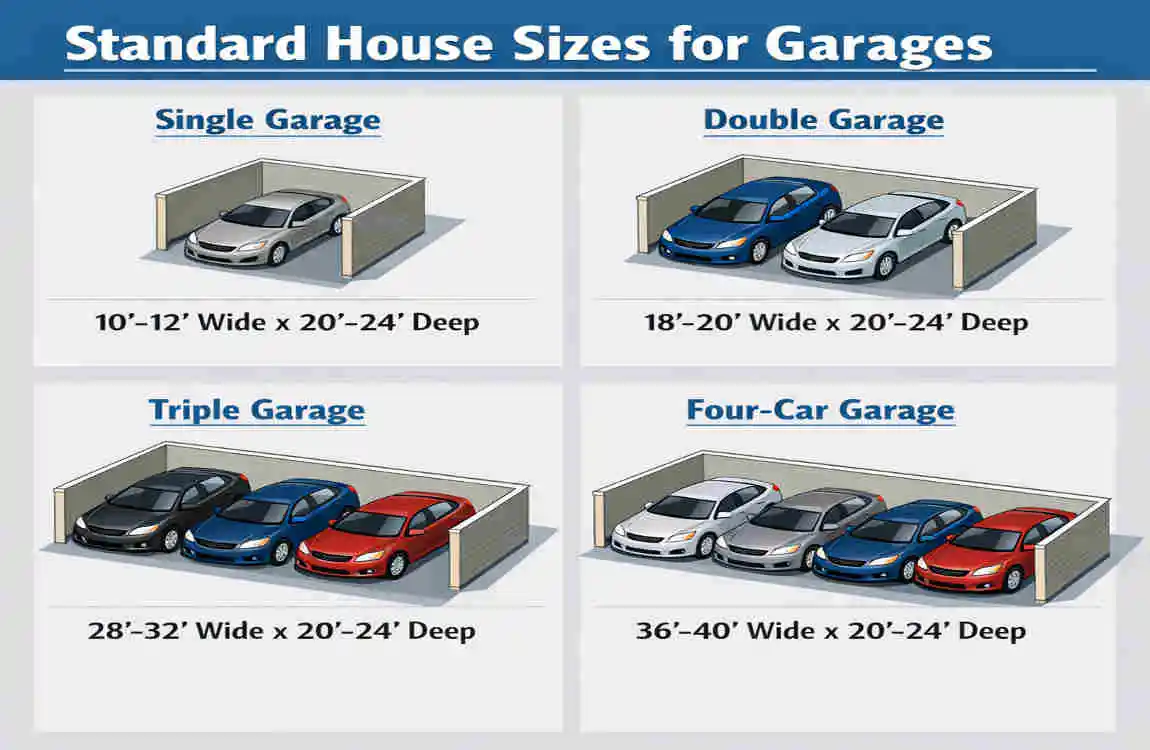
To understand the door, you have to understand the room it leads into. The standard dimensions of house garages are directly tied to the door size. You can’t put an 18-foot door on an 18-foot wide garage!
Single-Family Home Standards
For a typical single-family home, the internal dimensions of a two-car garage usually fall within the 20×20 feet to 24×24 feet range.
- 20×20 Feet: This is considered the “minimum” standard. It fits two cars, but barely. With a 16-foot door, you only have 2 feet of wall space on either side of the door opening. This leaves very little room for shelving or opening car doors wide.
- 24×24 Feet: This is the “comfortable” standard. It allows for longer vehicles (depth) and wider door opening space (width).
Double garage doors are usually used in homes ranging from 2,000 to 3,000 square feet. Here is a breakdown of how garage sizes typically align with house types:
House TypeInternal Garage Size (ft)Door Width (ft)
Small Ranch / Starter 20×20 14-16
Mid-Size Family Home 22×22 16
Large / Luxury / Modern 24×24+ 16-18
Pro Tip: Think of your garage as another room. Standard living rooms are often around 12×16 feet. A garage is significantly larger, yet we often give it less design thought. Ensuring your garage depth is at least 24 feet allows you to walk around the back of your car with the garage door closed—a luxury you will appreciate when carrying groceries in the rain!
Custom vs Standard Sizes: Which Is Right for You?
Should you buy off the shelf, or go bespoke? This is a question of budget versus need.
The Case for Standard Sizes
Standard sizes (16×7 or 16×8) are mass-produced. This means they are readily available in stock at big-box hardware stores and from local installers. Because they are manufactured in bulk, the cost is significantly lower. If you break a panel, finding a replacement is easy and cheap.
The Case for Custom Sizes
Custom sizes are necessary if you have a unique home design, an older home with non-standard framing, or specific vehicle needs (like a tall RV or boat). You can order a door that is exactly 17 feet 3 inches if you really need it, or a 10-foot-high door to accommodate a lifted Sprinter van.
Aspect Standard Custom
Cost Lower ($1,500 – $4,000) Higher ($5,000+)
Availability Immediate / Off-shelf 4-8 weeks lead time
Fit Fits 90% of homes . Exact specific needs
Repairs , Parts easily found . Parts may need ordering
When to Customise? If you use your garage as a workshop, gym, or studio, you might want a custom-insulated door with specific window placements for natural light. If you own an RV, you absolutely need a custom height (often 10-14 feet high).
Installation and Measurements Guide
Ready to get your hands dirty? Or at least, get your tape measure dusty? Measuring for a double garage door requires precision. A mistake here can be a very expensive headache later.
Follow this step-by-step guide to get it right:
- Measure the Rough Opening: This is the distance from the inside of the left structural stud to the inside of the right structural stud. Do not measure the old door! Measure the opening.
- Tip: The “Rough Opening” should be the exact size of the door you are buying. If you buy a 16×7 door, your rough opening should be 16 feet wide by 7 feet high. The door sits behind the opening, overlapping it.
- Side Room (The “Jambs”): Measure the width of the wall on each side of the opening. You typically need 3.75 to 5 inches on each side for the vertical track installation.
- Headroom: This is crucial! Measure the distance from the top of the door opening to the ceiling (or to the lowest obstruction, such as a light fixture or garage door opener motor).
- Standard tracks need 10 to 12 inches of headroom.
- If you have less, you may need “low headroom” hardware.
- If you want an automatic opener, add another 3 inches.
- Backroom: Measure the depth of the garage. You need the door height plus 18 inches. For a 7-foot door, you need at least 8.5 feet of clear ceiling space back into the garage for the door to retract.
Pro Tip: While measuring is a great DIY task, installing high-tension springs can be dangerous. We always recommend hiring a professional to handle the actual install to ensure code compliance and safety.
Cost Breakdown by Size
Money talks. How much is this going to cost you?
For a standard 16-foot wide double garage door, you can expect to pay between $1,500 and $3,500 installed.
Why the huge price range? It depends on the materials and features:
- Material: A single-layer steel door is the cheapest. A real wood carriage-style door is the most expensive.
- Insulation: Uninsulated doors are cheap. Doors with high R-value polyurethane insulation (great for attached garages) cost more but save you money on energy bills.
- Windows: Adding windows to the top panel adds style and light but increases the cost.
- Automation: Don’t forget the opener! A good Wi-Fi-enabled opener adds $300-$600.
Regional Note: Prices fluctuate based on where you live. In urban areas or places with high import shipping costs (like Lahore or remote islands), prices can be significantly higher due to logistics.
Common Mistakes and Fixes
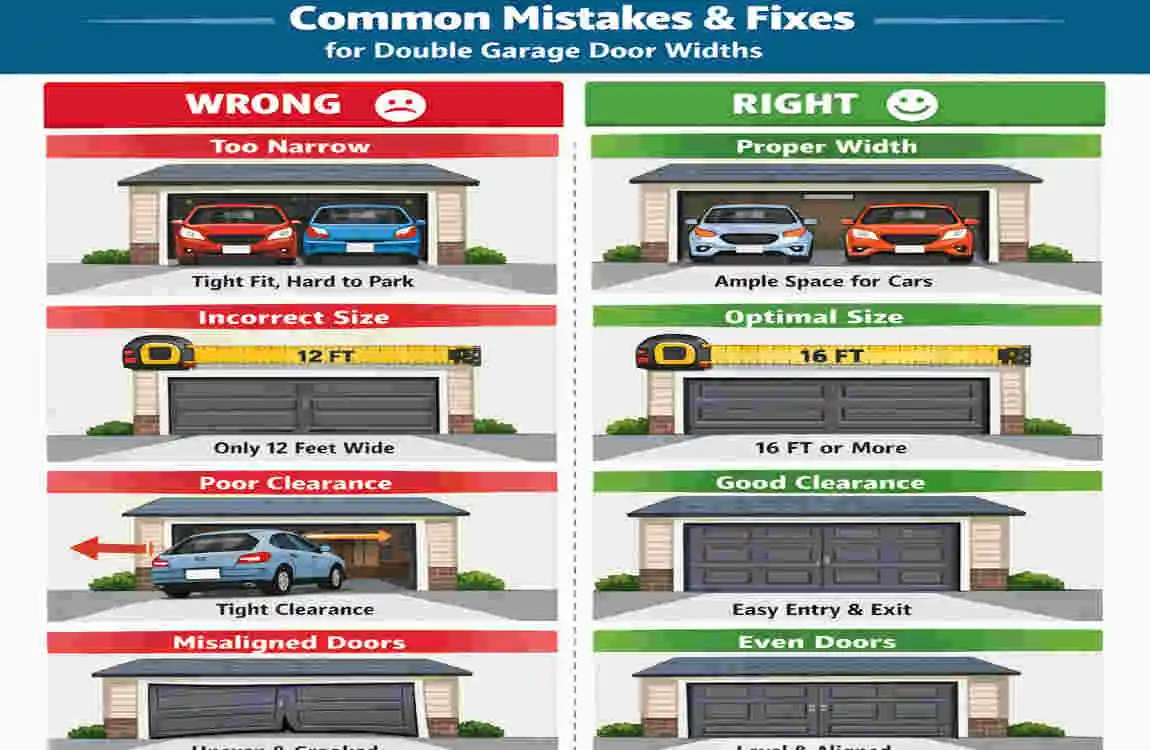
We see homeowners make the same mistakes over and over. Avoid these pitfalls to ensure a smooth project.
- Undersizing for Modern Trucks:
- Mistake: Installing a 16-foot luxury door for two full-size dually trucks.
- Fix: If you have big toys, go for the 18-foot width. It’s a small price to pay for years of convenience.
- Ignoring Headroom:
- Mistake: Buying a standard door without checking the ceiling height or light fixtures.
- Fix: Measure the “headroom” distance meticulously. If it’s tight, order a “low headroom kit” immediately.
- Skipping Insulation:
- Mistake: Buying a non-insulated door for a garage attached to the house.
- Fix: Your garage acts as a buffer. An insulated door keeps your home warmer in winter and cooler in summer. It’s worth the extra investment for the energy savings alone.
FAQs
Here are the quick answers to the questions you might be asking your phone right now.
How wide is a double garage door in meters? A standard US double garage door (16 feet) is approximately 4.88 meters wide. In Australia and other metric-using countries, the standard is often 4.8 meters to 5.5 meters.
Can I fit two trucks in a standard double garage? It is possible, but it will be very tight. A standard 16-foot door leaves very little room for mirrors on two full-size trucks. We strongly recommend a minimum of 18 feet wide for two trucks.
What is the standard height of a garage door? The most common height is 7 feet. However, 8-foot heights are becoming increasingly popular for new homes to accommodate roof racks and taller SUVs.
Do I need a double door or two single doors? Two single doors (usually 8 or 9 feet wide each) offer better aesthetics and structural integrity. Still, a single double door (16 feet) is generally cheaper and easier to automate (one opener vs two).