
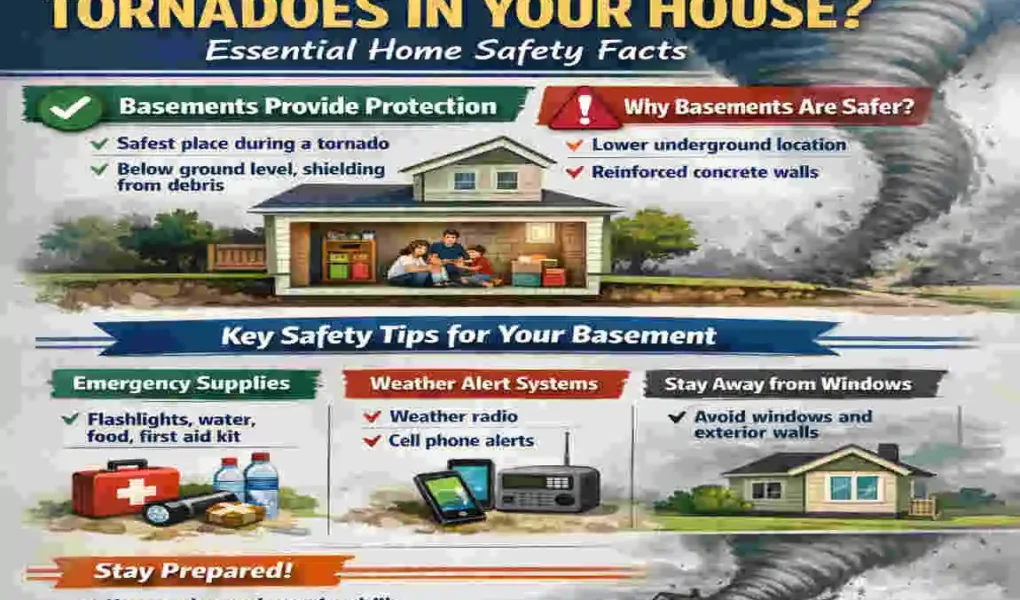
The sky turns a bruising shade of green, the wind begins to howl like a freight train, and the emergency sirens start their eerie wail. It’s a scenario that plays out over 1,200 times a year across the United States. In that heart-stopping moment, your first instinct is likely to run downstairs. But it begs the critical question: Are basements good for tornadoes?
Basements excel as shelters primarily because they offer an underground barrier against the catastrophic power of EF-scale winds. Being below ground level places you out of the direct line of fire from flying debris—the number one cause of injury and death during these storms. However, a cluttered, flood-prone basement, or one located directly beneath heavy furniture, can pose its own set of hazards.
Common Myths About Basements in Tornadoes
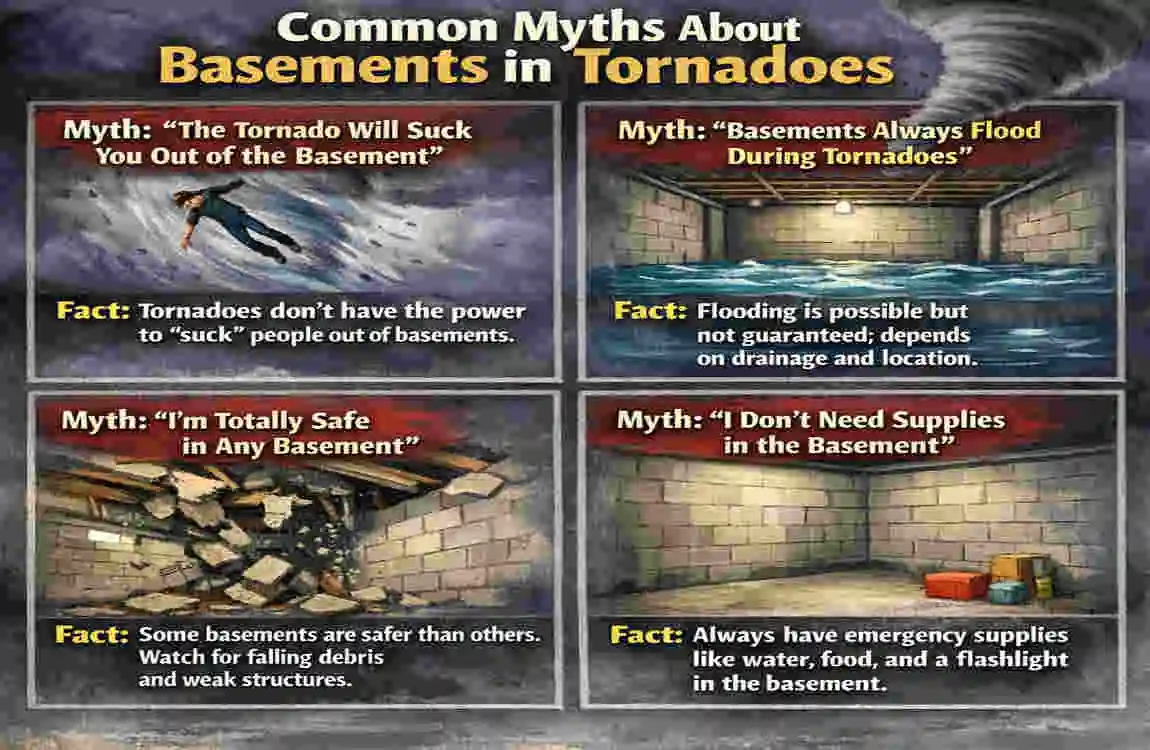
When it comes to tornado safety, misinformation can be just as dangerous as the storm itself. Many of us grew up hearing “rules of thumb” that might actually put us in harm’s way. Let’s clear the air and debunk the most persistent myths about basement tornado safety.
All Basements Are Equal Shelters
There is a widespread belief that as long as you are underground, you are safe. This is false.
- The Reality: Basement structural integrity varies widely. A walk-out basement, for example, often has sliding glass doors or large windows that can shatter instantly, allowing wind to pressurize the house and potentially lift the roof.
- The Fix: Only interior spots, specifically those away from windows, doors, and exterior walls, offer true protection. You need to put as many barriers between you and the outside world as possible.
Basements Are Flood-Proof During Storms
Many people assume that because a tornado involves wind, water isn’t a concern.
- The Reality: Tornadoes are almost always accompanied by severe thunderstorms and torrential rain. If your basement is in a low-lying area or has poor drainage, it can flood rapidly while you are taking shelter.
- The Fix: You must account for flood risk. If your designated shelter spot is prone to water, elevate your emergency supplies and have a backup plan.
No Preparation Is Needed
“It’s a basement; it’s made of concrete. I’m fine.” This mindset is dangerous.
- The Reality: Clutter kills. In the violent shaking of a tornado, unsecured items in your basement—like paint cans, tools, or exercise equipment—can become deadly projectiles. FEMA data suggests that debris impact causes the majority of tornado-related fatalities.
- The Fix: A safe basement is a clean basement. Prepping the area is just as important as going there.
By understanding that not all underground spaces are created equal, you can stop relying on luck and start relying on preparation.
Why Basements Are Effective Tornado Shelters
So, if there are myths and risks, why are basements still the gold standard for most homes? The answer lies in physics and engineering. When you ask, “Are basements good for tornadoes?”, you are really asking about protection from wind velocity and debris impact.
The Science of Underground Protection
The most devastating force of a tornado is the wind speed, which can exceed 200 mph in severe EF4 or EF5 storms.
- The Wind Shield: Wind moves horizontally. By being underground, you are effectively removing yourself from the wind’s path. The earth surrounding your basement walls acts as an impenetrable shield that wind cannot knock down.
- Debris Deflection: In a tornado, 2x4s, tree branches, and even vehicles can be hurled through the air like missiles. Above-ground walls, even brick ones, can be penetrated by debris traveling at high speeds. The soil backing your basement walls absorbs this impact energy, preventing penetration.
Structural Advantages
Compared to above-ground rooms, basements offer superior stability.
- Foundation Anchoring: The basement is the foundation. While the upper floors of a house can be sheared off by extreme winds (a failure of the load path), the foundation itself rarely moves.
- Collapse Voids: Even if the house above collapses, basements often retain “survivable void spaces.” This is particularly true if you are sheltering under a sturdy workbench or a reinforced stairwell.
NOAA and Expert Endorsements
The National Oceanic and Atmospheric Administration (NOAA) and safety experts consistently endorse basements as a top option for homes that lack a certified safe room. In regions like the Midwest, where soil types and frost lines make basement construction common, they have historically been the primary reason for lower casualty rates in residential areas compared to regions where slab foundations are the norm.
However, to maximize this effectiveness, you must identify the ideal spot. This is usually:
- Under the stairs (which offers structural reinforcement).
- Away from any windows (even small hopper windows).
- Against an interior wall.
Potential Risks and Limitations of Basements
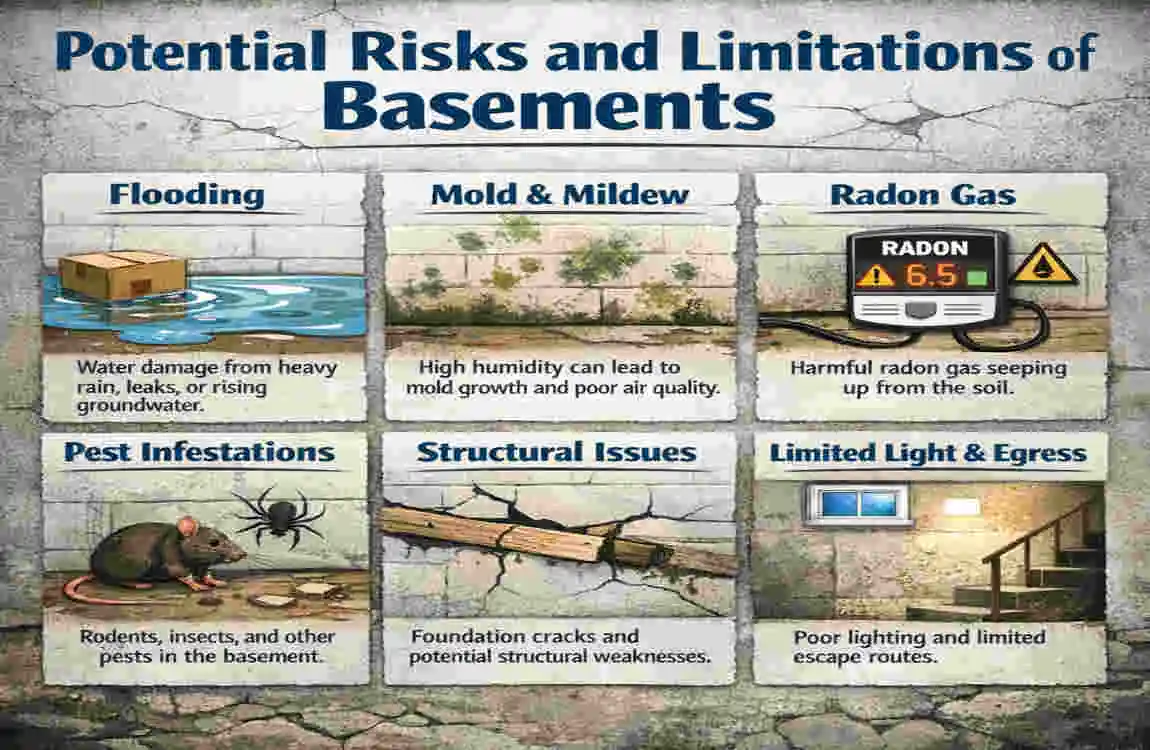
While basements are excellent, we need to have a balanced view. Most standard basements were not built specifically as FEMA-rated safe rooms. They were built to hold up a house, not necessarily to withstand a direct hit from an EF5 tornado without issues.
Understanding the “failure points” of a basement allows you to mitigate them. Here is a breakdown of the risks involved:
Basement Risk Assessment Table
Risk Description Mitigation Strategy
Falling Heavy Objects Items on the floor above you (refrigerators, pianos, waterbeds) can crash through the floorboards if the house collapses. Map it out: Look at your first-floor layout. Never position your shelter spot directly beneath heavy furniture or appliances.
Heavy rains accompanied by tornadoes can cause sewer backups or basement flooding. Elevate & Seal: Keep emergency kits on shelves, not the floor. Ensure sump pumps have battery backups.
Poor Construction Older block foundations may have cracks or lack rebar reinforcement, leading to wall failure in extreme pressure drops. Inspect: Have a contractor check for structural weakness. Avoid walls with visible horizontal cracks.
Entrapment/Access: If the house collapses into the basement, the stairs may be blocked, trapping you underground. Tools: Keep a whistle to signal rescuers. Some experts recommend keeping a hydraulic jack or crowbar in your emergency kit.
Hazardous Materials Basements are often used for storing chemicals, paints, and solvents. If these spill, fumes can be toxic in a confined space. Secure them: Store chemicals in latched cabinets or completely remove them from the shelter area.
The “Spider Web” Effect
Another minor but panic-inducing limitation is the environment itself. Basements can be dark, damp, and filled with cobwebs. While this may seem trivial, in a high-stress situation involving children or pets, a comfortable, clean environment helps keep everyone calm. If your basement is scary to your kids before the storm, it will be terrifying during it.
Step-by-Step Basement Prep Checklist
This is the most important section of this guide. Knowing “are basements good for tornadoes” is passive knowledge; preparing your basement is active safety. Follow this checklist to transform your basement from a storage space into a life-saving bunker.
Identify Your Safe Corner
Go downstairs right now. Look for a location that meets these criteria:
- West or South? Old myths said the southwest corner was safest. New research suggests the northeast corner of a central location is often better to avoid debris falling from the direction of the storm’s approach.
- No Windows: Avoid walk-out doors or window wells.
- Structural Cover: Is there a sturdy workbench? Can you get under the stairwell?
The Great Declutter
You cannot safely navigate a basement in the dark if it is an obstacle course.
- Clear Paths: Ensure a 3-foot wide path from the bottom of the stairs to your safe spot.
- Secure Hazards: Strap your water heater to the wall. Bolt down shelving units. Move heavy storage boxes to the floor so they can’t fall on you.
Build Your “Go-Kit.”
Stock a plastic bin or duffel bag specifically for this area. Do not rely on grabbing things from the kitchen on your way down. Your kit should include:
- Protection: Bike helmets or construction hard hats for every family member (essential for head protection).
- Communication: A battery-powered or hand-crank NOAA weather radio.
- Light: Flashlights and headlamps (with extra batteries). Do not use candles due to the risk of gas leaks.
- Signals: A loud whistle to alert first responders if you are trapped.
- Comfort: Heavy blankets or sleeping bags to protect against glass shards and cold.
- Basics: Water bottles and a basic first aid kit.
Reinforce the Structure (DIY to Pro)
Depending on your budget ($500-$2,000+), you can physically improve the space.
- DIY: Screw heavy plywood to the underside of the stairwell to create a debris barrier.
- Pro: install a steel storm door on walk-out entrances.
- Expert: Anchor the sill plate of your home to the foundation if it hasn’t been done (common in older homes).
The Family Drill
A plan is useless if no one knows it.
- Practice: Run a drill where everyone is in their bedrooms; you yell “Tornado!” and time how long it takes to reach the basement safe spot.
- Pets: Assign one adult to grab the dog/cat carrier. Keep a leash permanently near the basement door.
Seasonal Inspection
Every spring, before storm season:
- Check for foundation cracks/seepage.
- Test the sump pump.
- Refresh water and batteries in your kit.
Alternatives If No Basement
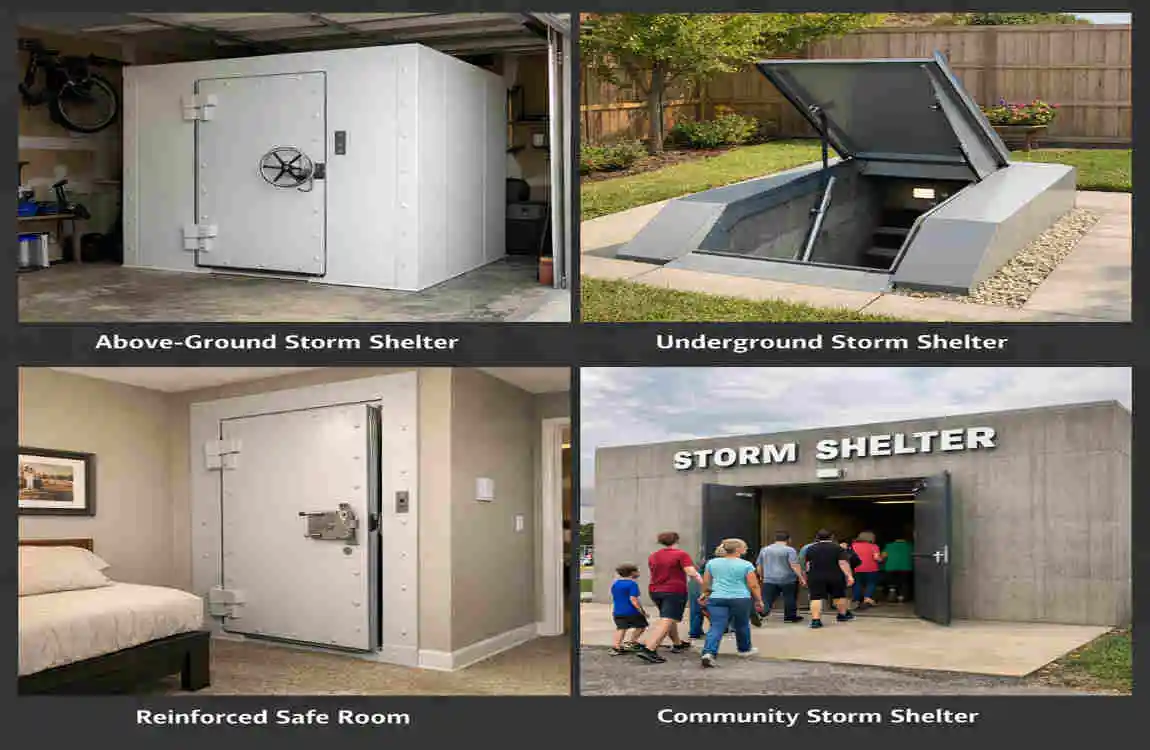
Not everyone has a basement. In the Southern United States, high water tables and limestone bedrock often make basements impossible to build. If you live in a slab-foundation home, you need different strategies.
Here is how alternative shelter options compare to the traditional basement:
OptionProsCons
Interior Bathroom/Closet Accessibility: Immediate access on the main floor. No stairs to navigate. Plumbing: Pipes in walls can sometimes offer slight structural resistance. Protection: Significantly less protection than underground. Vulnerable to roof collapse and piercing debris. Space: Often very cramped for families.
Above-Ground Safe Room Strength: Reinforced with steel/concrete to withstand EF5 winds/debris. Flood Proof: No risk of water filling the room. Access: Easy for elderly or disabled residents. Cost: Expensive to retrofit ($3,000-$8,000+). Aesthetics: Takes up living space in a garage or spare room.
In-Ground Garage Shelter Safety: Excellent protection (EF5 rated). Space: Does not take up square footage inside the house. Access: You must enter the garage to reach it (dangerous if the garage collapses). Flooding: Can be prone to leaks if not installed perfectly.
The Verdict on Alternatives
If you do not have a basement, an interior bathroom (specifically the bathtub, covered with a mattress) is your best immediate low-cost option. However, if you live in “Tornado Alley” or “Dixie Alley” and do not have a basement, investing in a prefabricated storm shelter or safe room is strongly recommended. It is the only thing that rivals—and sometimes exceeds—the safety of a basement.
Real-Life Case Studies: Basements in Action
Statistics are one thing, but real stories paint the true picture of why the question “Are basements good for tornadoes?” matters.
Joplin, Missouri (2011)
In the catastrophic EF5 tornado that leveled Joplin, Survival stories frequently centered on basements. While many homes were swept completely clean off their foundations—leaving nothing but a concrete slab—those who were able to get below grade had a significantly higher Survival rate. However, survivors also noted that debris piled heavily over basement exits, requiring neighbors to dig them out. This highlights the importance of having a whistle and notifying out-of-town family of your shelter plans.
Mayfield, Kentucky (2021)
During the long-track tornado event in December 2021, many older homes with basements were destroyed. Yet residents who huddled in the basements’ corners survived despite the home above them disintegrating. One notable takeaway from this event was the importance of head protection. Survivors noted that while the basement walls held, falling bricks and timber caused head injuries to those without helmets.
The Reddit Consensus
Online communities like r/tornado frequently discuss Survival strategies. A recurring theme in user anecdotes is the terrifying sound of the house “groaning” above. Users consistently advise that having a battery-powered radio was the only thing that kept them sane, drowning out the wind’s noise and keeping them updated on when the danger had passed.
Expert Recommendations
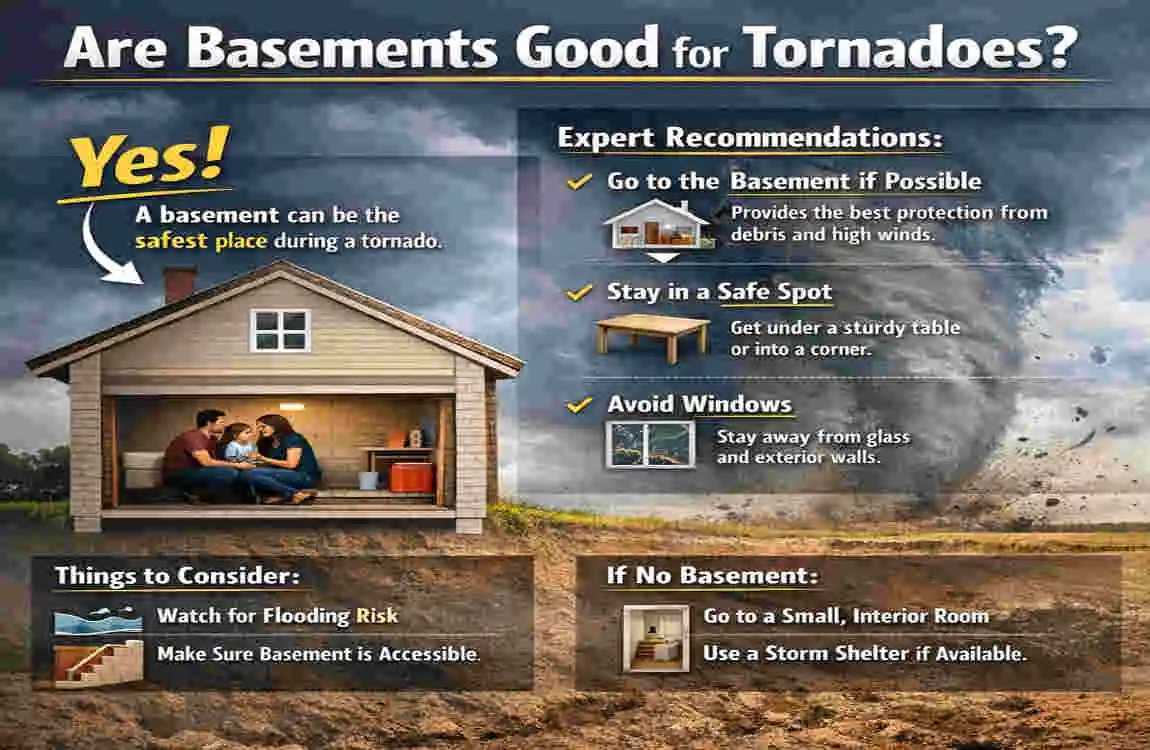
We have gathered insights from top safety organizations, including the American Red Cross, FEMA, and heavy-weather construction specialists. Here is what the pros say you absolutely must do:
“Pinpoint the Spot Now”
Experts emphasize that decision fatigue is real. When the siren sounds, your brain enters fight-or-flight Mode. If you haven’t already decided exactly where to sit, you might freeze.
- Tip: Mark the floor of your safe spot with tape. It sounds extreme, but it trains your brain visually.
The “Helmet Rule”
Meteorologists on television have started urging viewers to put on helmets.
- Expert Quote: “The number one trauma seen in hospitals after a tornado is blunt force trauma to the head. A $20 bicycle helmet can be the difference between a concussion and a tragedy.”
Shut Off Utilities?
There is debate on this, but most experts agree:
- If you have time, shut off the gas line to prevent a fire if the house is damaged.
- If the tornado is close: Do not waste time. Get to safety immediately. Life is more valuable than property.
Footwear Matters
Never run to the basement barefoot. If you survive the storm, you will likely be walking out over broken glass, nails, and splintered wood. Keep a pair of sturdy old sneakers tied to your shelter kit.
Frequently Asked Questions (FAQ)
Q: Are basements good for tornadoes of all strengths? A: Generally, yes. A basement is the safest location in a standard home. However, in rare EF5 tornadoes, even basements can be compromised if the home is swept off its foundation. For 98% of tornadoes, a basement offers near-total protection.
Q: What if my basement starts to flood during the tornado? A: This is a terrifying “pick your poison” scenario. If water rises rapidly, get up on a workbench or table. Do not leave the basement to go outside into the tornado unless the water level poses an immediate drowning risk.
Q: Can I build a safe room inside my basement? A: Yes! This is actually the ideal setup. You can bolt a steel safe room to the concrete floor of your basement. This gives you the benefits of being underground, along with the structural assurance of a rated shelter.
Q: How much does it cost to prep a basement for tornadoes? A: Basic prep (cleaning, kit, helmets) costs under $200. Structural reinforcements or the purchase of a safe room can cost between $3,000 and $6,000.
Q: Should I open windows in the basement to equalize pressure? A: NO. This is a dangerous myth. Opening windows wastes precious time and allows violent wind and debris to enter the home, increasing the risk of structural failure. Keep everything closed and get to cover.