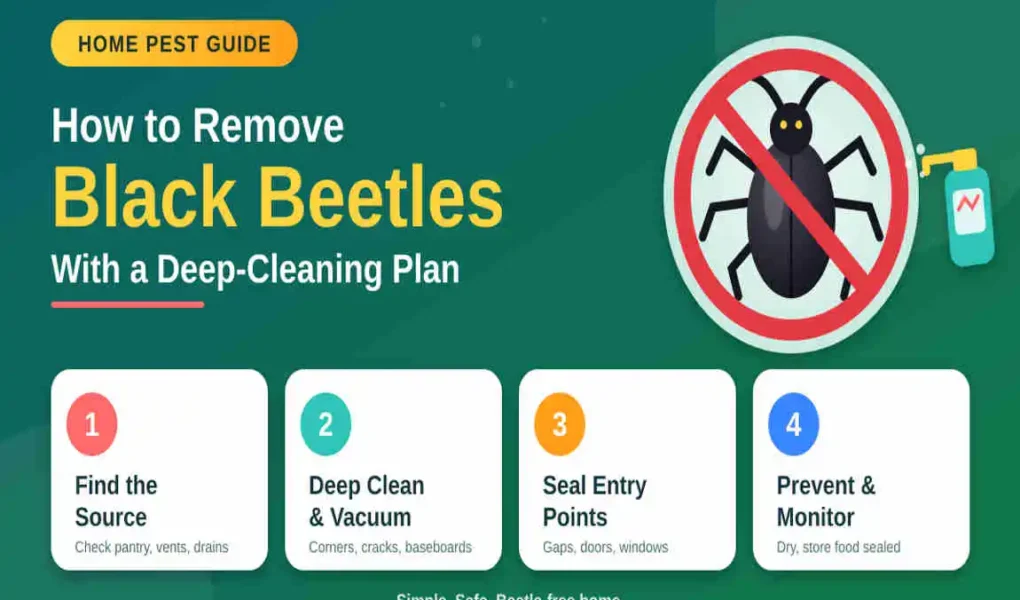
To get rid of small black beetles in the house, first identify them (usually black or varied carpet beetles, sometimes pantry beetles), then locate and remove what is feeding them: wool, fur, feathers, lint, dead insects, old nests or spilled food. Vacuum every crack, edge and closet with attachments, wash or freeze infested fabrics, empty and clean pantry shelves, and seal entry gaps. Repeat weekly for at least a month. Cleaning that removes the food source works better than spraying alone.
Finding a few tiny black beetles on a windowsill or in the bathtub is unsettling, and the first instinct is usually to reach for a can of spray. Extension entomologists give very different advice: the beetles you see are often just the visible tip of a hidden food source.
What Are Those Small Black Beetles in Your House?
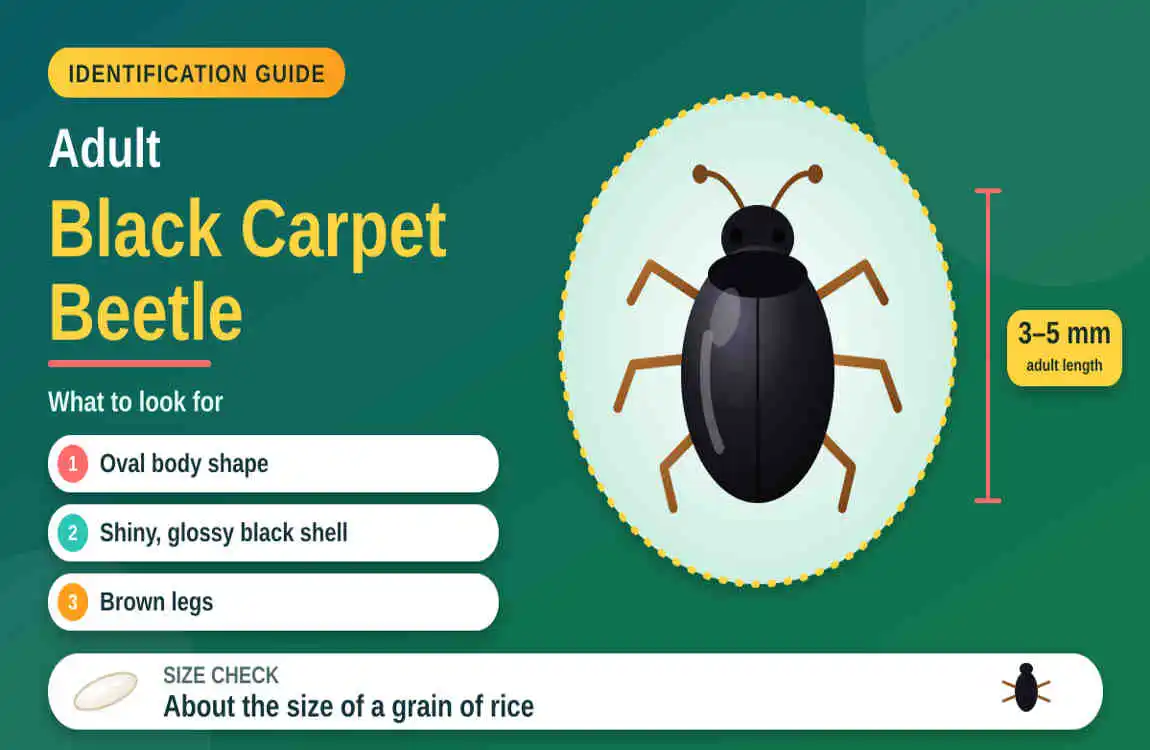
Most small black beetles found indoors are carpet beetles. Adult black carpet beetles (Attagenus unicolor) are oval, somewhat shiny, black with brown legs, and roughly 1/8 to 3/16 inch long. Their larvae are the real troublemakers: carrot-shaped, brown or golden, with a long tuft of hairs at the tail end. Varied carpet beetles look similar in size, but are mottled with light wavy lines rather than solid black.
Pantry beetles can also look dark at a glance. Flour beetles, drugstore beetles and sawtoothed grain beetles are typically reddish-brown and about 1/8 inch long, while rice weevils are small black snout beetles with reddish spots on the back.
| Beetle | How to recognise it | Where you find it | What it eats |
|---|---|---|---|
| Black carpet beetle | Shiny black, oval, brown legs; larva has a hairy tail tuft | Windowsills, baseboards, closets, rugs, under furniture | Wool, silk, fur, feathers, hair, lint, dead insects |
| Varied carpet beetle | Tiny, rounded, mottled pattern; bristly striped larva | Bedrooms, light fixtures, windowsills, stored fabrics | Animal-based fabrics, dried insects |
| Rice weevil | Black snout beetle with four reddish spots | Pantry, near rice, grains, dried beans | Whole grains and seeds |
| Flour / grain beetles | Reddish-brown, flat, about 1/8 inch | Flour, cereal, pasta, dry pet food | Milled grains and processed foods |
Why Cleaning Works Better Than Spraying
Carpet beetle larvae feed on dust, lint and animal-based materials, which is why good cleaning house keeping prevents many infestations. They do not damage purely synthetic carpet, but blended fabrics that include wool or other animal fibres can be affected. In pantries, university extension programs also advise against relying on insecticides, because treatments are temporary unless the infested food is removed and they do not reach insects sealed inside packages.
Where Black Beetles Really Come From
Before you clean, think like an inspector. Common hidden sources include:
- Bird, rodent or wasp nests in attics, eaves, chimneys or wall voids.
- Dead insects collected in light fixtures, window tracks and ceiling lights.
- Dead rodents or birds inside walls or ceilings.
- Lint and hair in air ducts, vents and along carpet edges.
- Stored wool, fur, silk, feathers or taxidermy in closets and boxes.
- Cut flowers brought in from outside, since adults feed on pollen.

The 7-Day Deep-Cleaning Plan to Remove Black Beetles
This plan combines sanitation steps recommended by university extension services. Wear gloves and a dust mask when you tackle heavy infestations, because carpet beetle larval hairs can irritate skin and lungs.
Inspect and map the problem
Locate the source before you treat anything. Look for live larvae, shed larval skins, fecal specks and fabric damage, and keep in mind that insects may be dropping from attic storage or a ceiling void, not just crawling from the room you are in. Check windowsills, because adults gathering there are a classic sign.
Deal with infested fabrics and keepsakes
Throw away items you do not need. For small items you want to keep, freezing for at least 48 hours kills eggs and larvae, according to an Extension expert response. Airing woolens in strong sunlight and dry cleaning also help; expensive furs are best put in professional cold storage.
Vacuum like you mean it
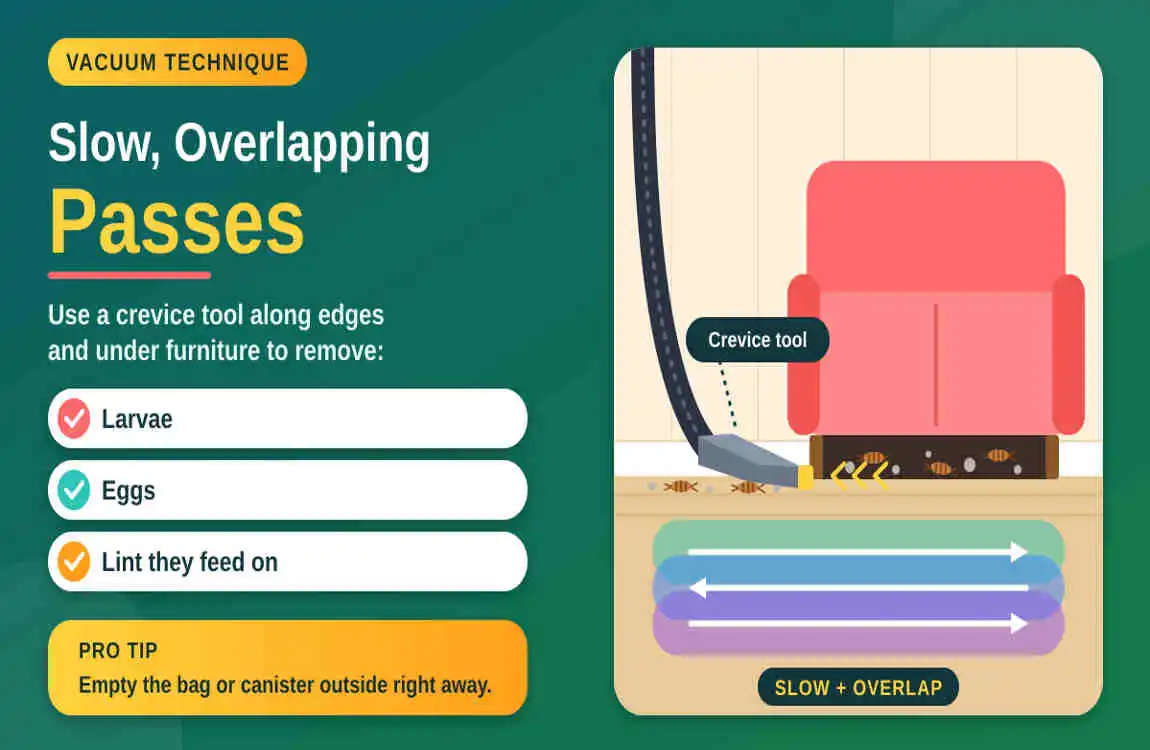
Use a strong-suction vacuum with crevice and brush attachments to remove lint, hair and dust from floors, shelves and drawers. Go beyond the traffic path: vacuum under and behind furniture, in closets, along draperies and baseboards, and inside drawers. Empty the canister or seal the bag and take it outside immediately so beetles cannot crawl back out.
Clean light fixtures, window tracks and vents
Remove accumulated dead insects from light fixtures and window tracks, and take down any abandoned wasp or bird nests attached to the house. Dust vents and, if lint is heavy in the ductwork, consider a professional duct cleaning.
Reset the pantry
Take everything out and inspect it. Throw away old, unused and infested products, then vacuum and wash shelves, cracks and corners to remove spilled food. Often removing one infested package of flour, pasta or cake mix is all it takes. If you must keep a lightly infested dry food, the Texas A&M guide lists freezing for 7 to 14 days or heating at 130°F for one hour as options. Then store susceptible foods in sealed glass or hard plastic containers.
Seal entry points and reduce outdoor sources
Permanently sealing cracks discourages beetles from laying eggs or pupating, and it also helps in pantry areas. Repair torn window screens, caulk gaps around pipes and baseboards, and avoid bringing in cut flowers without shaking and inspecting them. Adults can come inside on their own to look for suitable food, so exterior nests and debris near the home matter too.
Set monitors and schedule follow-ups
Sticky traps, especially those baited with animal-based attractants or pheromones, can capture adults and tell you whether the plan is working. Re-vacuum the hotspots from Figure 2 weekly. Because black carpet beetles can need roughly 180 to 650 days to complete a life cycle, keep inspecting for a few months before declaring victory.

Should You Use Insecticides or Natural Remedies?
Treat chemicals as a last step, never the first. Ohio State University Extension notes that many homeowner insecticides once used for carpet beetles have been withdrawn, and it recommends calling a pest professional if sanitation and prevention do not solve the problem. For pantry pests, the University of Illinois Extension recommends against insecticide use. If you do use any product, read and follow every word of the label, and do not apply sprays to clothing or food.
Safety tip: Keep children and pets away from treated areas, and avoid applying any product on food-storage surfaces. When in doubt, ask your local cooperative extension office or a licensed pest control professional.
When to Call a Professional
- You keep finding beetles weeks after thorough cleaning.
- You suspect a nest or dead animal inside a wall, chimney or attic.
- Expensive furniture, antique rugs, furs or tapestries are involved.
- Several family members develop unexplained skin irritation that coincides with larvae being found.
How to Prevent Black Beetles From Coming Back
- Vacuum edges, closets and under furniture on a regular schedule, not just the middle of rooms.
- Wash or dry clean wool and other animal-fibre items before long-term storage, and store them in sealed containers.
- Keep light fixtures free of dead insects.
- Buy pantry staples in quantities you will use, and keep them sealed or refrigerated.
- Do not assume you did something wrong: pantry pests often arrive in purchased food, and their presence does not mean a house is unclean.
Frequently Asked Questions
What are the small black beetles in my house?
Most often they are adult black carpet beetles, which are shiny, oval, about 1/8 to 3/16 inch long and have brown legs. Varied carpet beetles are mottled rather than solid black. Small black snout beetles are more likely rice weevils from dry goods.
How do I get rid of small black beetles in the house?
Find and remove the food source, vacuum thoroughly with attachments, wash or freeze infested fabrics, clean and reorganise the pantry, and seal cracks. Repeat the routine weekly for at least a month.
Do black carpet beetles bite?
They are not known to feed on people. However, larval hairs may irritate skin and lungs when infestations are disturbed, so wear a mask and gloves while cleaning.
How long does it take to get rid of carpet beetles?
Expect weeks, not days. The life cycle of the black carpet beetle can run from 180 to 650 days, which is why follow-up vacuuming and monitoring matter.
Can beetles come from dry food in my pantry?
Yes. Flour beetles, sawtoothed grain beetles, drugstore beetles and weevils infest dry goods, and these pests usually arrive in groceries.
Do carpet beetles damage synthetic carpets?
Generally no. They target animal-based materials such as wool, silk, fur and feathers, though blended fabrics can be attacked.
The bottom line
Getting rid of small black beetles in your house starts with identifying where they are coming from and removing the conditions that attract them. Regular vacuuming, deep cleaning, checking carpets and cupboards, storing food in airtight containers, and sealing gaps around doors and windows can help prevent further infestations. Remember that different beetles require different treatments, so identifying the pest is essential. If the beetles keep returning or appear in large numbers, consider contacting a professional pest control service for proper identification and treatment.