Imagine living in a busy household. Kids running across the floor, pets chasing toys, constant foot traffic from family members, and let’s not forget the monsoon season that can leave everything humid for weeks. Floors in these homes need to be tough—really tough. They must survive spills, scratches, moisture, weather changes, and daily wear without looking tired or damaged.
You’re probably wondering: what is hybrid resilient flooring, and why is it trending so quickly in 2026? In simple terms, hybrid resilient flooring is a next-generation floor type that blends the best features of vinyl, laminate, and luxury vinyl tile (LVT). It uses a rigid core—usually SPC (stone plastic composite) or WPC (wood plastic composite)—paired with multiple vinyl and protective layers. This combination makes the flooring 100% waterproof, incredibly strong, visually appealing, and suitable for almost any room in the house.
What Is Hybrid Resilient Flooring?
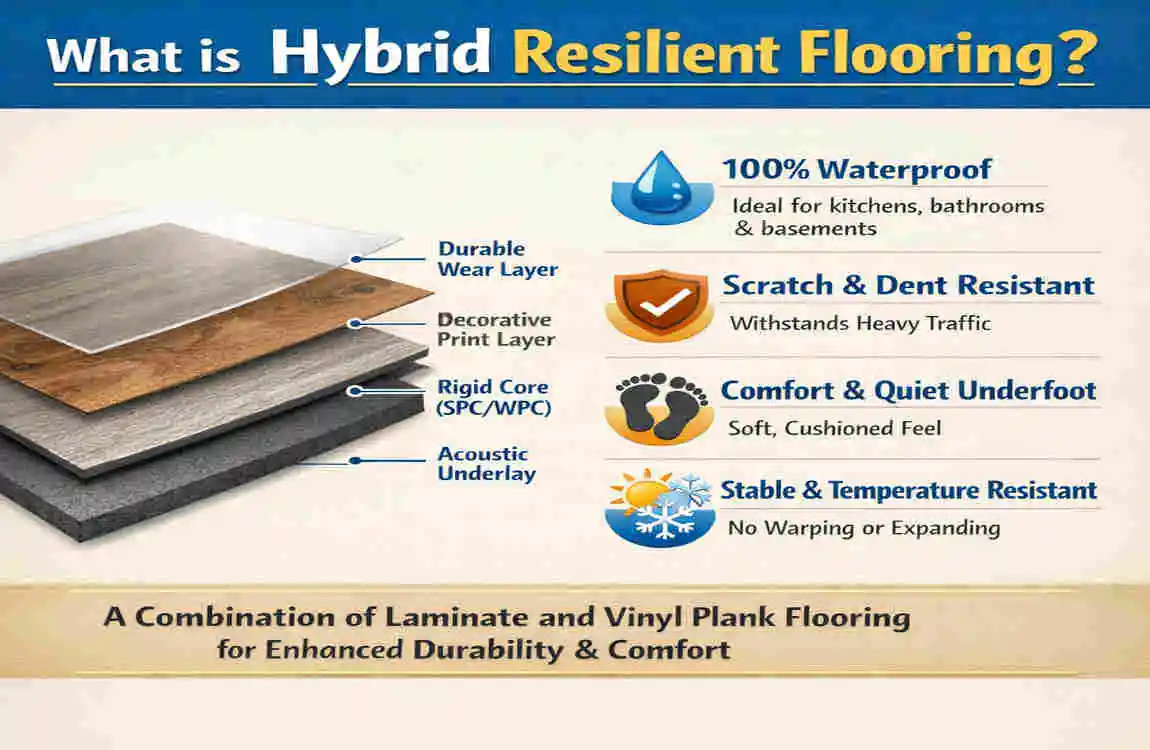
Core Definition and Composition
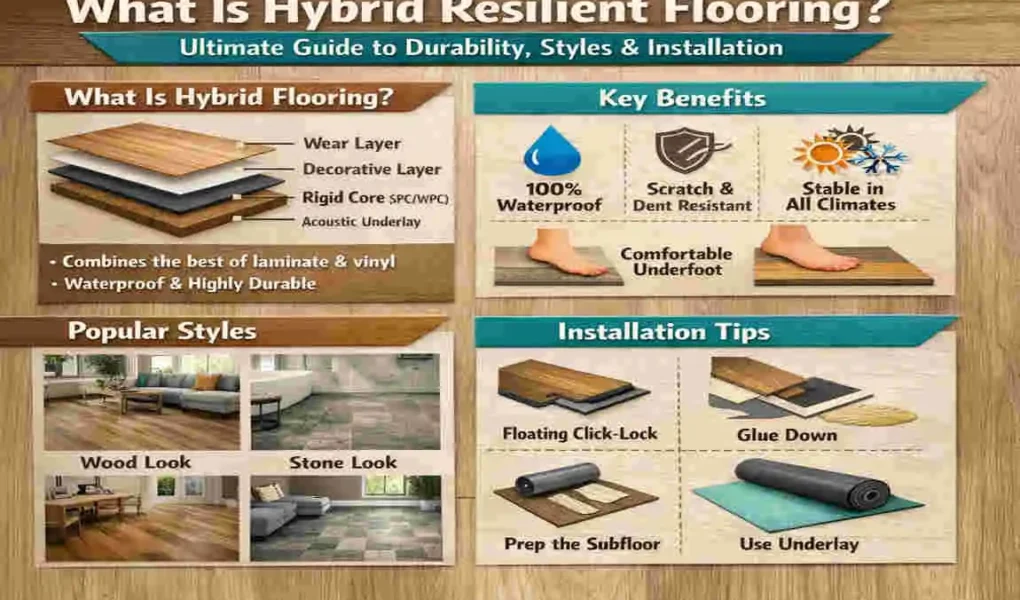
To understand what hybrid resilient flooring is, picture it as a sandwich made of four specialized layers—each improving performance, comfort, and visual appeal.
Here’s a breakdown of its main components:
1. Wear Layer
This is the top protective layer coated with a scratch-resistant urethane finish. It shields the floor from:
- Foot traffic
- Kids’ toys
- Pet claws
- Stains and minor spills
It’s the reason hybrid floors maintain their new look for years.
Print Layer
This layer carries the high-resolution image that gives hybrid floors their realistic appearance. It can mimic:
- Oak
- Walnut
- Marble
- Travertine
- Slate
- Contemporary geometric designs
Advances in printing technology make these designs look almost identical to natural stone or hardwood.
Rigid Core Layer
This is the heart of hybrid flooring, responsible for its strength and water resistance. It is typically made of:
- SPC (stone plastic composite) – denser, stronger, ideal for moisture-prone areas
- WPC (wood plastic composite) – slightly softer underfoot, better sound absorption
The rigid core prevents dents, reduces expansion, and offers impressive structural stability.
Underlayment Layer
Some hybrid planks come with pre-attached underlayment. It provides:
- Sound absorption
- Moisture control
- Extra cushioning underfoot
Because of this layer, hybrid flooring feels more comfortable and quieter than plain vinyl or laminate.
Short Evolution Story
Hybrid resilient flooring emerged around 2018, when manufacturers sought something stronger than LVT but more comfortable than laminate. Over time, it has become the standard rigid flooring option worldwide for homes and commercial spaces.
How It Differs from Other Flooring
To make the differences clear, here’s a comparison table:
Flooring Type Key Traits Best For Drawbacks
Hybrid Resilient Rigid core, 100% waterproof, click-lock system. Kitchens, basements, humid environments. Slightly higher cost
Laminate Printed top layer, MDF core Bedrooms, lounges. It can swell with moisture.
Vinyl Sheet Seamless, flexible Bathrooms, storage rooms , Less realistic patterns
Hardwood Natural wood, long-lasting Living/dining rooms Sensitive to humidity; requires maintenance
Hybrid flooring sits comfortably in the middle—offering the beauty of hardwood, the durability of vinyl, and the stability of laminate, without the weaknesses.
Durability of Hybrid Resilient Flooring
Hybrid resilient flooring is widely known for its toughness. If durability is your main concern, this section will make you love it even more.
Key Durability Features
Scratch and UV Resistance
Hybrid floors feature a commercial-grade wear layer that protects against scratches and fading. This is perfect for:
- Active kids
- Pets with long nails
- Heavy everyday use
- Sun-exposed rooms
You get a long-lasting finish that won’t discolor.
Impact Strength
Because of its rigid SPC/WPC core, hybrid flooring resists dents from:
- Dropped utensils
- Furniture weight
- High heels
- Sports equipment
This makes it a top pick for living rooms, hallways, and commercial spaces.
Waterproofing Benefits
Hybrid flooring is 100% waterproof, making it ideal for:
- Basements
- Kitchens
- Laundry rooms
- Homes in humid regions like Lahore
Unlike laminate, it never swells from moisture.
Real-World Performance
Long Lifespan
Most homeowners can expect hybrid floors to last 20+ years, thanks to their layered build and strong protective coatings. In commercial areas, the lifespan is still impressive at 10–15 years.
Consistency in Humid Environments
Materials like hardwood can cup or warp in humid climates. Hybrid flooring stays level, making it perfect for:
- Monsoon-affected cities
- Bathrooms
- Ground-level areas
Performance in Tests
Hybrid floors typically meet industry standards for:
- Abrasion resistance
- Stain resistance
- Surface strength
You can drag furniture or move appliances without worrying about damaging the surface.
Maintenance Tips
Here’s how you can extend the life of hybrid floors even further:
- Sweep or vacuum daily to keep dirt from scratching the wear layer
- Mop weekly with mild soap and warm water
- Avoid harsh cleaners, bleach, and wax
- Use felt pads under furniture
- Deep clean once a year for maximum lifespan
Following these steps can help you extend the life of your flooring by years.
Hybrid Resilient Flooring Styles
Choosing flooring isn’t just about durability—it’s about style too. Hybrid resilient flooring offers a wide range of beautiful designs that match modern home trends.
Popular Styles and Finishes
Wood-Style Designs
These are the most in-demand hybrid flooring styles, with patterns resembling:
- Oak
- Walnut
- Maple
- Hickory
- Pine
They come with embossed textures, giving them a realistic grain feel.
Stone-Look Floors
Perfect for bathrooms, kitchens, and entryways, these designs mimic:
- Marble
- Travertine
- Granite
They give a luxury look without needing sealing or heavy maintenance.
Modern Geometric Patterns
For those who love a bold aesthetic, hybrid flooring now comes in patterns like:
- Chevron
- Herringbone
- Hexagonal tiles
- Neutral geometric prints
These designs work well in contemporary urban apartments.
Common Styles Table
Style Aesthetic Ideal Room Thickness
Rustic Oak Warm and traditional Living rooms, hallways 5–7 mm
Marble Effect Elegant with cool tones Bathrooms, kitchens 4–6 mm
Gray Chevron Modern and trendy Apartments, kitchens 5 mm+
Eco-Friendly Advantage
Hybrid floors have:
- Lower VOC emissions
- Recyclable core materials
- Healthier indoor air quality
This makes them great for families with kids or allergies.
Hybrid Resilient Flooring Installation
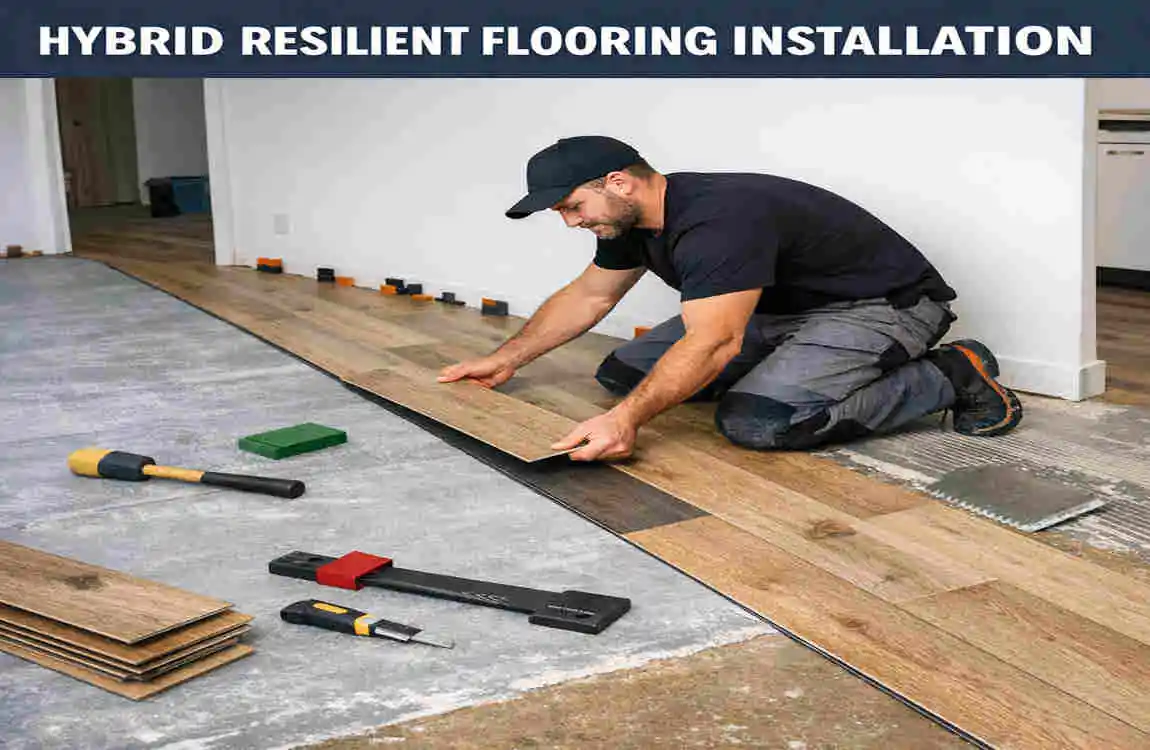
Prep Work
Before installation, the flooring must acclimate for 48 hours inside the room where it will be installed. This helps the planks adjust to the room’s temperature and humidity.
Subfloor Requirements
A proper subfloor ensures a perfect installation:
- Must be flat and level
- Free from bumps, cracks, and dips
- Suitable for concrete or plywood
Tools You Need
Here’s a quick checklist:
- Tapping block
- Pull bar
- Spacers
- Utility knife
- Rubber mallet
- Measuring tape
- Jigsaw or handsaw
Once everything is prepared, installation becomes fast and simple.
Step-by-Step Guide
Install the Underlayment
Some hybrid flooring includes attached underlayment. If not, lay a moisture-resistant underlayment across the subfloor.
Begin Installation from a Corner
Start with the longest wall. Place the first plank down with spacers to maintain proper expansion gaps.
Click and Lock
Hybrid flooring uses a floating click-lock system:
- Insert the tongue of one plank into the groove of another
- Angle downward
- Press until it clicks
Stagger the Planks
Stagger end seams by at least 12 inches for stability and visual appeal.
Cutting Planks
Use a jigsaw or a sharp utility knife for cutting to fit edges, corners, and transitions.
Install Moldings and Transitions
For doorways and connecting rooms, use T-moldings to allow expansion.
Glue-Down Option
If you want extra stability—especially in commercial settings—you can glue down the planks instead of using a floating installation.
Installation Speed
A DIY homeowner can install around 200 sq ft in a day, making hybrid flooring one of the fastest types to install.
Common Installation Mistakes
- Skipping the acclimation step
- Uneven subfloor
- Incorrect seam staggering
- Tight installation with no expansion room
- Inaccurate cutting around edges
Avoiding these mistakes ensures a flawless finish.
Cost of Installation
- Material cost: $3–7 per sq ft
- Labor cost: $2–4 per sq ft
Overall, it is more affordable than hardwood but slightly more expensive than basic laminate.
Pros, Cons & Cost Comparison
Here’s a quick comparison to help you decide:
Aspect Pros Cons Cost (PKR/sq m)
Durability Resistant to pets, kids, moisture May feel synthetic 800–1800
Style Looks like real wood/stone Cannot be refinished –
Installation Easy DIY, click-lock system , Professionals recommended for large spaces +400 labor
Hybrid flooring is also up to 30% more stable than standard LVP because of its rigid core.
Where to Buy in Lahore & FAQs
Where to Buy
You can purchase hybrid resilient flooring from major flooring retailers across Lahore or order through local online stores. Many hardware and home improvement shops also offer installation services.
Frequently Asked Questions
Is hybrid flooring pet-friendly?
Yes, it’s scratch-resistant and durable enough for pets.
Can it be installed in bathrooms?
Absolutely. Hybrid flooring is 100% waterproof.
Does it feel warm underfoot?
Yes. With its underlayment, hybrid flooring feels warmer and softer than tiles.
Can I install hybrid flooring over tiles?
Yes, as long as the tile surface is level.
Does hybrid flooring fade?
No, the UV-resistant wear layer prevents fading.