When you think about medieval European architecture, what comes to mind? Massive stone churches, towering walls, and a sense of quiet strength that has lasted for centuries. These structures were not just buildings—they were expressions of faith, power, and artistic vision.
One fascinating chapter in this story is Ottonian architecture, which developed during the 10th and early 11th centuries in the Holy Roman Empire. This period may not be as widely discussed as Gothic or Romanesque architecture, but it played a crucial role in shaping both.
In simple terms, an arcade is a series of arches supported by columns or piers. But in Ottonian architecture, it becomes much more than that. It organizes space, supports massive structures, and adds rhythm and harmony to interiors.
Understanding Ottonian Architecture
Before diving deeper into arcades, it helps to understand the architectural world they belong to.
Historical Context
Ottonian architecture developed during the rule of the Ottonian dynasty, roughly between the 10th and early 11th centuries. This was a time when rulers sought to revive the glory of the Roman Empire while strengthening Christian institutions.
Churches were at the center of this movement. They were not just places of worship—they were symbols of political authority and religious unity.
Architects of this period drew heavily on earlier traditions, especially Carolingian and ancient Roman architecture. However, they didn’t just copy them. They adapted and refined these ideas into something new.
Key Characteristics
Ottonian buildings have a distinct look and structure. Some of their defining features include:
- Basilica-style layouts with long central halls
- Modular construction, where spaces repeat in a clear pattern
- Alternating support systems, using both columns and piers
- Strong symmetry and geometric clarity
These features work together to create buildings that feel both ordered and powerful.
Importance in European Architecture
You can think of Ottonian architecture as a bridge.
It connects the earlier Carolingian style with the later Romanesque movement. Many ideas that became fully developed in Romanesque architecture actually began here.
One of those ideas is the systematic use of arcades. In Ottonian buildings, arcades were refined and used more deliberately, setting the stage for future architectural developments.
What Is the Arcade in Ottonian Architecture?
This is the heart of our discussion, so let’s break it down clearly.
Definition of an Arcade
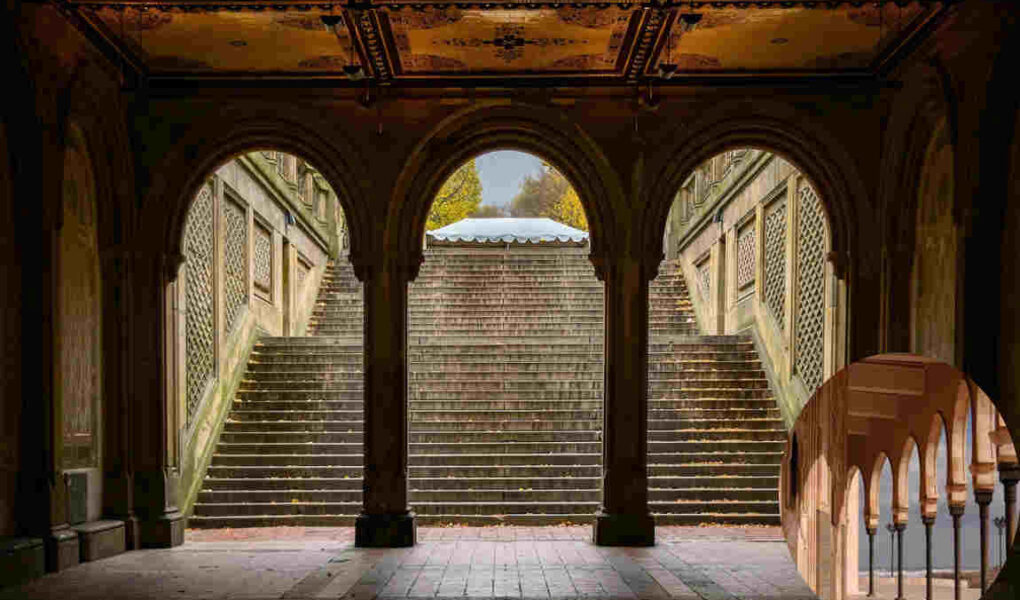
An arcade is a row or series of arches supported by columns or piers. These arches are usually evenly spaced, creating a repeating pattern.
What makes arcades special is that they serve two purposes at once:
- Structural – They support weight
- Decorative – They add visual beauty
Arcade in the Ottonian Context
Now, let’s answer the main question more directly:
What is the arcade in Ottonian architecture?
In Ottonian churches, arcades are typically found inside the building, especially along the nave, which is the central space where people gather.
They separate the nave from the side aisles, creating a clear and organized layout. As you walk through such a church, you’ll notice a steady rhythm created by repeating arches.
This rhythm is not accidental. It reflects careful planning and a desire for balance.
Key Components of an Arcade
To understand arcades better, it helps to look at their parts:
Component Description
Arches are usually rounded, forming the top of each opening
Columns/Piers : Vertical supports that hold up the arches
Capitals Decorative tops of columns
Bases : Bottom supports that anchor the structure
Each part plays a role in both strength and appearance.
Simple Explanation for Beginners
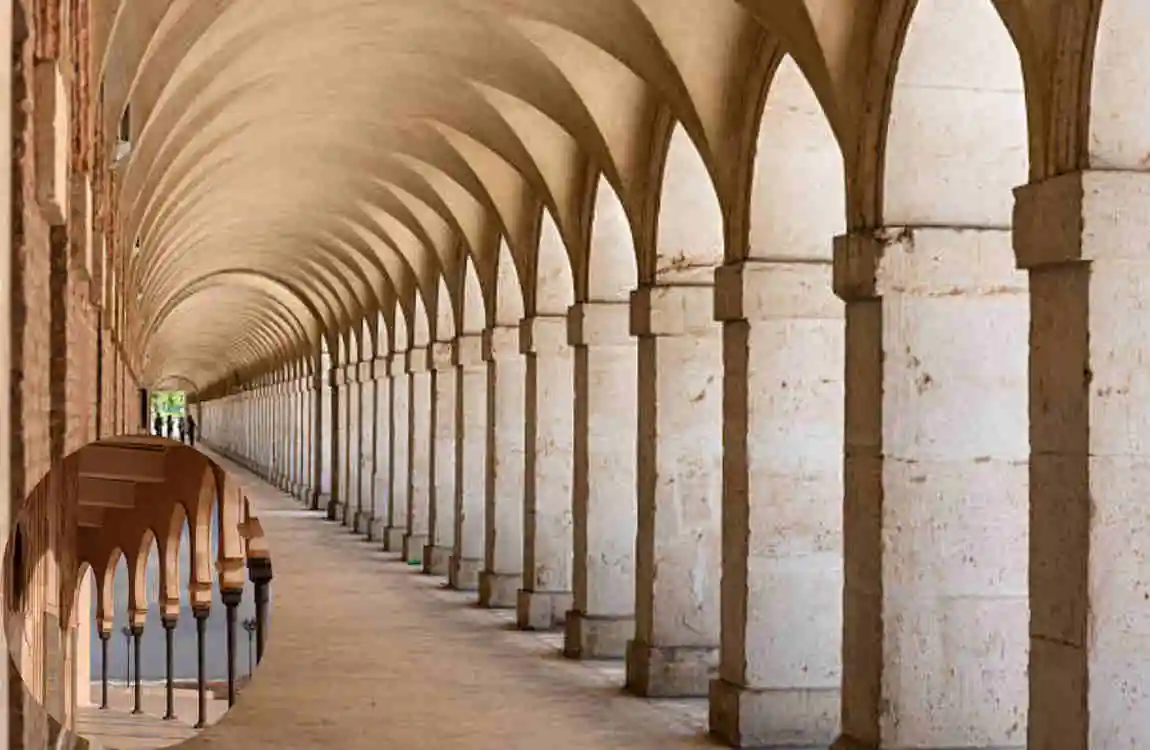
Imagine walking down a long hallway where the same arch shape repeats on both sides.
That’s essentially what an arcade looks like.
This repetition creates a sense of movement and direction. It gently guides your eyes—and your steps—forward.
Structural Role of Arcades
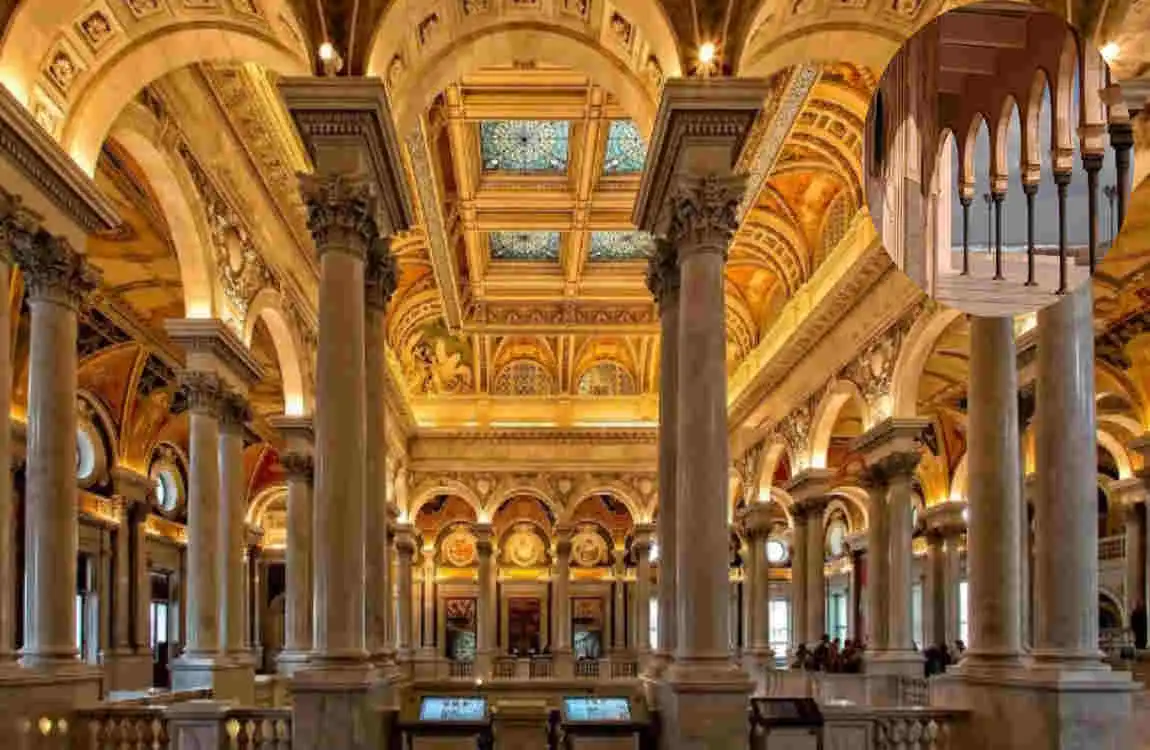
Arcades are not just about looks. They are essential to how these buildings stand.
Load Distribution
One of the main jobs of an arcade is to carry weight.
The arches transfer the load from the upper walls and roof down into the columns or piers, and then into the ground. This system spreads the weight evenly.
Without arcades, large stone buildings would struggle to remain stable.
Spatial Organization
Arcades also help organize the interior space of a church.
They divide the building into clear sections:
- The central nave
- The side aisles
This makes movement easier and gives the building a logical structure.
Engineering Advantages
From an engineering perspective, arcades offer several benefits:
- They increase stability
- They allow for larger interior spaces
- They reduce the need for solid walls
- They make efficient use of materials
In short, arcades make big buildings possible—and practical.
Aesthetic and Symbolic Significance
Now let’s look beyond function and explore meaning.
Visual Rhythm and Harmony
The repeating arches of an arcade create a strong sense of rhythm.
This repetition brings balance and harmony to the space. It’s almost like a visual pattern that feels calm and ordered.
As a visitor, your eyes naturally follow the arches, creating a smooth visual journey.
Light and Shadow Effects
Arcades also interact beautifully with light.
As sunlight enters the building, it creates patterns of light and shadow across the arches and columns. This adds depth and movement to the interior.
The effect can feel almost magical, especially in large churches.
Religious Symbolism
In a religious setting, nothing is accidental.
Arcades often symbolize:
- Order and divine harmony
- The structure of heaven
- A sense of infinite continuity
For worshippers, this design reinforced spiritual ideas in a subtle but powerful way.
Types of Arcades in Ottonian Architecture
Not all arcades are the same. Let’s explore a few variations.
Blind Arcades
Blind arcades are purely decorative.
They look like real arches but are built into solid walls and don’t open into another space. Their purpose is to add visual interest.
Open Arcades
Open arcades are functional.
They create actual passageways and are commonly found inside churches or in cloisters.
Exterior vs Interior Arcades
- Interior arcades organize space inside buildings
- Exterior arcades decorate outer walls or courtyards
Each type serves a slightly different purpose, but both follow the same basic idea.
Comparison with Other Architectural Styles
To fully understand Ottonian arcades, it helps to compare them with other styles.
Carolingian Arcades
Carolingian arcades came earlier and were simpler.
They lacked the refinement and rhythmic consistency seen in Ottonian designs.
Romanesque Arcades
Romanesque architecture was built on Ottonian ideas.
Arcades became heavier and more massive, with thicker supports and a stronger sense of solidity.
Gothic Arcades
Gothic arcades took a different direction.
They introduced:
- Pointed arches
- Greater height and verticality
- More emphasis on light
Key Differences Summary
- Ottonian: balanced and rhythmic
- Romanesque: heavy and solid
- Gothic: tall and light
Each style reflects different priorities and technologies.
Notable Examples of Arcades in Ottonian Buildings
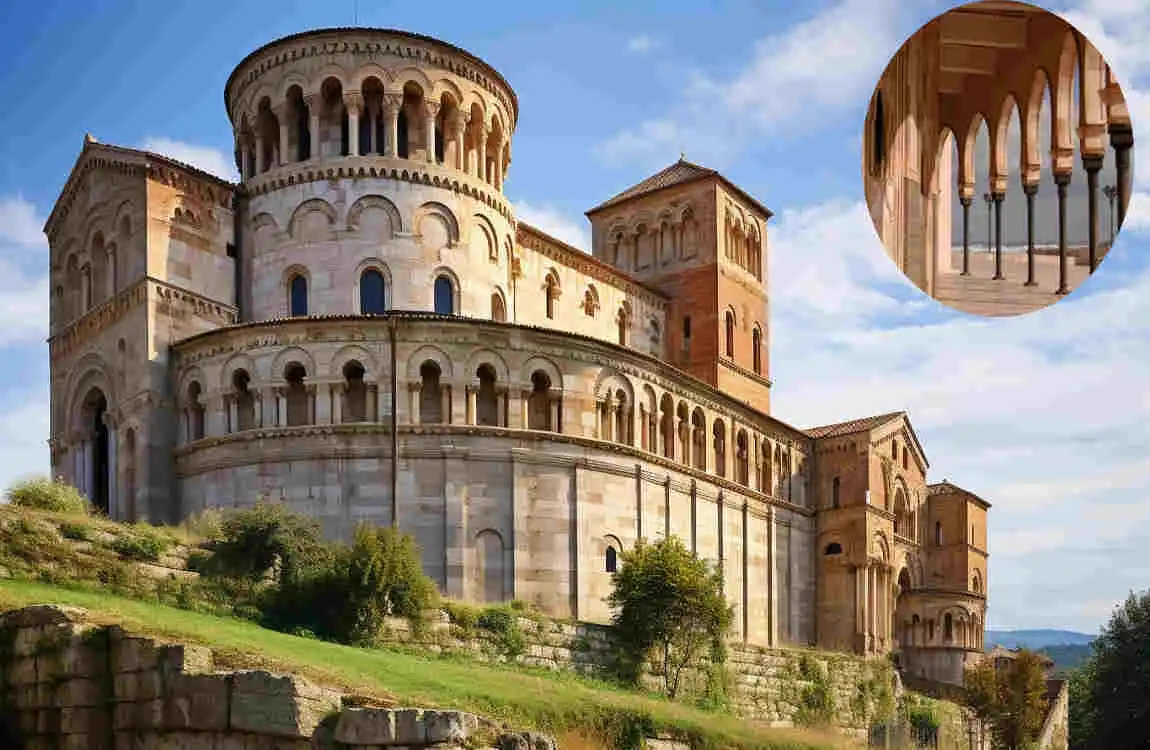
Let’s look at some real-world examples.
St. Michael’s Church, Hildesheim
This is one of the best-preserved Ottonian churches.
Its arcades clearly show the alternating system of columns and piers, creating a strong visual rhythm.
Gernrode Abbey Church
Another important example, this church features early forms of Ottonian design.
Its arcades are simpler but still show the key principles.
Other Relevant Sites
Across Europe, you can find variations of Ottonian arcades.
Each region added its own touch, but the core idea remained the same.
Construction Techniques and Materials
Building arcades required skill and planning.
Materials Used
Common materials included:
- Stone
- Brick
- Mortar
These materials were chosen for their strength and durability.
Building Techniques
Constructing arches required careful placement of stones.
Builders used temporary supports until the arch was complete. Once finished, the structure could support itself.
Craftsmanship
Skilled artisans played a major role.
They shaped stones, carved capitals, and ensured everything fit perfectly. Their work still stands as a testament to their expertise today.
Legacy of Arcades in Ottonian Architecture
The influence of Ottonian arcades didn’t end with the period.
Influence on Romanesque Architecture
Romanesque builders adopted and expanded the use of arcades.
They made them larger and more prominent.
Long-Term Architectural Impact
Arcades became a standard feature in European church design.
You can see their influence in buildings across centuries.
Modern Interpretations
Even today, architects use arcades in:
- Public buildings
- Walkways
- Decorative facades
The idea continues to evolve.
Why Arcades Still Matter Today
Why is this topic still relevant?
Arcades are studied because they:
- Teach us about historical engineering
- Inspire modern design
- Reflect cultural values
They are more than old structures—they are lessons in creativity and problem-solving.
Common Misconceptions
Let’s clear up a few misunderstandings.
Many people think arcades are purely decorative. In reality, they are structural elements.
Others confuse them with colonnades or aisles, but these are different features.
Finally, arcades are often oversimplified when, in fact, they are complex, carefully designed systems.
FAQs
What is the arcade in Ottonian architecture?
It is a series of arches supported by columns or piers, used to divide and support spaces inside buildings.
Where are arcades typically located?
They are usually found in church interiors, especially between the nave and aisles.
Are arcades structural or decorative?
They are both. They support weight and enhance visual appeal.
How are Ottonian arcades different from Romanesque?
Ottonian arcades are more balanced and rhythmic, while Romanesque ones are heavier.
What materials were used in arcades?
Stone, brick, and mortar were commonly used.
Why were arcades important in churches?
They helped organize space, support the structure, and create a meaningful visual experience.