Basements are often the coolest part of any home, naturally, but when summer rolls around, they can quickly become stuffy, damp, and uncomfortable. Properly cooling your basement isn’t just about comfort—it affects everything from air quality to how you can use the space. Whether it’s a rec room, a home office, or an extra bedroom, keeping your house basement cool is key.
Why Cooling Basements Is Different
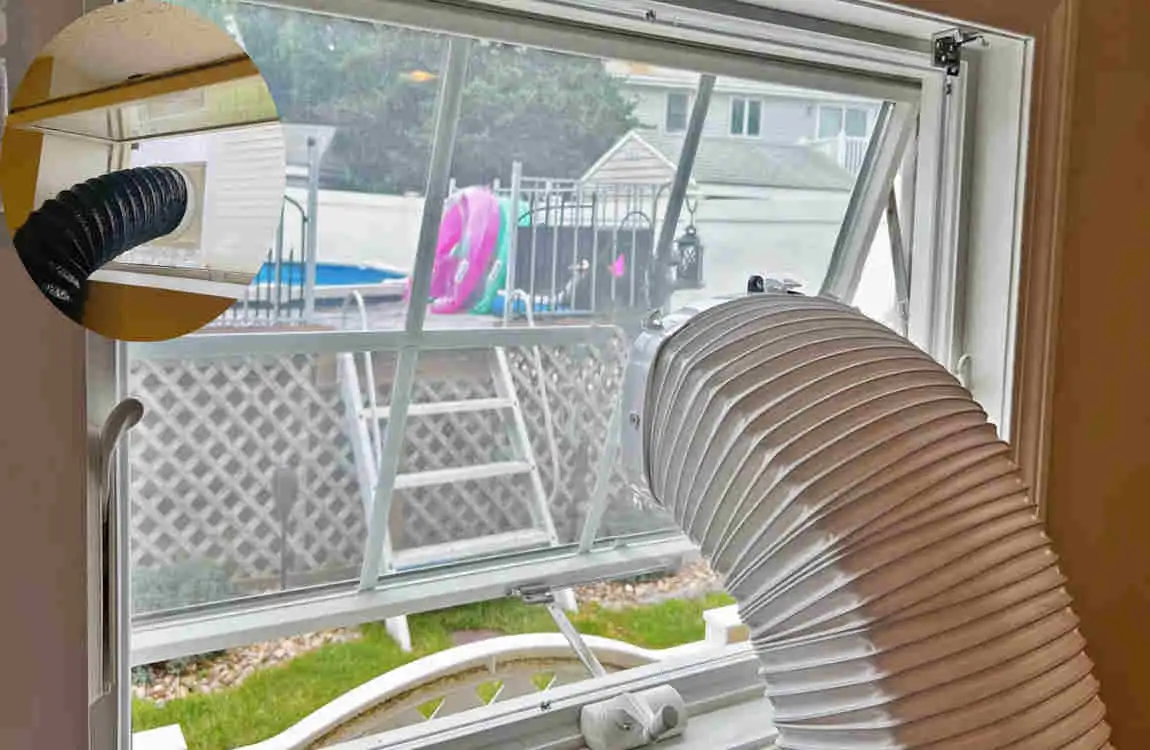
Basements are unlike any other room in your home. They sit below ground level, which means they’re naturally cooler but also prone to dampness. Because they’re surrounded by soil, basements often suffer from limited ventilation and higher humidity. This combination leads to a musty smell and can encourage mould growth if left unaddressed.
The windows in basements are usually smaller and often positioned high on the walls, close to the ground outside. These windows can be tricky to work with when it comes to installing traditional cooling systems.
Common Basement Cooling Problems
Many homeowners find that their basement feels stuffy and humid, even when the rest of the house design is cool and comfortable. This happens because air circulation is poor, allowing moisture from the ground to seep in. Without proper airflow, the temperature can hover uncomfortably high during warm months.
Another issue is that basements often have limited access to sunlight, which affects the effectiveness of specific cooling methods. For example, evaporative cooling may be less effective in humid basements because it relies on dry air to cool effectively.
How Temperature Affects Basement Usability
A hot, damp basement is less inviting. It’s more challenging to use as a living space or storage area, and excess moisture can damage furniture and other belongings. On the other hand, a well-cooled basement can be a retreat from the summer heat, a productive workspace, or a fun area for family activities.
Why Choosing the Right A/C Solution Matters
Because basements present unique challenges, selecting the right air conditioner for a basement window is more critical than simply choosing any air conditioner. The unit must fit your window size, handle humidity, and operate quietly to avoid disturbing your peace.
Types of A/C Units Suitable for Basement Windows
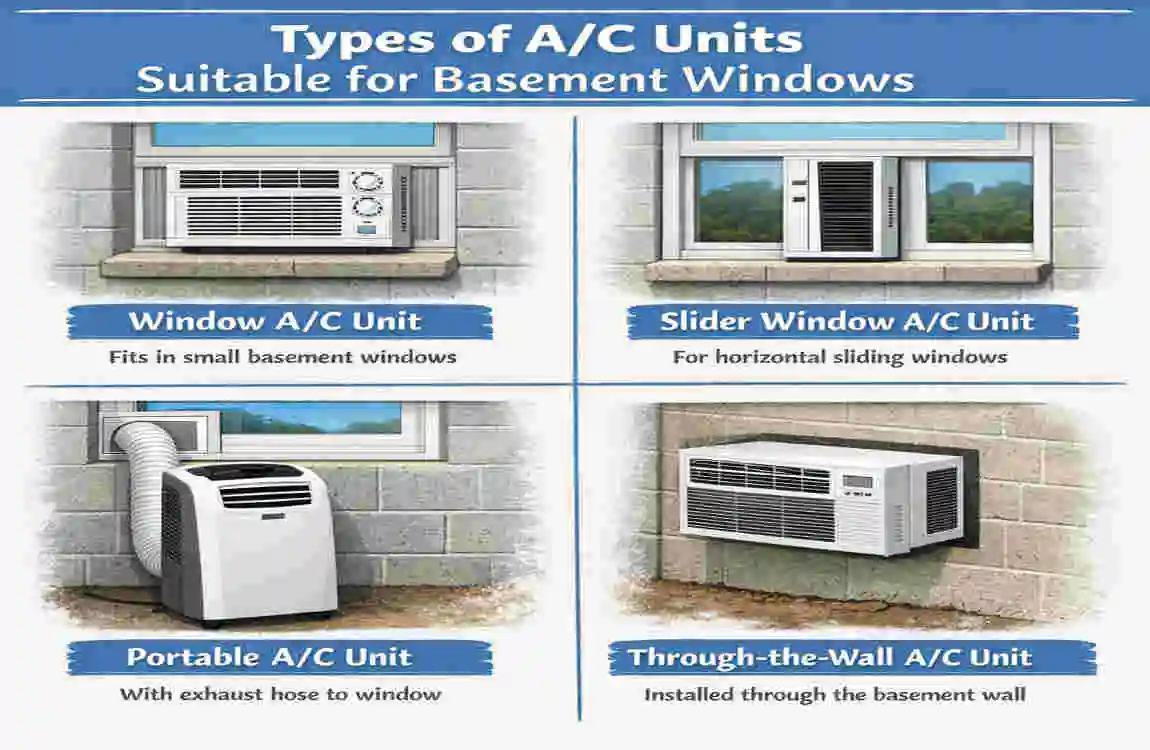
Window Air Conditioners
These are the classic choice for basement windows, offering direct cooling by fitting right into the window frame.
- Benefits for Basements:
- Window A/C units are generally compact, easy to install, and don’t take up floor space. They efficiently cool small to medium-sized basements and often include built-in dehumidifiers to handle moisture.
- Size and Cooling Capacity Considerations:
- Choosing the right size is critical. An undersized unit won’t cool effectively, while an oversized one can waste energy and create humidity problems. Basement windows tend to be smaller, so look for units designed for compact window dimensions.
Portable Air Conditioners with Window Adapters
These units sit on the floor and vent hot air through a hose connected to a window adapter.
- Pros for Basement Use:
- Portables don’t require permanent installation and can be moved between rooms. They work well if your basement window isn’t standard size or if you want flexibility.
- Cons:
- They tend to be noisier and less efficient than window units. The hose can also limit placement options and may look bulky.
Mini-Split Systems vs. Window Units
Mini-splits are ductless systems that consist of an indoor air handler and an outdoor compressor.
- Cost and Installation Complexity:
- Mini-splits provide excellent cooling and quiet operation, along with superior humidity control. However, they are more expensive and require professional installation, making them less ideal for renters or those looking for a quick solution.
Evaporative Coolers and Fans
Evaporative coolers (also known as swamp coolers) and fans can be beneficial in dry climates.
- When to Consider:
- If your basement is dry and you’re looking for a low-cost, energy-saving option, these might be a good choice. But in humid basements, they can make the air feel wetter and less comfortable.
Key Features to Look For in An A/C Unit for Basement Windows
Cooling Capacity (BTU) Appropriate for Basement Size
Cooling power is measured in British Thermal Units (BTUs). The size of your basement determines the BTU rating you need:
Basement Size (sq. ft.)Recommended BTU Rating
Up to 300 5,000 – 6,000
300 – 500 7,000 – 10,000
500 – 800 10,000 – 14,000
Selecting the proper BTU ensures efficient cooling without overworking the unit.
Energy Efficiency Ratings (EER/SEER)
Look for units with high EER (Energy Efficiency Ratio) or SEER (Seasonal Energy Efficiency Ratio) ratings. Higher ratings indicate that the unit uses less electricity, resulting in lower utility bills for you.
Noise Levels
Basements are often used as quiet spaces, so low noise operation is a must. Many modern air conditioning units display decibel levels; aim for models with decibel levels below 55 dB for a comfortable background noise level.
Dehumidification Features
Since basements tend to be humid, choose units with built-in dehumidifiers or “dry modes.” This feature helps reduce moisture, making your basement feel fresher and preventing mould.
Compact Design and Ease of Installation
Basement windows can be small or oddly shaped, so compact units designed for tight spaces are ideal. Also, look for models that include all necessary installation hardware and clear instructions.
Smart Controls and Timers
Modern units often come with remote controls, programmable timers, and even smartphone apps. These features enable you to optimise cooling times, conserve energy, and maintain comfort effortlessly.
Top Recommended A/C Units for Basement Windows
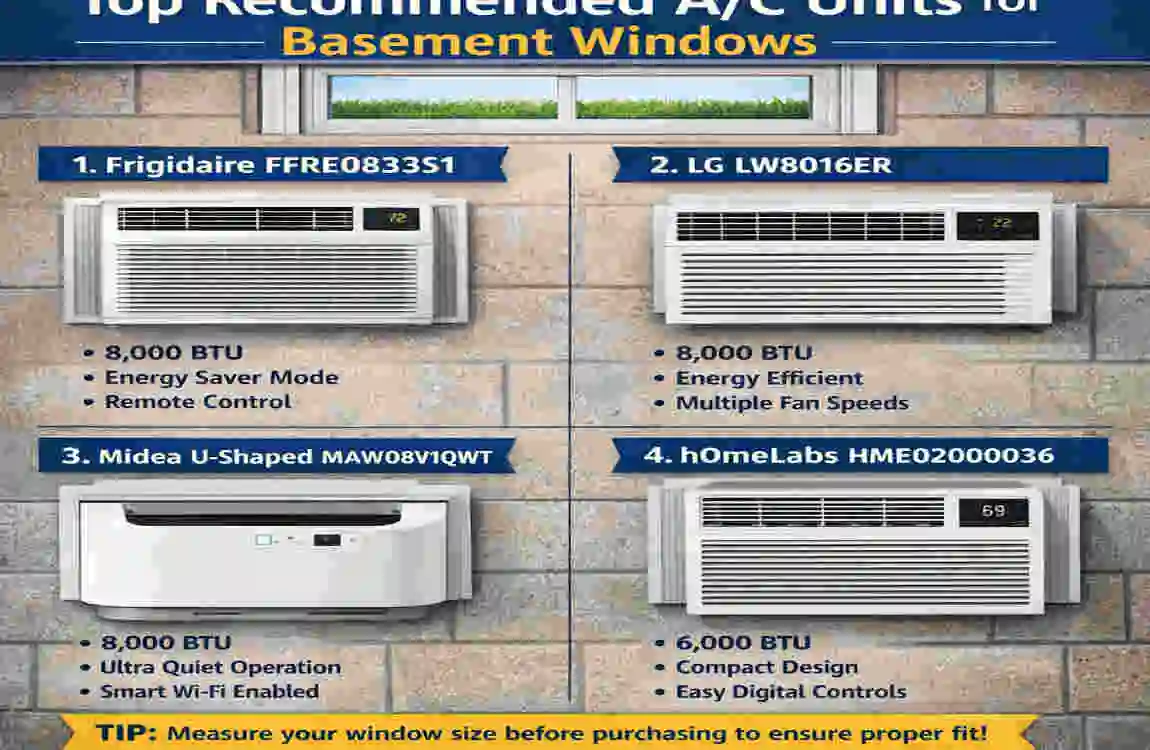
Here are some of the best A/C units specifically designed for basement windows, striking a balance between efficiency, quiet operation, and moisture control.
Model BTU Rating Noise Level (dB)Price Range Key Features
Frigidaire FFRE053WAE 5,000 52 $250 – $300 Compact, energy efficient, quiet
LG LW6017R 6,000 53 $280 – $350 Dehumidifier, remote control
Midea U Inverter Window AC 8,000 44 $450 – $500 Ultra-quiet, inverter tech, Wi-Fi
Koldfront WAC12001W 12,000 55 $400 – $450 Powerful, easy window installation
Honeywell MN10CESWW Portable 10,000 55 $400 – $450
Pioneer WYS012-17 Mini-Split 12,000 $800 – $1,000 Quiet, energy efficient, professional installation required
Detailed Reviews
Frigidaire FFRE053WAE
This unit is perfect for small modren basements. It fits into smaller windows and runs quietly, making it great for bedrooms or home offices. Its energy efficiency means lower electricity bills during summer.
LG LW6017R
Offering a slightly higher cooling capacity, this model includes a built-in dehumidifier and remote control. It’s a solid choice for medium-sized basements where humidity is a problem.
Midea U Inverter Window Air Conditioner
Midea’s innovative inverter technology enables this unit to cool efficiently while maintaining incredibly low noise levels. The Wi-Fi-enabled controls let you adjust settings from your phone, adding convenience.
Koldfront WAC12001W
For larger basements, this 12,000 BTU unit delivers strong cooling power. It’s designed for easy installation in standard basement windows and includes basic dehumidifying.
Honeywell MN10CESWW Portable A/C
If a window unit isn’t an option, this portable model comes with a window vent kit. It’s powerful but can be noisier and takes up floor space.
Pioneer WYS012-17 Mini-Split System
If budget allows, mini-splits provide premium cooling with quiet operation and excellent humidity control. Installation is more complex but delivers the best comfort.
Installation Tips for A/C Units in Basement Windows
Preparing Your Basement Window
Before installation, carefully measure your window. Clean the window frame and remove any obstacles. Ensure the window can open and support the unit securely.
Sealing Gaps to Avoid Air Leaks
Use weather stripping or foam insulation to seal gaps around the unit. This prevents cool air from escaping and warm air from entering, improving efficiency.
Handling Electrical Requirements Safely
Check the electrical load and use proper outlets. If your unit requires a dedicated circuit, consult an electrician to avoid overloads or hazards.
Best Practices for Secure Mounting
Follow manufacturer instructions closely. Use brackets or supports if provided to ensure the unit doesn’t fall or strain the window.
Seasonal Removal and Storage Tips
Remove the A/C unit during cooler months to prevent damage. Clean and cover it before storing in a dry, protected place.
Maintenance and Care for Basement Window A/C Units

Regular Cleaning and Filter Replacement
Clean filters every 30 days during heavy use to maintain airflow and efficiency. Wash or replace filters as recommended house features.
Checking for Mould and Moisture Issues
Keep an eye on condensation around the unit. Clean the drip pan and drain lines to prevent mould from growing.
Ensuring Efficient Operation
Run the unit regularly during warm months and check for unusual noises or reduced cooling. Timely maintenance keeps it running smoothly.
When to Call Professionals
If your unit leaks water, makes loud noises, or fails to cool properly, it’s time to seek expert help. Regular servicing extends the life of your A/C.
FAQ: A/C Unit for Basement Window
Can I install a window A/C unit in a basement window?
Yes, as long as the basement window is large enough and can safely support the unit. Proper mounting and sealing are essential.
What size A/C unit do I need for a basement?
A small basement (200–300 sq. ft.) typically requires a 5,000–8,000 BTU unit, while larger spaces may need 10,000 BTU or more.
Are basement window A/C units energy-efficient?
Many modern units are energy-efficient, especially those with ENERGY STAR certification and programmable thermostats.
How do I prevent water leaks from a basement window A/C?
Install the unit with a slight downward tilt toward the outside and seal any gaps around the frame.
Can a window A/C cool an entire basement?
It depends on the basement’s size and layout. Open floor plans cool more effectively than basements with multiple rooms.
| A/C Unit | BTU Rating | Recommended Basement Size | Key Features | Best For |
|---|---|---|---|---|
| Whirlpool Window A/C | 5,000 BTU | Up to 150 sq. ft. | Simple controls, moisture removal, easy installation | Small basement rooms |
| Emerson Quiet Kool | 5,000 BTU | Up to 150 sq. ft. | Quiet operation, remote control, timer | Bedrooms and home offices in basements |
| Danby Window A/C | 5,000 BTU | Up to 150 sq. ft. | Washable filter, eco-friendly refrigerant | Budget-friendly cooling |
| BLACK+DECKER Window A/C | 5,000 BTU | Up to 150 sq. ft. | Compact design, easy setup | Small basement windows |
| Windmill Window A/C | 6,000–8,000 BTU | Small to medium basements | Quiet inverter technology, smart controls | Energy-efficient cooling |
| LG Window A/C | 8,000 BTU | Up to 350 sq. ft. | Fast cooling, remote control, washable filter | Larger finished basements |