Winter can be tough on any home, but mobile homes face a bigger risk because their plumbing is often more exposed to cold air. If the space under the home is not well insulated, pipes can freeze much faster than they would in a regular house.
| Problem Area | Why It Happens | Prevention Tip |
|---|---|---|
| Exposed pipes under mobile home | Cold air directly reaches plumbing | Insulate pipes with foam sleeves or heat tape |
| Poor skirting | Wind enters under home | Seal or upgrade skirting panels |
| Low indoor temperature | Heat doesn’t reach plumbing areas | Keep thermostat above 55°F (13°C) |
| Drafts and air leaks | Cold air enters floor gaps | Seal cracks and floor openings |
| Standing still water in pipes | Water freezes when not moving | Let faucets drip during extreme cold |
| Power outage | Heating system shuts down | Use backup heat source or generator |
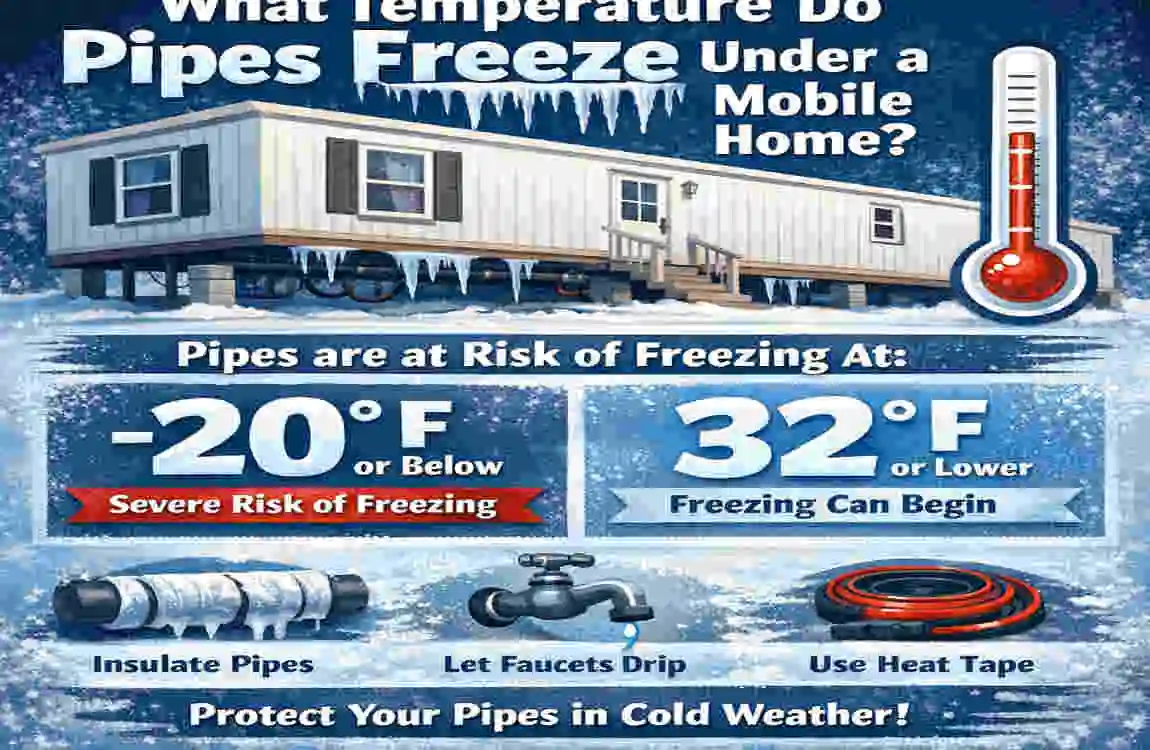
If you are asking what temperature pipes freeze at under a mobile home, the simple answer is that freezing can begin around 32°F (0°C). Still, in a mobile home, the danger often starts earlier because wind, poor insulation, and open skirting cause pipes to lose heat quickly.
What Temperature Do Pipes Freeze Under a Mobile Home?
Standard Freezing Point of Pipes
Pipes usually start freezing at 32°F (0°C). That is the basic freezing point of water. But under a mobile home, pipes can reach that point faster because they are more exposed to cold air.
Critical Temperature Range for Mobile Homes
The risk is much higher when temperatures are between 20°F and 32°F (-6°C and 0°C). If it drops below 20°F (-6°C), frozen pipes become much more likely, especially if the cold lasts for several hours or all night.
Why Mobile Homes Freeze Faster Than Regular Homes
Mobile homes often lose heat more quickly because:
- Pipes sit under the floor and feel outdoor air
- Skirting may have gaps or poor insulation
- Flooring can let heat escape
- Older plumbing may not be well protected
That is why mobile home winter plumbing tips matter so much during cold weather.
Warning Signs Your Mobile Home Pipes Are Freezing
Early Warning Signs
You may notice small changes before pipes fully freeze. Watch for:
- Slow water flow
- Weak water pressure
- Odd sounds in the plumbing
- Frost on visible pipes
These signs usually mean the pipe is getting too cold and needs attention right away.
Severe Warning Signs
If the problem gets worse, you may see:
- No water coming from taps
- Bulging pipes
- Ice under the mobile home
At this point, action is needed fast to avoid a burst pipe.
What Happens If You Ignore the Signs
A frozen pipe can split when the ice expands. That may lead to burst pipes, flooding, floor damage, and expensive repairs. In a mobile home, even a small leak can spread quickly and cause major issues.
Common Causes of Frozen Pipes in Mobile Homes
Poor Insulation
Thin insulation under the floor lets cold air reach the pipes. If pipes are not wrapped properly, they lose heat even faster.
Cold Air Exposure
Wind moving under the home can make freezing worse. Damaged skirting or open gaps let cold air rush in and cool the plumbing.
Plumbing Placement Issues
Pipes placed near outside walls or in unheated areas are more likely to freeze. Shallow underground pipes can also be a problem in very cold weather.
Heating System Failures
If the furnace stops working or the power goes out during a storm, the whole home cools down. That makes pipes under the home much more vulnerable.
How to Prevent Frozen Pipes in a Mobile Home
Insulate Pipes Properly
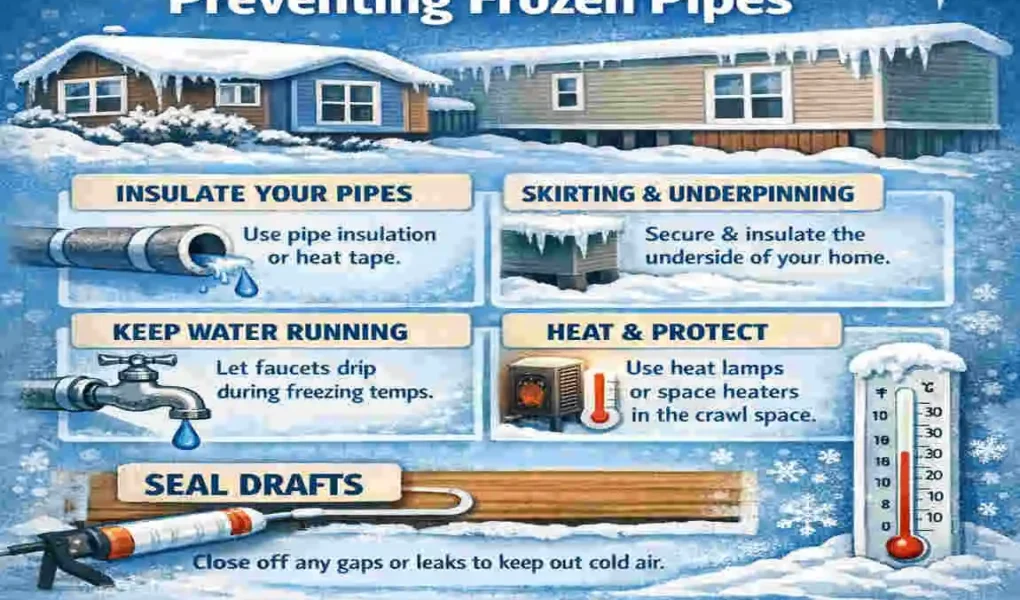
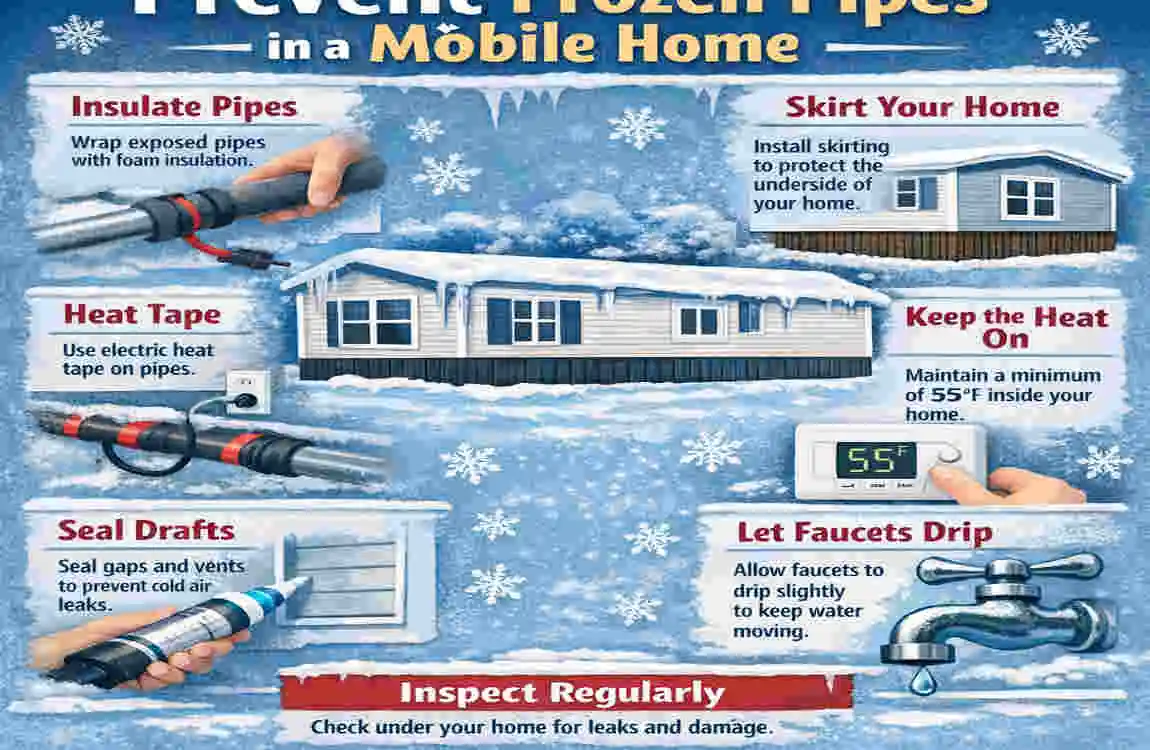
Use foam pipe sleeves, pipe wrap, or heat tape on exposed plumbing. Even simple insulation can make a big difference in keeping pipes warmer.
Seal and Protect the Underbelly
Check the skirting and underbelly for holes, cracks, or loose panels. Seal gaps and add insulated skirting to block wind and cold air.
Maintain Indoor Heat
Keep the thermostat at 55°F (13°C) or higher during freezing weather. You can also open cabinet doors under sinks so warm air can move around the pipes.
Let Faucets Drip During Extreme Cold
A small drip helps keep water moving. Moving water is less likely to freeze, and it also reduces pressure inside the pipe.
Use Heating Systems Safely
If you use space heaters or heat cables, make sure they are installed and used safely. Never place heaters near anything flammable and follow all safety instructions.
Winter Preparation Checklist for Mobile Home Owners
Task Statu Priority Level
Insulate exposed pipes ☐ High
Seal skirting gaps ☐ High
Check thermostat settings ☐ High
Wrap outdoor plumbing ☐ Medium
Test water flow on cold mornings ☐ Medium
Install heat tape ☐ High
Inspect underbelly insulation ☐ High
Emergency Steps If Your Pipes Freeze
Turn Off Water Supply
If you think a pipe is frozen, turn off the water first. This can help prevent serious damage if the pipe bursts.
Locate the Frozen Section
Check under the mobile home and around sinks to find the cold or blocked area.
Safely Thaw Pipes
Use a hair dryer, warm towels, or gentle heat. Do not use open flames, because that can damage the pipe or start a fire.
Check for Leaks
Once the pipe thaws, turn the water back on slowly and look for leaks around joints and fittings.
When to Call a Professional
Call a plumber if:
- The pipe has burst
- You cannot reach the frozen area
- The pipes keep freezing again
Long-Term Solutions to Prevent Future Pipe Freezing
Upgrade Insulation System
Better underbelly insulation and stronger skirting can help keep the space under your home warmer during winter.
Relocate Vulnerable Pipes
If possible, move pipes into heated areas or away from outside walls. This is one of the best long-term ways to reduce the risk of freezing.
Install Smart Temperature Monitoring
Freeze alarms and temperature sensors can warn you before pipes freeze and burst. This gives you time to act early.
Cost of Preventing Frozen Pipes vs Repairing Damage
Prevention Costs
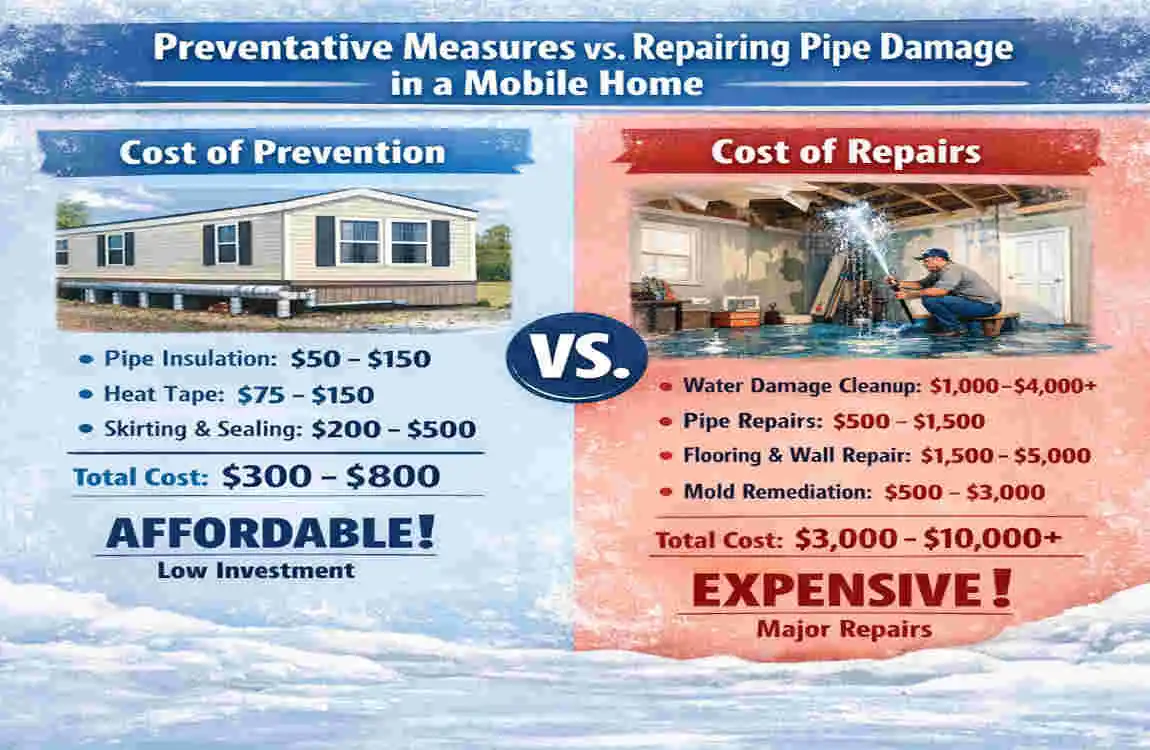
Basic prevention is usually affordable. Pipe wrap, insulation, and heat tape cost far less than major repairs.
Damage Costs
A burst pipe can lead to plumbing repair, water cleanup, flooring damage, and mold problems. Those costs can add up fast.
Key Insight
Preventing frozen pipes is almost always cheaper than fixing the damage later. A little work before winter can save you a lot of stress and money.
Frequently Asked Questions
At what temperature do pipes freeze under a mobile home?
Pipes can freeze at around 32°F, but the risk increases rapidly below 20°F because mobile homes expose plumbing to more cold air.
How long does it take pipes to freeze?
In very cold weather, pipes can freeze in just a few hours, especially if they are poorly insulated.
Should I leave water dripping overnight?
Yes, during freezing weather, a small drip can help keep water moving and reduce the risk of freezing.
What pipes freeze first in mobile homes?
The most exposed pipes, especially those near outside walls or under the floor, usually freeze first.
Can frozen pipes thaw on their own?
Sometimes they can, but that is risky. A frozen pipe may burst as it thaws.