Painting your home’s exterior is one of the simplest ways to improve curb appeal while protecting the surface. A fresh coat of paint can make an older house look cleaner, brighter, and more cared for. It can also help shield siding from weather, sun, and moisture damage.
| Tip | Key Point | |
|---|---|---|
| Prepare the surface | Clean, wash, and repair cracks before painting | |
| Protect areas | Cover windows, doors, and landscaping | |
| Choose right roller | Use thick nap rollers for textured exterior walls | |
| Use primer if needed | Helps paint stick and improves durability | |
| Paint top to bottom | Prevents drips and uneven coverage |
If you want to paint the exterior of your house yourself, a roller is one of the most practical tools you can use. It covers large wall areas quickly, spreads paint evenly, and works well for many common surfaces. With the right preparation and a steady approach, painting the exterior of a house with a roller becomes a manageable DIY project rather than a stressful one.
Why Choose a Roller for Exterior House Painting?
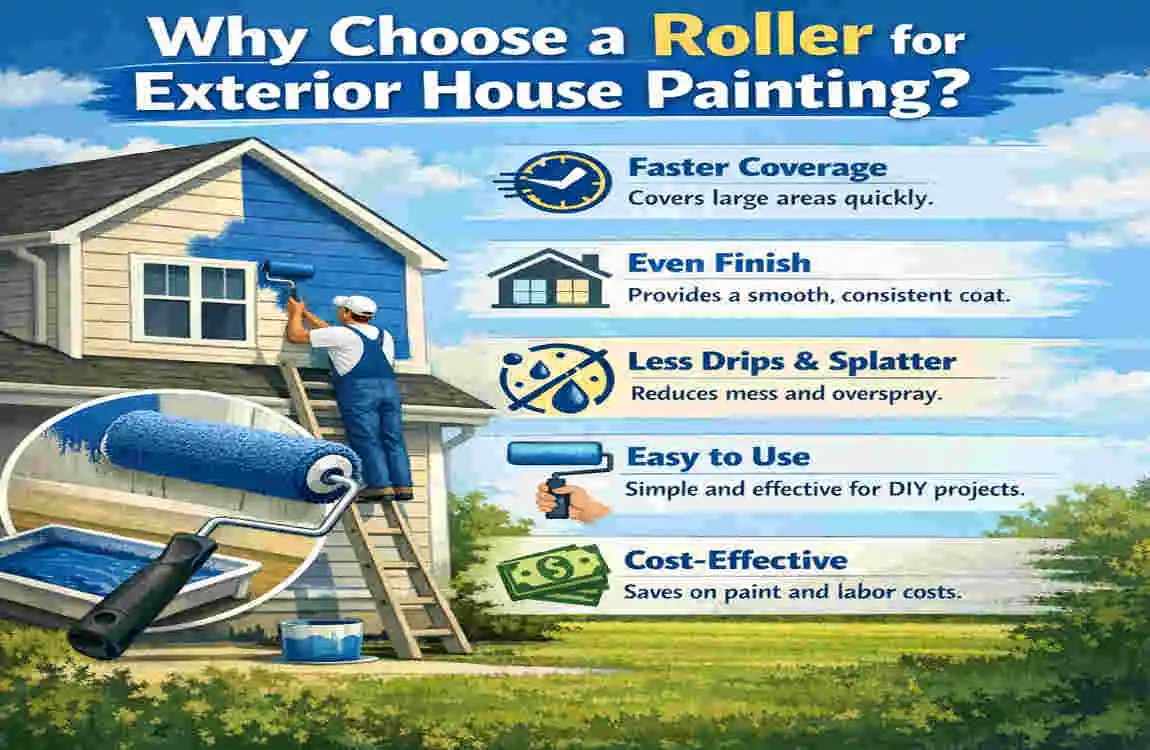
Advantages of Using a Roller
A roller is a smart choice when you want faster coverage across wide exterior walls. It helps spread paint more evenly than a brush alone and reduces the time it takes to finish large sections. That makes it especially useful for DIY exterior house painting.
Rollers are also more affordable than spray equipment. For many homeowners, that makes them the best balance between cost and quality. They are simple to use, easy to control, and ideal for people who want reliable results without having to buy expensive tools.
Roller vs Brush vs Paint Sprayer
Method Best Use Pros Cons
Roller Large wall surfaces Even coverage, easy to use, affordable Not ideal for tight corners.
Brush Trim, edges, small areas Precise control Slower on big walls
Sprayer Large, open surfaces Very fast coverage More setup, cleanup, and overspray
For most homeowners, the best roller for exterior painting is the one that provides solid coverage on the wall while remaining easy to handle. A roller is often the best all-around option for a simple exterior paint roller guide.
Tools and Materials You’ll Need
Essential Painting Equipment
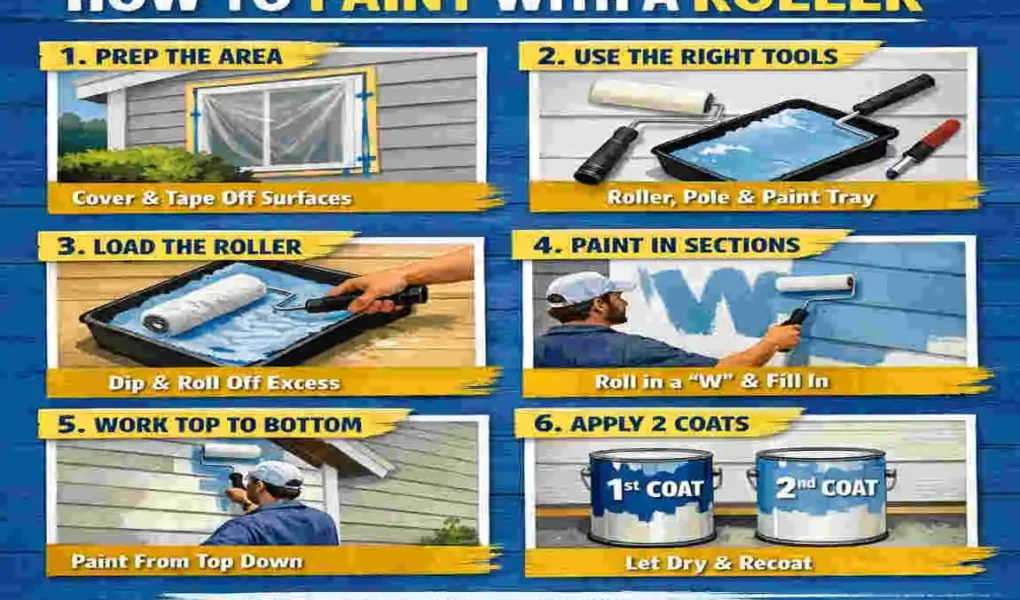
Before you begin, gather your exterior painting tools. You will need rollers and roller frames, an extension pole, paint trays, buckets, exterior paint, painter’s tape, and drop cloths. These items help you work faster and keep the job neat.
Safety Equipment
Safety matters as much as the paint itself. Wear gloves, safety glasses, and a dust mask when sanding or working with old paint. If you use a ladder, make sure it is stable and placed on level ground.
Choosing the Right Roller Nap
The roller nap is the thickness of the roller cover. Smooth walls usually need a shorter nap, while rougher walls need a thicker one. For textured siding or stucco, a deeper nap helps paint reach into the surface better. Choosing the right nap is one of the most important tips for house painting preparation.
Preparing Your Home Exterior Before Painting
Inspect the Exterior Surface
Start by walking around your house and looking closely at the surface. Check for cracks, peeling paint, mold, mildew, and other damage. If you skip this step, even the best paint job may not last.
Clean the Walls Thoroughly
Dirt and dust can stop paint from sticking properly. A pressure wash is often the fastest way to clean the surface, but use it carefully and let the walls dry completely before painting. Clean walls give you a stronger finish and better adhesion.
Repair and Patch Damaged Areas
Fix cracks, fill small holes, and replace damaged siding if needed. Sand rough spots so the surface feels smooth. These small repairs make a big difference in the final look and help the paint bond well.
Protect Surrounding Areas
Cover windows, plants, and outdoor furniture before you begin. Use drop cloths and painter’s tape to protect areas you do not want painted. Good preparation keeps the job cleaner and easier from start to finish.
Choosing the Best Exterior Paint
Types of Exterior Paint
Acrylic paint is popular because it holds up well outside. Latex paint is also common and easy to work with. Oil-based paint can be durable, but it is less often chosen for modern exterior jobs.
Selecting the Right Finish
Flat finish hides small flaws, satin finish gives a softer look with some shine, and semi-gloss is easier to clean. The best choice depends on your siding and the look you want. For many homes, satin is a balanced option.
How Much Paint Do You Need?
Measure the square footage of the walls you plan to paint. Then factor in extra paint for a second coat. Estimating carefully helps you avoid running short in the middle of the project.
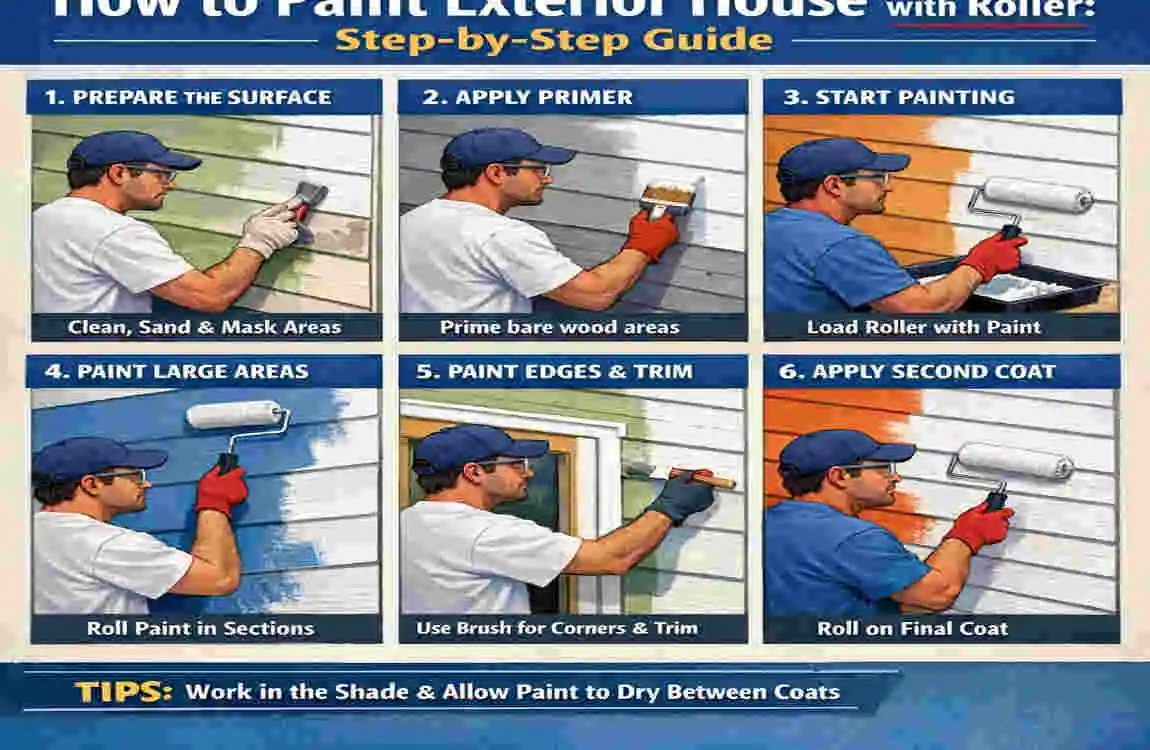
How to Paint Exterior House with Roller: Step-by-Step Guide
Prime the Surface
Primer is important when painting bare wood, repaired spots, stained areas, or surfaces that need better adhesion. Apply it evenly and let it dry fully before moving on.
Prepare the Roller
Load the roller lightly and evenly. Do not soak it with too much paint, or it may drip and create uneven lines. A well-loaded roller helps you better control the finish.
Start from the Top
Begin at the top of the wall and work downward. This helps you manage drips before they become a problem. It also lets you keep the surface looking more even as you move across it.
Use the “W” Pattern Technique
Roll the paint in a W pattern to spread it evenly across the wall. Then fill in the gaps without lifting the roller too often. This is one of the easiest exterior wall painting techniques for avoiding patchy spots and roller marks.
Maintain a Wet Edge
Always paint into the edge of the still-wet area. This reduces lap marks and helps the finish blend smoothly. Work in sections that you can finish before the paint starts drying.
Apply Additional Coats
One coat is often not enough for full coverage. Let the first coat dry according to the paint instructions, then check the result. A second coat usually gives the wall a richer and more even look.
Touch-Up Areas
After the main wall is done, inspect the corners, trim the edges, and check hard-to-reach spots. Use a brush for small touch-ups where a roller cannot reach well. This final step helps the whole house look polished.
Quick Reference Table: How to Paint Exterior House with Roller
Step What to Do Key Tip
1 Inspect Exterior Repair cracks and peeling paint
2 Clean Surface Pressure wash and allow to dry
3 Protect Surroundings Cover plants, windows, and furniture
4 Apply Primer Use where needed for better adhesion
5 Load Roller Properly Avoid overloading with paint
6 Paint Using “W” Pattern Ensures even coverage
7 Work Top to Bottom Prevents visible drips
8 Maintain Wet Edge Reduces lap marks
9 Apply Second Coat Follow recommended drying times
10 Final Touch-Ups Check corners, trim, and missed spots
Professional Tips for a Smooth Exterior Finish
Paint During Ideal Weather Conditions
Choose a mild day with dry weather. Very hot, cold, or humid conditions can affect how the paint dries. The best results usually come from steady temperatures and no rain in the forecast.
Work in the Shade
Direct sunlight can dry the paint too quickly and leave marks. Whenever possible, work on the shaded side of the house first. This gives you more time to blend each section smoothly.
Use High-Quality Rollers
Cheap rollers may shed lint or leave an uneven finish. A better roller gives you smoother coverage and less frustration. Quality tools often improve the final look more than people expect.
Keep Paint Consistent
Mix the paint well before and during the job. This helps keep the color uniform across all walls. If you are using more than one can, boxing the paint together can reduce slight shade differences.
Common Mistakes to Avoid When Painting with a Roller
Skipping surface preparation is one of the biggest mistakes. If the wall is dirty or damaged, the paint will not last as long. Another common issue is using the wrong roller nap, which can result in uneven coverage or excessive texture.
You should also avoid applying too much paint at once. Heavy coats often drip and dry unevenly. Painting in direct sunlight, rushing between coats, or ignoring the paint label can all lead to poor results.
How Long Does Exterior Roller Painting Last?
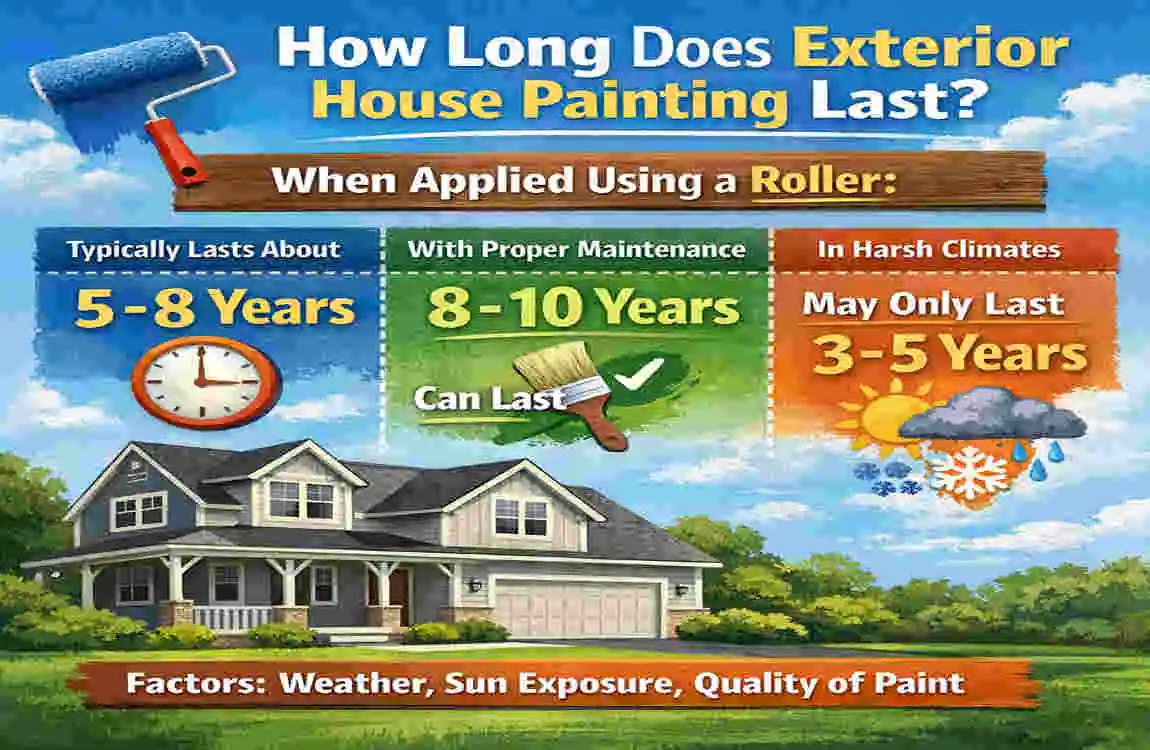
The lifespan depends on climate, surface type, and paint quality. In general, a well-done exterior paint job can last for several years before it needs attention again. Homes in harsh weather may need repainting sooner.
To make the paint last longer, inspect the exterior each year and clean off dirt when needed. Catching small problems early can prevent bigger repairs later.
Cost of Painting a House Exterior with a Roller
DIY Cost Breakdown
If you do it yourself, your main costs will be paint, rollers, trays, tape, drop cloths, and a few repair supplies. The total usually stays much lower than hiring someone, especially if you already own basic tools.
Professional Painting Costs
Hiring pros costs more because you are paying for labor, experience, and equipment. That said, you may save time and reduce the chance of mistakes.
Potential Savings with DIY Painting
DIY painting can offer strong savings if you have the time and patience. It is one of the most practical home projects for boosting value without a huge budget.
Frequently Asked Questions (FAQs)
Can I paint an entire house exterior using only a roller?
Yes, many homes can be painted with a roller, especially if the siding is flat or lightly textured. You may still need a brush for corners, trim, and detail areas.
What type of roller is best for exterior walls?
The best roller depends on the surface. Smooth walls need a shorter nap, while rough or textured walls need a thicker nap for better coverage.
How many coats of paint are needed?
Most exteriors need at least two coats for a solid finish. A primer may also be needed first, depending on the surface condition.
Do I need to use primer first?
Not always, but primer helps on bare surfaces, repairs, stains, or faded areas. It improves adhesion and can make the paint last longer.
Is a roller better than a paint sprayer?
A roller is often better for beginners because it is easier to control and creates less overspray. A sprayer is faster, but it takes more skill and setup.
How long should I wait between coats?
Always follow the paint manufacturer’s instructions. Drying time can vary based on weather, paint type, and surface conditions.
Can I paint over old exterior paint?
Yes, if the old paint is sound, clean, and not peeling badly. You may need sanding, patching, and primer to help the new paint stick properly.