Walking into a home. The walls are painted a neutral grey, the furniture is perfectly arranged, and the lighting is soft. It looks nice, right? Now, imagine that same room, but on the coffee table sits a vibrant vase of yellow sunflowers, and in the corner, a tall peace lily reaches for the light. Suddenly, the room doesn’t just look nice—it feels alive.
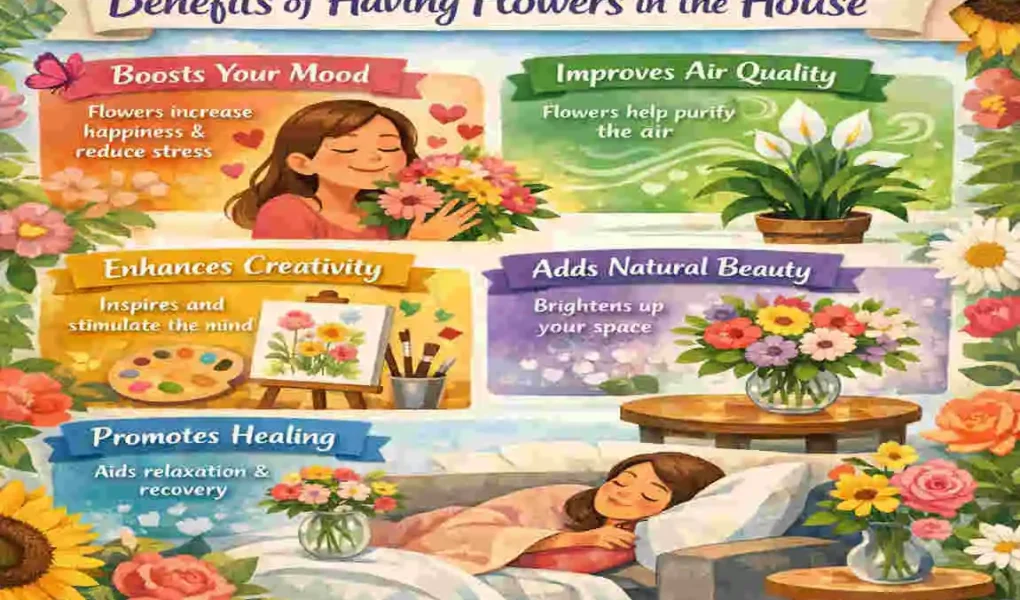
But beyond the aesthetic appeal, have you ever stopped to wonder what the benefits of having flowers in the house are? They do a lot more than look pretty. From the chemistry of your brain to the quality of the air you breathe, flowers are hardworking, functional decor.
Why Flowers Trump Other Decor for Home Wellness
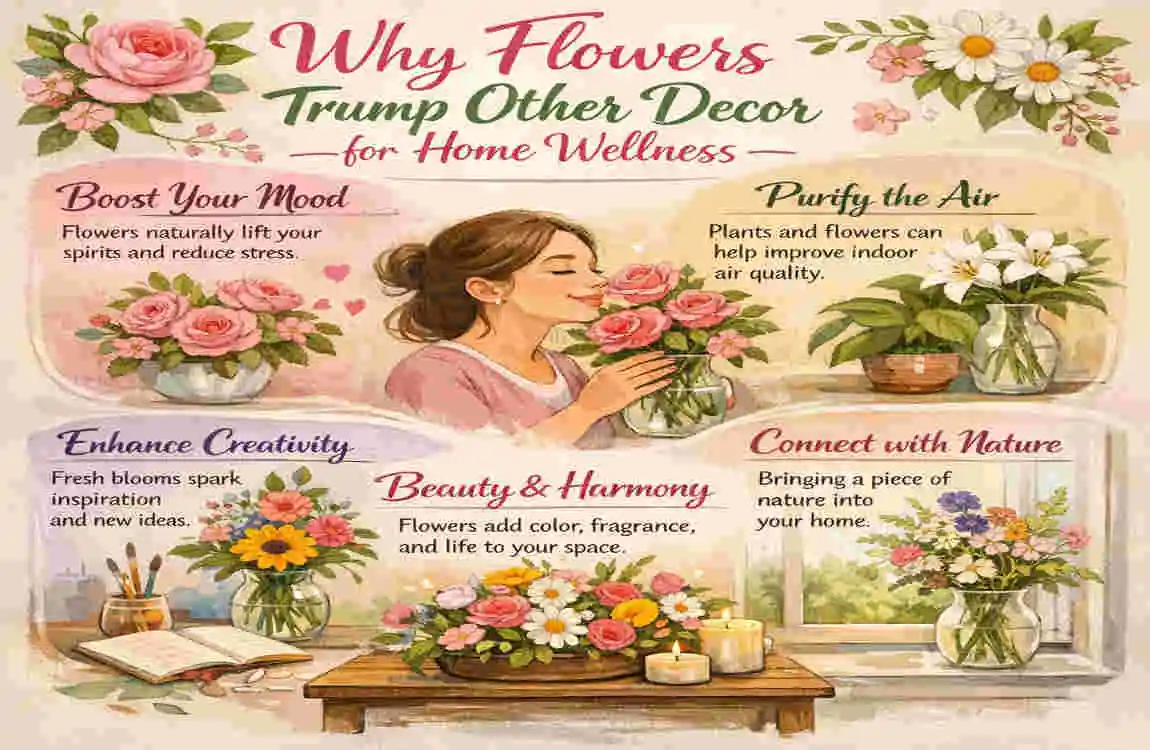
When we think about home improvement, we often think about static objects. We buy a painting, a sculpture, or a new set of throw pillows. While these items certainly add to a room’s visual style, they don’t interact with you. Flowers are different. They are living, breathing entities that contribute to the biological ecosystem of your home.
This connection goes back to our evolutionary history. Scientists call it the “Biophilia Hypothesis.” Essentially, humans are hardwired to connect with nature. For our ancestors, spotting lush greenery and flowers indicated the presence of water and food. That instinct hasn’t gone away just because we live in modern houses.
Unlike houseplants, which are fantastic for long-term greenery but primarily offer shades of green, cut flowers provide an immediate, concentrated burst of colour and scent. They offer a seasonal variety that keeps your decor feeling fresh and in step with the season. While a painting stays the same for ten years, a weekly rotation of flowers ensures your home always feels current and cared for.
Instant Mood Boost and Happiness Surge
How Flowers in the House Elevate Your Daily Mood
If you have ever received a bouquet as a gift, you know that immediate spark of joy it brings. But did you know that this isn’t just a sentimental reaction? It is a physiological one. When you ask what the benefits of having flowers in the house are, the most immediate answer is a chemical shift in your brain.
Research conducted at Rutgers University specifically looked into this phenomenon. The study found that flowers are natural mood modulators and have an immediate impact on happiness. All participants in the study expressed “true” or “excited” smiles upon receiving flowers, demonstrating extraordinary delight and gratitude. This reaction was universal, occurring across all age groups surveyed.
The Science of Colour Therapy. Part of this mood boost comes from “chromotherapy,” or colour therapy. Different flowers trigger different emotional responses based on their hue:
- Yellows (Sunflowers, Daffodils): These are associated with the sun and energy. They tend to stimulate the brain and encourage feelings of optimism.
- Pinks and Peaches (Roses, Peonies): These soft colours evoke feelings of gentleness, safety, and affection.
- Reds (Tulips, Roses): Red is the colour of passion and energy, known to increase heart rate and alertness slightly.
Real-Life Application I often advise clients to place bright flowers in the entryway or kitchen. The kitchen is usually the hub of the family home, and having a burst of yellow or orange there can set a positive tone for the entire morning. In an office setting, workers with fresh flowers on their desks have been reported to show a 15% increase in satisfaction with their workspace compared to those without.
Top Mood-Boosting Flowers
If you are having a rough week, try picking up one of these:
- Gerberas: Their large, open faces and bright colours are almost cartoonishly happy.
- Tulips: Simple, elegant, and they come in every colour imaginable.
- Hydrangeas: Their voluminous blooms create a sense of abundance and luxury.
- Roses: A classic for a reason, specifically for evoking feelings of love and connection.
Natural Air Purification and Fresher Indoors
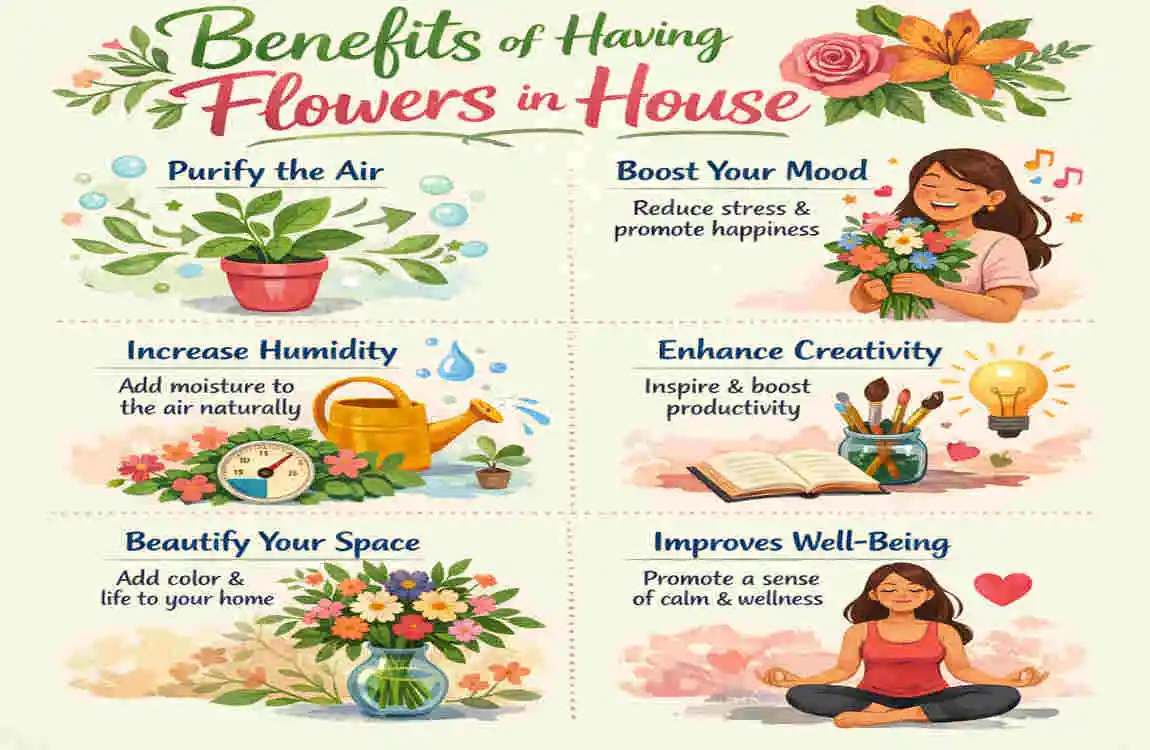
What Are the Benefits of Having Flowers in the House for Cleaner Air?
We tend to think of air pollution as something that happens outside—car fumes and factory smoke. However, the Environmental Protection Agency (EPA) has stated that indoor air can be up to five times more polluted than outdoor air. This is due to “Volatile Organic Compounds” (VOCs) that off-gas from paints, carpets, furniture, and cleaning products.
This is where your floral arrangements become functional tools. Many flowering plants are potent air filters. In the famous NASA Clean Air Study, researchers discovered that certain plants and flowers can remove toxic agents such as benzene, formaldehyde, and trichloroethylene from the air.
How It Works Plants absorb these gases through the pores on their leaves. The microorganisms in the potting soil (or the plant’s root system) then convert these pollutants into food for the plant. While leafy houseplants like Snake Plants are famous for this, flowering plants are heavy hitters too.
Flowers vs Toxins: Here is a breakdown of which flowering plants tackle specific household toxins:
Flowering Plant: Toxins Removed, Best Placement
Peace Lily, Ammonia, Benzene, Formaldehyde, Bathrooms (they love humidity)
Gerbera Daisy Trichloroethylene, Benzene Laundry room or Bedroom
Chrysanthemum Ammonia, Benzene, Xylene Living areas with bright light
Azalea Formaldehyde Basements or cooler spots
Maintenance for Maximum Filtration. To get the most out of this benefit, you need to keep the flowers healthy. Dust on the leaves/petals can block their ability to absorb toxins. As a home improvement enthusiast, I recommend gently wiping down the leaves of your potted flowering plants with a damp cloth once a week. For cut flowers, ensure the water is fresh, as stagnant water can actually release bacteria into the air, counteracting the benefits.
Stress Reduction and Better Mental Health
Reduce Stress with Flowers: The Home Therapy You Need
In the high-pressure world of real estate, stress is a constant companion. Dealing with property chains, negotiations, and deadlines can be exhausting. I have found that coming home to a house filled with flowers acts as a “reset” button for the nervous system.
This isn’t just anecdotal evidence. A study conducted in the Netherlands looked at hospital patients and found that those with flowers in their rooms required less pain medication, had lower blood pressure, and reported less anxiety than those in rooms without flowers. If flowers can help patients recovering from surgery, imagine what they can do for your daily stress levels.
The Role of Aromatherapy The scent is a powerful pathway to the brain, specifically the limbic system, which controls emotion and memory.
- Lavender: Known for lowering heart rate and blood pressure.
- Rose: Can reduce the respiratory rate, helping you breathe more deeply and calmly.
- Eucalyptus (often used as greenery in bouquets): Opens the sinuses and clears the head, relieving that “heavy” feeling of stress.
Creating a Sanctuary To maximise stress relief, I suggest creating a “decompression zone” in your home. This might be a reading nook, a bathtub, or just your favourite armchair. Place a small arrangement of fragrant flowers nearby.
Long-Term Anxiety Reduction: Consistency is key here. According to research published in the Journal of Environmental Psychology, long-term exposure to natural elements, such as flowers, can reduce general anxiety by up to 30%. It acts as a gentle, visual distraction. When your eyes rest on the complex, organic shapes of a flower, your brain shifts out of the “hard focus” required for screens and spreadsheets and enters “soft fascination,” which is restorative for mental fatigue.
Enhanced Sleep Quality and Relaxation
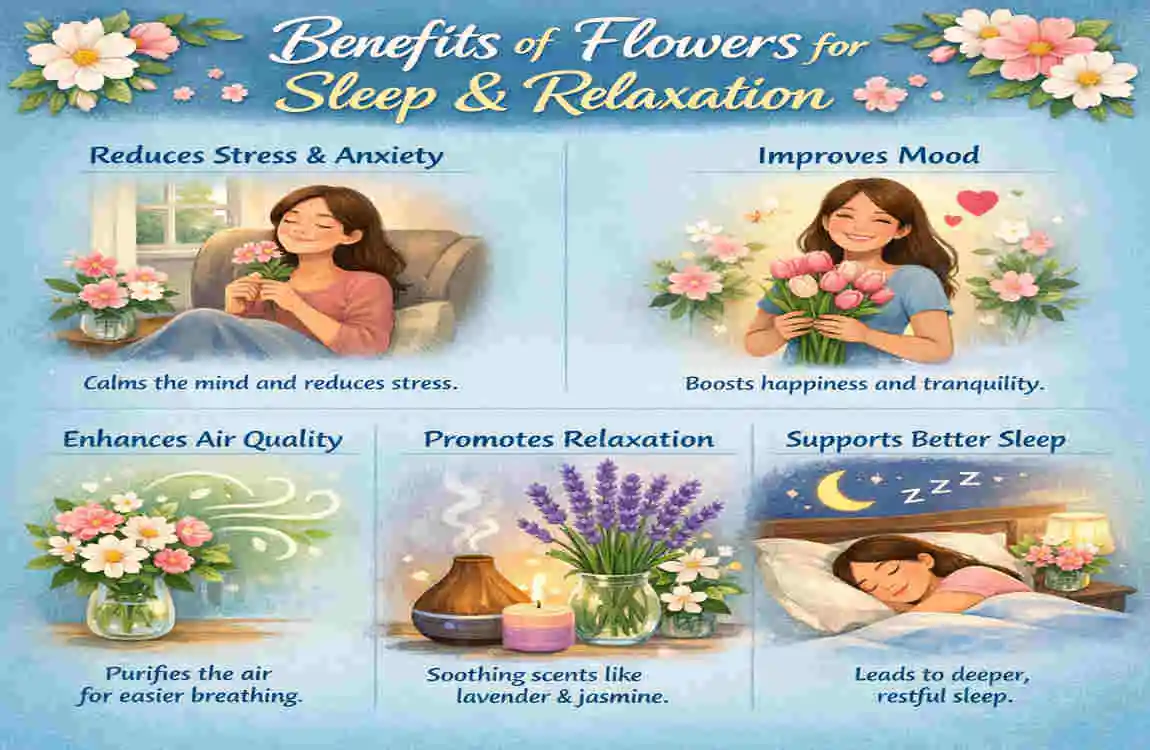
Flowers in the Bedroom: Unlock Better Sleep Tonight
We spend a third of our lives in our bedrooms, yet we often neglect their decor, saving the best items for the living room where guests see them. As a real estate agent, I tell sellers that the main bedroom must feel like a retreat. As a homeowner, you should treat it the same way.
Asking what the benefits of having flowers in the house are inevitably leads us to the topic of sleep hygiene. Insomnia and restless sleep are major issues in the UK, but certain flowers can act as natural sedatives.
The Power of Jasmine Research from Wheeling Jesuit University found that jasmine scent leads to greater sleep efficiency and reduced sleep movement. Participants who slept in a room scented with jasmine reported waking up feeling more refreshed and alert than those who slept in lavender-scented or non-scented rooms.
Gardenia for Anxiety-Induced Insomnia Gardenias have a heavy, creamy scent that has been likened to the effects of Valium in some studies regarding its ability to soothe the neurotransmitters in the brain.
Placement Guide for the Bedroom
- Nightstand: Keep small arrangements here. You want the scent close, but you don’t want a massive vase that you might knock over in the dark.
- Avoid Heavy Pollen: If you suffer from hay fever, avoid lilies or sunflowers in the bedroom. Stick to roses, hydrangeas, or tulips, which carry less airborne pollen.
- Cool Colours: Visually, stick to whites, blues, and violets in the bedroom. These colours lower blood pressure and prepare the body for rest, unlike bright reds or oranges, which might be too stimulating.
Boosted Creativity and Productivity
Spark Ideas: How House Flowers Fuel Your Brainpower
Since the shift toward remote work, many of us at homeimprovementcast.co.uk have been looking for ways to optimise our home offices. If you are staring at a blank wall or a cluttered shelf, your brain is likely to stall.
Flowers are a secret weapon for productivity. A study by Texas A&M University found that workers demonstrated more innovative thinking and generated more ideas and original solutions to problems when flowers were present in their office environment. In fact, problem-solving skills improved by roughly 15% for men and women alike.
Why Does This Happen? It relates to that concept of “soft fascination.” Intense focus drains the brain’s energy reserves. Glancing at a bright bouquet provides a micro-break that restores attention span without completely distracting you from the task at hand. It is gentle stimulation—enough to keep the brain awake, but not so much as to cause overwhelm.
Workspace Tips
- Desk Poppies: Their vibrant colour can act as a caffeine shot for your eyes during the mid-afternoon slump.
- Orchids: These are sculptural and elegant. They suggest sophistication and order, which can subliminally encourage you to keep your desk tidy and your work organised.
- Line of Sight: Place the flowers within your peripheral vision so you benefit from them even when looking at your screen.
Health Perks, such as Allergies and Immunity
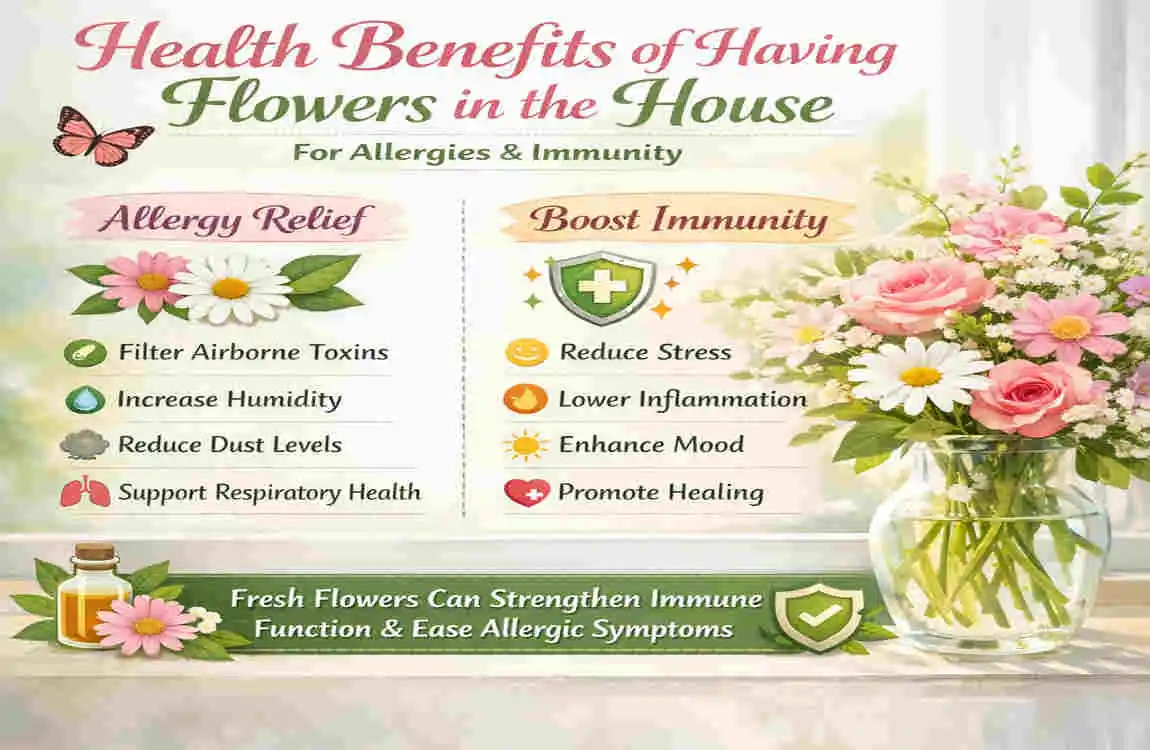
Surprising Health Wins from Indoor Flowers
This might sound counterintuitive. Usually, people associate flowers with sneezing and allergies. However, if you choose the right flowers, they can actually support your physical health.
Building Tolerance? While you should avoid high-pollen flowers if you are sensitive, having hypoallergenic flowers (such as roses, Peonies, and Irises) in the house can help maintain a clean environment. Furthermore, the humidity released by flowers and plants (transpiration) helps combat dry air. Dry air is a breeding ground for flu viruses and can irritate the sensitive linings of your nose and throat. By keeping the humidity optimal, flowers help your body’s first line of defence against illness.
The Placebo Effect of Care. There is also a tangible health benefit to caring for flowers. The routine of changing water, trimming stems, and arranging blooms is a mindful activity that lowers cortisol (the stress hormone). High cortisol levels are linked to everything from weight gain to heart disease, so anything that lowers them is a health win.
Practical Tips: Choosing, Arranging, and Maintaining Flowers
Make the Most of Flowers: Easy Home Setup Guide
Now that we know what the benefits of having flowers in the house are, how do we make it practical? You don’t need a massive budget to enjoy these perks. In my line of work, staging a home on a budget is a crucial skill. Here is how I apply that to floral decor:
The “Grocery Store” Hack: You do not need a florist for everyday blooms. Supermarket flowers are fantastic if you treat them right. Look for bunches with buds that are still tight and slightly closed—they will last much longer.
Vase Life Extension
- Cut the Stems: Always cut the stems at a 45-degree angle. This increases the surface area for water absorption.
- Remove Lower Leaves: Strip any leaves that will sit below the water line. Leaves in water rot quickly, creating bacteria that kill the flower.
- The Penny Trick: Some people swear by dropping a copper penny and a pinch of sugar into the water. The sugar feeds the flower, and the copper acts as a fungicide (though a drop of bleach works even better for bacteria).
Strategic Placement Don’t hide your flowers. Place them where you spend the most time.
- The Coffee Table: For relaxation.
- The Kitchen Island: For family engagement.
- The Hallway Console: To welcome you home (and impress guests).
Seasonal Rotations
- Spring: Tulips and Daffodils (New beginnings).
- Summer: Peonies and Sunflowers (Energy).
- Autumn: Dahlias and Chrysanthemums (Warmth).
- Winter: Amaryllis and white Roses (Cosy elegance).
FAQ: Common Questions on Flowers in the House
Do artificial flowers provide the same benefits? While high-quality silk flowers can provide the visual benefit of colour, they lack the biological benefits. They do not clean the air, they do not release natural aromatherapy scents (unless sprayed), and they don’t trigger the same evolutionary “biophilic” response as living things. For true wellness benefits, fresh is best.
What are the best flowers for a home with pets? This is crucial. Lilies are extremely toxic to cats—even the pollen can be fatal. If you have pets, stick to safe options like Roses, Gerberas, Sunflowers, and Orchids. Always check the ASPCA or UK charity listings before bringing a new plant home.
Is it expensive to keep fresh flowers all the time? It doesn’t have to be. You can buy “filler” greenery (like eucalyptus), which lasts for weeks, and add just two or three “hero” stems (like a single large hydrangea) to create a full look for under £5-£10 a week.
How often should I change the water? Every two days is ideal. If the water looks cloudy, it’s already full of bacteria. Changing it frequently is the single best way to make your arrangement last 10 days instead of 4.