Vinyl plank flooring (LVP) has become a top choice for bedroom renovations, thanks to its durability, water resistance, and ability to mimic the natural charm of hardwood. If you’re planning to upgrade your bedroom, one of the most important questions you’ll face is: “Which direction should I lay vinyl plank flooring in the bedroom?”
The direction of your vinyl planks impacts room size perception, light flow, and overall aesthetics. Whether you’re a DIY enthusiast or hiring a professional installer, understanding this decision can make the difference between a cramped, chaotic vibe and a serene, spacious retreat.
| Direction | Best For | Pros | Cons | Bedroom Trend Level |
|---|---|---|---|---|
| Straight (parallel to longest wall) | Small/narrow bedrooms | Makes room feel larger; easy install; calm aesthetic | Basic look | High (most popular) |
| Diagonal (45°) | Square/large bedrooms | Dynamic, modern vibe; hides imperfections | More cuts/waste; tricky in tight spaces | Medium |
| Herringbone | Luxury/modern bedrooms | Statement pattern; high-end feel | Complex; higher waste/skill needed | Rising (2026) |
| Perpendicular to wall | Feature-focused (e.g., fireplace) | Draws eye to focal points | Can shorten room visually | Low |
Why Direction Matters in Bedroom LVP Installation
The way you lay vinyl planks in your bedroom isn’t just a design choice—it’s one of the most important factors in achieving a cohesive, restful look. Here’s why:
Perceived Room Size
The direction of the planks can significantly affect how big or small your bedroom feels. For instance:
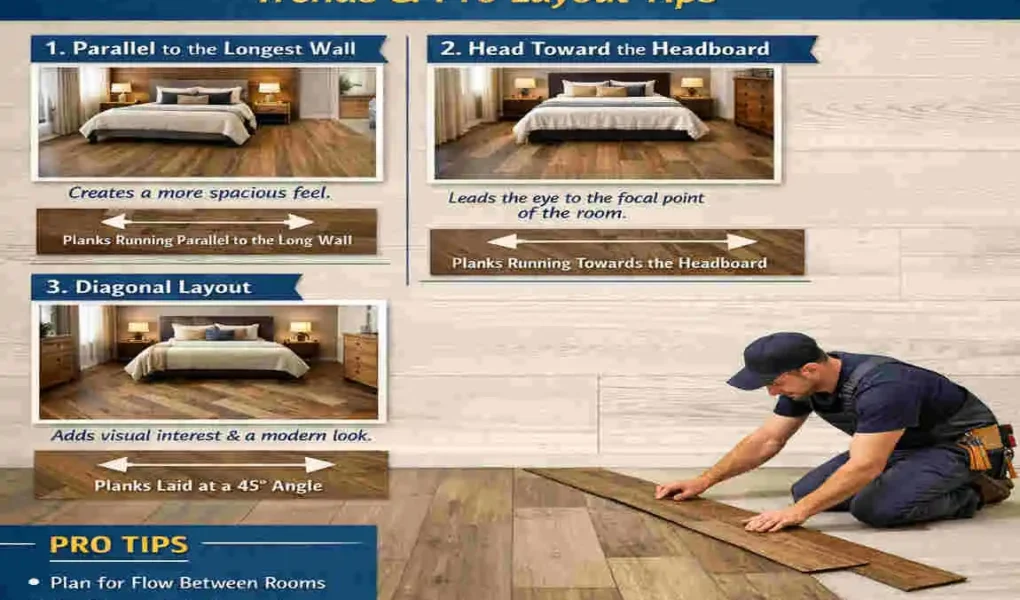
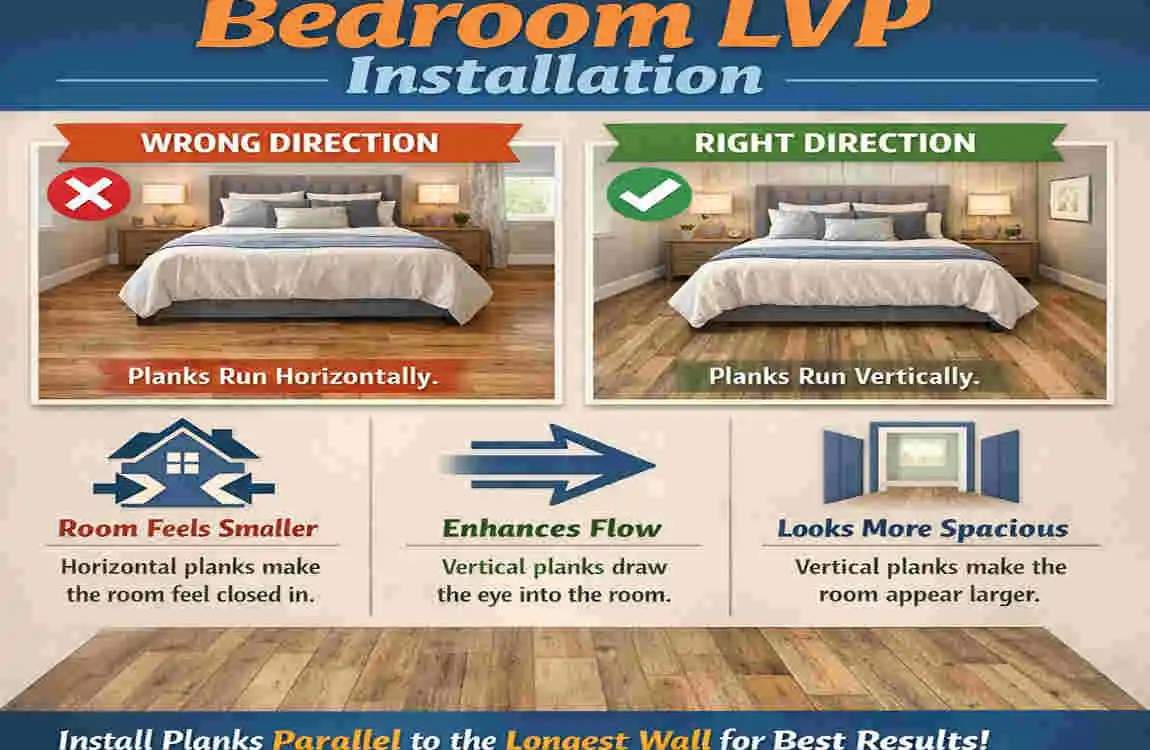
- Parallel to the longest wall: This elongates the room, making it feel more spacious—perfect for narrow bedrooms.
- Perpendicular to windows: This enhances natural light reflection, creating an open and airy atmosphere.
Traffic and Flow
Bedrooms are personal spaces, but they still have a natural flow of traffic. The plank direction should guide the eye seamlessly, avoiding visual disruptions. Misaligned planks can “chop” the room into awkward sections, disrupting the harmony.
Visual Balance
LVP should complement the bedroom’s layout and furniture placement. When laid correctly, it creates a sense of balance and grounding, especially in spaces with dominant furniture like beds and wardrobes.
2026 Trends in Direction
Modern bedroom designs lean heavily toward light-following layouts and biophilic principles. In fact, a recent survey found that 65% of designers recommend aligning planks with natural light sources for a calming effect. By choosing the right direction, you ensure your bedroom feels like a peaceful retreat.
Top 2026 Trends in Bedroom Vinyl Plank Direction
The trends for vinyl plank direction in 2026 reflect a mix of practicality, aesthetics, and bold design choices. Here are the most popular ones:
Straight Lay Parallel to the Bed
This is the most dominant trend, with over 70% of homeowners opting for it. Straight planks parallel to the bed create a clean, simple look that works especially well in small or compact guest bedrooms.
- Benefits: Makes tight spaces feel more expansive.
- Drawbacks: May come off as too basic for some tastes.
Light-Following Orientation
Aligning planks with the primary light source, such as a large window, is another highly sought-after option. This layout enhances natural light, particularly in east- or south-facing bedrooms, giving the space a warm and inviting glow.
- Benefits: Amplifies brightness and complements biophilic trends.
- Drawbacks: Requires precise cuts to accommodate light angles.
Diagonal Layout for Drama
Diagonal planks are gaining popularity in luxury bedrooms, with a 25% rise in adoption. This bold approach adds movement to the room and works best in larger bedrooms where the angles won’t overwhelm the space.
- Benefits: Adds a unique, dynamic look.
- Drawbacks: Generates more material waste (+15%) and requires skilled installation.
Herringbone Accent
Herringbone patterns are emerging as a designer favourite for creating accent zones, such as beneath the bed or in small seating areas within the bedroom. Though niche, this pattern adds an unmistakable touch of elegance.
- Benefits: High-end and visually captivating.
- Drawbacks: Complex and time-intensive to install.
Comparing 2026 Trends
Trend Best For Drawbacks Popularity
Straight Parallel Narrow bedrooms Basic look High
Light-Following Sunny master suites Tricky cuts Medium
Diagonal Spacious en-suites Wasteful Rising
Herringbone Accent zones (under beds) , Complex installation , Niche
Key Factors to Consider for LVP Direction
Choosing the right direction for your vinyl planks involves more than just following trends. Let’s dive into some essential factors:
Room Shape and Size
The shape and size of your bedroom dictate how LVP should be laid:
- Rectangular Bedrooms: For narrow rooms, lay planks parallel to the longest wall to create the illusion of width.
- Square Bedrooms: Consider a perpendicular layout to balance the proportions.
- L-Shaped Bedrooms: Stagger planks at transitions and align them with joists for stability.
Example:
For a 12×10 bedroom, laying planks parallel to the 12-foot wall can make the room feel 20% wider.
Natural Light and Windows
Light direction plays a critical role in plank orientation:
- Run planks with the light to minimise shadows and amplify brightness.
- Avoid laying planks against light sources as this can create unflattering stripes or shadows.
Pro Tip:
Pair your light-following planks with sheer curtains for a soft and diffused lighting effect.
Furniture Layout and Flow
The placement of key furniture pieces, such as the bed, should influence the plank direction:
- Align the planks toward the headboard to create a grounded, cohesive look.
- If you have a rug under the bed, ensure the plank direction complements the rug’s pattern.
Pro Layout Tips for Flawless Installation
Here’s a step-by-step guide to ensure a smooth installation process:
- Dry-Lay the First Row: Test the direction visually before committing.
- Start from the Room’s Centre or Longest Wall: This ensures symmetry and minimises errors.
- Stagger Seams: Maintain a 12-18 inch stagger for structural strength and visual appeal.
- Trim End Pieces Carefully: Avoid leaving planks shorter than 50% of their width at edges.
- Use Appropriate Tools: A pull bar and spacers are essential for tight fits.
Tools Checklist
Step Tool Needed Benefit
Centre Start Chalk line Symmetry
Stagger Seams Utility knife Strength
Acclimate Planks None Prevents warping
Popular Bedroom Patterns Beyond Straight Lay
If you’re looking for something more unique than a straight lay, consider these patterns:
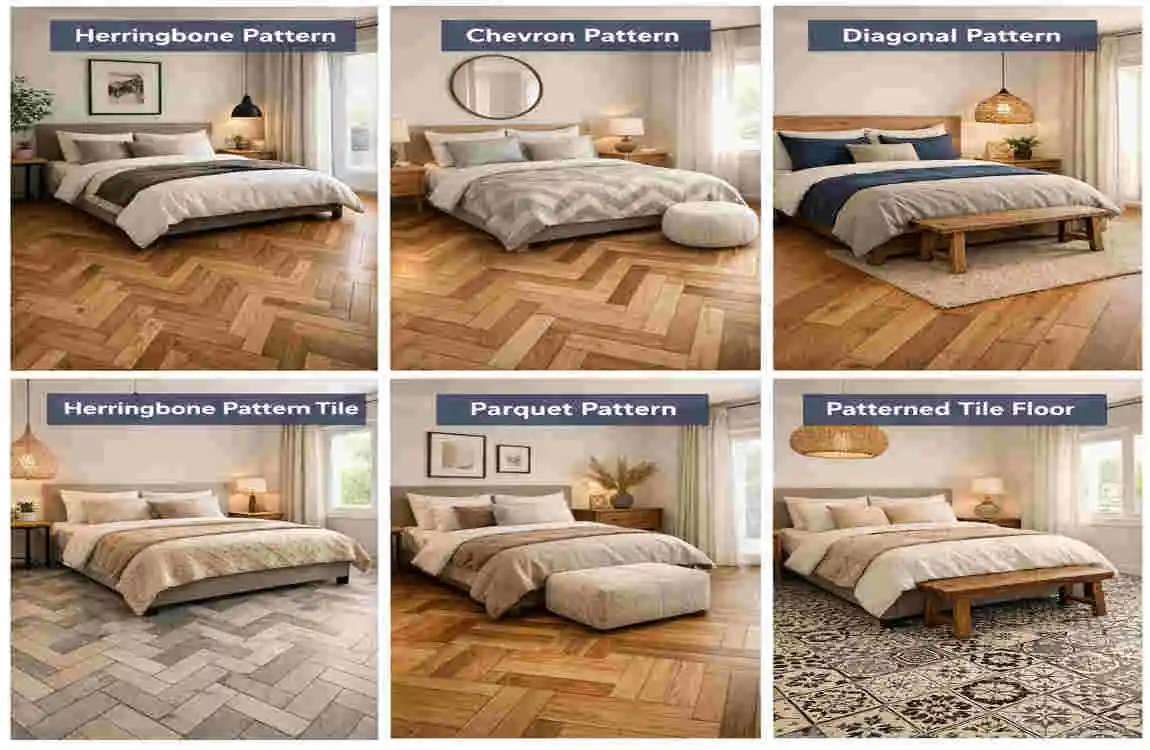
- Offset (Running Bond): A timeless staggered look that works in any room size.
- Diagonal 45°: Adds boldness and suits modern, spacious designs.
- Herringbone: High-end and perfect for accent features.
Cost and Material Considerations
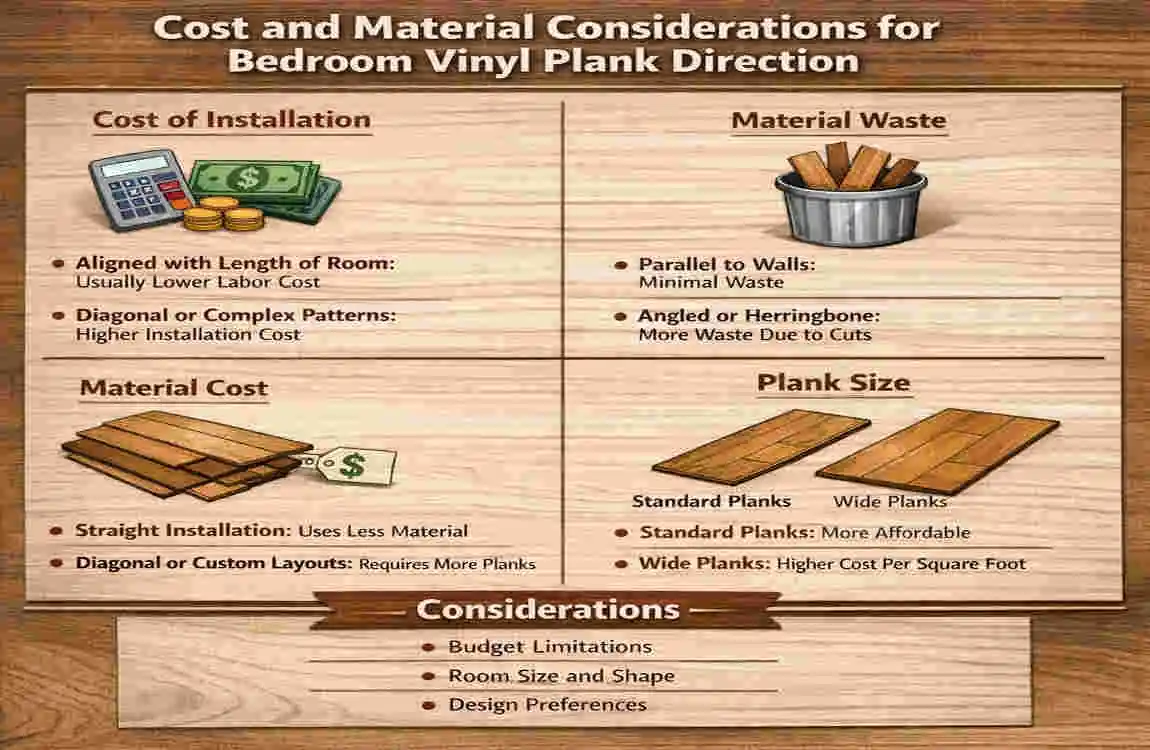
The cost of luxury vinyl planks ranges from $2 to $7 per square foot, depending on the type and quality. Keep in mind:
- Patterns like diagonal or herringbone increase material waste by up to 15%.
- For bedrooms, opt for waterproof SPC (stone plastic composite) cores for durability and moisture resistance.
FAQs: Bedroom Vinyl Plank Direction
- Which direction should I lay vinyl planks in a bedroom?
- Parallel to the longest wall or with the dominant light source.
- What’s best for small bedrooms?
- A straight line parallel to the bed or wall is ideal.
- How do I ensure consistency across rooms?
- Maintain the same direction throughout for a seamless flow.