
If you are asking if house plumbing is a good career, the short answer is yes, for the right person. Plumbing is a practical trade that keeps homes working properly every single day. People need clean water, working toilets, safe drainage, and reliable heating. That means plumbers are always needed.
This career is not for everyone, though. It takes physical effort, patience, and a willingness to learn. Still, if you enjoy hands-on work and want a job that stays in demand, house plumbing can be a strong career choice.
What Is House Plumbing?
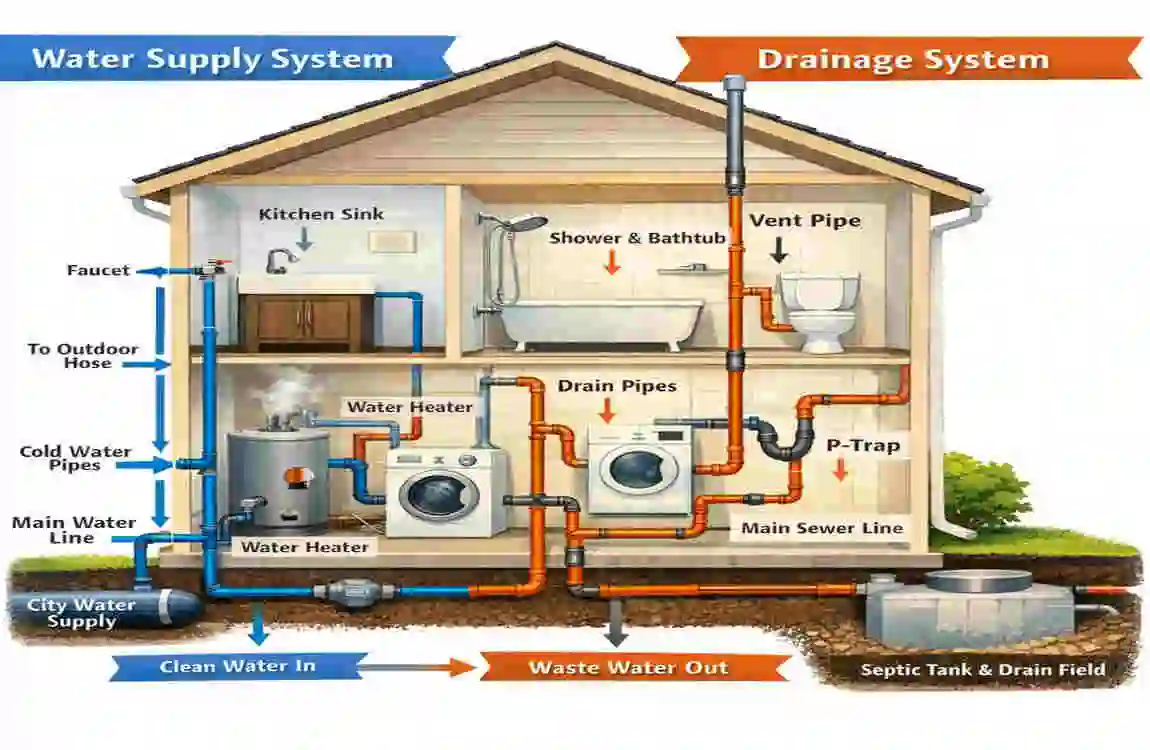
House plumbing involves installing, repairing, and maintaining the systems that move water in and out of a home. It covers many everyday jobs that people often take for granted until something goes wrong.
Common Plumbing Tasks
A house plumber may handle tasks like:
- Fixing leaks and burst pipes
- Installing sinks, toilets, and faucets
- Repairing drainage problems
- Maintaining water heaters
- Checking pipes and fixtures for damage
In simple terms, plumbers help keep a house safe, clean, and comfortable.
Is House Plumbing a Good Career?
Yes, house plumbing is a good career for many people because it offers steady work, decent pay, and room to grow. It is also a trade that does not always require a four-year college degree, making it more accessible to many workers.
High Demand
Homes always need plumbing. Pipes break, faucets leak, drains clog, and water heaters wear out. On top of that, new homes need plumbing installed from the start.
This means plumbers are needed in both busy and slow economies. The work does not disappear easily, which is a big advantage if you want a career with strong demand.
Good Income Potential
Plumbing can pay well, especially once you gain experience. Skilled plumbers often earn better pay than many entry-level jobs, and income can grow even more if you specialize or start your own business.
Your earnings often improve when you:
- Get proper training
- Build experience
- Earn licenses or certifications
- Take on more complex jobs
No Traditional Four-Year Degree Needed
One of the biggest benefits of plumbing is that you can often start through an apprenticeship or trade school. That means you can learn while working, rather than spending years in a university classroom.
This can save both time and money. For many people, that makes plumbing a very practical career path.
Career Growth
Plumbing is not a dead-end job. You can begin as an apprentice, move up to a licensed plumber, and later become a supervisor, contractor, or business owner.
Career Progression Example
Career Stage: What It Means
Apprentice : Learn the basics while working with experienced plumbers
Journeyman Work more independently and handle a wider range of jobs
Licensed Plumber : Take on advanced work and meet state or local requirements
Contractor/Owner : Run your own plumbing business or manage larger projects
This growth path gives you more control over your future.
Job security
Plumbing is an essential service. It cannot be easily replaced by machines or automation because every job site and home can have different problems.
That kind of stability is valuable. If you want a trade that tends to stay important over time, plumbing is a smart option.
Pros of Choosing Plumbing as a Career
There are many reasons people choose this field. Some of the biggest advantages include:
- Stable job opportunities
- Hands-on, practical work
- Chance to start your own business
- Strong earning potential
- Flexible career options
For people who like working with their hands and solving problems, plumbing can feel rewarding every day.
Challenges of House Plumbing
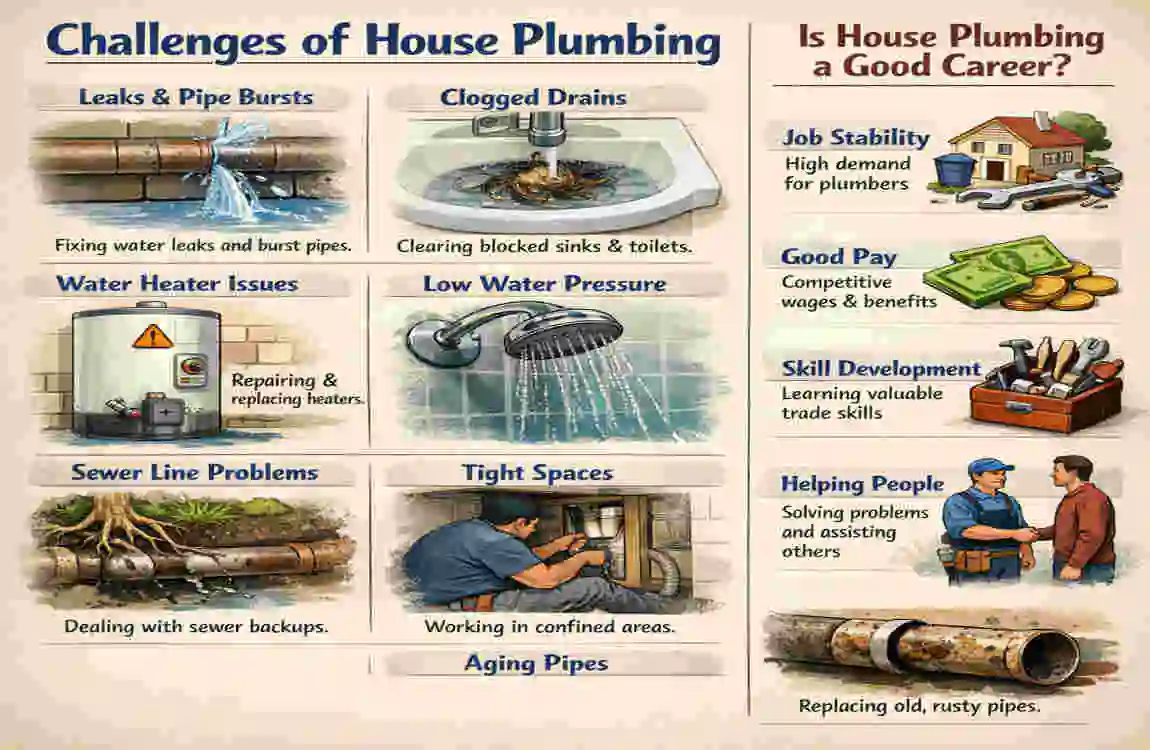
Of course, no career is perfect. Plumbing also has some tough parts.
Physical Work
Plumbing can be physically demanding. You may need to lift heavy tools, crawl under houses, or work in uncomfortable positions.
Emergency Calls
Some plumbing problems happen at night, on weekends, or during holidays. That can mean long hours or sudden calls when customers need help fast.
Tight Spaces
Plumbers often work in small, cramped, or dirty areas. If you do not like confined spaces, this part may be hard.
Training Required
Even though you do not always need a college degree, you still need real training. Plumbing involves technical knowledge, safety rules, and problem-solving skills.
Skills Needed to Become a Plumber
If you are seriously considering this career, it helps to know which skills matter most.
Important Skills
- Problem-solving: You must figure out what is wrong and how to fix it
- Physical stamina: The work can be tiring
- Attention to detail: Small mistakes can cause big problems
- Communication: You need to explain issues clearly to customers
- Basic math and technical knowledge: Measurements, pressure, and system layouts matter
These skills can be learned and improved with practice. You do not need to be perfect from the start.
Who Should Choose Plumbing?
House plumbing is a strong fit for certain types of people. It may be a good career for you if you:
- Enjoy hands-on work
- Like solving practical problems
- Want a trade with steady demand
- Prefer learning by doing
- Want to build a career without long college years
If that sounds like you, plumbing may be worth serious consideration.
Who May Not Enjoy It?
Plumbing may not be the best choice if you dislike physical labor, want a desk job, or do not want to deal with emergency repairs. It is also not ideal if you want a career with very predictable hours all the time.
Is House Plumbing Worth It in the Long Run?
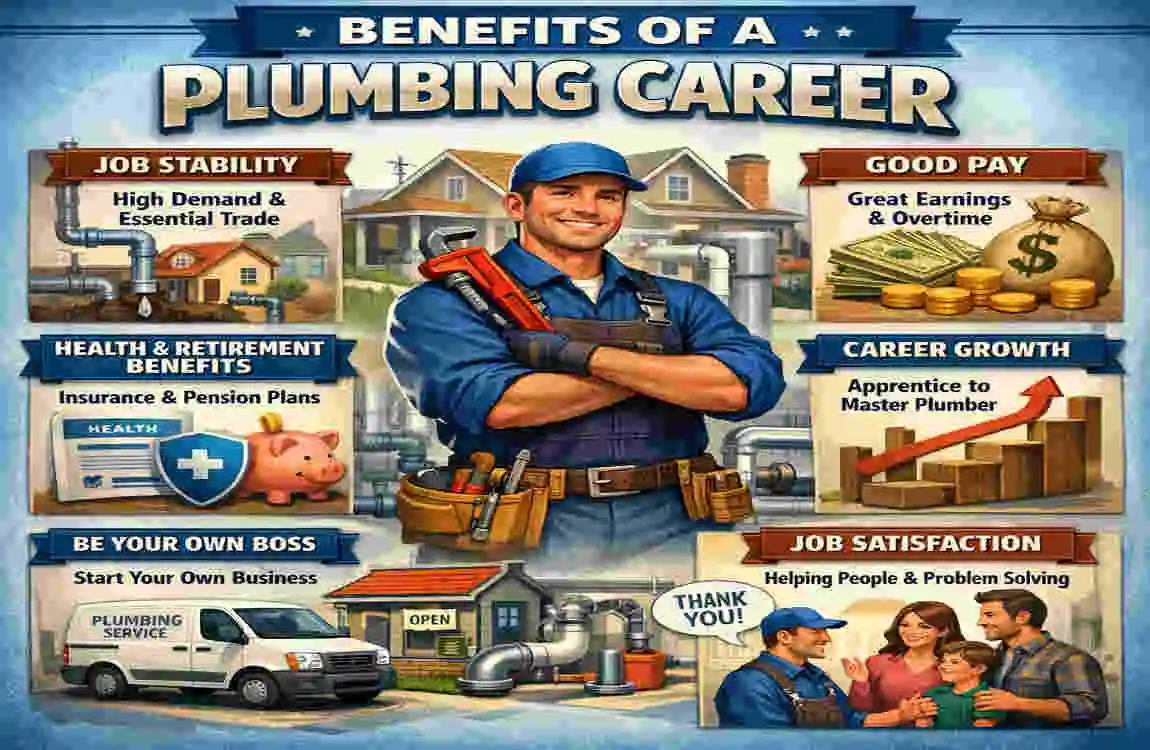
For many people, yes. Plumbing offers a mix of stability, skill building, and income growth. It can also lead to independence if you want to run your own business later.
The career may be especially worthwhile if you want:
- A reliable trade
- A job with real-world value
- A clear path to grow
- Work that does not depend on a college degree
FAQs
Is house plumbing a stressful job?
It can be stressful during urgent repairs or emergency calls, but many plumbers enjoy the challenge and variety.
Can plumbers make good money?
Yes, experienced plumbers can earn high incomes, especially if they specialize or own their own business.
Is plumbing hard to learn?
It takes training and practice, but many people learn through apprenticeships and on-the-job experience.
Is plumbing a future-proof career?
Yes, plumbing is an essential service, so it remains important in homes and buildings over the long term.
| Factor | Why It Matters |
|---|---|
| Job demand | Plumbing is consistently needed in homes, repairs, and new construction. |
| Skills required | You need problem-solving, hand skills, and basic technical knowledge. |
| Training | Most plumbers learn through apprenticeships or trade programs. |
| Earnings | Income can be strong, especially with experience or specialization. |
| Work conditions | The job can involve physical labor, tight spaces, and emergency calls. |
| Career growth | You can advance into master plumbing, contracting, or business ownership. |
| Best for | People who like practical work, independence, and fixing real-world problems. |