A house fire can change from a small problem to a life-threatening emergency in minutes. You may think of flames first, but the real danger often comes from the speed of the fire, the heat it creates, and the smoke it fills the home with. If you have ever wondered how hot a house fire gets, the answer is: much hotter than most people expect.
In a small, smoldering fire, temperatures may stay in the low hundreds of degrees Celsius.
Quick Answer: How Hot Does a House Fire Get?
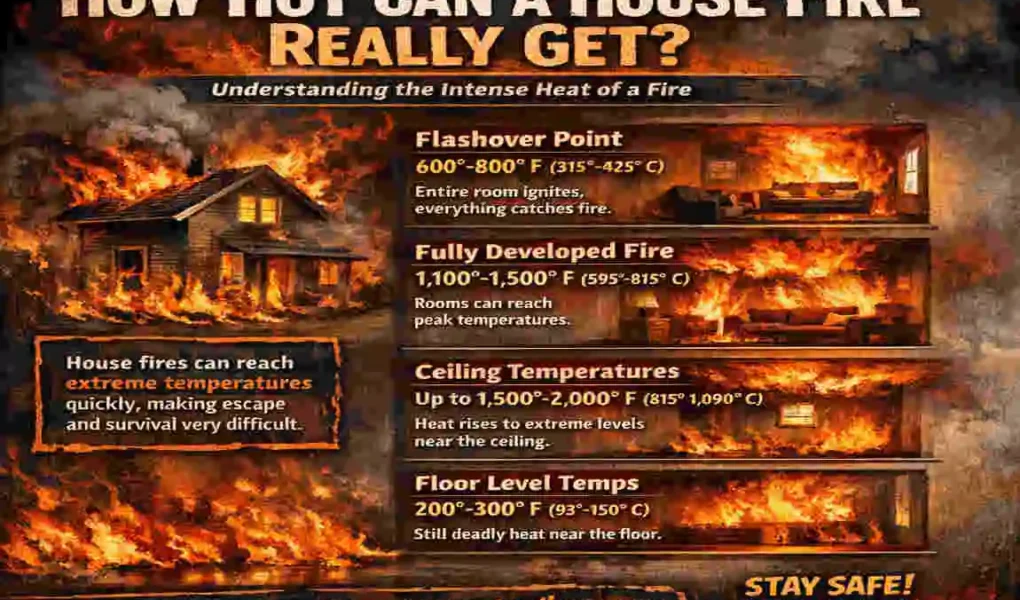
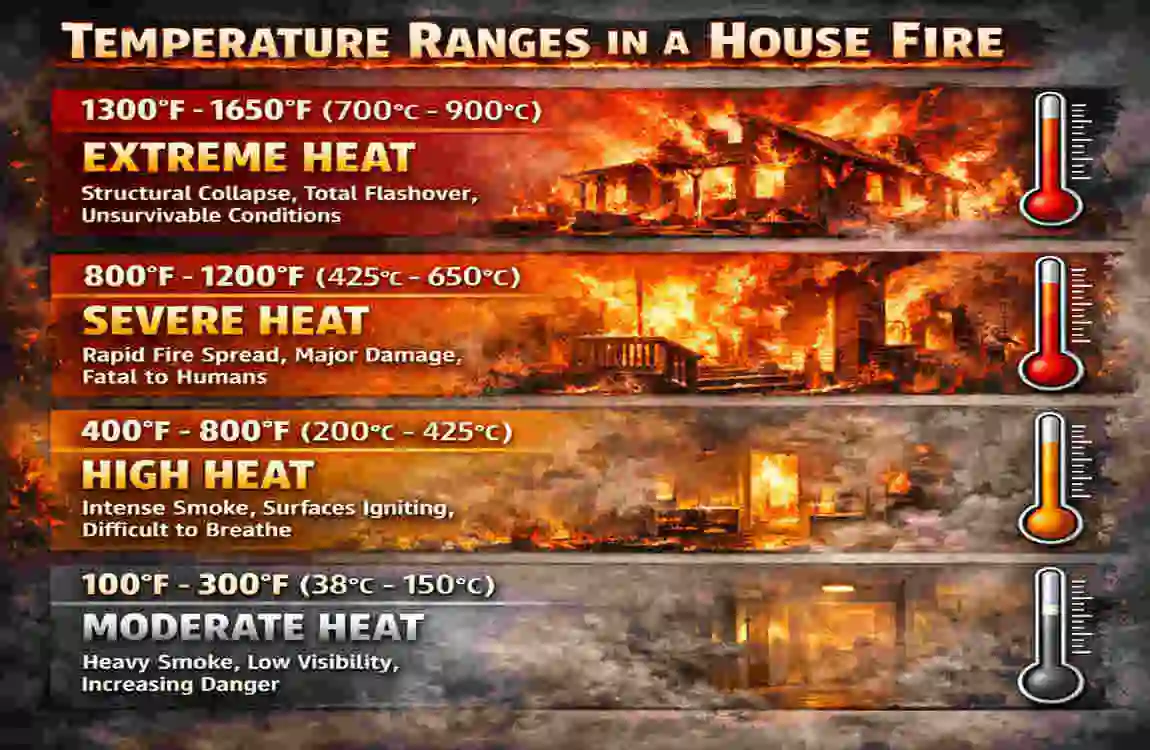
A luxury house fire can range from about 300°C to 1,200°C or more, depending on how much fuel is burning and how much oxygen the fire gets. A small, contained fire may stay cooler, while a fully developed room fire can become extremely hot very quickly. In some cases, localized areas can get even hotter.
The exact temperature depends on the room, the materials inside it, and how the fire spreads. That is why how hot a house fire gets does not have a single answer. The real concern is that even a “moderate” fire can become dangerous fast.
Temperature Ranges and What They Mean
Smoldering and early-stage fires
A fire does not always start with big flames. Sometimes it begins as a smoldering fire, where material burns slowly and produces a lot of smoke. These fires may sit around 300–600°C. That may sound manageable, but this stage is still dangerous because smoke builds up quickly and can fill a room before flames spread much.
This is also the stage when people often underestimate the threat. They may try to grab something or stay “just a little longer,” but smoke inhalation can become deadly very fast.
Fully involved room fires
Once flames spread across furniture, curtains, carpet, and other household items, the fire can become fully involved. In this stage, temperatures often rise to 600–1,100°C. That is hot enough to damage walls, melt some materials, and make conditions inside the home unbearable.
At these temperatures, Survival time drops quickly. Breathing becomes difficult, skin can burn in seconds, and visibility becomes very poor. This is why fire safety experts stress early escape over trying to fight a growing fire.
Flashover and extreme heat spikes
One of the most dangerous types of fire is flashover. This happens when nearly everything in a room reaches ignition temperature simultaneously. The room can seem to “flip” from a growing fire into a full room fire in a sudden burst.
During flashover, temperatures can reach 1,000–1,200°C or more in localized areas. The change is fast, violent, and extremely dangerous. This is one reason house fires can become deadly so quickly.
Common Materials and Why They Matter
Different materials burn in different ways. Some ignite quickly, some melt first, and some make the fire more toxic by releasing harmful gases.
Typical household materials and fire behavior
Material: Typical heat behavior, Main hazard
Wood Ignites around 300°C , flames, and heat spread
Fabrics and upholstery can catch quickly under high heat, with fast flame spread and smoke.
Plastics and synthetics may soften or melt before burning; many emit dangerous fumes. Toxic smoke, rapid fire growth.
Carpet and foam burn quickly once ignited. Heavy smoke, fast heat rise
Steel Softens around 500–600 °C. Loss of strength, collapse risk
Wood is one of the most common fuels in a home fire. Furniture, trim, and framing can all add to the fire load. Soft furnishings are also a major problem because many modern items contain plastics and foam that burn hot and emit toxic smoke.
A lot of people think metal is safe in a fire, but that is not fully true. Steel does not usually melt in a typical modern house fire, but it can lose strength much earlier. That can make it bend, sag, or fail under load.
Structural Risks: When Buildings Become Unsafe
A house fire is not only about flames. It is also about what the heat does to the building itself.
Steel is especially important to watch. It starts losing a large part of its strength at around 500–600°C. That means beams, supports, and connectors can weaken long before they melt. Concrete may seem tough, but intense heat can cause it to crack or spall, leading to pieces breaking away.
This is why a fully involved fire can threaten a home’s structure in a short time. Open floor plans, lightweight construction, and remodeled spaces can also help fire spread more quickly through the home. In some homes, a fire can spread from one room to another much faster than older building styles would allow.
If you have a home safety article or construction guide on your site, this is a good place to link to it, because building design plays a significant role in fire behavior.
Health Risks: Heat vs. Smoke
When people think about fire injury, they often picture burns. But in many fires, smoke is the primary and most serious threat.
Smoke can contain toxic gases, tiny particles, and low-oxygen air. Modern home items such as foam, plastic, paint, and synthetic fabrics can release dangerous fumes even before flames reach full size. Breathing this smoke can make a person confused, weak, or unconscious very quickly.
The two main dangers
- Smoke inhalation: Can cause poisoning, lung injury, and loss of consciousness
- Thermal injury: Can burn skin, eyes, and airways in seconds during high heat
If a fire starts, the safest action is to leave immediately. Do not try to “see if it gets worse.” In fire emergencies, a few seconds can make a difference.
How Ventilation and Firefighting Change the Heat
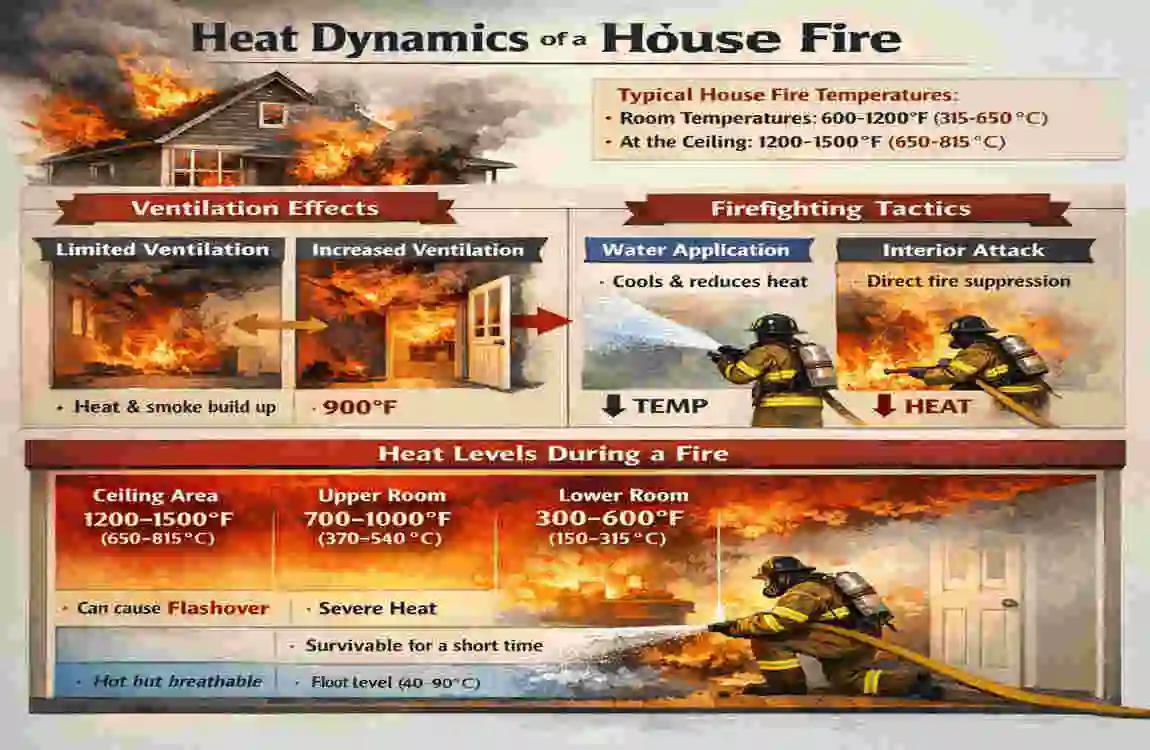
A fire’s temperature is not fixed. It changes based on oxygen and airflow.
If windows or doors are open, more oxygen can rush in, making the fire burn hotter. In some situations, that can trigger a sudden flare-up or even make conditions dangerous for anyone inside. This is why firefighters are careful when they control ventilation.
Water also plays a major role. Firefighters use water to cool burning surfaces, lower temperatures, and slow fire spread. That cooling effect can reduce the chance of flashover and structural damage.
For homeowners, the best protection is prevention. Working smoke alarms, fast escape, and a clear plan do more to keep you safe than trying to judge how hot the fire might get.
Prevention and Safety Steps
A fire-safe modern home gives you time to react. That starts with basic protection and good habits.
High-impact safety steps
- Install and test smoke alarms in bedrooms, hallways, and living spaces
- Use carbon monoxide alarms where needed
- Keep combustibles away from stoves, heaters, and open flames
- Do not leave cooking unattended
- Check wiring and outlets for signs of damage
- Consider sprinklers if you are upgrading your home
It also helps to have a simple escape plan. Make sure everyone in the home knows two ways out of each room, where to meet outside, and who will call emergency services. Keep a fire extinguisher in easy reach, and remember the PASS method:
- Pull the pin
- Aim at the base of the fire
- Squeeze the handle
- Sweep side to side
Use an extinguisher only on a very small fire that you can safely control. If the fire is growing, leave immediately.
Short Examples That Show How Fast Fire Can Change
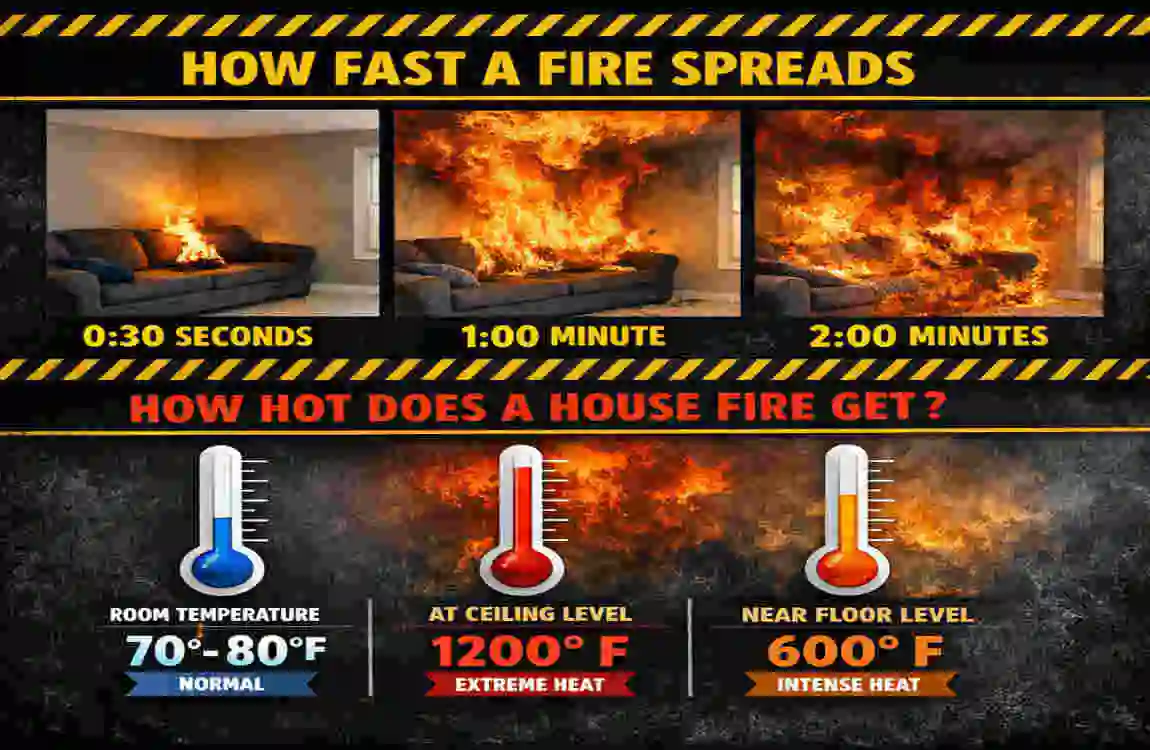
A small kitchen grease fire may start hot, but if someone reacts quickly and safely, it may be controlled before it spreads. The key is not the flame size alone, but how fast the person acts.
A living-room fire, sparked by a candle and nearby fabric, can move from a small flame to a room full of heat in minutes. Soft furnishings and open-air airflow can help it spread faster than expected.
A garage or attic fire can be especially dangerous because these spaces may contain flammable materials, insulation, and hidden pathways for heat. Fires in enclosed spaces can build up intense heat before anyone notices them.
These examples all show the same lesson: small fires can quickly turn into large ones.
FAQ
How hot does a house fire get?
A house fire usually ranges from 300°C to 1,200°C or more, depending on the stage of the fire, the fuel inside the home, and ventilation. Smoldering fires are cooler, while fully developed fires are much hotter.
Can a house fire melt steel?
A typical house fire usually does not melt steel, but it can severely weaken it. Steel begins to lose strength around 500–600°C, which can lead to bending, sagging, or collapse.
How fast can a fire turn into flashover?
In a furnished room with enough fuel and oxygen, flashover can happen in just a few minutes. This is why early warning and fast escape are so important.
Is smoke or heat more dangerous?
Smoke is often the more immediate danger. It can be toxic, reduce visibility, and make a person lose consciousness before flames reach them.
Will sprinklers help reduce fire temperature?
Yes. Sprinklers can slow fire spread and cool the area, helping lower peak temperatures and giving people more time to escape.
What should I do if my house is on fire?
Get out right away, call emergency services, and stay out. Do not go back inside for belongings. Your life is worth more than anything in the house.
| Area / Material in a House Fire | Typical Temperature Range | What Happens at This Heat |
|---|---|---|
| Average room fire | 600°F – 1,100°F (315°C – 593°C) | Furniture, plastics, and fabrics ignite rapidly |
| Flashover stage | 1,100°F – 1,500°F (593°C – 815°C) | Nearly everything in the room catches fire at once |
| Ceiling temperatures | Up to 1,800°F (982°C) | Extreme heat builds near the top of rooms |
| Wood ignition point | Around 570°F (299°C) | Wood begins to burn and char |
| Glass windows | Around 900°F (482°C) | Windows can crack or shatter |
| Steel structures | 1,000°F+ (538°C+) | Steel weakens and may bend or collapse |
| House fire smoke | 300°F – 1,000°F (149°C – 538°C) | Toxic smoke can cause severe burns and breathing danger |
| Cremation comparison | 1,400°F – 1,800°F (760°C – 982°C) | Similar to the hottest stages of major house fires |