Woodworm may sound small, but the damage it causes can be a big problem for homeowners. These tiny insects can quietly eat away at wooden beams, floors, furniture, and other parts of your home before you even notice them.
That leads to one very common question: Does house insurance cover woodworm?
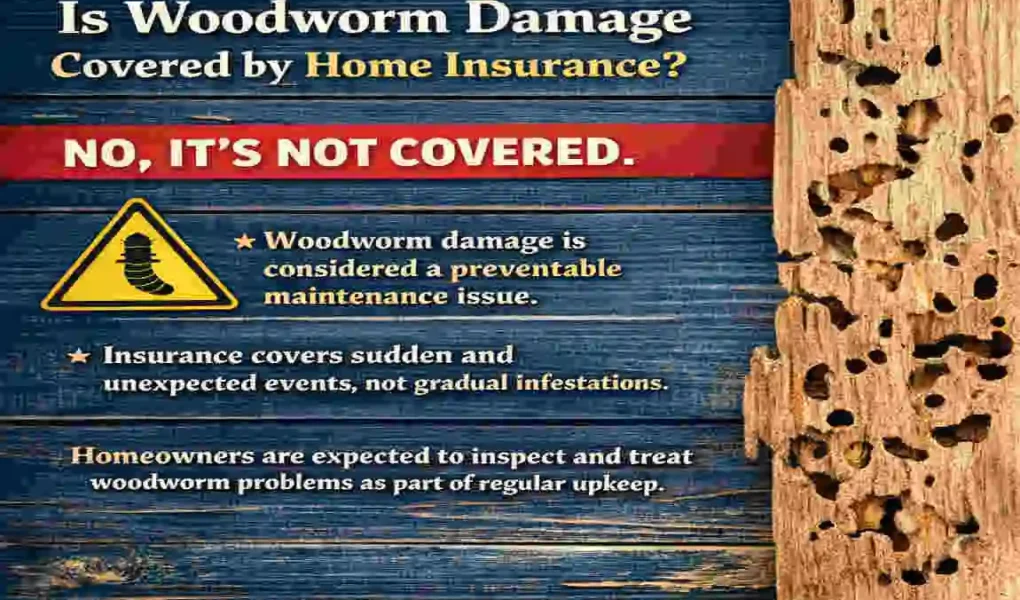
The short answer is usually no, but the full answer depends on your policy. Some home insurance plans treat woodworm as a pest problem, while others may make exceptions in special cases. That is why it is so important to read the fine print before you assume you are protected.
What Is Woodworm and How Does It Affect Homes?
What Is Woodworm?
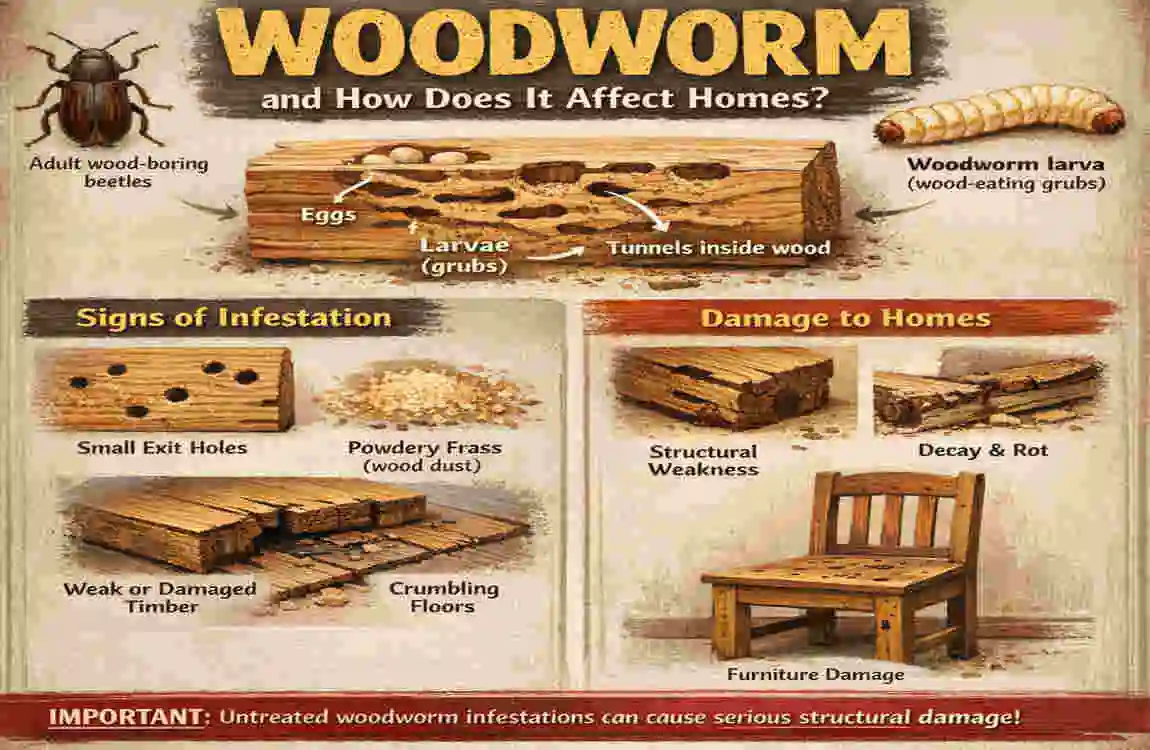
Woodworm is the name people often use for the larvae of wood-boring beetles. These insects lay eggs in timber, and when the larvae hatch, they feed on the wood from the inside.
That is what makes woodworm so tricky. At first, the surface may look fine. But inside, the wood may already be weakening.
Over time, the larvae grow, leave the wood, and become adult beetles. The adults then lay more eggs, and the cycle starts again. If the infestation is left alone, the damage can spread through floors, roof timbers, joists, furniture, and more.
Signs of a Woodworm Infestation
Here are the most common signs to look for:
- Tiny round holes in wood
- Fine dust or powder near the wood
- Weak, soft, or crumbling timber
- Adult beetles are found around windows, floors, or wooden areas
If you notice more than one of these signs, it is worth taking a closer look. The sooner you act, the easier it is to limit the damage.
Why Woodworm Damage Matters
Woodworm is not just a cosmetic issue. It can slowly weaken the structural integrity of your home.
If the problem spreads into structural timber, the repair costs can rise quickly. It can also affect your home’s value if you plan to sell. Buyers often worry about hidden timber damage, and surveyors may flag it during inspections.
So yes, even though woodworm starts small, it can become a serious and costly issue if you ignore it.
Does House Insurance Typically Cover Woodworm Damage?
Understanding Home Insurance Policies
Most modern home insurance policies are designed to cover sudden and unexpected damage. This may include fire, burst pipes, storm damage, or theft.
What they usually do not cover is damage that happens slowly over time. That is where woodworm often becomes a problem.
Insurance companies often separate damage into two types:
- Sudden damage: something happens quickly and unexpectedly
- Gradual damage: something gets worse little by little over time
Woodworm usually falls into the second group.
Is Woodworm Damage Considered Gradual or Sudden?
In most cases, woodworm damage is treated as gradual damage. The infestation develops over weeks, months, or even years. As a result, many insurers exclude it from standard cover.
This is one of the main reasons people ask, does house insurance cover woodworm. The answer is often disappointing, because most policies see it as a maintenance issue rather than an insured event.
Standard Exclusions in Home Insurance
Many home insurance policies exclude damage caused by:
- Pests and infestations
- Wear and tear
- Poor maintenance
- Neglect or lack of repair
That means if woodworm developed because the luxury home was not checked or maintained properly, the insurer may refuse the claim.
When Woodworm Damage Might Be Covered
There are some situations where coverage may be possible. This depends on the wording of your policy and the facts of the case.
For example, you may have a chance of coverage if:
- The damage is tied to a sudden insured event
- The infestation led to a structural collapse
- Your policy includes a special endorsement for pest damage
Here is a simple way to think about it:
Situation: Likely Insurance Outcome
Slow woodworm infestation over time. Usually not covered
Damage caused by a lack of maintenance is usually not covered
Woodworm linked to another insured event may be reviewed
Special pest cover added to policy. May be covered
So, if you are wondering whether woodworm is covered by house insurance? The real answer is: usually not, unless your policy says otherwise.
How to Check if Your Policy Covers Woodworm Damage
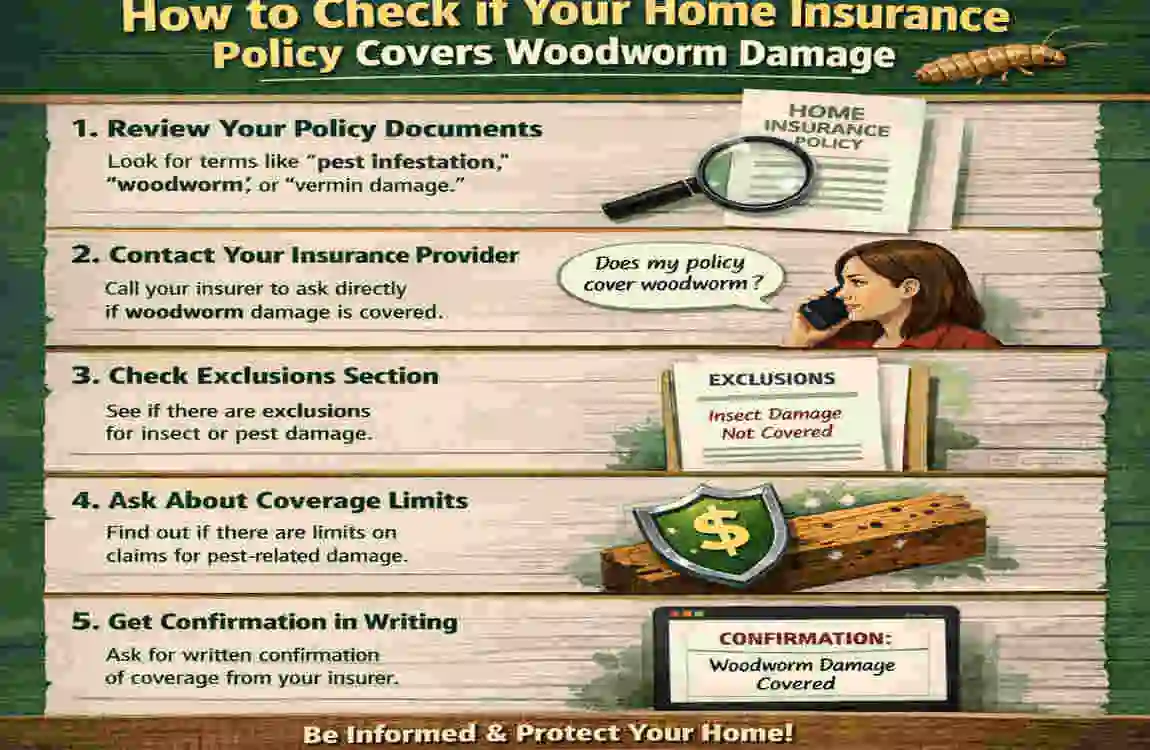
Steps to Review Your Policy
If you want a clear answer, do not guess. Check your policy carefully.
Start with these steps:
- Read the exclusions section
- Look for words like pest infestation, wood-boring insects, or gradual damage
- Check whether your policy mentions timber treatment or structural damage
- Speak to your insurer and ask for a plain answer
Even if the policy language feels confusing, ask them to explain it in simple terms.
What to Ask Your Insurance Provider
When you call your insurer, ask direct questions like:
- Does my policy cover woodworm damage?
- Are pest infestations excluded?
- Is there any cover if woodworm affects structural timber?
- Can I add optional pest-related cover?
- Would a collapse caused by woodworm be treated as a claimable event?
Clear questions often lead to clear answers. If you are not sure, ask them to send the response in writing.
Preventing and Dealing with Woodworm Infestations
How to Prevent Woodworm Infestations
Prevention is always better than repair. A little effort now can save you money later.
Good prevention steps include:
- Inspect wooden areas regularly
- Keep your home well-ventilated
- Fix leaks and reduce dampness
- Use wood treatments or sealants where needed
- Store firewood and timber properly, away from damp areas
Woodworm often thrives in moist, neglected spaces. So keeping wood dry and checked is one of the best ways to protect your luxury home.
What to Do If You Find Woodworm
If you think you have woodworm, stay calm and act quickly.
- Check how far the damage has spread
- Call a pest control or timber treatment expert
- Get a professional inspection
- Treat the affected wood with the right product
- Repair any damaged timber if needed
The earlier you deal with it, the lower the repair bill is likely to be.
Costs of Repairing Woodworm Damage
Costs can vary widely depending on the size of the infestation and the amount of timber affected.
You may need to pay for:
- Inspection fees
- Pest treatment
- Timber replacement
- Structural repairs
If the damage is small, costs may stay manageable. But if the infestation has spread into beams or flooring, the price can rise quickly. That is why many homeowners want to know if woodworm is covered by house insurance before they face a big bill.
Can You Get Insurance Coverage for Woodworm?
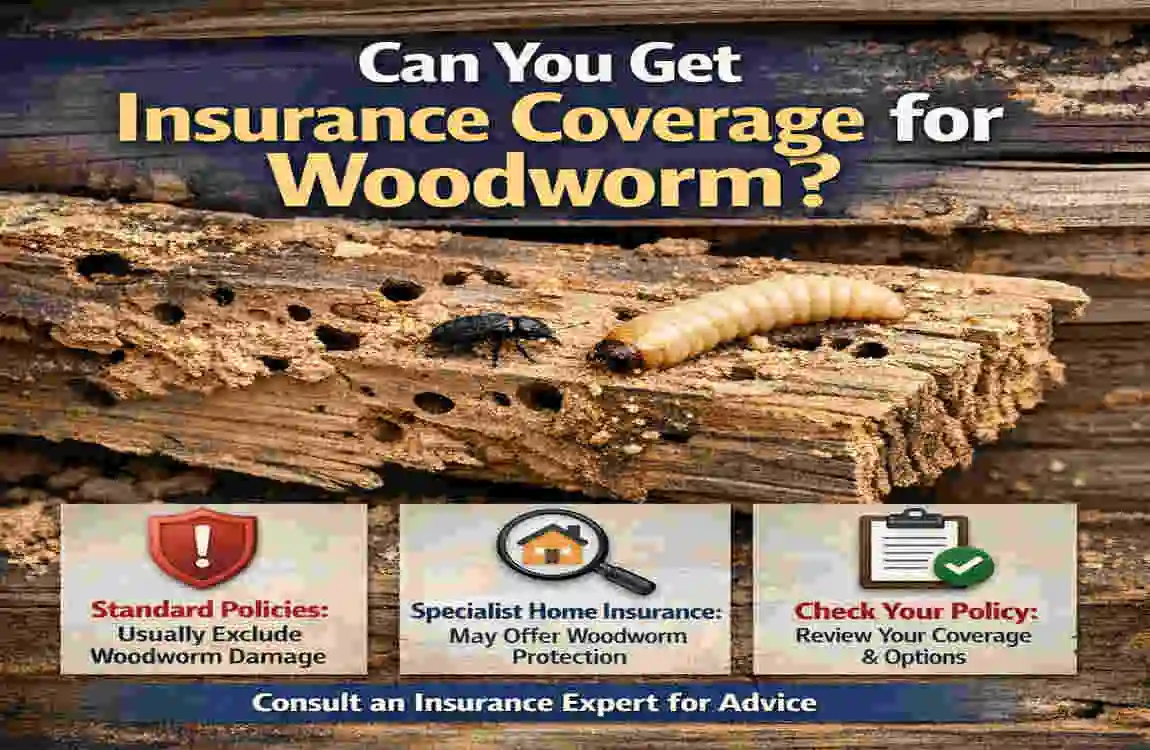
Adding Optional Pest Coverage
Some insurers may offer extra cover or special add-ons for pest-related issues. This is not common in every policy, but it is worth asking about.
If pest cover is available, it may help with certain treatment or repair costs. Still, you should read the terms carefully. Extra cover often has limits, exclusions, and conditions.
Home Maintenance as a Preventive Measure
Insurance companies like to see that you are taking care of your property. Regular maintenance helps prevent damage and may support your position if you ever need to make a claim.
Simple habits matter a lot:
- Fix leaks quickly
- Keep timber dry
- Check lofts, basements, and floorboards
- Arrange regular home inspections
This does not guarantee cover, but it does reduce risk.
Other Ways to Protect Yourself
If your standard home policy does not help, you may want to look at:
- Home warranty plans
- Specialist pest insurance
- Savings for emergency repairs
These options can give you a backup plan if woodworm becomes a serious issue.
Frequently Asked Questions
Does house insurance cover woodworm?
Usually no. Most policies exclude pest infestations and gradual damage. Still, some policies may make exceptions, so always check the wording.
What type of home insurance covers pest damage?
You may need optional add-ons or a specialist policy. Standard home insurance often does not include pest damage.
How can I tell if I have woodworm damage?
Look for tiny holes, dust near the wood, weak timber, and adult beetles. If you notice these signs, get a professional inspection.
Does home insurance cover repairs to wooden furniture damaged by woodworm?
Usually not. Furniture may be covered under contents insurance in some cases, but woodworm damage is often excluded.
Can I claim on insurance if woodworm causes a collapse?
Maybe. If the collapse is linked to a covered event or your policy has special terms, the insurer may review it. The final answer depends on the policy.
| Topic | Short Answer | What It Means for You |
|---|---|---|
| Is woodworm damage insured under home policies? | Usually no | Most standard home insurance policies exclude woodworm because it is seen as gradual damage or a pest problem. |
| Why is it often excluded? | Because it develops over time | Insurers usually do not cover issues caused by slow wear, neglect, or infestations. |
| When might it be covered? | In rare cases | Coverage may apply if your policy has special pest cover or if woodworm leads to a separate insured event. |
| What should you check? | Your policy exclusions | Look for terms like pest infestation, gradual damage, or wood-boring insects. |
| What should you do if you find woodworm? | Act quickly | Get a professional inspection and treatment before the damage spreads. |