A garden room extension is one of the most popular ways to add extra space without the stress of a full house build. Many homeowners use it as a home office, gym, guest room, or even a quiet place to relax.
If you are asking how much a house garden room extension costs, the short answer is: it depends on the size, finish, and features. In the UK, a basic project may start around £15,000, while a high-spec garden room can reach £60,000+.
What Exactly Is a Garden Room Extension?
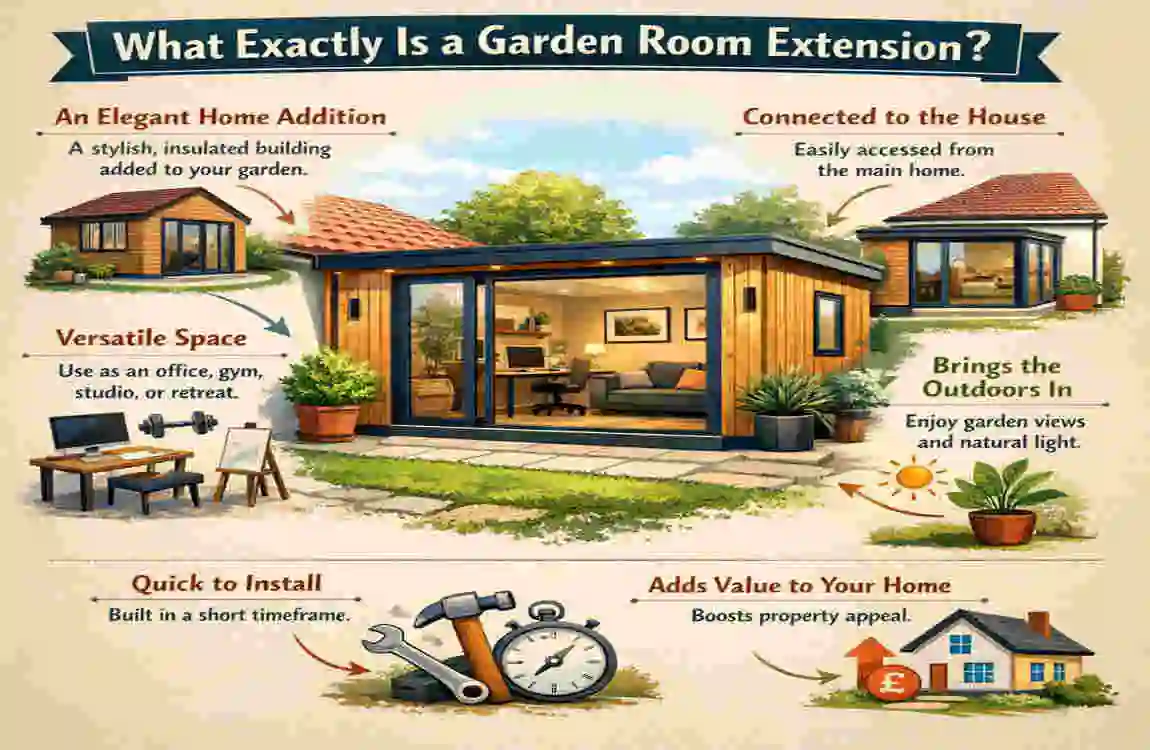
A garden room extension is a separate structure in your garden that provides additional usable space. It is usually insulated, wired for electricity, and built for year-round use.
It is not the same as a conservatory or a full house extension. A conservatory is often attached to the home and has lots of glass. A house extension usually involves major building work on the main property. A garden room is often simpler, faster, and less disruptive.
Why Choose a Garden Room Over a House Extension?
There are a few clear reasons:
- Lower cost than many brick-built extensions
- Faster build time
- Less disruption to your home
- Often, there is less planning hassle
- Great for work, hobbies, or extra living space
For many people, it is a practical middle ground between a small shed and a full home extension.
How Much Does a House Garden Room Extension Cost?
The average cost depends on what you want, but a helpful UK guide is:
- Small basic garden room: £15,000–£25,000
- Mid-range garden room: £25,000–£40,000
- Large Premium garden room: £40,000–£60,000+
These are only rough figures, but they give you a solid starting point for your budget.
Sample Price Ranges by Size
Size, Typical Cost, Best For
8–12 m² £12,000–£25,000 Small office, studio, hobby room
12–18 m² £25,000–£40,000 Comfortable office or guest space
18–25+ m² £40,000–£70,000+ Premium rooms, annex-style spaces
What These Prices Usually Include
Most quotes for a garden room extension cost will include:
- The structure and installation
- Basic insulation
- Windows and doors
- Electrical wiring
- Lighting
What They Often Do Not Include
Be careful, because some costs are extra. These may include:
- Planning or application fees
- Groundworks
- Landscaping
- Plumbing
- Bespoke furniture
- High-end interior finishes
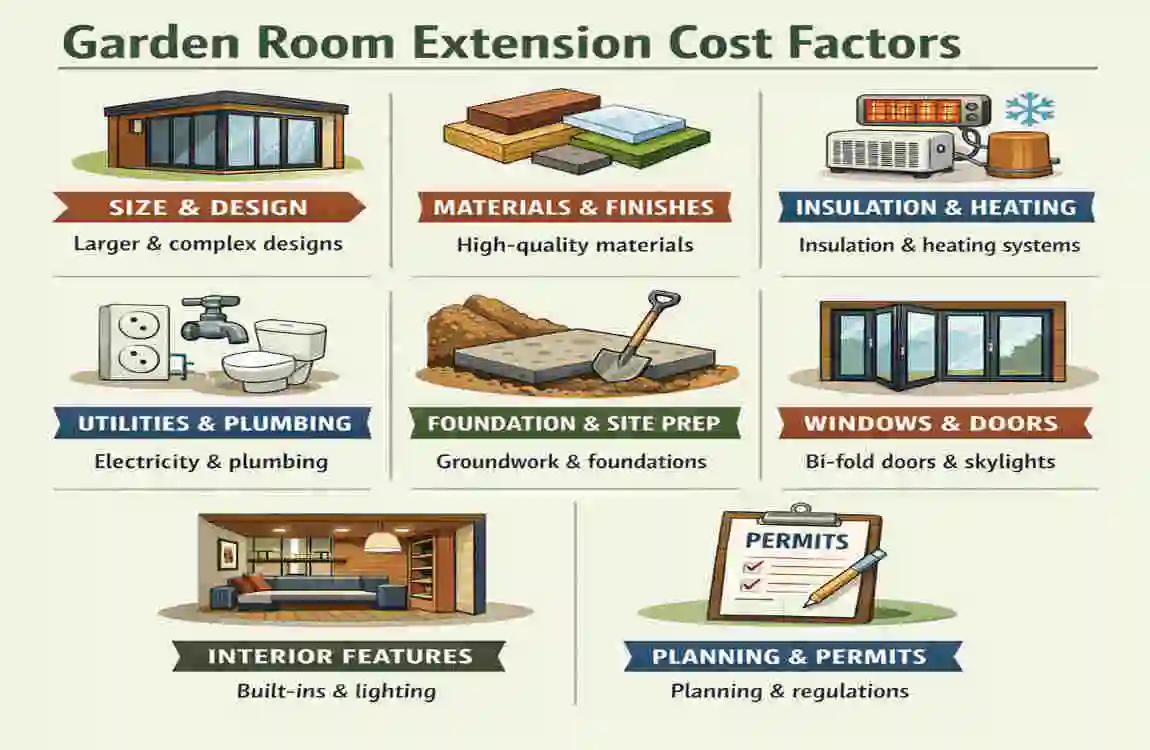
What Factors Determine How Much a Garden Room Extension Costs?
Several things can make the price rise or fall.
Size and Square Meters
This is the biggest factor. A larger garden room needs more materials, more labor, and usually a stronger base.
Materials and Build Quality
The material you choose makes a big difference. Timber, SIPs panels, and other building systems all come with different price points. Better insulation and stronger glazing also increase the total.
Design and Style
A simple flat-roof room usually costs less than a design with large glass walls, a pitched roof, or custom shapes.
Heating and Insulation
If you want to use the room all year, you will likely need proper insulation and heating. Underfloor heating or efficient electric heaters can add to the cost, but they also make the space far more comfortable.
Electrics and Plumbing
A simple office is cheaper than a room with a bathroom or kitchenette. Once plumbing is added, the cost can rise quickly.
Site Conditions
If your garden is hard to access, sloped, or requires extra groundworks, the price goes up. Poor access can mean extra labor or equipment.
Planning Permission and Building Rules
Some garden rooms can fall under permitted development, but not all do. If planning permission is needed, that can add fees and professional costs.
Hidden Costs to Watch For
When people ask how much a house garden room extension costs, hidden costs are often what catch them out.
Common extras include:
- Site clearance
- Drainage work
- Base or foundation preparation
- Power supply to the garden
- Internet connection
- Paths, steps, or fencing
- VAT, if not already included
A cheap quote can look attractive at first, but always check what is missing.
Garden Room vs House Extension: Which Costs Less?
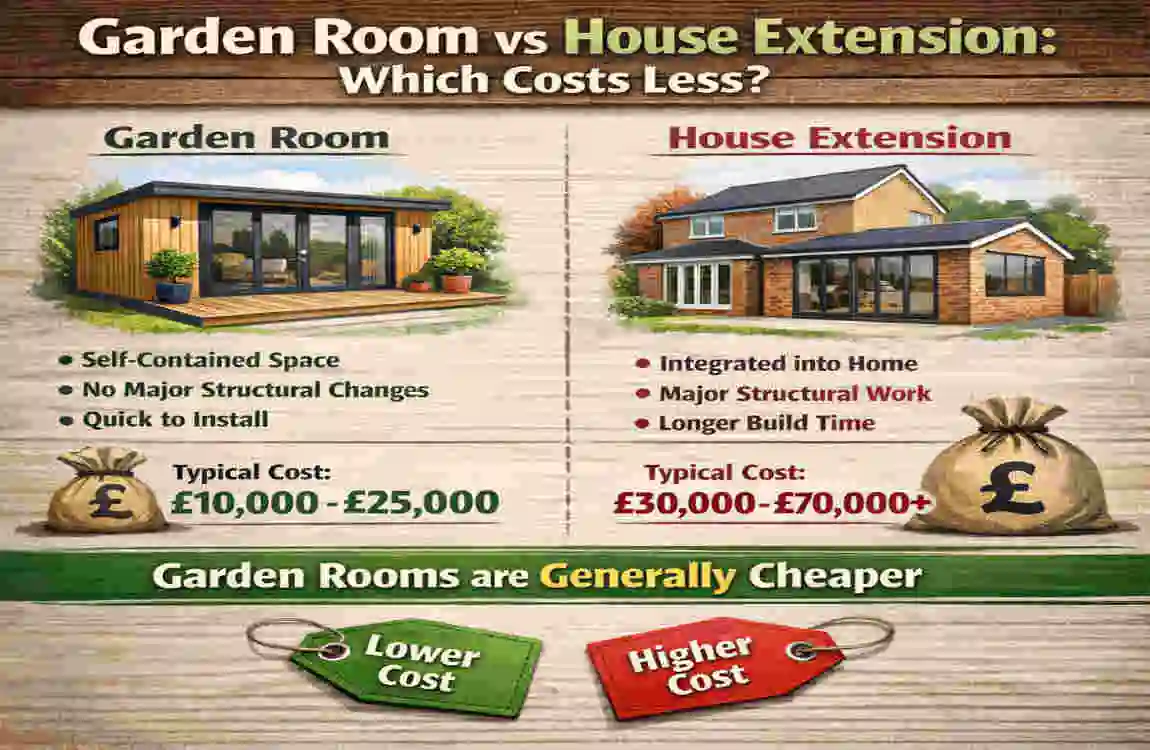
In most cases, a garden room is cheaper than a full house extension.
AspectGarden Room ExtensionFull House Extension
Starting cost £15,000–£25,000 £30,000–£45,000+
Build time 4–8 weeks, 3–6 months, or more
Planning needed? Often not Often yes
Disruption Low Higher
A house extension may be better if you want to open up the kitchen or create a major change to the layout. But if you want extra space quickly and with less hassle, a garden room is often the smarter choice.
How to Estimate Your Own Budget
If you want a realistic budget, start with these simple steps:
- Decide how you will use the room
- Office, gym, guest room, or rental space
- Choose the size
- Bigger rooms cost more, so be clear on what you actually need
- Get detailed quotes
- Compare what is included, not just the final price
- Add a buffer
- Keep 10%–20% extra for unexpected costs
- Think long term
- A better-built room may cost more now, but save money later
When It Makes Sense to Spend More
You should consider spending more if the room will be used every day, rented out, or kept for many years. Better insulation, stronger finishes, and higher-quality windows usually pay off over time.
A budget build can work well too, especially if you only need occasional use or want a simple extra room.
FAQs About Garden Room Extension Costs
How much does a typical garden room extension cost in the UK?
Most projects fall somewhere between £15,000 and £60,000+, depending on size and finish.
Is a garden room cheaper than extending the house?
Yes, in most cases. A garden room is usually quicker and less expensive than a full extension.
How long does it take to build?
Many garden rooms take around 4 to 8 weeks, but larger or more complex builds can take longer.
Does a garden room add value?
It can, especially if it is well built, fully insulated, and legally compliant. It may also make your home more attractive to buyers.
| Garden Room Type | Average Cost (UK) | Best For | Notes |
|---|---|---|---|
| Basic garden room | £15,000–£25,000 | Home office, hobby room | Simple design, basic insulation, standard finish |
| Mid-range garden room | £25,000–£40,000 | Office, gym, guest space | Better insulation, electrics, improved windows and doors |
| Premium garden room | £40,000–£60,000+ | Luxury studio, annexe-style use | High-end materials, custom design, more features |
| Large or bespoke build | £60,000+ | Multi-use space, high-spec living area | Higher cost due to size, plumbing, and custom finishes |