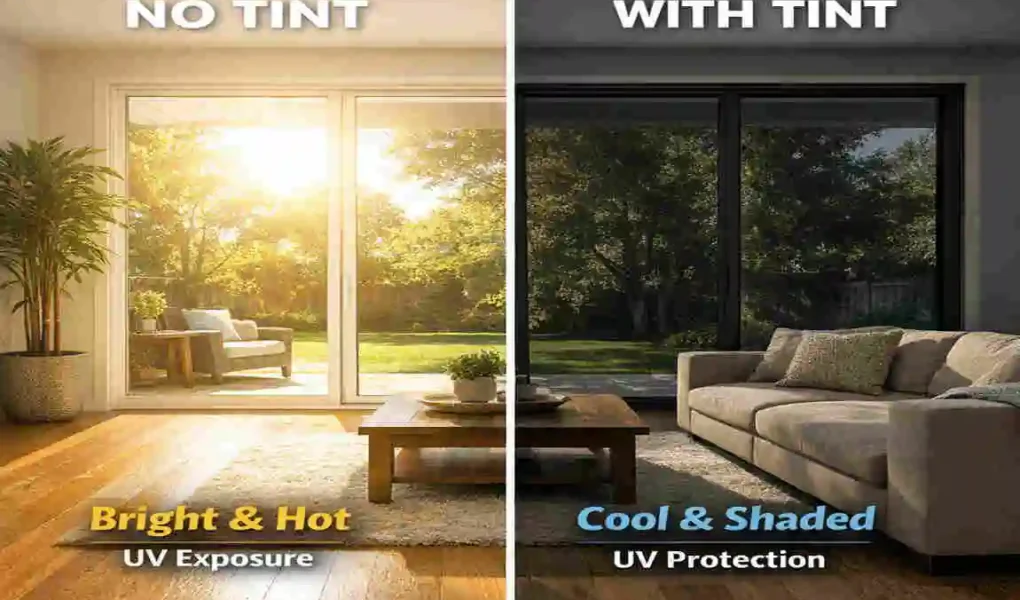
When the sun streams through your windows, it can brighten your home, but it can also bring challenges like excessive heat, glare, and furniture fading. This is why many homeowners wonder if window tint can block sunlight effectively without making their rooms too dark.
To clarify, blocking sunlight doesn’t necessarily mean plunging your home into darkness. Window tinting can reduce visible light, block harmful UV rays, and minimise glare while still allowing natural daylight to filter through. The key lies in choosing the right film type for your needs.
What Window Tint Does
How Window Tint Works
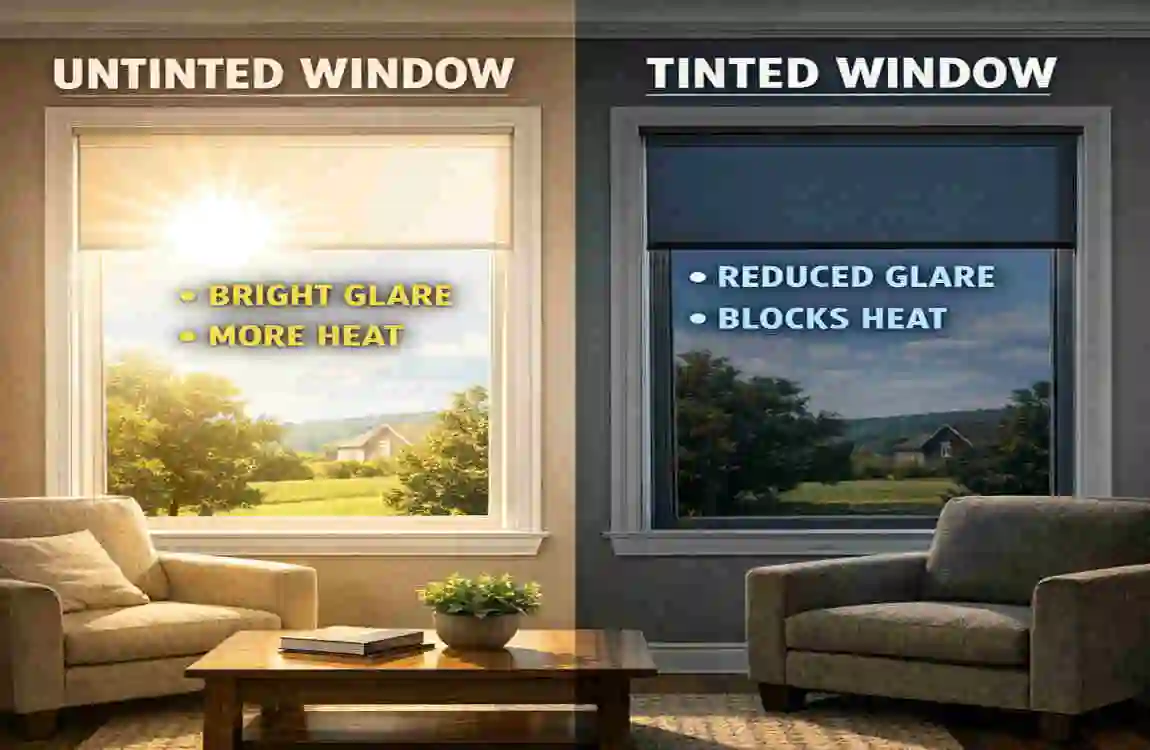
Residential window tint is a thin, adhesive film applied to the surface of glass windows. It’s designed to filter sunlight by controlling the amount of visible light, UV rays, and infrared heat that passes through the glass.
Modern window tints use advanced technology to balance performance and aesthetics. They don’t just block light; they selectively filter it to reduce glare and heat while maintaining a bright and welcoming atmosphere indoors.
Does It Block All Sunlight?
No, window tint doesn’t block all sunlight. Instead, it reduces the intensity of sunlight entering your home. This means you can enjoy a well-lit space without the harshness of direct sunlight. The level of sunlight reduction depends on the film’s VLT rating, which we’ll discuss in detail later.
Does House Window Tint Block Sunlight?
The simple answer is yes, house window tint can block sunlight, but the degree of reduction varies. Here’s how:
Light Reduction Levels
- Darker Films: These block more sunlight and are ideal for rooms where privacy or maximum glare reduction is a priority.
- Lighter Films: These allow more daylight to pass through while still reducing glare and UV exposure.
Does It Make Rooms Too Dark?
Not necessarily. Modern films are designed to balance light reduction with brightness. For example, a lightly tinted film can reduce glare without making your living room feel like a cave.
How Much Light Gets Through?
Understanding Visible Light Transmission (VLT)
VLT is the percentage of visible light that passes through a window after tinting. Here’s a simple breakdown:
Film TypeVLT Percentage Effect on Room Brightness
Clear or Light Tint 50%-70% Minimal light reduction, bright room
Medium Tint 30%-50% Noticeable glare reduction, balanced light
Dark Tint 10%-30% Significant light reduction, dimmer room
What Homeowners Notice First
Most homeowners notice a reduction in glare before they perceive any change in overall brightness. This is because window tint selectively filters harsh light while preserving softer, natural daylight.
Sunlight vs UV vs Heat
Breaking Down the Differences
- Visible Sunlight: The light you see, which can cause glare and brighten a room.
- Ultraviolet (UV) Rays: Invisible rays that cause skin damage and fading of furniture.
- Solar Heat: Infrared energy from the sun that raises indoor temperatures.
UV Blocking
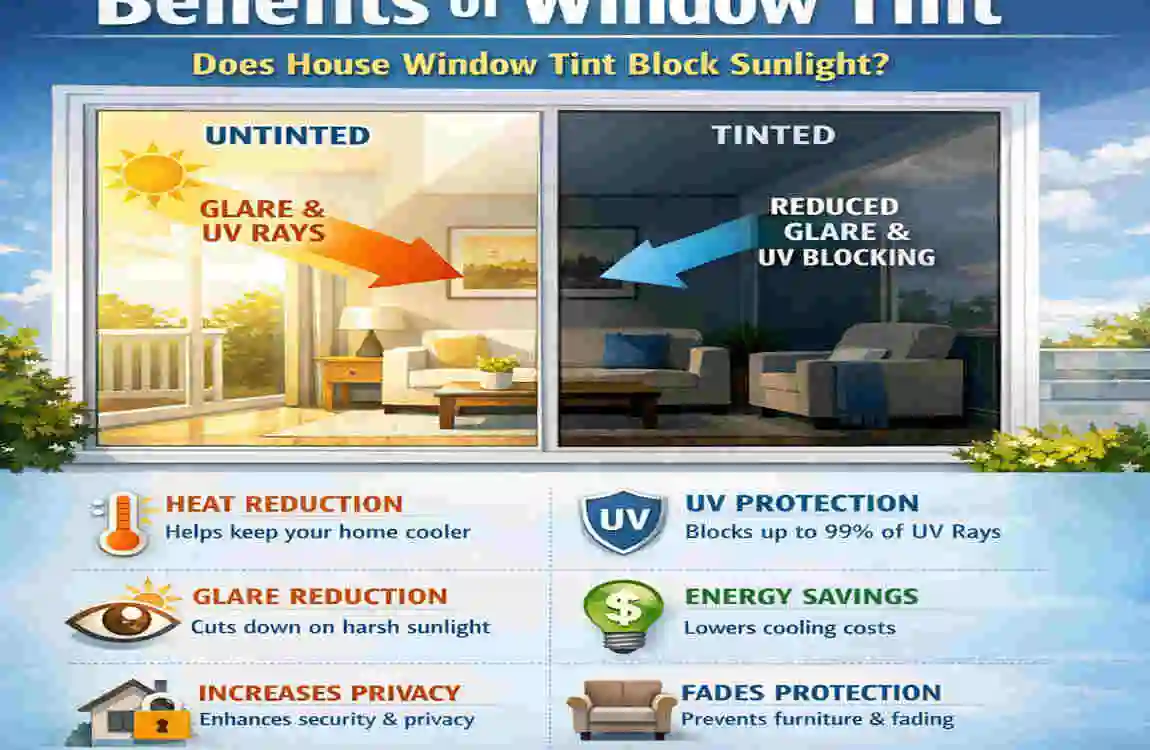
Many residential window films block up to 99% of UV rays, protecting your skin and preventing fading of floors, curtains, and upholstery.
Heat Rejection
Some films are designed to reject a significant portion of solar heat, keeping your home cooler and reducing energy costs.
Benefits of Window Tint
Reduced Glare
Window tint minimises glare on screens, making it easier to watch TV or work on a computer during the day.
UV Protection
By blocking harmful UV rays, window tint helps preserve your furniture, flooring, and artwork.
Improved Comfort
Tinted windows reduce heat buildup, creating a more comfortable indoor environment even on sunny days.
Energy Efficiency
By keeping your home cooler, window tint can lower your reliance on air conditioning, saving you money on energy bills.
Possible Drawbacks
While window tint offers many benefits, it’s not without its limitations:
- Darker Rooms: Stronger tints can make rooms feel dimmer, which may not suit every homeowner’s preference.
- Not Ideal for All Windows: Some window types or climates may not be compatible with certain films.
- Warranty Concerns: Tinting may void warranties on certain types of windows, so check with your manufacturer.
Best Types of Window Tint
1. Ceramic Tint
- Excellent heat rejection
- Allows more natural light
- Durable and non-reflective
Carbon Tint
- Balanced performance
- Long-lasting and fade-resistant
Reflective Films
- Strong sun control
- Enhanced privacy
Low-E Coatings
- Controls heat transfer
- Maintains brightness
How to Choose the Right Tint
Key Considerations
- Privacy Needs: Darker films offer more privacy.
- Glare Reduction: Choose a medium tint for balanced light and glare control.
- Room Function: Consider how much natural light each room needs.
- Professional Advice: Consult a professional installer to find the best film for your home.
Window Tint vs Other Solutions
Comparison with Blinds and Curtains
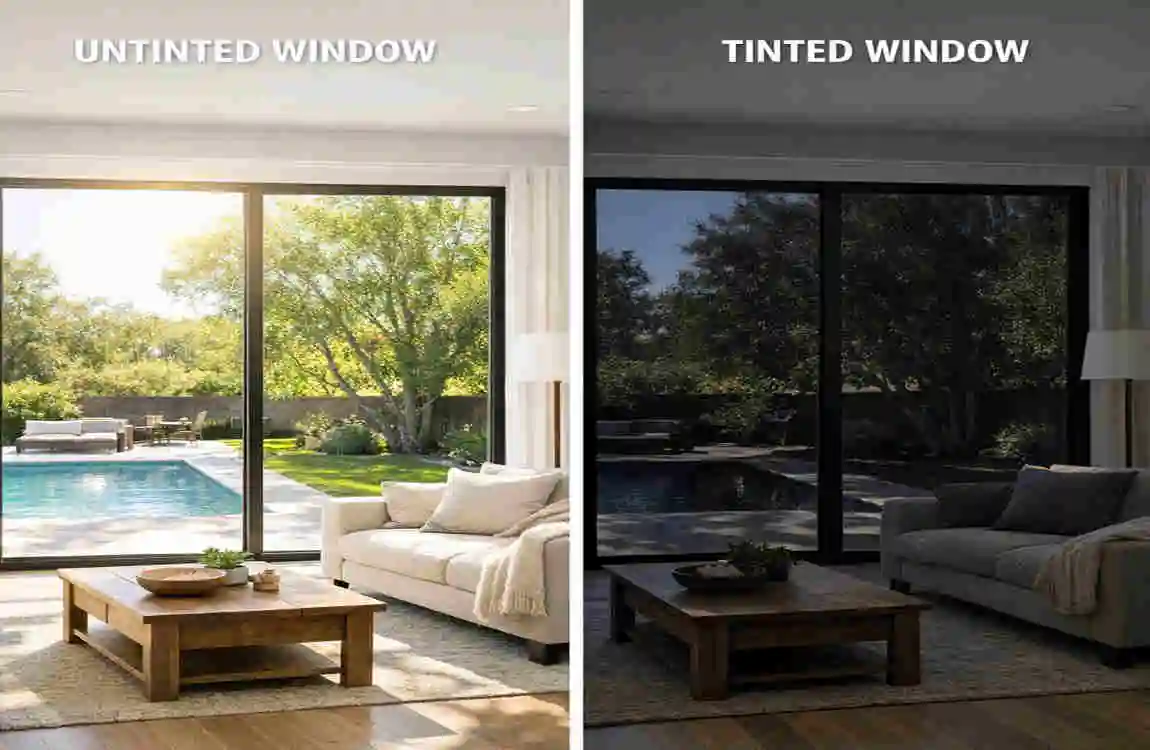
- Blinds/Shades: Require manual adjustment and block all light when closed.
- Window Tint: Works continuously without blocking your view.
External Shading
External shading, like awnings, blocks sunlight before it reaches the glass, while tint works directly on the window surface.
Frequently Asked Questions
Does Window Tint Make a House Dark?
Not necessarily. Modern films are designed to reduce glare and UV rays without significantly darkening your home.
Can Window Tint Block Heat as Well as Sunlight?
Yes, many films are designed to reject solar heat, improving indoor comfort.
How Long Does Residential Window Tint Last?
High-quality films can last 10-20 years with proper care.
| SEO Question | Short Answer | SEO Note |
|---|---|---|
| Does house window tint block sunlight? | Yes, house window tint can block or reduce sunlight, but the amount depends on the film’s darkness and visible light transmission. | Use this exact phrase as the H1 or opening sentence. |
| How much sunlight does it block? | Lighter films let in more daylight, while darker films block more sunlight and glare. | Add a comparison of light, medium, and dark tint levels. |
| Does it block UV rays too? | Yes, quality residential tint can block up to 99% of harmful UV rays. | Include UV protection as a main benefit. |
| Will it make rooms dark? | Not always; many modern films reduce glare and UV without making interiors too dim. | Good angle for homeowners who want comfort without losing natural light. |
| Best blog angle | “Reduce sunlight, glare, and heat without darkening your home too much.” | Strong informational SEO intent. |