

Move people and valuables away from the leak, put a bucket under the drip, and switch off the power if water is near lights, sockets or wiring. Photograph everything, then call your insurer and a licensed roofer. If the ceiling is bulging, release the water gently from the edge of the bulge, never the middle.
You hear the drip before you see it. Maybe it is a damp patch spreading across the bedroom ceiling, or water running down a light fitting. Either way, the next hour matters. What you do now decides whether this is a small repair or a big restoration bill.
Put safety first
Water and electricity are a dangerous mix. If water is dripping near a light fitting, ceiling fan, socket or the fuse box, turn the electricity off at the main switch, but only if you can reach it from a dry spot. FEMA is blunt about this: never switch power on or off, or use an electrical tool or appliance, while standing in water. If you cannot reach the switch safely, leave the room and call an electrician or your utility.
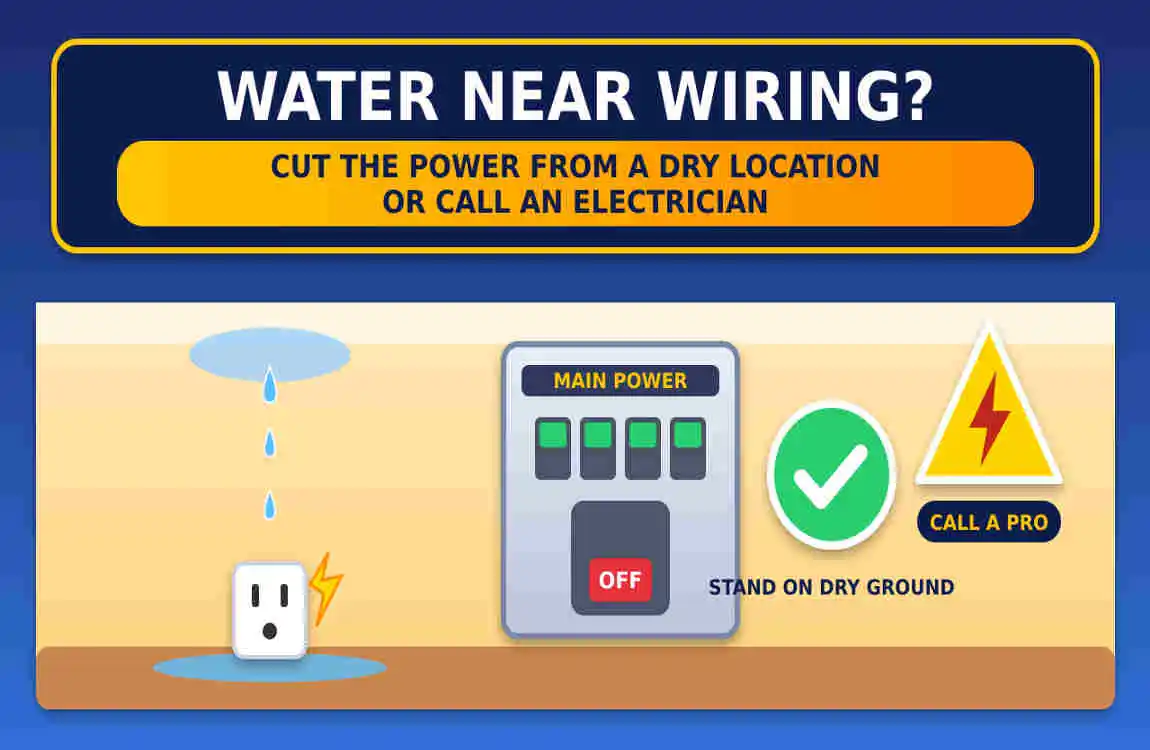
Also look around for anything that signals bigger trouble: a sagging ceiling, cracks in walls, or storm debris such as fallen branches or damaged power lines outside. If the building feels unsafe, get everyone out first and worry about the leak later.
Contain the water
Your goal is simple: stop the water reaching your floors, furniture and belongings.
- Move things. Clear furniture, rugs, electronics, books and paperwork away from the drip zone. If something is too heavy to lift, cover it with plastic sheeting.
- Catch the drips. Put a bucket or large pot under each leak. Lay towels or a plastic sheet underneath to catch splashes.
- Quiet the noise. A folded cloth or sponge in the bottom of the bucket stops the constant plink that keeps you awake.
- Mop as you go. Standing water on floors soaks into boards and subfloors quickly.
As This Old House advises, call an emergency roofer if water is pooling rather than just dripping.
Release a bulging ceiling safely
A ceiling that bulges or sags is holding a lot of water, and water is heavy. The American Red Cross explains that a sagging ceiling has likely absorbed water and may need replacing, and that you should poke small holes starting at the outer edge of the bulge so the water drains slowly. Striking the middle could bring the whole ceiling down on you.

If you do this, put a bucket directly underneath, wear eye protection and a hard hat, use a long stick, and stand clear. Not comfortable doing it? Keep everyone out of the room and leave it to a professional.
Find where the water is coming in
The wet patch on your ceiling is rarely directly below the hole in your roof. Water travels along rafters, insulation and pipes before it shows itself, so the leak can start several feet away.
- Check the attic or loft with a torch. Look for stains, dark spots, wet insulation or daylight coming through. Corners, roof joints, skylights, chimneys and valleys are the usual suspects.
- Rule out plumbing and condensation. A leaking pipe or a poorly ventilated loft can look just like a roof leak.
- Check from the ground. Look for missing or slipped tiles and shingles, damaged flashing, or blocked gutters.
Do not climb up to look. The National Roofing Contractors Association (NRCA) recommends checking for storm damage from the ground and leaving closer assessment and repairs to a professional roofing contractor. The fall risk simply is not worth it.
Document the damage
Before you start cleaning up, take clear photos and short videos of the ceiling, walls, floors, damaged belongings and, from the ground, any visible roof damage. Note the date and time the leak started and how much water you collected. The CDC also advises contacting your insurance company and taking pictures before you begin cleanup.
Call your insurer and a roofer
Report the damage to your home insurer promptly. They may recommend emergency roofers and explain what your policy covers. Keep these points in mind:
- Cause matters. Policies generally cover sudden, accidental damage such as a storm. Leaks from an aging roof maintenance are often excluded, according to NerdWallet.
- Reasonable temporary repairs are expected. The California Department of Insurance notes that protecting the property with temporary repairs is one of the most important steps after a loss, and that your insurer may reimburse reasonable costs if you keep receipts.
- Check your deductible. For a small leak, repair costs may be lower than your excess, so ask before you file.
- Hold off on big commitments. Do not sign for a full roof replacement until your insurer has confirmed the claim.
Then call a licensed roofer. Ask for emergency availability, confirm their licence and insurance, and get a written quote. This Old House suggests checking warranties and comparing multiple quotes once the emergency has passed.
Make a temporary repair (only if it is safe)
A temporary cover is the usual short-term fix for an exposed opening, but it should wait for dry weather. This Old House advises installing a tarp only in dry conditions with proper safety precautions. Drape the top edge over the roof peak or secure it so water cannot run underneath, and weigh the edges down with heavy boards. For a known puncture, once the roof is dry, clear away debris and apply roofing cement or sealant as directed by the manufacturer. Treat it as a stop-gap until a professional makes a permanent repair.

If the roof is wet, steep or high, skip this step. A roofer can fit a tarp quickly, and your insurer will usually prefer that to an injured homeowner.
Dry everything out within 48 hours
Once the water is contained, the clock starts on mold. The CDC and EPA advise drying wet areas and items within 24 to 48 hours. In most cases, mold will not grow if damp materials are dried in that window.
- Open windows when it is dry outside and run fans and a dehumidifier once the electrics are safe.
- Remove wet insulation and soaked carpet if you cannot dry them quickly.
- Wipe hard surfaces with detergent and water and dry them completely.
The EPA warns that porous materials such as ceiling tiles and carpet may have to be thrown away if they become moldy, because mold is hard to remove from them fully. If mold covers more than about 10 square feet, or the water was contaminated, bring in a professional.
Mistakes that make roof leaks worse
- Climbing on a wet roof. This is the quickest way to turn a repair job into a hospital visit.
- Ignoring a “small” stain. Slow leaks rot timber and insulation long before they look dramatic.
- Hitting the middle of a sagging ceiling. It can bring the whole ceiling down.
- Throwing away evidence. Photograph damaged items before you discard them.
- Waiting for “the next dry spell”. Delays can leave your insurer arguing the damage got worse through neglect.
- Paying a stranger on the doorstep. After storms, door-knocking contractors appear. Use a licensed roofer you have checked.
What does emergency roof leak repair cost?
According to This Old House, emergency roof leak repair in the US typically runs between $379 and $1,755. Emergency call-outs can cost up to twice as much as standard repairs and may add a fee of $100 to $300. A simple patch can take 20 to 30 minutes, while bigger jobs can take hours or days. Prices vary by region and roof type, so treat these as ballpark figures and ask for a written quote.

Frequently asked questions
What is the first thing to do if your roof is leaking in the rain?
Move people and valuables away, place a bucket under the drip, and switch off power to any room where water is near lights, sockets or wiring. Then photograph the damage and call your insurer and a roofer.
Should I go on the roof to fix a leak during a storm?
No. A wet roof is a serious fall risk. The NRCA advises owners to check for damage from the ground and leave repairs to a professional roofing contractor.
How do I stop a roof leak temporarily?
Indoors, catch the water and drain any ceiling bulge from its edge. Outdoors, a securely fastened tarp over the damaged area is the usual short-term fix, installed in dry weather and ideally by a professional.
How long do I have to dry out a wet ceiling or insulation?
Aim for 24 to 48 hours. Wet materials that cannot be dried in that time may need to be removed and replaced to prevent mold.
Does home insurance cover a leaking roof?
Usually, only when a sudden, covered event such as a storm causes the leak. Leaks caused by wear, age or neglect are commonly excluded. Read your policy and report the damage promptly.
Can a leak happen without any visible damage on the roof?
Yes. Water can enter through worn flashing, around chimneys, vents or skylights, and travel a long way before it appears inside. A professional inspection can trace it.
Prevent the next leak
Once the emergency is over, book a roof inspection, especially before the wetter months. Keep gutters and valleys clear of leaves, repair loose or missing tiles and shingles, and have flashing and seals around vents and chimneys checked. Trimming overhanging branches also helps. These small jobs cost far less than another emergency call-out.
Sources
- FEMA: Tips for returning home safely after a disaster
- American Red Cross: Home structural elements after water damage
- National Roofing Contractors Association (NRCA): Roof repairs after a storm
- CDC: Mold cleanup guide
- US EPA: A brief guide to mold, moisture and your home
- California Department of Insurance: Residential property claims guide
- This Old House: Emergency roof leak repair
- NerdWallet: Does homeowners insurance cover roof leaks?