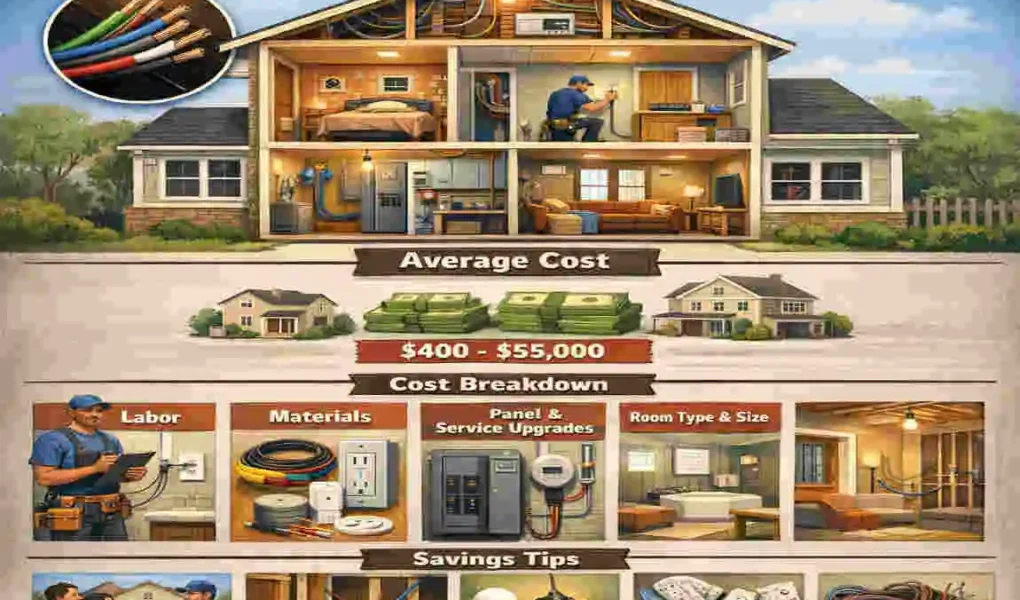
Wondering how much it costs to wire a whole house? It is one of the most common questions homeowners ask when planning a new build or a major renovation. In 2026, the short answer is that you should expect to pay anywhere between $8,000 and $25,000 for a standard home. However, that is a big range, and if you make smart choices, you can slash that bill significantly.
Wiring a house is about more than just keeping the lights on. It is about creating a nervous system for your home that powers your life, from your morning coffee to the electric vehicle charging in your garage. Whole-house wiring covers everything from the main electrical panel (the brain) to the outlets, switches, and light fixtures (the extremities).
Factors Affecting House Wiring Costs
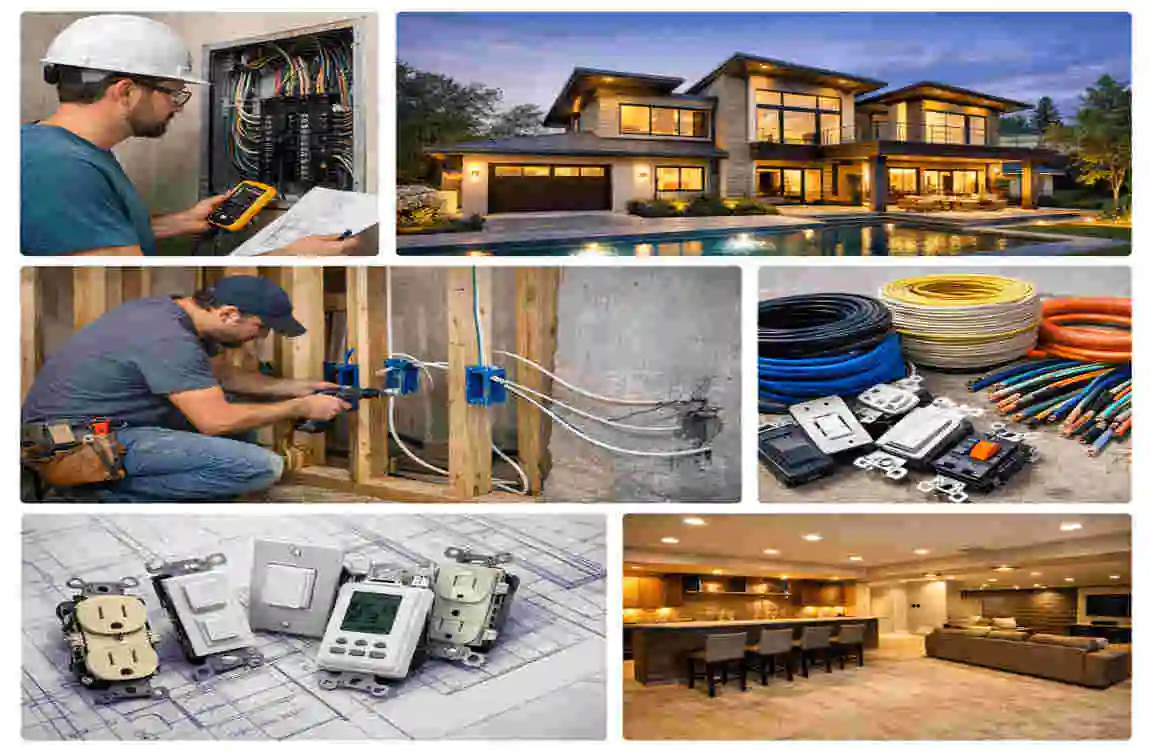
Before we hand you the bill, you need to understand what you are paying for. The cost to wire a home isn’t a flat rate; it’s calculated based on several factors. Understanding these variables is the first step in controlling your budget.
Home Size and Layout
It might seem obvious, but the size of your home is the biggest cost driver. Generally, you are looking at $4 to $12 per square foot. However, it is not just about the footprint. A 2,000-square-foot single-story ranch is often cheaper to wire than a 2,000-square-foot two-story colonial. Why? Because running wires vertically between floors adds labor time and complexity.
Location, Location, Location
Where you live dictates how much you pay for labor.
- United States: In high-cost areas like New York or California, labor rates skyrocket, pushing the average whole-house job toward $15,000-$30,000. The national average sits closer to $10,000.
- International Context (e.g., Pakistan): For our readers in regions like Lahore or Karachi, the dynamic flips. Materials (copper) are expensive, but labor is significantly cheaper. You might pay PKR 1-3 million (approx. $3,500-$10,500 USD), with a much lower labor cost proportion.
Wiring Type and Materials
Not all wire is created equal.
- Romex (Non-Metallic Sheathed Cable): This is the standard for most residential homes in the US. It is flexible, easy to pull through walls, and the cheapest option.
- Conduit (BX or MC Cable): In some urban areas (like Chicago) or commercial-grade residential builds, code requires wires to be run inside metal pipes (conduit). This protects the wire but takes three times as long to install, doubling your labor costs.
Project Scope Influences
Several other factors will nudge that final price tag up or down:
- New Build vs. Rewiring: This is huge. Wiring a new house with open walls is easy. Rewiring an old house where the electrician has to “fish” wires through closed walls can increase costs by 50% or more.
- Modern Features: Do you want a dedicated circuit for an EV charger? A smart panel that monitors energy usage? Hardwired security cameras? Each of these “extras” adds 20-30% to the base price.
- Labor Rates: Licensed electricians charge between $50 and $150 per hour. Apprentices charge less, but the master electrician oversees the work.
Average Costs: How Much Does It Cost to Wire a Whole House?
Let’s get down to the data. You want numbers, and we have them. These figures are updated for 2026 and reflect the current market for materials and labor.
National Averages by Home Size
The table below gives you a realistic range. “Basic” implies compliance with standard code requirements. “Mid-Range” includes some smart home features and better lighting. “Luxury” assumes heavy loads like hot tubs, EV chargers, and solar readiness.
Home SizeBasic WiringMid-Range (Smart Ready)Luxury (EV/Solar/High-End)
1,000 sq ft $4,000 – $8,000 $6,000 – $12,000 $10,000 – $18,000
2,000 sq ft $8,000 – $15,000 $12,000 – $20,000 $18,000 – $30,000
3,000+ sq ft $12,000 – $25,000 $18,000 – $35,000 $25,000 – $50,000
The “Per Square Foot” Rule
If you are doing a quick mental calculation, budgeting $4 to $12 per square foot is a safe bet.
- Materials: Typically account for 40% of the total.
- Labor: typically accounts for 50% of the total.
- Permits & Overhead: The remaining 10%.
Regional Insight: In markets like Pakistan, the “per square foot” rate often serves as a labor contract baseline. You might see quotes of PKR 200-500 per square foot for labor only, with the homeowner expected to purchase the materials separately. This differs from the US model, where the contractor typically purchases the materials.
Detailed Cost Breakdown by Component
To truly understand how much it costs to wire a whole house, we need to break the house down into its electrical organs. You aren’t just paying for “wiring”; you are paying for specific components that have distinct costs.
The Main Service Panel The Brain
Every electron in your house flows through here.
- Cost: $1,500–$4,000.
- Details: Most modern homes require a 200-amp service. If you are building a large luxury home with multiple AC units and electric heating, you might need a 400-amp service, which can double this cost. A “smart panel” (like a SPAN panel) that lets you control circuits from your phone starts at about $3,500 for the hardware alone.
Wiring Runs The Nerves
This is the actual copper wire running through your studs and ceiling joists.
- Cost: $0.50 – $2.00 per linear foot.
- Details: The average 2,000 sq ft home has over 1,000 feet of wire. Copper prices fluctuate daily. Currently, copper is averaging around $1.50/ft for standard 12/2 Romex. If you need heavy-gauge wire for a stove or dryer, that price jumps to $4-$6 per foot.
Outlets and Switches The Interface
You interact with these every day.
- Cost: $150–$300 per room.
- Details: The average home has over 150 individual outlets and switches. While the plastic device itself only costs $2-$5, the labor to install the box, strip the wire, and connect it adds up.
- Upgrade Tip: USB outlets cost about $20 each but add immense convenience. Dimmer switches cost $15-$30 but transform a room’s feel.
Lighting Fixtures The Ambiance
Lighting is where budgets often blow up, since personal taste varies so widely.
- Recessed Lights (Can Lights): $100 – $150 each (installed). These are standard in modern builds.
- Pendant Lights/Chandeliers: Installation costs are roughly $50-$200, plus the cost of the fixture itself, which can range from $50 to $5,000.
Dedicated Appliance Circuits The Muscle
Large appliances cannot share a circuit; they need their own dedicated power line.
- Electric Oven/Range: $500 – $1,000.
- Clothes Dryer: $400-$800.
- HVAC Systems: $300 – $1,500 depending on the distance from the panel.
The Hidden Costs
Don’t forget the things you can’t see, but that you definitely pay for.
- Trenching: If you need to run power to a detached garage or shed, digging the trench costs about $10 per foot.
- GFCI/AFCI Upgrades: Modern code requires Arc Fault (AFCI) and Ground Fault (GFCI) protection in almost every room. These special breakers cost $50 each compared to $5 for a standard breaker.
Labor vs. Materials: Who’s Cheapest?
When you look at your invoice, you will see two main columns: Labor and Materials. Understanding the balance between these two can help you negotiate and plan.
The Labor Split
Electricians are skilled tradespeople. Their rates reflect years of training, licensing, and insurance.
- Timeline: Wiring a new 2,000 sq ft house typically takes a crew of two electricians 3 to 7 days to complete the “rough-in” (wiring inside walls) and another 2 to 3 days for the “trim-out” (installing switches/lights).
- Hourly vs. Bid: Most whole-house jobs are bid at a flat rate. However, change orders (changes made after work starts) are billed at an hourly rate.
The Materials Chart
Here is a quick look at the cost of the raw goods in 2026. This helps you check if your contractor is marking up materials excessively.
ItemAverage Cost per Unit (Material Only)
12/2 NM Cable (Yellow Romex) $0.60 – $0.80 per foot
14/2 NM Cable (White Romex) $0.40 – $0.60 per foot
Standard 20A Breaker $10 – $20
AFCI/GFCI Breaker $40 – $60
Plastic Outlet Box $2 – $5
Standard Duplex Outlet $0.75 – $3.00
New Construction vs. Rewiring Costs
We mentioned this earlier, but it deserves a deeper dive. The difference between wiring a house under construction and one that is already finished is night and day.
New Construction: The “Open Wall” Discount
When a house is framed but has no drywall, electricians are in heaven. They can drill holes through studs rapidly, pull hundreds of feet of wire in minutes, and staple everything neatly.
- Cost: Generally 20-30% cheaper than rewiring.
- Advantage: You can place outlets exactly where you want them without worrying about hitting a pipe or a block inside the wall.
Rewiring: The “Fishing” Premium
If you are renovating an old Victorian or a 1950s ranch, the walls are closed.
- The Process: Electricians have to cut holes in your drywall (which you have to pay to patch and paint later). They use flexible fiberglass rods called “fish tape” to unquestioningly pull wires through cavities.
- The Cost: Expect to pay $5,000 to $15,000 EXTRA for the labor involved in fishing wires.
- The Mess: It is dusty, disruptive, and invasive.
AspectNew Build WiringRewiring (Retrofit)
Cost per sq ft $4 – $8 $7 – $15
Disruption Low (Job site) High (Living space)
Timeline Fast (3-5 days rough-in) Slow (1-2 weeks)
Wall Damage None Extensive (requires patching)
Savings Tips: Cut Your Wiring Bill Without Cutting Corners
You want to know how much it costs to wire a whole house, but more importantly, how to lower that number. Here are actionable strategies to save money without compromising safety.
Plan and Bundle
Change orders are budget killers. If you decide you want an outlet on the other side of the room after the drywall is up, it will cost you five times as much as doing it during the rough-in.
- The Strategy: Walk through the framed house with a marker. Mark every single outlet, switch, and light location. Take your time. Bundle this project with other work to get a “volume discount” from the contractor. Savings: Up to 15%.
The Aluminum vs. Copper Debate
Copper is the gold standard for conductivity, but it is expensive.
- The Strategy: For the heavy, thick cables that bring power from the street to your panel (service entrance) or to a sub-panel, ask for aluminum wire. Modern aluminum alloys are safe for these specific high-amperage applications and cost significantly less than copper. Note: Never use aluminum for standard wall outlets; strictly use copper there—savings: roughly 30% on heavy feeder cables.
Choose Standard Fixtures First
You can always upgrade a light fixture later.
- The Strategy: Ask the builder to install basic “contractor grade” flush-mount lights or simple porcelain bulb holders in bedrooms and hallways to pass inspection. Buy your fancy chandeliers and smart fans later when your bank account recovers.
- Energy Star: Also, look for Energy Star-rated fixtures. While they might cost a tiny bit more upfront, they often qualify for utility rebates that lower the net cost. Savings: 10% on lighting packages.
Off-Peak Hiring
Construction has seasons. Summer is busy; winter is slow.
- The Strategy: If your timeline is flexible, try to schedule your wiring job during the “off-season” (typically January through March). Contractors might lower their labor rates to keep their crews busy—savings: Variable, but often negotiable.
DIY Prep Work Know Your Limits
You generally cannot wire the house yourself without a license (and we don’t recommend it for safety reasons), but you can do the grunt work.
- The Strategy: Ask your electrician if you can do the “low voltage” work (running ethernet cables, speaker wires, or coax) or if you can dig the trenches for any outdoor runs. Digging is expensive labor; doing it yourself saves the electrician time and you money—savings: $2,000+ on labor.
Permits, Codes, and Hidden Fees

Bureaucracy isn’t fun, but it is necessary. In the world of electrical work, permits are your best friend because they guarantee that a third party (the inspector) will check the work.
NEC 2023/2026 Requirements
The National Electrical Code (NEC) is updated every 3 years. The 2023 code (still widely used in 2026) brought some strict changes:
- AFCI Everywhere: Arc Fault Circuit Interrupters are now required in almost every living area. These prevent sparking wires from causing fires.
- Exterior Emergency Disconnects: You must have an exterior switch for firefighters to cut power.
- EV Readiness: Many local jurisdictions now require a 240V outlet in the garage for future Electric Vehicle charging, even if you don’t own a Tesla yet.
The Cost of Permission
- Permit Fees: Expect to pay the city or county between $200 and $1,000 for the electrical permit. This usually covers the plan review and two inspections (rough-in and final).
- Inspection Pitfalls: If your electrician uses undersized wire or puts too many outlets on one circuit, the inspector will fail the job. The rework cost usually falls on the contractor, but if you did it yourself, it falls on you. Fixing a failed inspection can cost $1,000+.
FAQs: How Much Does It Cost to Wire a Whole House?
How much does it cost to wire a 2,000 sq ft house? For a standard 2,000 sq ft home with moderate finishes, you should budget between $8,000 and $15,000. If you are doing a complex custom build with high-end tech, it can reach $20,000.
Is it cheaper to wire during new construction? Yes, absolutely. Wiring a new home is generally 20% to 30% cheaper than rewiring an existing home. Open walls allow electricians to work much faster, saving thousands in labor costs.
Can I save by doing some electrical work myself? You can, but be careful. You can save money by doing non-electrical prep work, such as demolition (removing old drywall), digging trenches, or cleaning up the job site. However, actually running high-voltage wire usually requires a license to be legal and insurable.