Hoarding is more common than you might think, affecting an estimated 2-5% of the population. Imagine walking into a house where every corner is stacked with towering piles of items—newspapers from decades ago, unopened packages, or even deteriorating food. For families, realtors, or homeowners dealing with such situations, cleaning a hoarder’s home can feel overwhelming. But how long does it actually take to transform such a space into a livable home again?
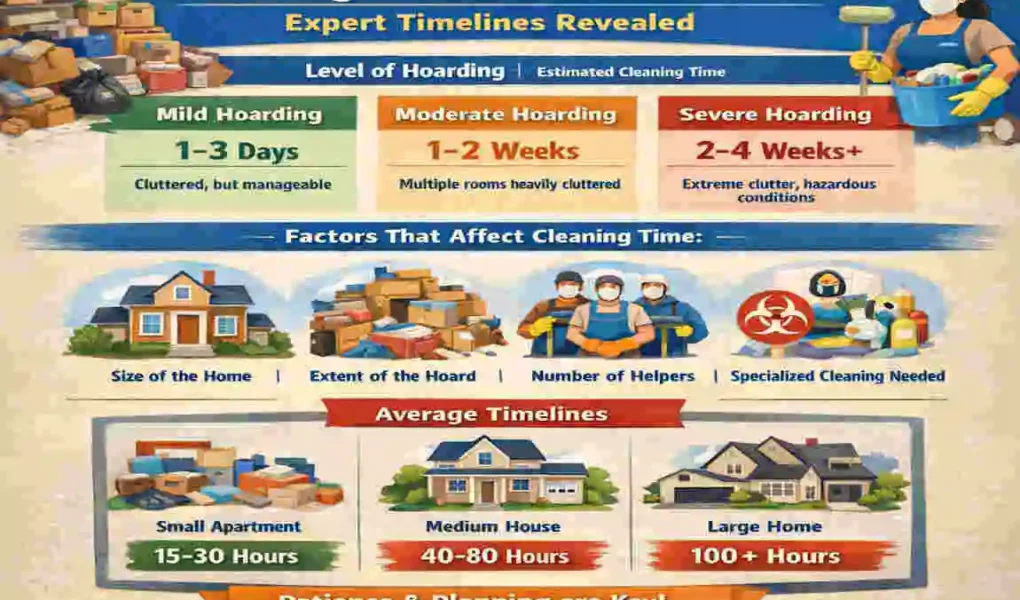
The timeline for cleaning a hoarder’s house can vary significantly, ranging from a few days for mild cases to several months for extreme hoards. Several factors, such as the size of the home, the severity of the hoarding, and whether professionals are involved, all play a role in determining how long the process will take.
| Hoarding Level | Description | Typical Duration | Key Factors |
|---|---|---|---|
| Mild (Level 1-2) | Minor clutter; pathways accessible; no major hazards | 1-5 days | Small team (2-3 people); 1,000-2,000 sq ft home; basic sorting |
| Moderate (Level 3) | Rooms 50% full; blocked access; some pests/mold | 5-10 days | Larger crew; dumpster use; initial deep clean needed |
| Severe (Level 4-5) | Floor-to-ceiling clutter; biohazards; structural issues | 2-12+ weeks | 5+ person team; hazmat gear; repairs; staged over weeks |
Understanding Hoarding
Before delving into the cleaning process, it’s important to understand what hoarding is and why it happens. Hoarding is not just about clutter; it’s a mental health disorder that can severely impact a person’s life and luxury home.
What is Hoarding Disorder?
Hoarding disorder is recognized under the DSM-5 (Diagnostic and Statistical Manual of Mental Disorders). It involves persistent difficulty discarding or parting with possessions, regardless of their value. This behavior often stems from a deep emotional attachment to items, fear of losing something important, or anxiety about letting go.
Types of Hoarding
Hoarding isn’t limited to just one type of behavior. People can hoard a variety of items, including:
- Animal Hoarding: Accumulating an excessive number of pets and being unable to care for them.
- Trash/Paper Hoarding: Collecting newspapers, packaging, or discarded waste.
- Luxury Item Hoarding: Stockpiling high-value or sentimental items like clothes, jewelry, or electronics.
Severity Levels of Hoarding
The Institute for Challenging Disorganization developed a Clutter-Hoarding Scale, which categorizes hoards into five levels:
- Level 1: Slight clutter, manageable with basic cleaning.
- Level 5: Extreme hoarding with severe structural damage, biohazards, and safety risks.
Myths vs. Reality
Many people assume hoarding is “messy behavior,” but it’s much more than that. Severe hoarding can lead to health and safety risks, including:
- Mold and pest infestations.
- Blocked exits, increasing fire hazards.
- Structural damage from the sheer weight of accumulated items.
Factors Affecting Cleanup Time
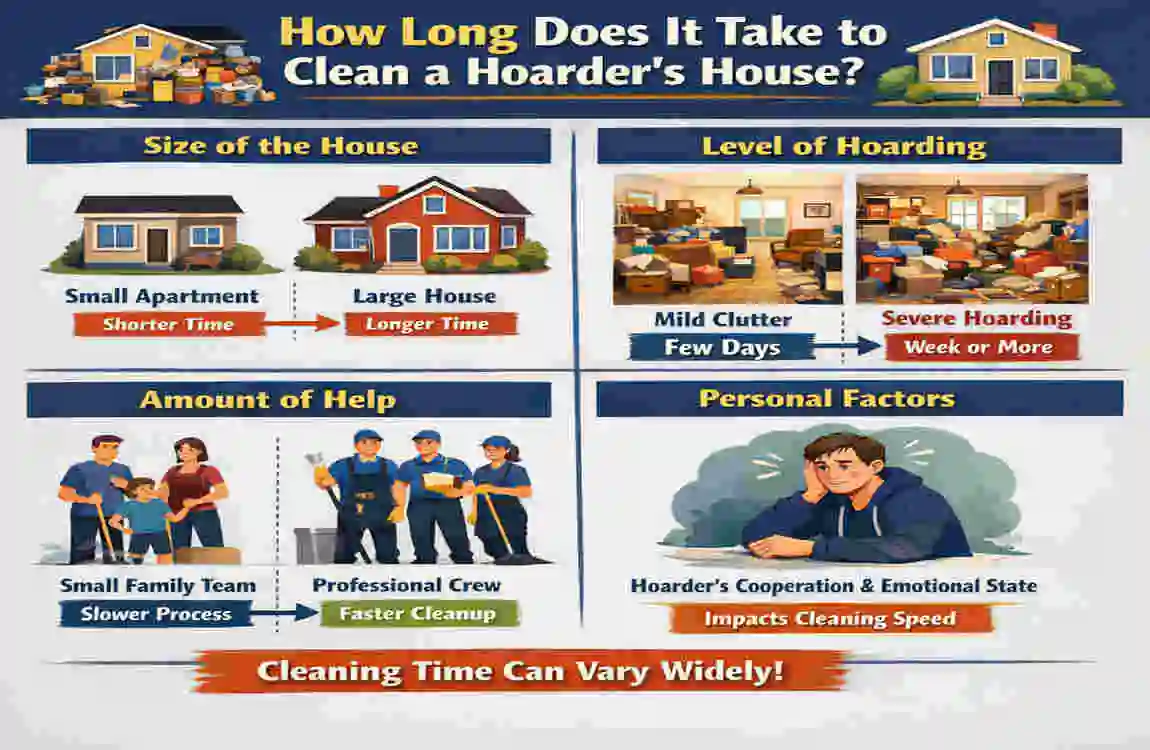
Cleaning a hoarder’s house is not a one-size-fits-all task. Several factors influence how long the process will take. Let’s break them down.
Home Size and Layout
The size of the property plays a significant role in cleanup timelines. A small one-bedroom apartment may take only a few days, while a large multi-story home could take weeks or even months.
Home Size Low Impact (Days)High Impact (Weeks/Months)
<1000 sq ft 3-7 days 1-2 weeks
3000+ sq ft 4-12 weeks 3-6+ months
Severity of Hoarding
The severity of the hoard directly affects the timeline. A Level 1 hoard with manageable clutter could be cleared in a week. In contrast, a Level 5 hoard with biohazards and structural damage may require months of work.
Types of Items Involved
Sorting through sentimental or valuable items can significantly slow down the process. On the other hand, bulk trash or clearly disposable items are quicker to remove.
Team Size and Access
- DIY Cleanup: A single person or a small team may take significantly longer than a professional team.
- Professional Cleanup Crews: Larger teams with specialized equipment can complete the job much faster.
Legal and Permitting Issues
In some cases, legal or permitting delays can add weeks to the timeline. For example:
- Evictions or health department interventions.
- Permits for dumpster placement or structural repairs.
Step-by-Step Cleanup Process
Cleaning a hoarder’s house involves multiple phases. Below is a detailed breakdown of the step-by-step process and the typical time for each stage.
Assessment (1-3 Days)
Before starting, a thorough assessment is conducted. This includes:
- Walking through the property and documenting the extent of the hoard.
- Taking photos and providing a cleanup quote.
Planning and Sorting (3-10 Days)
Items are sorted into categories:
- Keep: Items with sentimental or practical value.
- Donate: Items in good condition that can benefit others.
- Trash: Irreparable or hazardous items.
Bulk Removal (1-4 Weeks)
This is the core phase, where teams remove large quantities of items. Heavy equipment such as dumpsters and conveyors may be used to improve efficiency.
Deep Cleaning and Sanitization (3-7 Days)
Once the clutter is removed, the focus shifts to cleaning and sanitizing the space. This may include:
- Ozone treatments to remove odors.
- Steam cleaning for carpets and furniture.
- Biohazard cleanup, if necessary.
Repairs and Restoration (1-4 Weeks)
If the home has structural damage, repairs may be needed. This could involve fixing walls, floors, or plumbing.
Average Timelines by Case
Different types of hoarding cases have varying timelines. Here’s a general guide based on typical situations:
Case TypeTypical Duration
Mild (Level 1) 3-7 days
Moderate (Level 3) 2-4 weeks
Severe (Level 5) 1-6 months
For example, a small apartment with moderate hoarding may take 2 weeks. In contrast, a large house with extreme hoarding (including biohazards) could take several months.
Costs Tied to Timelines
The cost of cleaning a hoarder’s house is closely tied to the timeline. Here’s what to expect:
- Hourly Rates: Cleanup teams typically charge $25-150 per hour, per team member.
- Total Costs: Depending on the duration, costs can range from $1,000 to $50,000+.
A faster, professional cleanup may seem expensive upfront. Still, it can save money in the long run by preventing further damage or legal issues.
DIY vs. Professional Services
Should you tackle the cleanup yourself, or hire professionals? Here’s a quick comparison:
DIY Cleanup
- Pros: Cost savings if you already have tools and time.
- Cons: Can take 2-3x longer and pose a higher risk of injury or exposure to hazards.
Professional Services
- Pros: Licensed, insured teams with specialized equipment can work efficiently.
- Cons: Higher upfront cost, but often more cost-effective overall.
Prevention and Aftercare
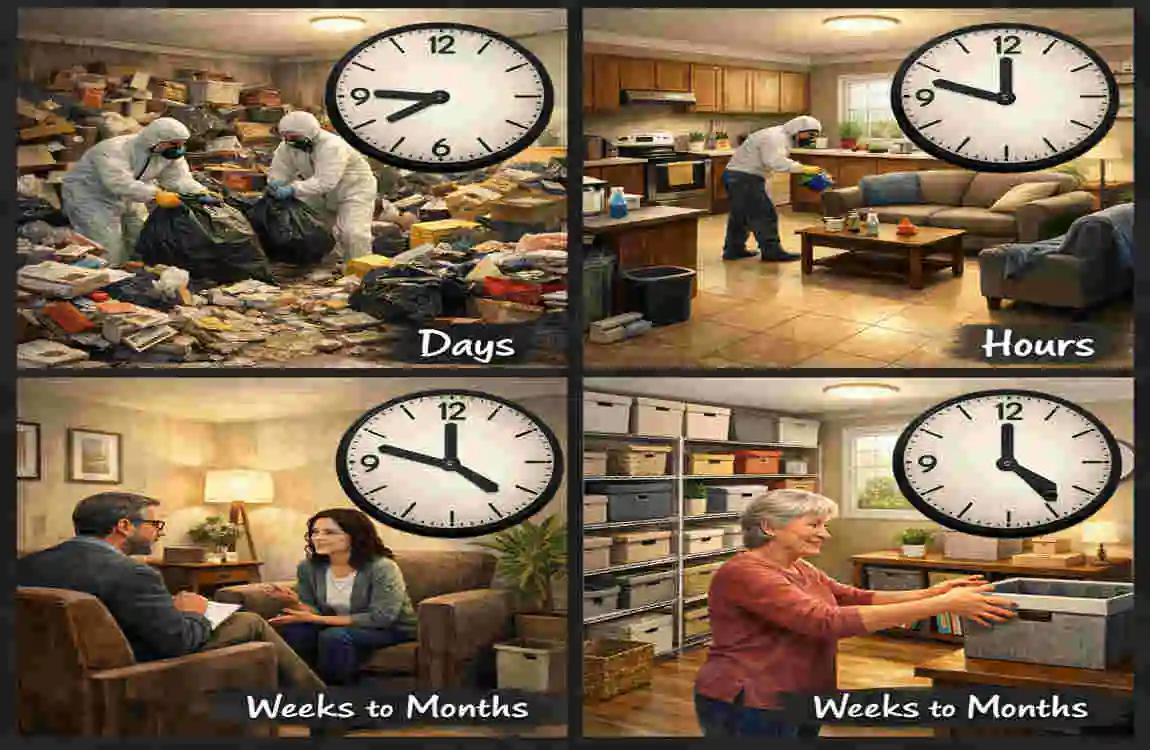
Cleaning a hoarder’s house is just the first step. To prevent relapse, it’s important to:
- Set up home organization systems, like labeled storage bins.
- Encourage therapy or resources that address the emotional root of hoarding.
FAQs
How long does it take to clean a hoarder’s house?
Timelines vary from 3 days to several months, depending on size and severity.
Can the house be cleaned while the occupant lives there?
Yes, but it may take longer and require careful coordination.
What’s the fastest way to clean a hoarder’s house?
Hiring professionals with a large team and proper equipment ensures the quickest results.