You look up at your home, expecting to feel a sense of pride. Instead, you are greeted by a grimy, dull exterior that seems to have aged a decade in just a few short months.
If your home is losing its curb appeal due to a stubborn buildup of green mold, dark algae, and everyday dirt, you are definitely not alone. It is a common struggle for homeowners everywhere, but it does not have to be permanent.
Pressure washing is the ultimate solution to breathe new life into your home’s exterior. When you learn how to pressure wash house siding, you do much more than improve its looks. You actively extend the life of your siding materials.
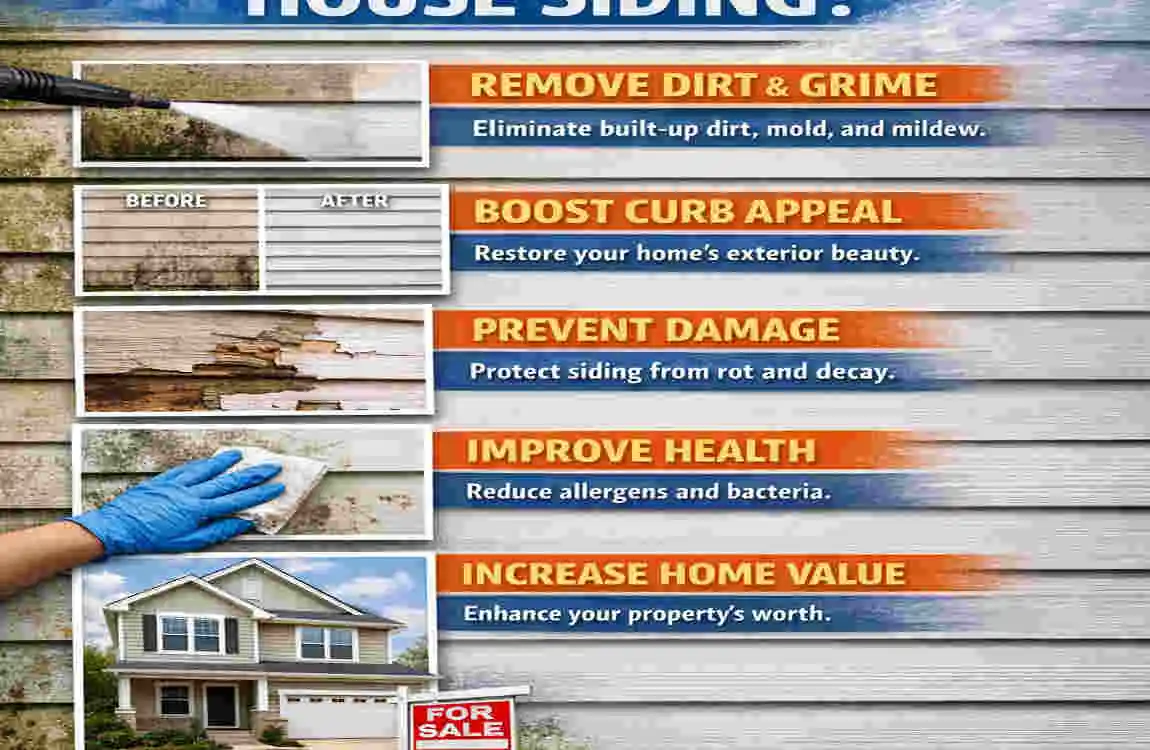
Regular cleaning removes the harmful elements that eat away at your home’s protective layers. This simple maintenance routine prevents incredibly costly repairs down the road. It also instantly increases your overall home value.
This is especially true for Lahore homeowners who constantly face a unique blend of heavy monsoon grime, urban pollution, and intense summer dust. Your home takes a beating from the elements, and it desperately needs a deep clean to stay protected.
Why Pressure Wash House Siding?
The Hidden Risks of Grime Buildup
You might look at a layer of dirt on your home and think it is just a cosmetic issue. Unfortunately, that buildup is actively plotting against your home’s structural integrity.
Over time, your siding collects a nasty mix of algae, mildew, mold, and airborne pollutants. These elements are highly acidic and abrasive.
When left unchecked, they literally eat away at the surface of your home. They erode the protective coatings on popular materials like vinyl, wood, and brick.
For wood siding, this trapped moisture leads to devastating wood rot. For vinyl, it causes premature fading, discoloration, and brittleness. Brick and mortar can even begin to crumble under the constant attack of deeply rooted organic growth.
Proven Results You Can See
The good news is that you do not have to watch your home deteriorate. Regular washing is the ultimate defense mechanism.
Experts recommend giving your home a thorough wash once or twice a year. This consistent maintenance routine is proven to restore up to 80% of your siding’s original brightness.
The best part? You can achieve these stunning results without relying on harsh, toxic chemicals. Water pressure, combined with mild, eco-friendly detergents, is all it takes to melt away months of stubborn grime.
Our Commitment to Your Home
We know exactly what it takes to protect your property. Our dedicated Lahore team uses advanced, eco-friendly methods for lasting protection.
Essential Equipment Guide
Before you learn how to pressure wash house siding, gather the right tools. Using the wrong equipment is the quickest way to turn a simple weekend project into a costly home repair disaster.
You do not need a shed full of complicated gadgets. Still, you do need specific items designed for exterior house cleaning. Below is a comprehensive breakdown of everything you need to get started safely.
Item Our Recommendation Why It Matters
Pressure Washer 1300-2400 PSI (Electric or Gas) Matches the safe PSI for siding to avoid ugly dents, severe warping, or blown-off panels.
Spray Nozzles 25° (Green) or 40° (White) A wide spray angle safely disperses water, cleaning a large area without cutting into the material.
Detergent House-safe, biodegradable soap Gently loosens heavy grime. It kills mold spores without fading your paint or poisoning your plants. Never use raw bleach.
Extension Wand 15-25 ft telescoping pole allows you to reach the second story of your home safely while keeping your feet planted firmly on the ground.
Safety Gear: Goggles, sturdy gloves, non-slip boots. Protect your eyes from flying debris and chemical splashes while preventing nasty slips on wet surfaces.
Budget Options vs. Professional Rentals
When shopping for the best pressure washer for siding, you have two main choices: buying or renting.
If you plan to clean your home, driveway, and patio multiple times a year, buying an electric pressure washer is a fantastic investment. You can find highly capable models for around $150-$250. They are lightweight, quiet, and incredibly easy to maintain.
If you only want to wash your house once a year, renting a more powerful gas machine from a local hardware store might be the better route. Rentals typically cost between $50 and $80 per day.
Gas washers offer more mobility since you are not tethered to an electrical outlet. Just be careful with the power output—gas models can easily exceed 3000 PSI, which is far too strong for delicate siding materials.
Preparation Steps
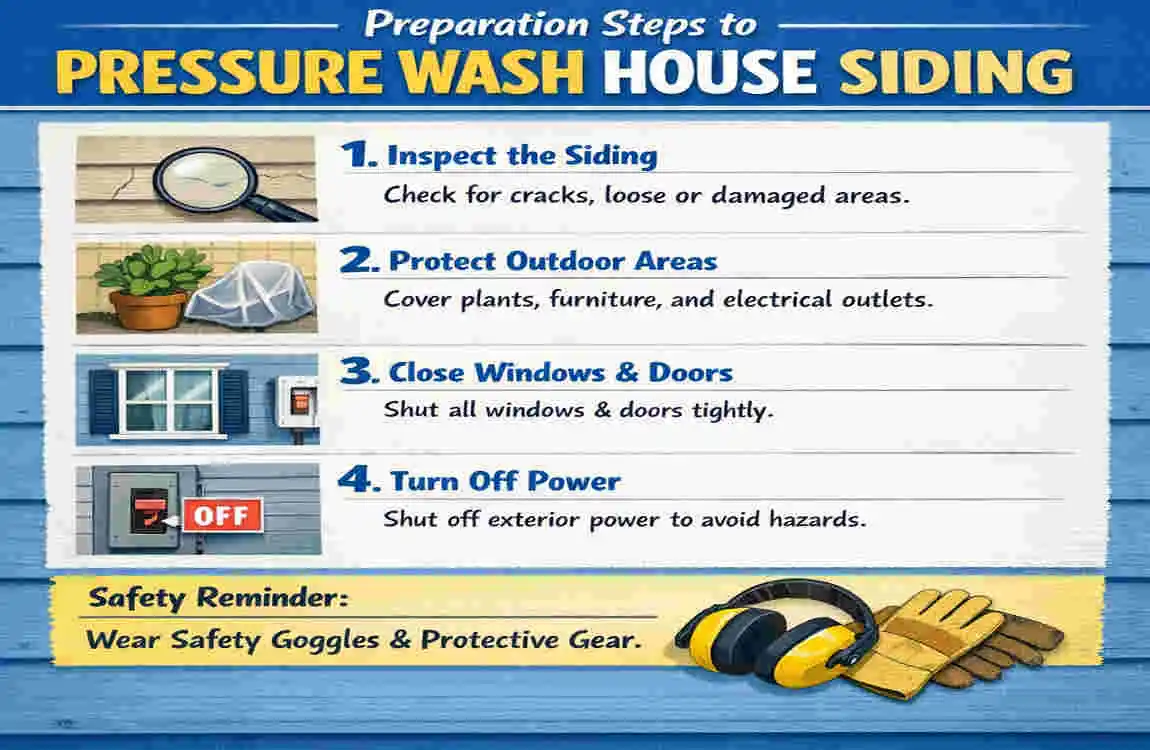
The Ultimate Pre-Washing Checklist
Preparation is the secret ingredient to learning how to pressure wash house siding safely. Skipping this phase is a recipe for disaster.
First, take a slow walk around the entire perimeter of your home. You need to inspect your siding closely for any pre-existing damage.
Look for loose vinyl panels, cracked bricks, or rotting wood boards. If you spray high-pressure water directly into a damaged area, you will force water behind the siding, leading to massive mold issues inside your walls.
Secure any loose pieces before you begin. Next, grab a tube of exterior-grade caulk. Seal up any visible gaps around your doors, windows, and utility pipes to ensure your home is completely watertight.
Protect Your Assets and Landscaping
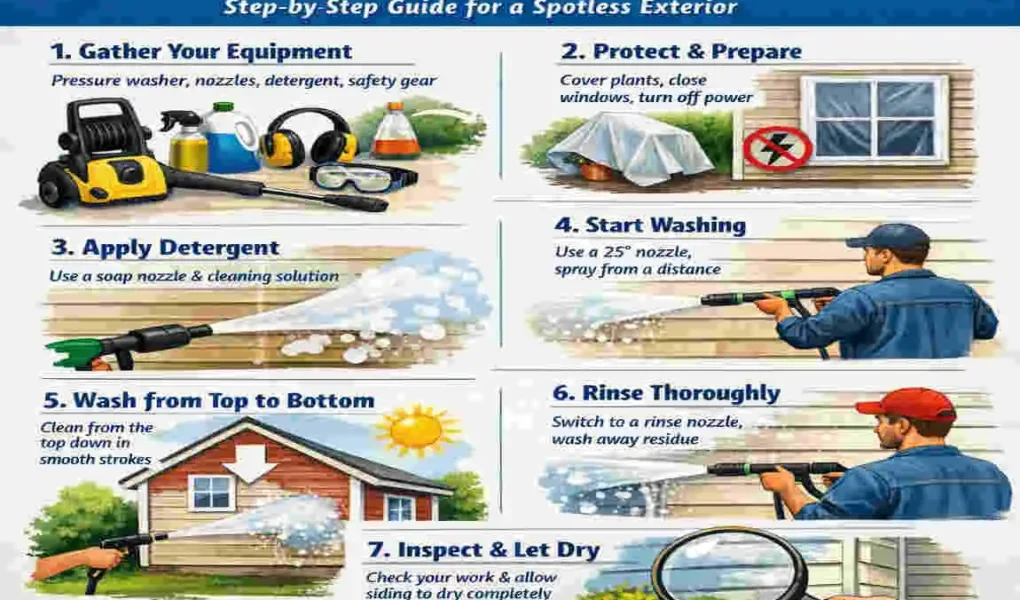
Water and electricity are a deadly combination. You must cover all exterior electrical outlets, light fixtures, and security cameras with heavy-duty plastic bags and waterproof tape.
Ensure all your windows and doors are shut tightly. You would be surprised how easily a strong blast of water can sneak through a slightly open window!
Next, turn your attention to your landscaping. You are going to be using detergents that, while eco-friendly, can still dry out the leaves of your favorite plants.
Thoroughly wet down all the shrubs, grass, and flower beds surrounding your home before you start washing. A wet plant will not absorb soapy run-off. Cover your most delicate plants with lightweight plastic tarps for extra insurance.
The Crucial Test Spot
Here is one of the most important house siding cleaning tips you will ever read. Never start spraying right in the middle of your front wall.
Always test pressure washing house siding on a small, hidden area first. Find a spot near the back of the house or behind a large bush.
Test your pressure and your soap solution. Make sure the water isn’t chipping the paint or leaving strange marks. Once you confirm the pressure is safe, you are ready to tackle the rest of the house.
Weather and Timing Tips
Choose your washing day wisely. You want to avoid days with high winds, as the wind will blow the soapy water right back into your face and dry out your detergent too quickly.
Avoid rainy days, not because the house is getting wet, but because slipping on muddy ground while holding a high-pressure wand is highly dangerous.
For our local clients, the mild days of the Pakistani summer—just before or right after the intense monsoon season—offer the absolute perfect conditions for a thorough exterior cleanse.
Step-by-Step Washing Process
Now that your home is fully prepped, it is time to get to work. Follow these detailed steps to guarantee a spotless, damage-free finish.
Set up and Mix Your Cleaning Solution
Start by setting up your machine on a flat, stable surface. Connect your garden hose to the water inlet, ensuring the connection is incredibly tight to avoid leaks.
Next, fill the detergent reservoir of your pressure washer. Always use a soap specifically formulated for house exteriors.
If your machine uses a siphon tube instead of a tank, drop the tube directly into your soap bottle. Read the manufacturer’s instructions to ensure you are diluting the soap properly.
Fill the tank from the bottom up to prevent excess bubbling and foaming. Fully turn on your water supply before turning on the machine. Running a pressure washer without water will instantly burn out the internal pump!
Apply the Detergent Generously
When applying soap, always use the lowest possible pressure setting. Swap out your high-pressure tip for the special black soap nozzle.
This nozzle reduces the pressure, allowing the machine to pull the soap from the tank and mix it with the water.
Start spraying the soapy mixture onto your siding. Work in manageable sections—about 10 to 15 feet wide.
Apply the soap from the bottom up. Why? If you start at the top, the soap will run down the dry siding, leaving permanent, impossible-to-blend-in clean streaks.
Let the detergent dwell on the surface for about 5 to 10 minutes. This gives the soap enough time to break down the dirt and kill the mold spores. Do not let the soap dry on the siding in the hot sun! If it starts to dry, gently mist it with more water.
Rinse Top-to-Bottom for a Flawless Finish
Once the soap has done its heavy lifting, it is time to rinse. Switch your nozzle to the 25° (green) or 40° (white) tip.
Now, reverse your direction. You want to rinse from the top down so that all the dirty water flows away from the clean areas.
Hold the wand firmly with both hands. Keep the nozzle at a 45-degree angle to the siding. Never spray straight-on directly, as this forces water under the overlapping panels.
Maintain a safe distance of 6 to 12 inches away from the surface. If you are cleaning vinyl or aluminum, stick to a pressure range of 1500-2000 PSI.
Use smooth, steady sweeps. Overlap each stroke by a few inches, just like you are mowing a lawn. Keep the wand moving constantly; lingering in one spot will carve a line right into your home’s exterior.
Tackle Stubborn Spots and Heavy Stains
Sometimes, water and soap aren’t enough for deeply baked-on grime or thick patches of black mildew.
If you encounter a stubborn spot, resist the urge to move the high-pressure nozzle closer to the wall. This is how siding gets destroyed.
Instead, put down the wand. Grab a soft-bristled siding brush attached to an extension pole. Dip the brush into a bucket of soapy water, then gently scrub the stubborn area by hand.
Once you have manually loosened the stubborn dirt, step back and hit it with another gentle rinse. If necessary, apply a second round of detergent and repeat the process. Patience is the key to safe cleaning.
Final Rinse and Detailed Inspection
After you have washed and rinsed every section of the wall, give the entire side of the house one final, comprehensive flush.
Start at the very top of the roofline and work your way down to the foundation. This ensures that absolutely no dirty residue or soapy film is left behind.
Once the wall begins to dry, inspect your work. Look closely for any missed spots, weird streaks, or areas where the grime was tougher than expected. Touch up these areas immediately while your equipment is still fully set up.
Pro Tip Guide for Different Siding Materials
Not all homes are built the same, which means learning how to pressure wash house siding requires adjusting your approach based on the material. Use this handy reference table to keep your specific home safe.
Siding Type Safe PSI Recommended Nozzle Crucial Notes
Vinyl / Aluminum 1500-2000 25° or 40° Keep the wand at least 3-4 ft away when testing. Never spray upward into the panel seams.
Wood Siding 1200-1900 40° (Wide angle) Keep the pressure very low to prevent splintering the wood or stripping off the protective paint.
Brick / Stone 2000-2400 25° (Medium angle) Bricks can handle higher pressure, but be extremely gentle around the older, crumbly mortar joints to avoid blowing them out.
Safety Tips and Common Mistakes
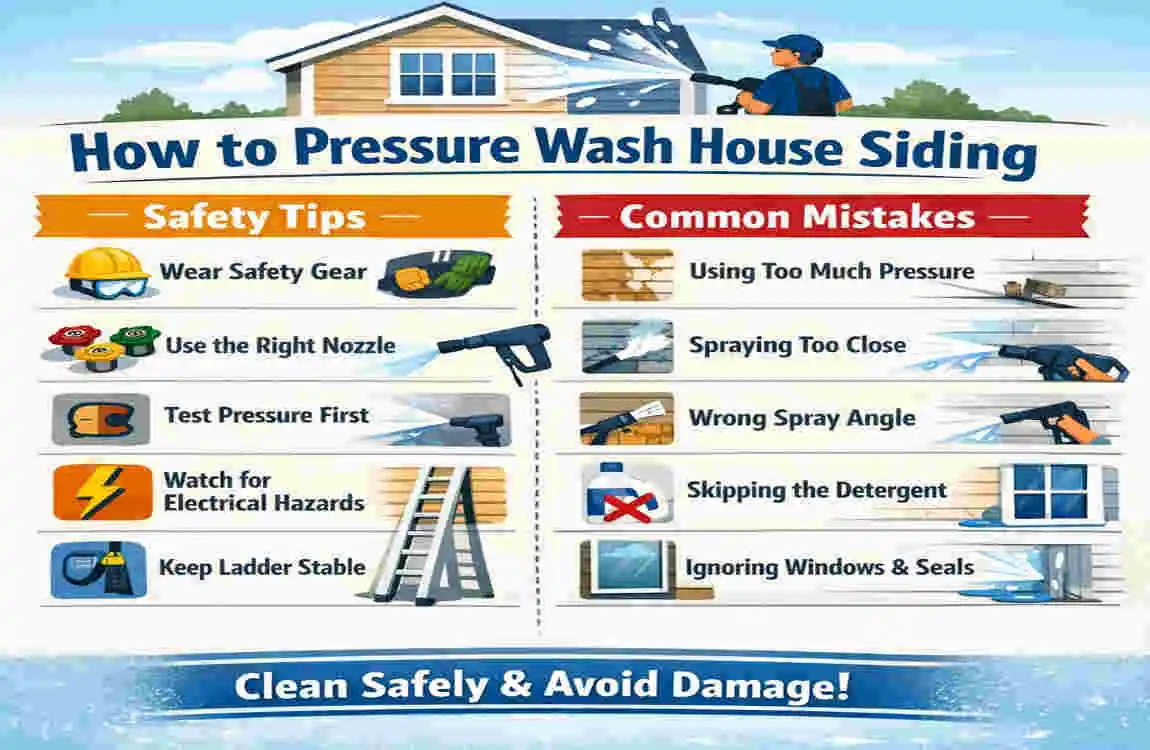
Protect Yourself Before You Wreck Yourself
Pressure washers are incredibly powerful machines, not toys. The water leaving the nozzle is traveling fast enough to slice through thick leather boots and cause serious bodily harm.
You must be fully geared up before you pull the trigger. Always wear safety goggles to protect your eyes from ricocheting rocks and splashing chemicals.
Wear heavy-duty work gloves to maintain a firm grip on the wet wand. Closed-toe, non-slip boots are absolutely mandatory.
Never, under any circumstances, point the wand at another person, a playful pet, or yourself. Even a momentary lapse in concentration can result in a severe injury that requires an emergency room visit.
Practices to Avoid at All Costs
If you want to master pressure washing house siding, you must know what not to do.
First, avoid using incredibly high PSI. Anything over 2400 PSI is generally overkill for a house and will likely cause irreversible damage.
Second, throw the 0° (red) nozzle in the trash. This nozzle creates a laser-thin stream of water that easily punctures vinyl siding, shatters glass windows, and carves your name into solid concrete. It has no place in exterior home cleaning.
Finally, never spray upward. House siding is designed to shed rain. If you spray upward, you will force gallons of water behind the panels, soaking the insulation and rotting the house’s framing.
Common Pitfalls and How to Fix Them
Even careful homeowners can make mistakes. Here is a quick guide to the most common errors and how to correct them immediately.
Common Mistake, The Consequence, The Easy Fix
Holding the nozzle too close: Dents, cracks, and permanently warped siding. Maintain a strict distance of 6-12″ from the wall at all times.
Rinsing from the bottom up, leaving ugly, permanent streaks of dirty water. Always apply soap bottom-up, but rinse strictly from the top down.
Using harsh, toxic chemicals, faded paint, dead landscaping, and health risks. Stick exclusively to mild, biodegradable, house-safe soap.
Lahore-Specific Challenges
For our readers in Lahore, the environment throws a few extra curveballs your way. The heavy dust storms that roll in right after the monsoon season can coat your freshly washed house in dirt within days.
To combat this, pay special attention to your rinsing phase. Make sure every ounce of sticky soap is gone. If soap residue is left on the siding, it will act like a magnet, pulling the dry dust right back onto your home’s exterior!
Post-Washing Care
Wrapping Up Your Equipment
The job isn’t truly finished until the equipment is safely put away. Learning how to pressure wash house siding also means knowing how to maintain your tools.
Once your house is sparkling clean, flush your pressure washer system with clean water. Run the machine for a few minutes without any soap to clear the internal lines.
Disconnect all the hoses, drain them completely, and coil them neatly. This prevents mold from growing inside the hose while it sits in your garage.
Protecting Your Freshly Cleaned Siding
If you have natural wood or older brick siding, cleaning it is only the first step. The pressure washing process removes dirt, but it can also strip away old protective layers.
Once the siding is completely dry—which usually takes a full 24 to 48 hours—consider applying a fresh coat of waterproof sealant or wood stain. This locks out future moisture, keeping the home looking brand new for much longer.
The Final Walkaround
Take one last stroll around your property. Now that the grime is gone, you have a clear view of your home’s true condition.
Inspect the siding for any issues previously hidden by dirt. Look for hairline cracks in the vinyl, tiny holes left by woodpeckers, or patches of peeling paint. Catching these small issues now saves you from massive repair bills later.
Finally, establish a maintenance calendar. Plan to schedule professional washes or tackle the DIY project biannually—once in the crisp spring and once in the cool fall. Consistent care is the ultimate secret to a beautiful home.
FAQs
We know that taking a high-powered water gun to your most valuable asset can be intimidating. Here are some of the most frequently asked questions we get from homeowners trying to understand how to pressure wash house siding.
What PSI is safe to pressure wash house siding?
The sweet spot for safely cleaning a home exterior is between 1300 and 2400 PSI. If you have delicate vinyl or aluminum siding, keep the pressure closer to the 1500-2000 range. If you are washing sturdy brick or stone, you can safely bump the pressure up to 2400 PSI. Anything above this level risks permanent structural damage.
Should I tackle this as a DIY project or hire professionals?
If you have a single-story home, feel comfortable handling heavy equipment, and have an entire weekend to dedicate to the project, DIY is a great, cost-effective option. However, if you have a multi-story home, delicate historical siding, or don’t have the time to rent equipment, hiring professionals is the smartest choice. Pros have the training, insurance, and heavy-duty gear to finish the job flawlessly in a fraction of the time.
How often should I clean my siding?
Industry experts strongly recommend washing your home’s exterior once or twice a year. If you live in an area with dense tree cover or in a humid climate prone to aggressive algae growth, you should definitely aim for biannual washes (spring and fall).
Is it safe to use bleach on my home’s exterior?
No, we highly discourage using raw household bleach. While bleach kills mold, it is incredibly harsh. It can strip the color right out of your siding, permanently stain your driveway, and kill your expensive landscaping. Always opt for a biodegradable, house-specific detergent that is tough on grime but gentle on your property.
Can pressure washing actually break vinyl siding?
Yes, absolutely. If you use too much pressure, hold the nozzle too close to the surface, or use a pinpoint 0-degree nozzle, you will easily crack, dent, or punch holes straight through vinyl siding. That is why following the correct techniques outlined in this guide is so crucial.