Clean plumbing pipes matter more than many people realise. When pipes stay clear, water moves freely, bad smells stay away, and daily chores feel easier. But when pipes get dirty or blocked, you may notice slow drains, gurgling sounds, and even water backing up into sinks or showers.
| Method | How It Works | Best For | Difficulty Level | Time Required |
|---|---|---|---|---|
| Hot Water Flush | Flushes grease and mild buildup using boiling water | Kitchen sinks, light clogs | Easy | 5–10 minutes |
| Baking Soda & Vinegar | Chemical reaction breaks down dirt and odors naturally | Mild clogs & bad smell | Easy | 20–30 minutes |
| Plunger Method | Uses pressure to dislodge blockages | Sinks, toilets, showers | Easy–Medium | 10–15 minutes |
| Drain Snake (Auger) | Physically removes deep clogs inside pipes | Stubborn blockages | Medium | 15–30 minutes |
| Chemical Cleaners | Dissolves tough buildup using strong solutions | Heavy clogs (use carefully) | Easy | 10–20 minutes |
The good news is that you do not always need a plumber right away. In many cases, simple DIY pipe cleaning methods can help you handle minor clogs and keep your drainage system in better shape. If you know how to clean plumbing pipes at home, you can also prevent bigger problems later.
Understanding Your Home Plumbing System
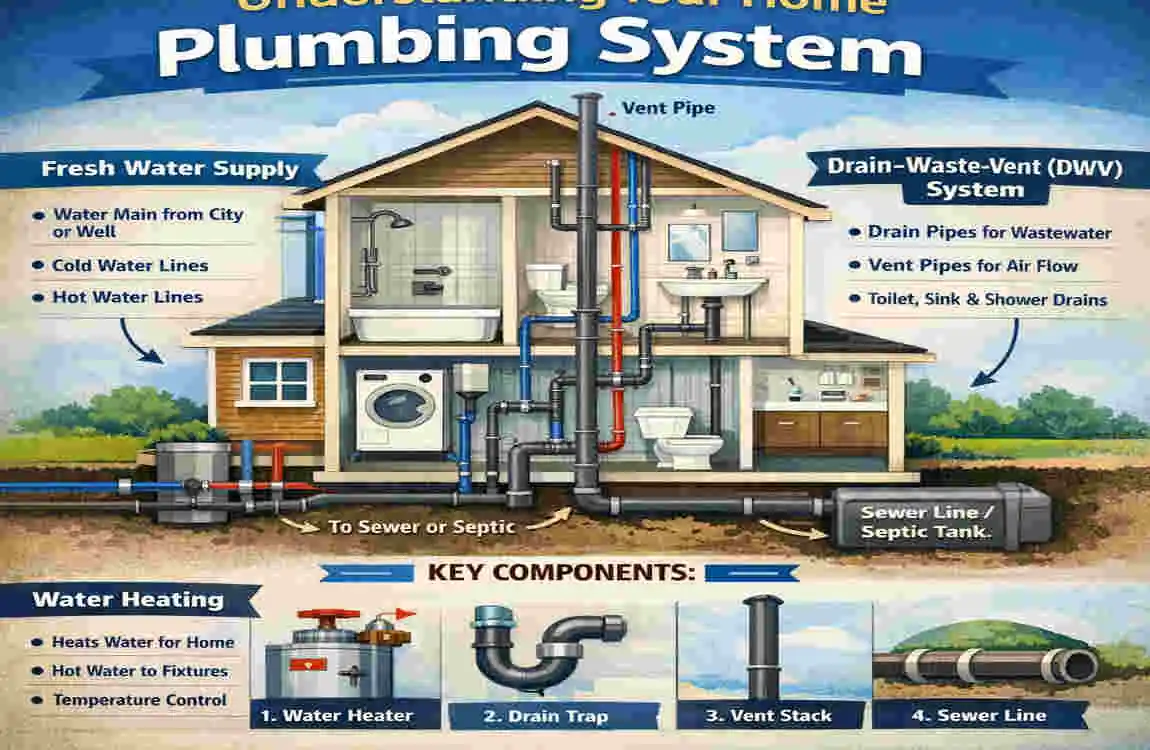
Your home plumbing system has a few main parts. Water supply pipes bring clean water into your home. Drainage pipes carry dirty water away from sinks, tubs, toilets, and appliances. Vent pipes help air move through the system so water can flow properly.
Over time, pipes can become clogged. This usually happens slowly. Small amounts of grease, soap, food waste, hair, and mineral buildup collect on the inside walls of the pipes. At first, the problem may be small. But if you ignore it, the blockage can grow and cause bigger drainage trouble.
Common Causes of Pipe Blockages
- Grease and oil from the kitchen use
- Hair buildup in bathroom drains
- Soap residue from showers and sinks
- Food waste going down the drain
- Mineral deposits from hard water
Early detection is important because small clogs are much easier to fix than major blockages. If you act early, you can often clean drain pipes before the problem gets worse.
Signs Your Plumbing Pipes Need Cleaning
Your drains usually give warning signs before they fully clog. One of the first signs is slow drainage. Water may sit in the sink or shower longer than usual.
You may also notice unpleasant odours coming from the drain. This often means trapped waste is starting to build up inside the pipes. Another common sign is a gurgling sound, which can happen when air gets trapped behind a blockage.
In some cases, water may back up or overflow. If this happens often, your pipes likely need attention. Frequent clogs are another clue that the pipes are not clean. You might also see a higher water bill if poor flow is making your plumbing work harder than normal.
Essential Tools & Materials for DIY Pipe Cleaning
Before you begin, it helps to gather a few basic items. These tools make home plumbing maintenance easier and safer.
Tool or Material What It Helps With
Plunger clears simple clogs with pressure
Drain snake or auger reaches deeper blockages
Baking soda and vinegar help loosen buildup and reduce odours
Hot water kettle breaks down grease and soap
Rubber gloves protect your hands
Bucket and mop : Handles spills and overflow
Pipe cleaning brush Scrubs reachable pipe areas
Eco-friendly drain cleaner works on mild clogs with less harsh chemicals
Having these items ready can save time when a drain starts acting up.
Safety Precautions Before Cleaning Plumbing Pipes
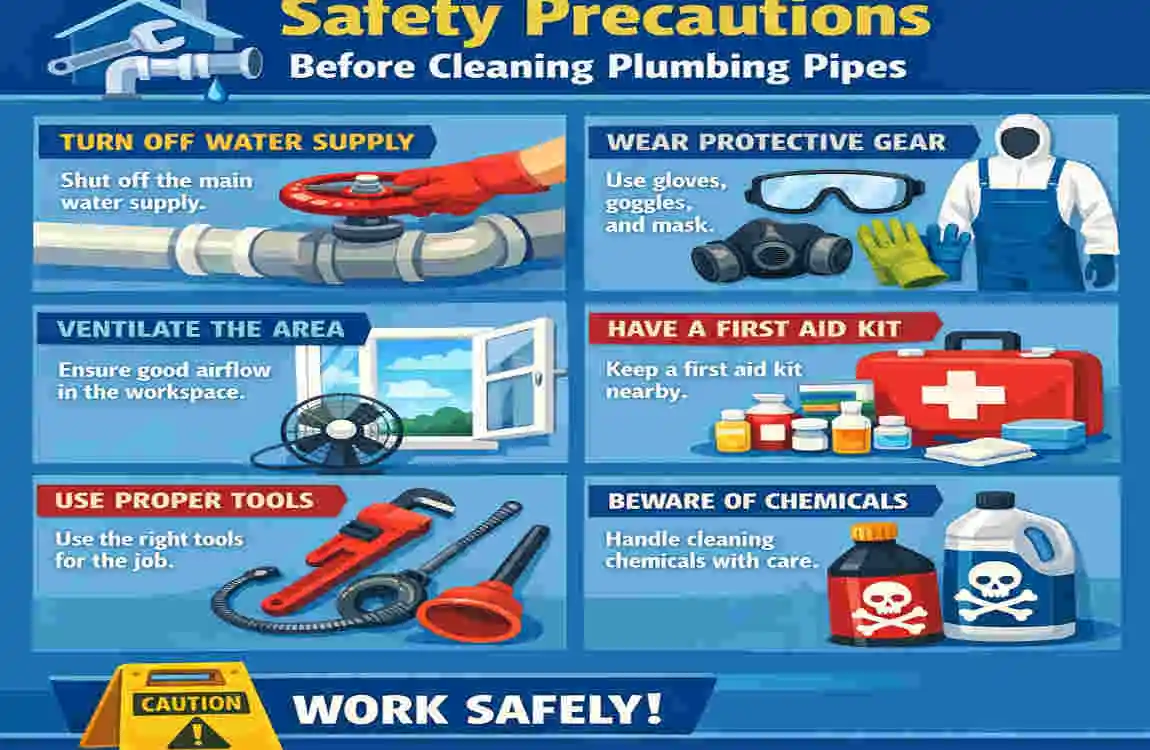
Safety should always come first. If you are working on a very clogged drain, turn off the water supply if needed. This helps prevent spills and mess.
Wear protective gloves and, if you are using any strong product, eye protection too. Never mix chemical cleaners, because that can create dangerous fumes. Also, make sure the area has fresh air.
If the clog is severe, if water is flooding, or if you suspect pipe damage, do not force a DIY fix. In that case, it is better to stop and get professional help.
Cleaning Plumbing Pipes with Hot Water
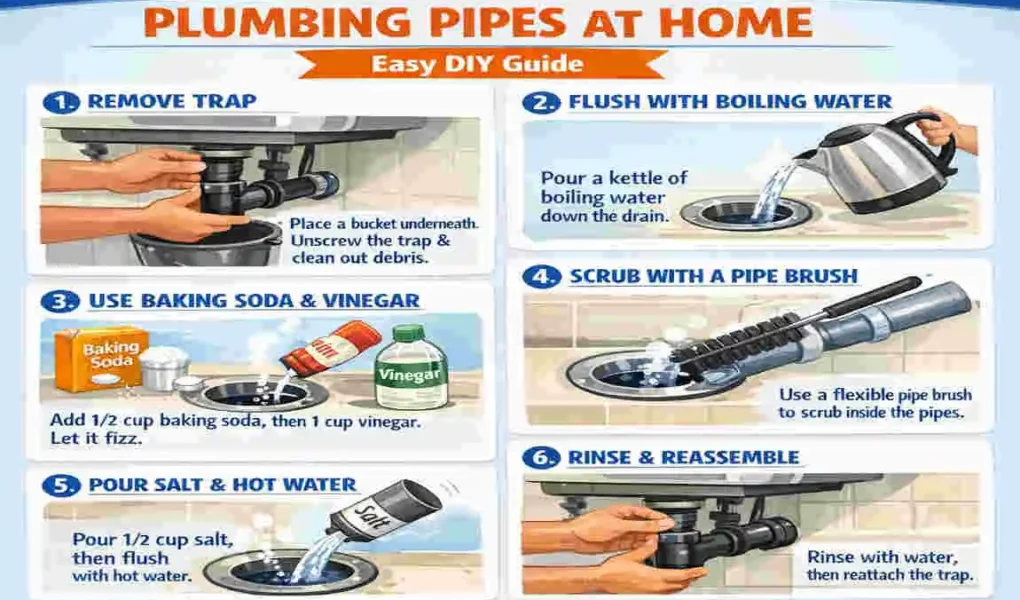
Hot water is one of the easiest cleaning methods. It works well because it can soften grease and loosen soap buildup inside the pipe.
Start by boiling water. Then slowly pour it down the drain in stages, not all at once. Let each pour move through the pipe before adding more. This method is especially useful for kitchen sinks where grease often collects.
You can repeat this periodically as part of your regular drain-cleaning routine. Still, hot water alone has limits. It may help with light buildup, but it will not fix a deep or stubborn clog.
Baking Soda and Vinegar Technique
This natural method is popular because it is simple and gentle. It can help with mild clogs and bad smells.
How to Use It
- Pour baking soda into the drain
- Add vinegar slowly
- Let the mixture react for a few minutes
- Flush the drain with hot water
The fizzing action helps loosen small bits of buildup. It also helps freshen the drain. This method is a good choice if you want an eco-friendly way to clean drain pipes without harsh chemicals.
It works best for light cleaning and odour control, not for major blockages.
Using a Plunger for Pipe Cleaning
A plunger creates pressure inside the pipe. That pressure can often move a clog loose enough for water to flow again.
To use it well, make sure there is enough water around the drain to cover the rubber cup. Place the plunger over the drain and push down gently at first. Then use firm, steady pumping motions. After several pushes, lift and check if the water drains better.
This method works well for sinks, toilets, and showers. Avoid using too much force, because that can splash dirty water or make the clog worse.
Drain Snake or Plumbing Auger Method
A drain snake is a long, flexible tool that goes deeper into the pipe than a plunger can. It helps break up stubborn clogs.
Feed the snake slowly into the drain until you feel resistance. Then turn the handle so the tip can catch the blockage. Pull it back out carefully. You may need to repeat the process a few times.
This is a strong option for deeper blockages, especially when hot water or baking soda and vinegar do not help. Be gentle while using it, because forcing the tool can damage older pipes.
Chemical Drain Cleaners (Use Carefully)
Chemical drain cleaners are designed to break down clogs fast. They can work on some blockages, but they should be used with care.
The main concern is that these cleaners can be harsh on pipes, skin, and the respiratory system. They may also create problems if used too often. Older plumbing systems can do more harm than good.
If you want a safer choice, try natural methods first. In many homes, simple DIY pipe cleaning works well without the risks of strong chemicals.
Natural Ways to Prevent Pipe Blockages
Keeping pipes clear is easier than fixing a clog later. A few small habits can make a big difference.
Helpful Prevention Habits
- Flush drains with hot water regularly
- Use drain strainers in sinks and showers
- Never pour grease into the sink
- Clean hair traps often
- Use baking soda and vinegar once a month
- Watch what goes down the drain
These simple steps support long-term home plumbing maintenance and help your pipes stay in better shape.
Kitchen vs Bathroom Pipe Cleaning Differences
Kitchen pipes usually deal with grease, food bits, and cooking residue. That means hot water and grease control are especially important there.
Bathroom pipes, on the other hand, collect hair, soap scum, and toothpaste residue. For these drains, a strainer and regular cleaning work very well.
Because the problems differ, the cleaning methods should also differ. Kitchen drains often need more grease removal, while bathroom drains often need hair removal and surface cleaning.
Common Mistakes to Avoid When Cleaning Plumbing Pipes
Many people make a few simple mistakes when trying to clean their pipes. One common mistake is using too much chemical cleaner. Another is ignoring early signs of clogging.
Some people also force tools too hard, which can damage the pipe. Others forget to wear gloves or eye protection. It is also a mistake to wait too long before calling a plumber when the problem is clearly beyond DIY pipe cleaning.
When to Call a Professional Plumber
Sometimes a home method is not enough. You should call a professional if the blockage keeps coming back, if water is leaking, or if you notice a strong sewer smell throughout the home.
A plumber is also the right choice if the pipe may burst, break, or be structurally damaged. In those cases, safe repair matters more than a quick fix.
Maintenance Tips for Long-Term Pipe Health
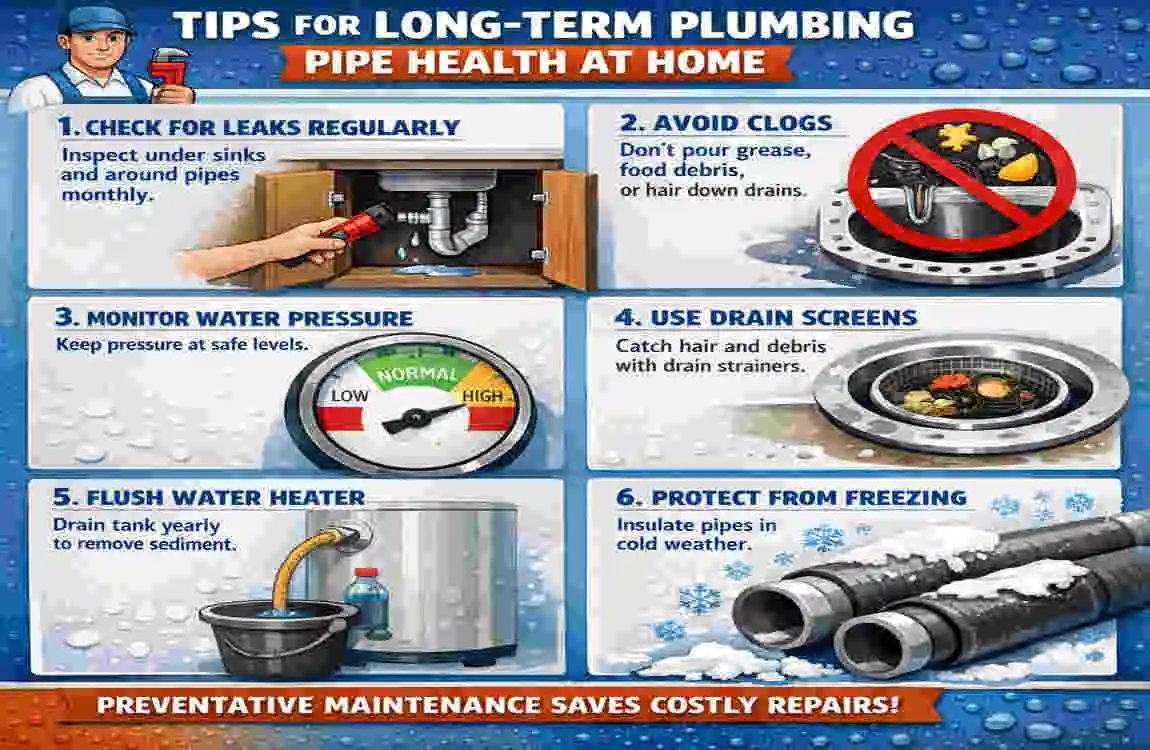
Good maintenance keeps your plumbing system working better for longer. A weekly quick rinse with hot water can help. A monthly baking soda cleaning routine can also reduce buildup.
It helps to check drains often so you can catch small problems early. If your home has hard water, a water softener may also help reduce mineral buildup. Simple kitchen habits, like wiping grease from pans before washing them, can protect your pipes, too.
Frequently Asked Questions (FAQs)
How often should I clean plumbing pipes at home?
Light cleaning once a month is a good habit. If your kitchen or bathroom gets heavy use, you may need to do it more often.
Is baking soda and vinegar safe for all pipes?
In most homes, yes, for light cleaning. It is usually safe and gentle, but it will not solve every clog.
Can hot water alone clean clogged pipes?
Hot water can help with small grease buildup, but it cannot fix serious blockages on its own.
What is the fastest way to unclog a pipe at home?
A plunger is often the fastest option for simple clogs. If that does not work, a drain snake may help.
Are chemical cleaners safe for old plumbing systems?
They can be risky for older pipes. If your plumbing is old, it is better to start with safer methods.