Imagine spotting your dream home online. You click the listing eagerly, but right there in bold letters: “Under Offer.” Your heart sinks. What does that mean? Are you still in the running, or has the door just closed on your hopes?
If you’ve ever found yourself asking, “What does under offer mean on a house sale?”—you’re not alone. This term can be confusing, especially if you’re new to the UK property market. It’s a key stage in the buying process that signals progress, but isn’t the final step.
In fact, data from 2025 shows that about 30% of UK property listings go under offer within just two weeks of hitting the market. That means understanding this stage is crucial if you want to stay competitive and make smart decisions.
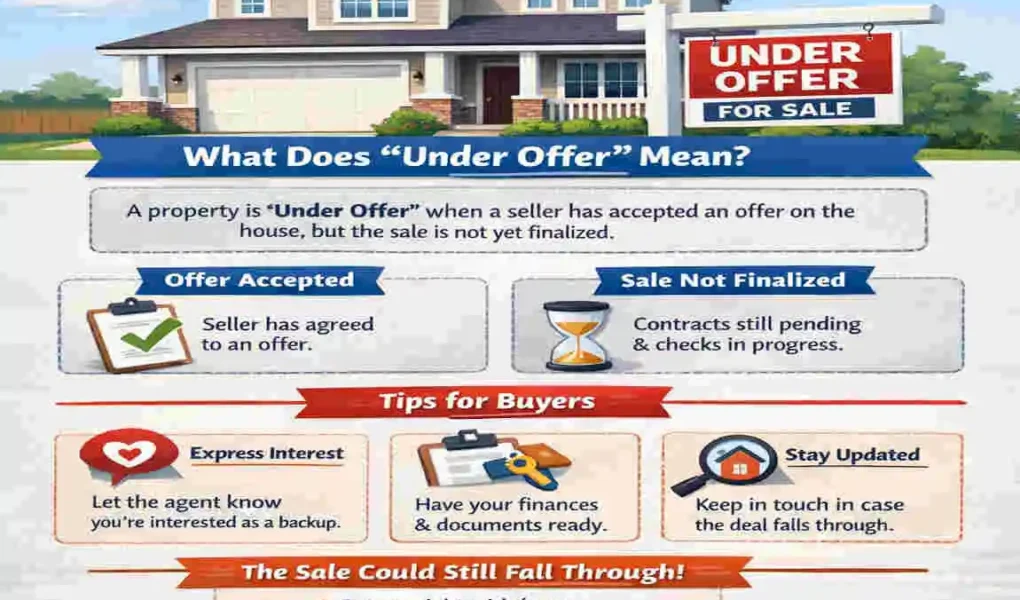
What Does “Under Offer” Mean on a House Sale?
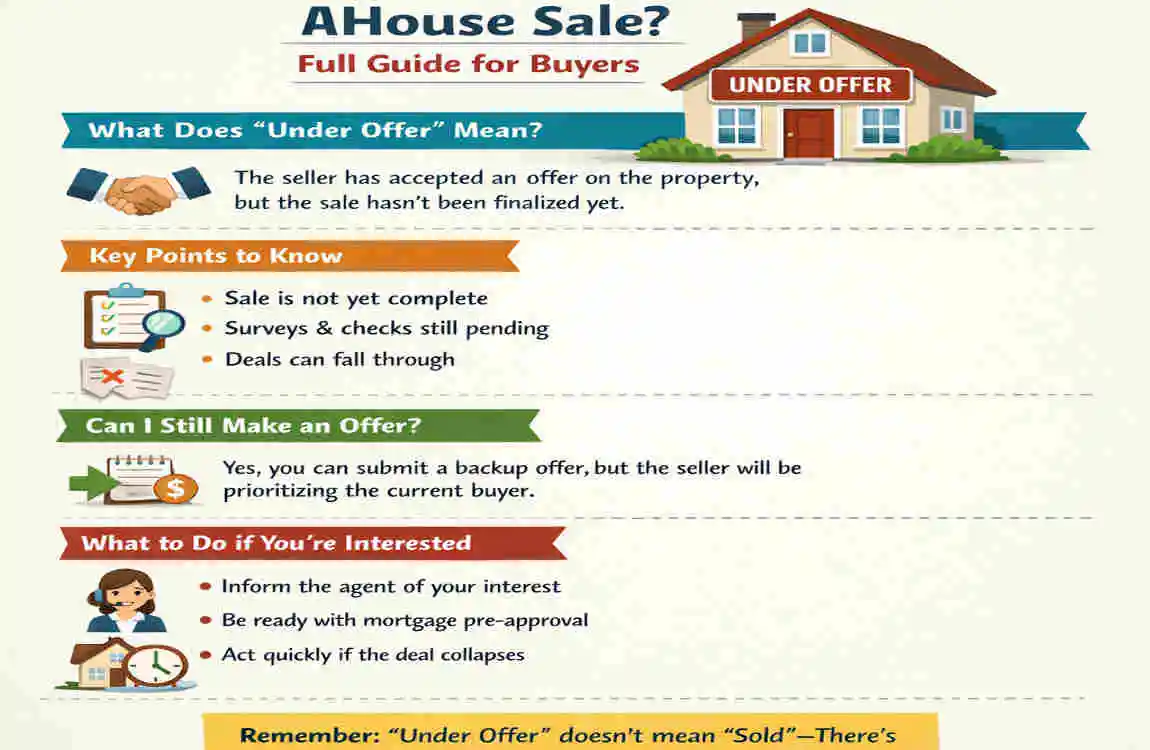
At its core, “under offer” means the seller has accepted a buyer’s offer, but there is no legally binding contract yet.
This is an important distinction. It’s like a handshake agreement — promising, but not final. The buyer and seller are on the path toward a deal, but the sale isn’t guaranteed until contracts are exchanged.
Key Traits of “Under Offer”
- Not legally binding: Either party can still back out without legal penalty.
- Price can still be negotiated: The seller might accept a better offer, or the buyer can renegotiate.
- Property may still be marketed: Sellers sometimes continue showing the house to other potential buyers.
How “Under Offer” Differs From Other Statuses
Status Meaning Buyer Implications
Under Offer: Offer accepted, no contract. Still possible to view, bid, or negotiate.
SSTC (Sold Subject to Contract) Contracts exchanged; deposit paid. Much harder to compete; sales are usually progressing
Sold. Sale completed, ownership transferred , Property off the market
The UK House Buying Process: Where “Under Offer” Fits In
Buying a house in the UK follows a series of steps — and “under offer” typically shows up mid-process. Here’s a simple breakdown of the main stages:
- Property Listed & Marketing: The home is listed on portals like Rightmove and Zoopla.
- Viewings & Initial Offers: Interested buyers view the property and submit offers.
- Under Offer Accepted: The seller accepts an offer,, but no contracts have been signed yet.
- Surveys, Searches & Mortgage Approval: Buyers arrange property surveys and legal checks.
- Exchange of Contracts (SSTC): Legal contracts signed; deposit paid.
- Completion: Final payment made, keys handed over.
Think of “under offer” as a handshake agreement—it shows mutual interest and intent but stops short of a signed deal.
Visualising the Timeline
Stage Description Buyer’s Position
Listed Property advertised , open to all buyers
Viewings & Offers Buyers view & bid Competitive offers submitted
Under Offer: Offer accepted; no contract. Opportunity to improve or wait
SSTC Contracts exchanged , Sale progressing; less flexibility
Completion Ownership transferred Sale finalised
Knowing this timeline helps you understand when you can still influence the sale and when it’s time to prepare for the next property.
Under Offer vs. Sold Subject to Contract (SSTC): Key Differences
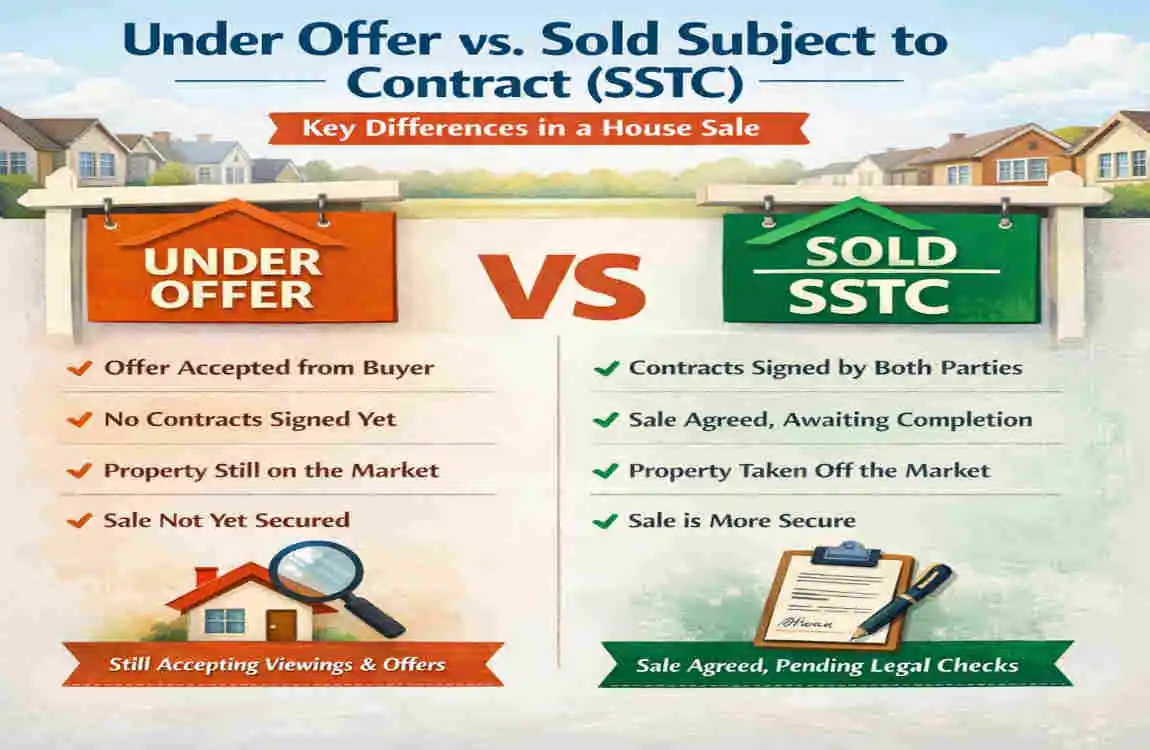
Many buyers confuse “under offer” with “sold subject to contract” (SSTC) — but there are important differences.
Under Offer
- Flexible Stage: The seller has chosen a preferred buyer, but the house may still be shown to others.
- Pros for Buyers: Opportunity to gazump (make a better offer) since no contracts signed.
- More negotiation room on price and terms.
- Cons: Risk that the seller accepts a higher bid from someone else.
- Offers can be withdrawn easily.
Sold Subject to Contract (SSTC)
- Legally Binding: Contracts have been exchanged, and usually a deposit has been paid.
- Pros: Strong commitment from both parties.
- Less chance of the sale falling through.
- Cons: Harder to compete if you’re a late bidder.
- Typically, no more viewings allowed.
Timelines from Under Offer to SSTC
Stage Average Duration
Under Offer 1-4 weeks
SSTC to Completion 4-8 weeks
What Happens After a House Goes “Under Offer”?
Once a property is marked as under offer, what should you do as a buyer? Here’s a clear step-by-step list to keep you in the game:
- Contact the Estate Agent Immediately: Confirm your interest and ask if viewings are still possible.
- Submit a Better Offer or Wait: If you’re serious, make a stronger bid backed by mortgage proof.
- Get Mortgage Pre-Approval: Having finance lined up shows sellers you’re ready to proceed.
- Arrange Surveys Early: Start structural surveys and legal checks to avoid delays later.
Real-Life Example
Buyer X found a home under offer but offered 5% above the accepted price. After 3 weeks of negotiations and mortgage approval, they secured the house.
This shows that being proactive and prepared can turn an “under offer” home into your new address.
Can You Still Buy a House That’s Under Offer? Strategies for Buyers

Yes! You’re not automatically out of the running when a property goes under offer. Here are some effective strategies:
- Make a Realistic Higher Bid: Don’t lowball. Back your offer with mortgage approval documents.
- Speed Up Your Chain: If you’re chain-free or a cash buyer, highlight this to the seller.
- Monitor for Fall-Throughs: Around 20% of under offer sales fall through due to financing or legal issues.
- Set Alerts on Rightmove and Zoopla: Use these to spot changes quickly and act fast.
Common Reasons Houses Fall Through After “Under Offer”
While “under offer” looks promising, many sales do not reach completion. Here are the top reasons homes fall through, according to 2025 Zoopla data:
- Survey Issues: Unexpected structural problems or repairs needed.
- Mortgage Refusal: Buyers fail to secure financing.
- Gazumping or Seller Change of Mind: Sellers accept a better offer or withdraw from the sale.
- Chain Collapse: Other linked sales fail, causing delays or cancellations.
Buyer Prep Checklist to Avoid Issues
Potential Issue Buyer Action
Survey Problems : Arrange surveys early; understand issues
Mortgage Refusal : Get pre-approved before bidding
Gazumping Risk : Stay in touch with agents; be ready to improve the offer
Chain Collapse : Understand chain status; consider chain-free offers
Being prepared helps you avoid costly surprises and strengthens your buying position.
Regional Differences: “Under Offer” in England, Scotland, Northern Ireland
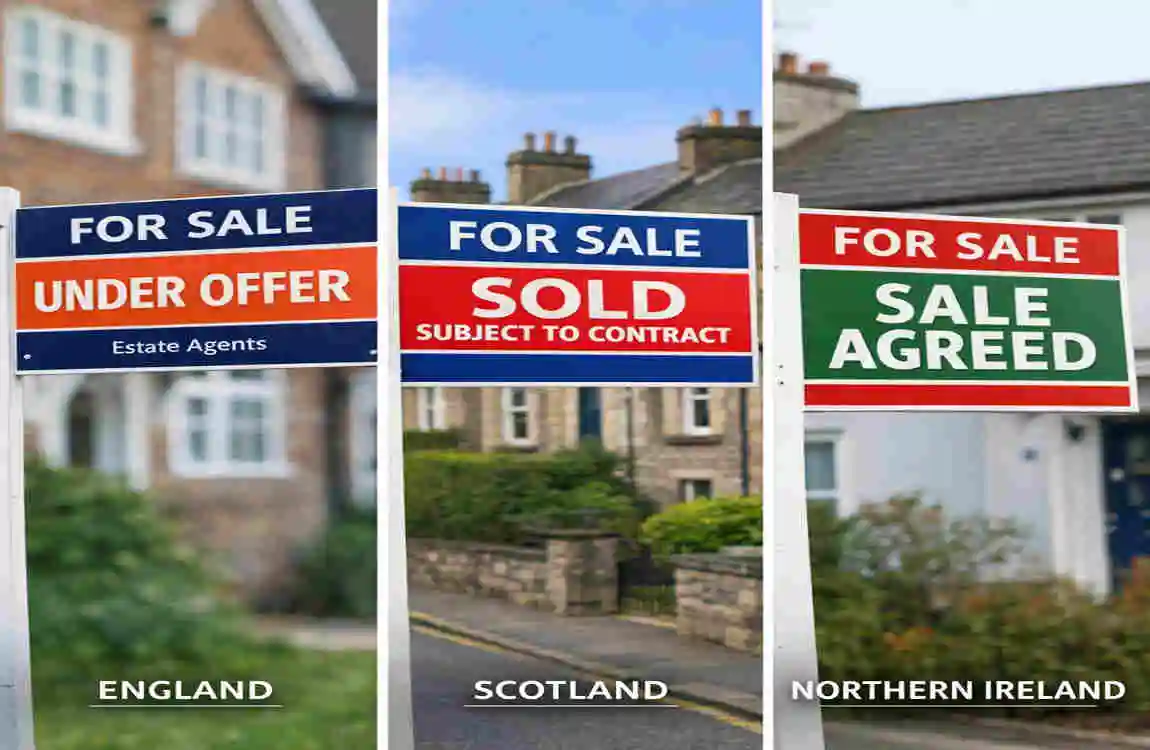
Understanding local variations can save confusion and help tailor your approach.
England & Wales
- Gazumping is allowed until contracts are exchanged.
- “Under offer” is common, and sellers often continue marketing.
Scotland
- “Under offer” is a less common term.
- The missives stage (binding contract) is the key milestone.
- Offers are usually more formal from the start.
Northern Ireland
- The process is similar to England, but timelines tend to be quicker.
- “Under offer” used, but contracts exchanged faster.
FAQs: What Does “Under Offer” Mean? Quick Answers
What does under offer mean in a house sale?
It means a seller has accepted an offer, but no contract has been signed yet.
How long does an under offer last?
Usually, 1-4 weeks before contracts are exchanged or the sale falls through.
Can I view a house under offer?
Sometimes, but sellers may limit viewings as they prioritise the accepted buyer.
What does under offer mean on Rightmove?I
t indicates an accepted offer, but it is not legally sold yet.
Under offer vs offers invited?“
“Offers invited”” means the seller is open to bids; “”under offer”” means an offer has already been accepted.
Can an under offer become SSTC?
Yes, once contracts are exchanged, it becomes SSTC.
Tips if your offer is underbid?
Consider improving your offer quickly and getting mortgage approval ready.