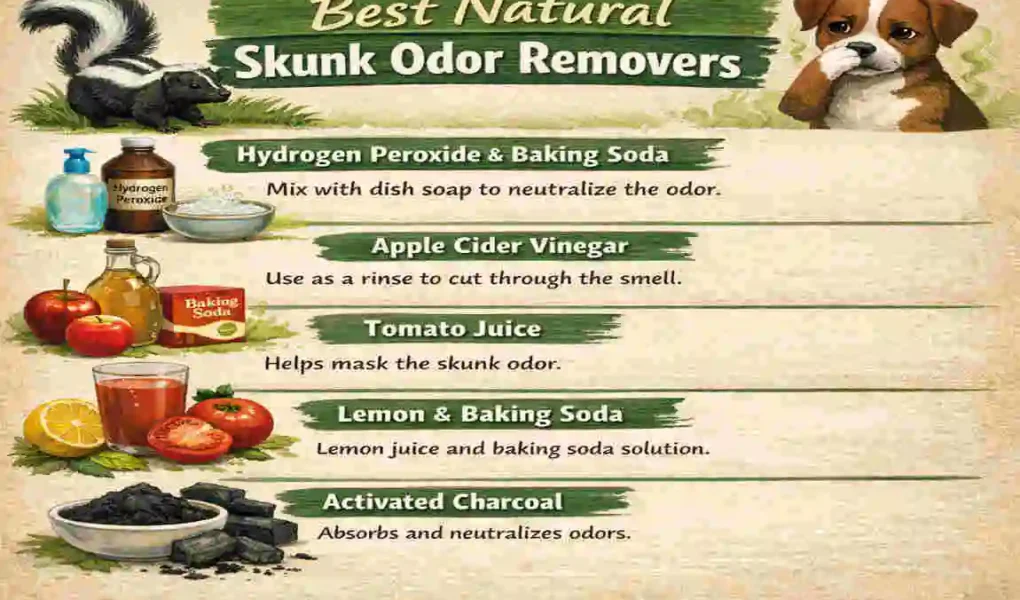
Woke up to that unmistakable skunk stink on your pet, your porch, or even inside your home? If so, you already know how overwhelming it can be. Skunk odor is not just unpleasant. It is strong, stubborn, and often seems to spread everywhere at once.
The reason skunk smell is so hard to handle is simple: the spray contains sulfur-based compounds that cling to fur, skin, fabric, carpet, and furniture. These compounds are oily, which means plain soap and water usually are not enough. Even when the smell fades for a little while, it can come back when the air gets warm or damp. That is why many people search for the best natural skunk smell remover instead of reaching for harsh cleaners right away.
A natural skunk odor remover is a product or homemade remedy that helps break down or absorb skunk odor without using heavy synthetic chemicals. In simple terms, it is a safer, gentler way to deal with the smell. Natural options often use ingredients like baking soda, vinegar, Hydrogen’s peroxide, enzymes, plant-based deodorizing agents, or mineral powders. Many people choose them because they are easier on pets, children, and sensitive noses.
| Product / Method | Type | Main Benefits | Best For |
|---|---|---|---|
| DIY hydrogen peroxide‑baking‑soda‑soap mix | Homemade liquid remover | Breaks down skunk thiols chemically; inexpensive and highly effective. | Pets, clothing, some hard surfaces. |
| Vinegar & baking soda | Household deodorizers | Neutralizes indoor skunk smell; safe, non‑toxic, and eco‑friendly. | Rooms, carpets, fabrics, and air. |
| Enzyme‑based skunk sprays (e.g., Nature’s Miracle–style) | Commercial bio‑enzymatic spray | Digests skunk oils instead of masking them; fresh citrus scent. | Fabrics, carpets, cars, and pet‑safe surfaces. |
| Natural probiotic skunk odor eliminators (pet‑focused) | All‑natural liquid spray | Uses probiotics to break down odor‑causing bacteria without harsh chemicals. | Pets and light‑contaminated surfaces. |
| Activated charcoal / mineral odor‑capture materials | Natural odor‑absorbing solids | Passively soaks up lingering skunk vapors; chemical‑free. | Rooms, garages, pet beds, storage areas. |
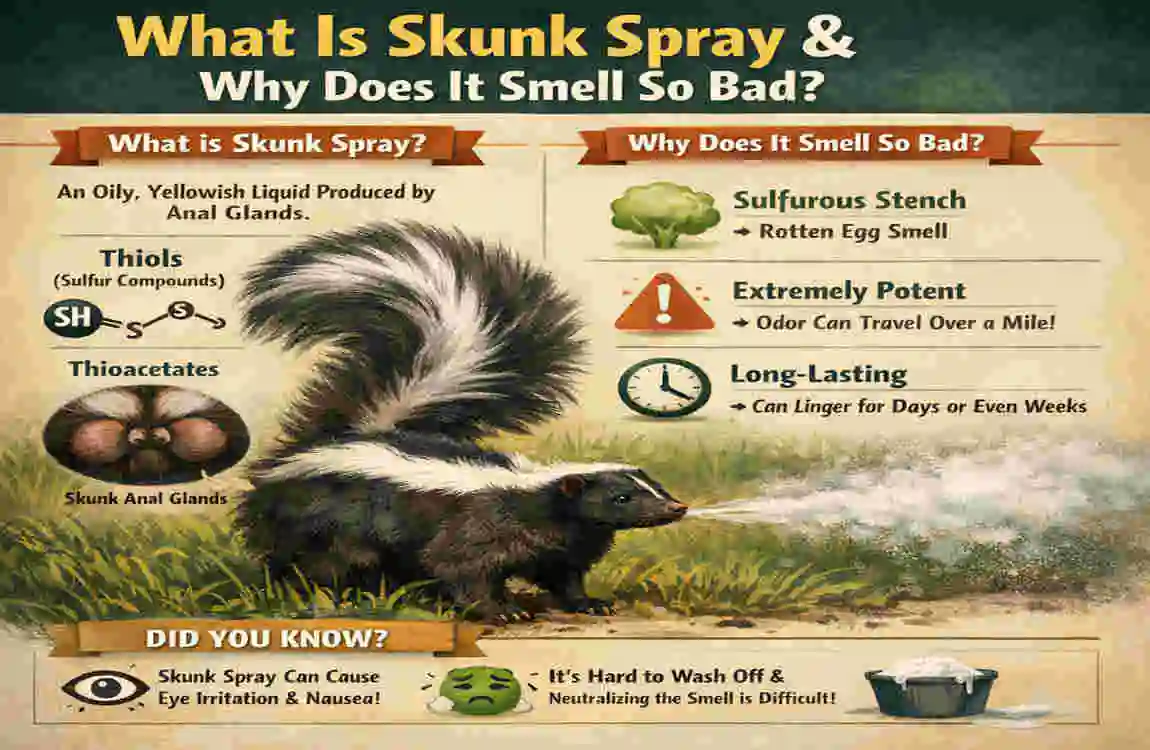
What Is Skunk Spray and Why Does It Smell So Bad?
The science behind the smell
Skunks do not spray by accident. They release the spray from glands near their tail as a defense mechanism when they feel threatened. The liquid they spray contains thiols and thioacetates, which are sulfur-rich compounds. These are the real reasons the smell is so powerful.
Sulfur smells are naturally sharp and unpleasant. Think of the smell of rotten eggs, but stronger and more persistent. Skunk spray is not just bad because it smells strong. It is bad because it sticks. The oily compounds cling to fur, skin, clothes, carpets, and even the air around them.
What makes it even trickier is that some of the smells can get stronger over time. Heat, moisture, and airflow can reactivate odor molecules that remain. That means a room clean might seem fine for a while and then suddenly smell again later in the day.
Why regular cleaning often fails
A quick wipe with soap or a simple wash cycle usually does not solve the problem. Skunk spray can soak into porous materials like:
- Pet fur
- Upholstery
- Carpet fibers
- Blankets and bedding
- Wood trim and soft furniture
- Air vents and enclosed spaces
That is why many people feel frustrated after their first cleaning attempt. The smell is not always on the surface. It can settle deeper into the material.
Regular cleaners may remove dirt, but they do not always break apart the odor molecules. Some cleaners only cover the smell for a short time. Once the masking scent fades, the skunk odor comes back.
Why a natural approach matters
Many people look for a natural skunk odor remover because they want something safer. That matters especially when:
- You have pets that may lick their fur after treatment
- You have children in the house
- Someone in the home has allergies or chemical sensitivity
- You want to avoid harsh fumes in a closed room or car
Natural solutions are often easier to use and less irritating. They can still be strong enough to work, but they usually do the job without adding a second wave of chemical smell.
What Is a Natural Skunk Odor Remover?
Simple definition
A natural skunk odor remover is any non-toxic or lower-toxicity product that helps remove skunk odor by breaking it down, neutralizing it, or absorbing it. Instead of relying on heavy artificial fragrances or harsh solvents, these removers use ingredients that are more familiar and safer for everyday use.
Common natural ingredients include:
- Baking soda
- White vinegar
- Hydrogen’s peroxide
- Mild liquid soap
- Enzymes
- Plant-based deodorizing agents
- Mineral-based odor absorbers
- Charcoal-based materials
These ingredients work in different ways. Some help loosen the oily residue. Some neutralize odor particles. Others absorb smell from the air or fabric.
Main types of natural skunk odor removers
There are three main kinds of natural solutions you will see most often.
1. DIY household mixes
These are homemade formulas you can mix with basic pantry items. The most famous one uses Hydrogen’s peroxide, baking soda, and dish soap. Many pet owners use this because it is affordable and works fast.
2. Enzyme-based sprays
Enzyme sprays are made to break down the odor-causing molecules rather than cover them. They are popular for carpets, furniture, cars, and pet messes. Many of these products have a light or very mild scent, but their main strength comes from the enzymes.
3. Mineral or plant-based odor absorbers
These products are often powders, pouches, or containers designed to trap and neutralize airborne odors. They are often used in rooms, garages, storage areas, pet areas, and other places where smells tendsmells tend to linger.
Why do people choose natural options
Natural skunk odor removers are popular because they are:
- Safer for pets and children
- More eco-friendly
- Less irritating to the nose and skin
- Easy to buy or make at home
- Useful for both immediate cleanup and long-term odor control
That does not mean every natural product works the same way. Some are better for fur, some for carpet, and some for the air. The key is knowing which one to use and when.
Top DIY Natural Skunk Odor Removers
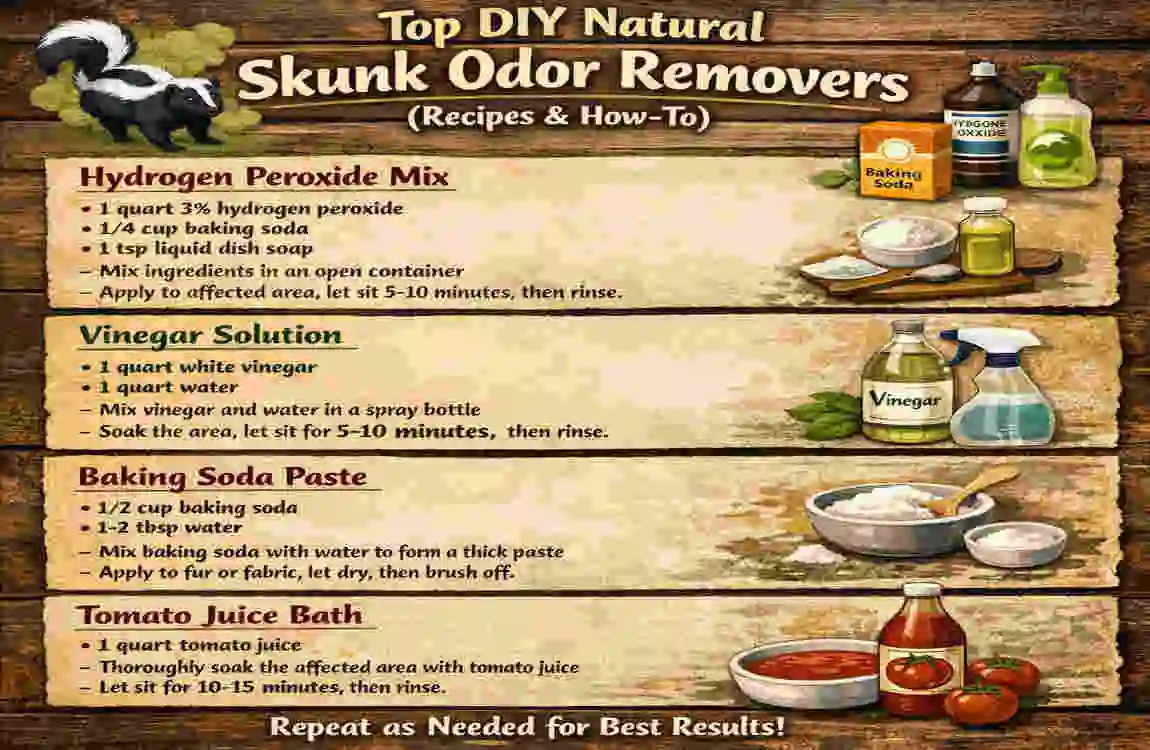
The classic peroxide, baking soda, and soap formula
This is the most well-known homemade natural skunk odor remover for pets. It works because each ingredient has a purpose.
- Hydrogen’s peroxide helps break down odor compounds
- Baking soda helps neutralize smells
- Dish soap helps lift oily residue from fur and skin
Ingredients
Use:
- 1 quart of 3% Hydrogen’s’s peroxide
- 1/4 cup baking soda
- 1 to 2 teaspoons liquid dish soap
How to use it on pets
Mix the ingredients in an open container. The mixture may fizz a little, which is normal. Apply it carefully to your pet’s fur, avoiding the eyes, nose, mouth, and any irritated skin. Gently massage it into the coat. Let it sit for about 5 minutes, then rinse thoroughly.
If the smell is still strong, you can repeat the process once more with a fresh batch. Do not save leftover mix for later. The mixture can build pressure in a sealed container.
Why does it work so well
The oily skunk spray clings to fur, and this formula helps lift and break it down. Many people notice a big difference after just one treatment. That is one reason it is often called the best natural skunk smell remover for pets.
Safety tips
Keep these points in mind:
- Do not use it near the eyes or mouth
- Do not use it on open wounds
- Do not store the mixture in a closed bottle
- Use fresh ingredients each time
- Rinse well so residue does not stay on the coat
This formula is effective, but it needs careful handling.
Vinegar and baking soda for indoor odor
If the smell has spread into a room, car, or fabric, a vinegar-based approach can help. Vinegar does not magically erase skunk odor on its own, but it can help neutralize the smell in the air and on some surfaces.
Best uses
This method works well for:
- Carpets
- Upholstery
- Curtains
- Fabric furniture
- Rooms with lingering odor
Simple ways to use it
You can place bowls of white vinegar in the affected area to help absorb some of the smell. You can also use vinegar in laundry or make a light treatment for surfaces that can handle moisture.
Baking soda can also be sprinkled on carpet or upholstery, left for a few hours, and then vacuumed up. It helps pull odor from the fabric.
Why do people like this method
It is simple, inexpensive, and already available in many homes. It is also a good choice when you want to avoid strong artificial sprays.
A small caution
Do not expect vinegar alone to solve a heavy skunk problem. It often works best as part of a larger cleanup plan that includes washing, airing out the space, and using another odor remover as needed.
Lavender-infused skunk-smell spray for pets
Some people like to add a few drops of lavender essential oil to a skunk-removal formula. This can give the final rinse a softer scent while the cleaning ingredients do the real work.
Why it helps
Lavender does not remove skunk odor on its own. The main job still belongs to the peroxide, baking soda, and soap mixture. But lavender can make the experience feel less harsh and may leave behind a pleasant, calming smell.
Important caution with essential oils
Use essential oils carefully. Pets can be sensitive to strong plant oils, especially cats. If you choose to use lavender, use only a very small amount and avoid overdoing it. When in doubt, skip the oil and keep the formula plain.
Other folk remedies to avoid
A lot of old home remedies get passed around after a skunk encounter. Some of them sound useful, but they usually do not help much.
Common examples include:
- Tomato juice
- WD-40
- Strong perfume
- Cologne
- Scented body spray
These may mask the smell for a short time, but they do not break down the skunk odor molecules. In some cases, they create a strange mix of bad smells. That can make the problem feel even worse.
Best Commercial Natural Skunk Odor Removers in 2026
Why commercial products are worth considering
DIY solutions are great, but they are not the only answer. In some cases, a commercial product is easier, faster, and more consistent. This is especially true if you are dealing with:
- A large area
- A car interior
- Thick carpeting
- Heavy pet odor
- A repeated skunk issue
Commercial natural products are often designed to do a specific job well. Some are made for pets. Others are designed for furniture or rooms.
Enzyme-based sprays
Enzyme sprays are one of the most useful commercial options. They contain biological ingredients that help break down odor molecules rather than covering them up.
How they work
Enzymes act like tiny workers. They target the skunk residue and help split it apart so the smell becomes much weaker or disappears.
Best uses
These sprays are useful for:
- Pet fur
- Car seats
- Rugs
- Fabric furniture
- Clothing
- Corners and hard-to-reach spots
Why do people like them
They are easy to spray and spread, and usually leave only a light scent. That makes them a good choice if you want something convenient and natural-feeling without having to mix a homemade recipe every time.
Mineral and powder-based odor absorbers
Another strong category is mineral-based or charcoal-style deodorizing products. These are often used when the smell is in the room itself rather than on a pet.
How they work
These products are built to absorb odor from the air and trap it in their material structure. Instead of spraying fragrance into the room, they quietly pull the smell out of the space.
Best uses
They are helpful for:
- Garages
- Basements
- Pet sleeping areas
- Storage rooms
- Mudrooms
- Cars parked in closed spaces
Why are they appealing
These options are usually fragrance-free or nearly fragrance-free. That makes them a good choice for people who are sensitive to strong smells.
Quick comparison table
Product / MethodTypeBest ForNatural ProsLimitations
Peroxide, baking soda, and soap DIY liquid remover Pets, clothing, some hard surfaces Fast, low-cost, effective Not for eyes or open wounds; should be made fresh
Vinegar and baking soda: Household deodorizer. Rooms, carpets, fabrics. Safe, simple, inexpensive. May need repeated use
Lavender-infused DIY spray DIY pet spray Light pet odor, mild over-spray Pleasant scent, simple to use Not strong enough for heavy skunk spray
Enzyme spray Commercial bio-based remover Carpets, cars, furniture Breaks odor down at the source Can be more expensive
Mineral odor absorber Powder or air absorber. Rooms, garages, storage spaces. Fragrance-free, passive odor control. Works more slowly
Step-by-Step Guide: How to Use Natural Skunk Odor Removers Safely
For pets
If your dog, cat, rabbit, or another pet gets sprayed, your first job is to stay calm. Pets often panic, and that can spread the odor more quickly.
What to do first
- Keep your pet outside if possible
- Try to stop them from rubbing their face on furniture or carpet
- Avoid touching their eyes, nose, or mouth
- Put on old clothes if you are going to handle them
How to bathe them
Use a fresh batch of the peroxide, baking soda, and soap formula. Apply it carefully to the fur, especially where the spray hit hardest. Massage it into the coat, then let it sit for about 5 minutes. Then rinse very well.
You may need to repeat the process if the odor persists. Long-haired pets often need a more careful rinse because the smell can hide in dense fur.
After the bath
Once the pet is clean:
- Towel-dry them well
- Use a blow dryer on low or cool if your pet tolerates it
- Check under the collar, around the tail, and under the chest
- Keep them away from furniture until they are fully dry
A clean pet that still smells faintly can often smell worse after getting warm again. So it helps to check carefully before letting them back inside.
For your home and car interiors
Skunk odor in a house or car can feel overwhelming, but it can be handled step by step.
Start with ventilation
Open windows if the weather allows. Run fans. Let fresh air move through the area. This will not remove the smell on its own, but it helps lower the odor level and gives your cleaning products a better chance to work.
Treat the source first.
If the odor came from a pet, clean the pet first. If it came from a porch, yard, or car seat, treat that area right away. The longer the smell sits, the deeper it can settle.
Use the right product.
- For carpets and upholstery, use an enzyme spray
- For air and room smell, use vinegar bowls or odor-absorbing powder
- For fabric surfaces, use baking soda before vacuuming
Be patient
A strong skunk smell may not disappear in one pass. Sometimes you need to clean house, air out, and repeat the process the next day.
For clothing, towels, and bedding
Skunk odor on fabric is frustrating because it spreads easily in the wash if it’s handled incorrectly.
Best approach
Wash the items with your regular detergent plus one of these:
- Baking soda
- Vinegar in the rinse cycle
- An enzyme laundry booster, if available
Important drying tip
Do not use high heat until the smell is gone. Heat can reactivate leftover odor oils and make the smell more noticeable again. Air-dry first if possible, then check the fabric before using the dryer.
What NOT to Do When Removing Skunk Smell Naturally
Common mistakes that make the problem worse
When people panic, they often resort to quick fixes that don’t help. Some of these methods are very popular but not very effective.
Avoid these mistakes
- Do not use tomato juice as your main treatment
- Do not spray heavy perfume or cologne over the odor
- Do not store peroxide mixtures in sealed containers
- Do not use the formula on open cuts or wounds
- Do not dry fabric with high heat before the odor is gone
- Do not rely on a single method for a heavy skunk problem
The biggest issue with many of these mistakes is that they mask the odor rather than remove it. A temporary scent swap does not solve the real problem.
Why mixing products carelessly is risky.
Some people try to combine multiple cleaning ingredients at once. That can backfire. For example, peroxide and vinegar should not be mixed for skunk cleanup. It is safer to use them separately and follow each product’s purpose.
Why patience matters
Skunk odor cleanup is often a process, not a one-step fix. The best results usually come from combining:
- Cleaning the source
- Ventilating the area
- Using the right remover
- Repeating if needed
- Preventing future exposure
That approach gives you a much better chance of fully eliminating the smell.
When to Call a Professional or Visit the Vet
When your pet needs medical care
If the skunk spray got into your pet’s eyes, mouth, or nose, or if your pet seems unusually upset, contact a vet. The spray can irritate, and in some cases, eye exposure may need prompt care.
Also, call a vet if your pet:
- Keeps rubbing their eyes
- Has redness or swelling
- Seems painful
- Has trouble opening the eyes
- Has sprayed in an open wound
Pets cannot tell you how bad the irritation feels, so it is better to be cautious.
When home treatment is not enough
If you have cleaned several times and the smell persists, it may be time to call a professional odor-removal service. This is especially true for:
- Large homes
- Cars with a deep odor
- Upholstered furniture with heavy contamination
- Basements or crawl spaces
- Places where skunks may have nested
Professional teams may have stronger equipment and more comprehensive treatment methods for stubborn smells.
When skunks keep coming back
If skunks are repeatedly visiting your yard, the odor problem will keep recurring unless you address the source. In that case, consider a wildlife control expert or humane exclusion service. They can help you figure out why skunks are coming near your home and how to stop them safely.
Preventing Future Skunk Encounters and Odors
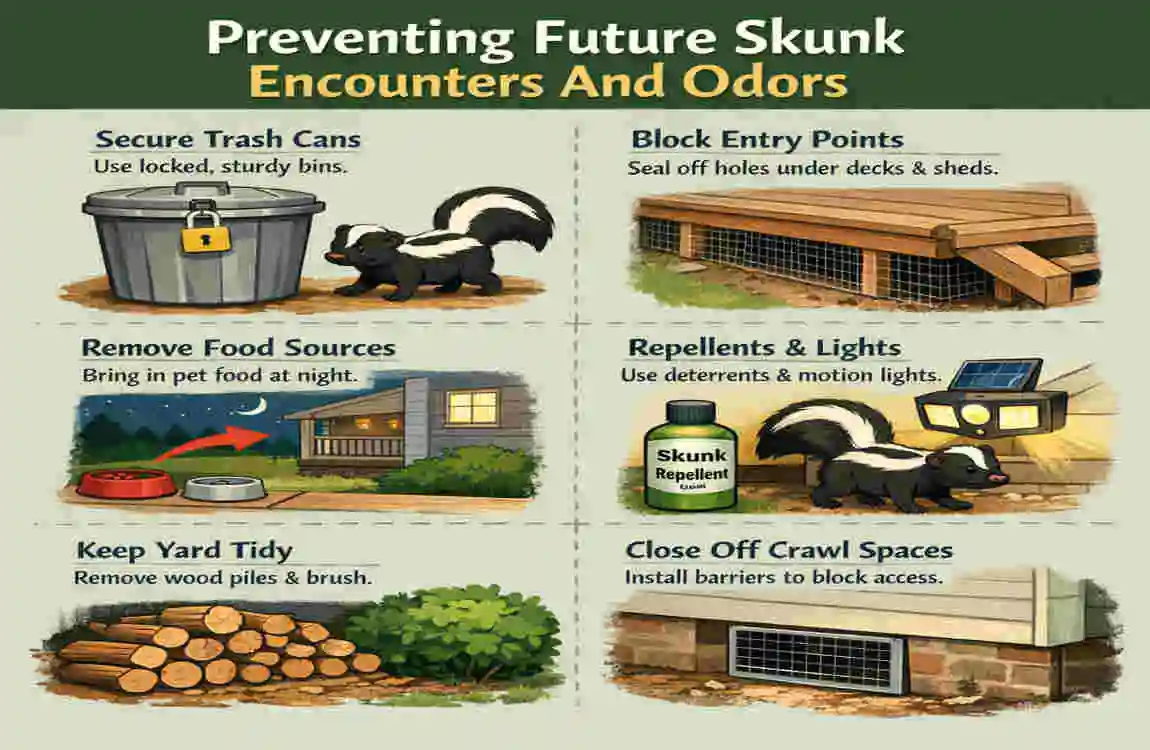
Make your yard less attractive to skunks.
Prevention is just as important as cleanup. If you reduce the chance of another encounter, you will save yourself a lot of stress later.
Helpful yard habits
- Keep trash cans tightly closed
- Do not leave pet food outside overnight
- Pick up fallen fruit from trees
- Seal gaps under porches and sheds
- Close openings around crawl spaces
- Keep wood piles neat and away from the house
Skunks are drawn to food, shelter, and quiet hiding places. If your yard offers those things, they are more likely to visit.
Protect your pets
Pets are often the first to trigger a skunk encounter because they chase, sniff, or bark at nighttime wildlife.
Simple pet-safety steps
- Keep dogs on a leash in skunk-prone areas
- Bring pets inside at night
- Use motion lights in dark yard areas
- Be careful around bushes, fences, and decks where skunks may hide
The goal is not to unnecessarily scare wildlife. The goal is to make your space less inviting so your pet does not end up too close to a skunk in the first place.
Natural deterrents that may help
You may also use gentle deterrents around the yard, such as:
- Motion-activated lights
- Sprinklers
- Certain strong herbs or scents
- Noise or movement-based deterrents
These methods do not harm skunks, but they can make your property less appealing to them. That is a smart long-term strategy if skunks are a recurring problem.
FAQs About Natural Skunk Odor Removers
Is Hydrogen peroxide safe for pets?
Yes, 3% Hydrogen’s’s’s’s’s Peroxide is commonly used in the classic skunk-removal formula for pets when used correctly and rinsed thoroughly. The key is to avoid the eyes, mouth, open wounds, and irritated skin. It should always be used carefully and only in the proper dilution.
Can I use this on my baby or toddler?
Some people use gentle odor-removal methods on children’s clothing, hair, or skin, but you should be extra careful. Avoid the eyes, test on a small area first, and do not use anything harsh on delicate skin. If the smell is on a child’s skin, a pediatrician can help guide you if needed.
How long does skunk smell last after treatment?
With the right treatment, most of the smell can fade within hours. However, light traces may linger for one to two days, especially if the weather is warm or humid. Deeply soaked fabric or pet fur may take longer to dry.
Are there fragrance-free options?
Yes. Enzyme sprays and mineral deodorizing powders are often fragrance-free or only lightly scented. These are good choices if you do not want to replace one strong smell with another.
Can I combine vinegar and the peroxide mix?
No, it is not recommended to mix vinegar and Hydrogen’s’s’s’s’s’s’s’s’s’s peroxide for skunk cleanup. They should be used separately. The safest approach is to choose the right method for each surface rather than blending everything into a single solution.