You have just wrapped up a major home renovation project. Maybe you finally laid down those beautiful patio pavers or fixed up a brick wall. The dust has settled, the tools are packed away, but there is one thing left behind—a heap of leftover builders sand sitting in the corner of your yard.
As you look at that pile, and then glance over at your garden beds that are struggling with drainage or heavy clay soil, a lightbulb goes on. You think, “Wait a minute. Sand improves drainage, right? Can I just shovel this leftover heap into my veggie patch and save a trip to the garden center?”
While it seems like a simple swap, dumping raw construction materials into your delicate ecosystem can sometimes do more harm than good if you aren’t careful. Builders sand is coarser, “sharper,” and chemically different from the bagged horticultural sand you see at nurseries.
What Is Builders Sand?
To understand how this material interacts with your soil, we first need to understand what it actually is. Not all sand is created equal. If you were to look at beach sand, play sand, and builders sand under a microscope, you would see three totally different worlds.
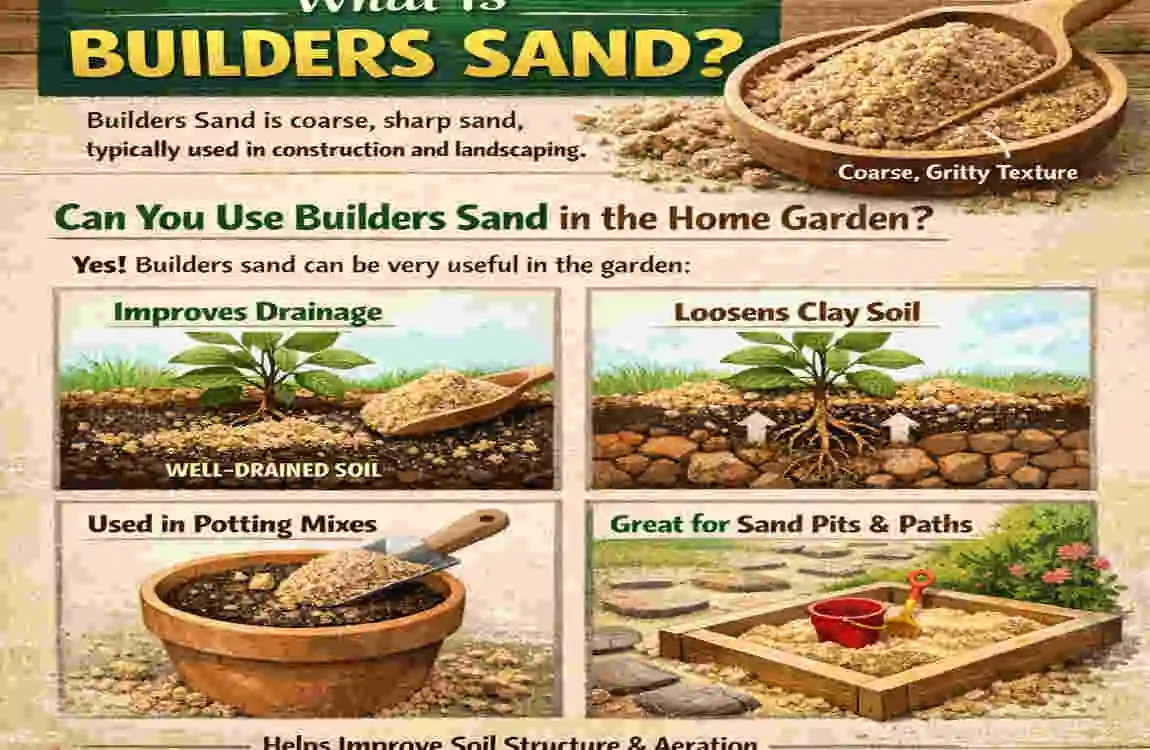
Builders sand (often called sharp sand, washed sand, or concrete sand) is a construction-grade material. It is typically sourced from crushed rock or quarries specifically for making mortar, concrete, and plaster.
The Gritty Details
The defining characteristic of builders sand is its shape. Unlike desert or beach sand, which has been tumbled by wind and water into round, smooth grains, builder’s sand is angular and sharp. The grains are jagged.
This is intentional. In construction, you want grains that lock together like puzzle pieces to create a strong, stable structure (like concrete). The grain size usually varies between 0.5mm to 2mm, making it significantly coarser than the fine sand you might see in a children’s sandbox.
Builders Sand vs. Garden Sand
Garden sand (often labeled as horticultural sand or river sand) acts differently. While it also provides drainage, it is often screened for pH and salt levels.
Here is a quick snapshot of the differences:
Feature Builders Sand Horticultural/Garden Sand
Grain Shape Angular, sharp, jagged Rounded or sub-angular
Origin Crushed rock/Quarry Riverbeds or mined deposits
Primary Use Concrete, mortar, paving base Seed starting, potting mixes, lawn leveling
Cost Low (Bulk availability) High (Specialized product)
Risk High (Salts/Chemicals) Low (Sterilized/Washed)
Why Is It So Tempting?
The appeal is obvious. Builders sand is incredibly cheap and readily available. If you have just built a house or a wall, you likely have it for free. Even if you buy it new, a bulk bag of builders’ sand costs a fraction of the price of a small bag of horticultural silver sand.
Quick Fact Box:
- Composition: High silica content, very low organic matter.
- pH Level: Generally neutral (6.5–7.5), though this depends heavily on the quarry source.
- Texture: Gritty to the touch; does not hold shape when wet unless mixed with a binder (like cement or clay).
Understanding these physical properties is key to understanding why it behaves the way it does when mixed with soil.
Can You Use Builders Sand in the Home Garden? Key Considerations
So, let’s tackle the big question head-on: Can you use builders sand in the home garden safely?
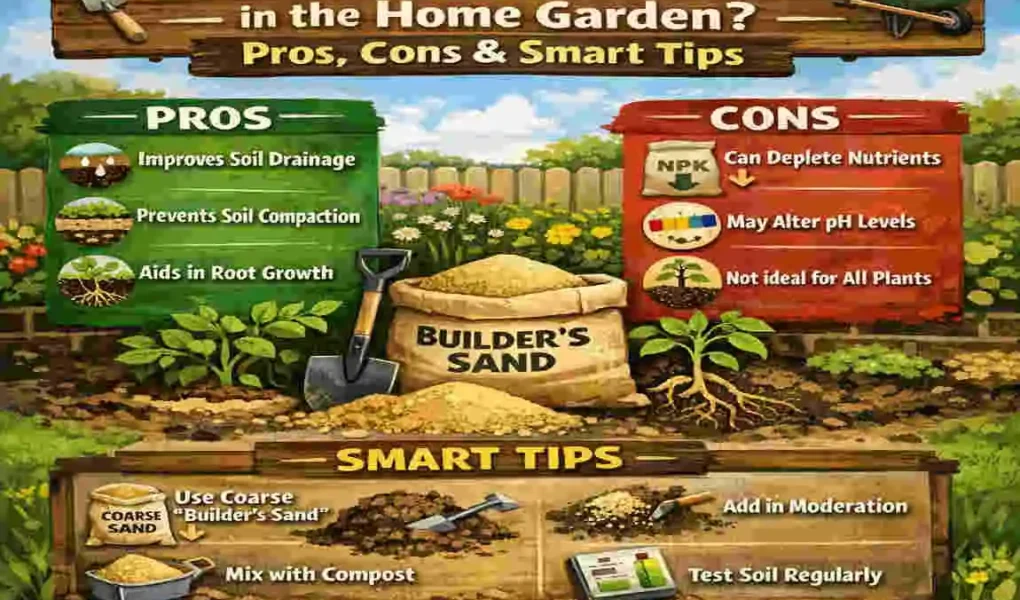
You can, provided the sand is clean, washed, and used sparingly (generally at a 20% mix ratio or less).
However, simply dumping it on top of your soil isn’t enough. You need to understand a bit of soil science to avoid a gardening disaster.
The “Concrete” Risk with Clay Soil
There is a common myth that adding sand to clay soil automatically fixes drainage. This is one of the most dangerous misconceptions in gardening.
Think about how concrete is made. You take cement (essentially a very fine, calcined clay-like powder), water, and… sand.
If you have heavy clay soil and you add a small amount of builders sand, the tiny clay particles pack into the spaces between the large sand grains. When this dries, it can turn your garden bed into a substance nearly as hard as concrete. To actually improve the structure of heavy clay with sand alone, you would need to replace nearly 50% of the soil volume with sand, which is impractical for most home gardeners.
Regional Soil Differences
Your location matters. If you are gardening in an area with naturally loamy or silty soil (like the fertile plains of Lahore, South Asia, or the Midwest US), a little builders sand can add excellent structure without the risk of concrete.
However, if you are in a region with heavy sticky clay (like parts of the UK or the US South), you need to be much more careful. In these cases, sand should always be accompanied by organic matter, such as compost.
The Contamination Check
Construction sand isn’t washed to “food grade” standards. It might contain:
- Salts: If dredged from marine environments, the salt content can kill plant roots immediately.
- Lime: This can spike your soil pH, making it too alkaline for many plants.
- Silt/Clay coating: Unwashed sand can actually add more fine particles that clog drainage.
Pro Tip: The Jar Test Before you toss that sand into your prize petunia bed, do a purity test.
- Fill a clear glass jar halfway with the builders sand.
- Fill the rest with water and a drop of dish soap.
- Shake it violently for a minute.
- Let it sit for 24 hours.
If the water remains cloudy and murky for a long time, the sand has a lot of silt or clay dust—avoid using it. If the water clears up quickly and the sand settles heavily at the bottom, it is likely clean enough (structurally) for garden use.
Pros of Using Builders Sand in the Home Garden
If you navigate the risks, there are genuine benefits to using builders sand. It isn’t just a “cheap fix”; in some contexts, it is actually the superior choice.
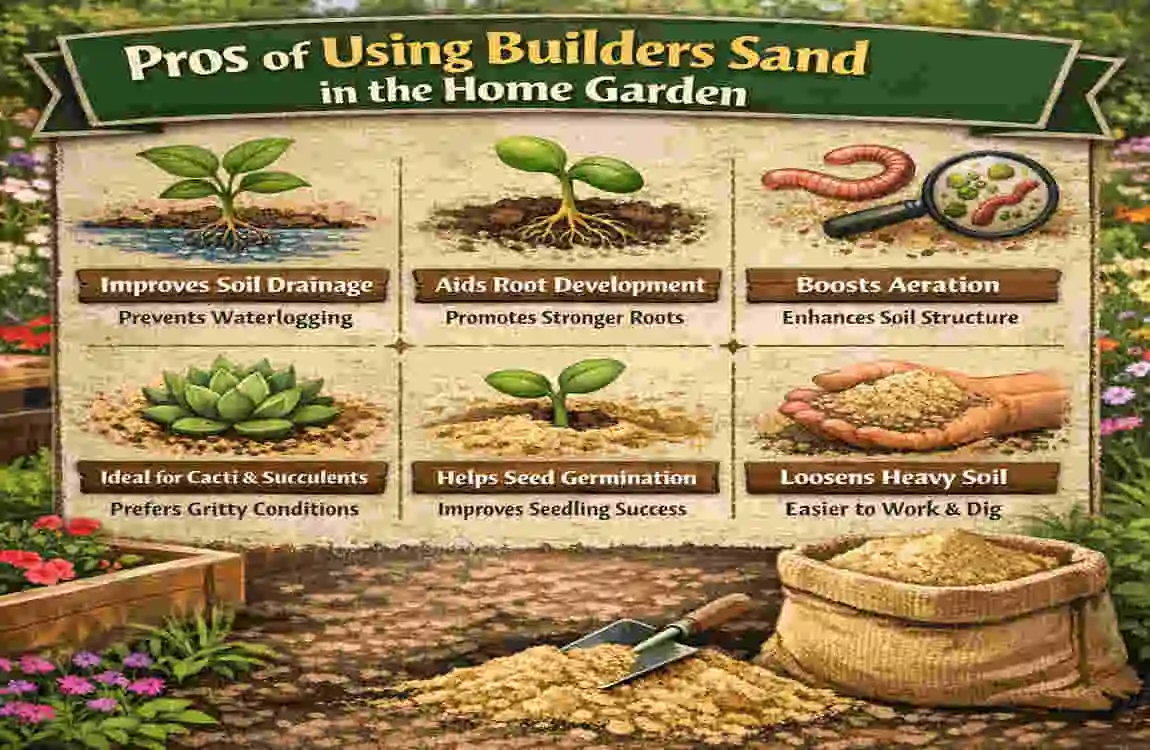
Superior Drainage Capabilities
The number one reason gardeners reach for sand is water management. Builders sand is coarse. Those large, angular grains create “macropores” (large air pockets) in the soil.
When incorporated correctly into potting mixes or raised beds, these pockets allow water to rush through freely. This is critical for plants that hate “wet feet,” such as lavender, rosemary, and most succulents. A study of soil mechanics shows that increasing coarse particle content can improve water infiltration rates by 30-50%, preventing the dreaded root rot that kills so many plants in winter.
Cost-Effectiveness
Let’s be real about the budget. Gardening can get expensive. Horticultural grit or sand can cost three to four times as much as builders sand by weight. If you are filling a large raised bed or trying to level a bumpy lawn, the savings are massive. Using what you already have on hand (leftover renovation materials) is the ultimate eco-friendly, wallet-friendly move.
Weed Suppression and Paths
You don’t just have to put the sand in the soil; you can put it on the soil. Builders sand packs down well because of those jagged edges. This makes it an excellent base for garden paths. A thick layer of compacted builders’ sand creates a hostile environment for weeds. They struggle to root in the nutrient-poor, shifting surface. It serves as a great sublayer before you lay decorative gravel or stepping stones.
Soil Aeration
Roots need oxygen just as much as they need water. Compacted soil suffocates roots. The sharp edges of builders sand help physically break up soil structure (when combined with compost), keeping the earth loose and friable. This allows roots to penetrate deeper and access nutrients they couldn’t reach before.
Case Study: The Carrot Bed Transformation
Imagine a gardener named Sarah. She tried to grow carrots in her native, heavy soil. Year after year, the carrots came out stunted, forked, and twisted because they couldn’t push through the dense earth.
One season, she decided to create a dedicated raised bed. She used a mix of 50% compost, 30% topsoil, and 20% washed builders sand. The result? Her carrots grew straight, long, and thick. The sand provided the loose texture required for root vegetables to expand without resistance.
Cons and Risks of Builders Sand in Gardens
We have covered the good; now we must look at the ugly. Using construction materials in a biological setting comes with inherent risks.
Poor Nutrient Retention
Sand is chemically inert. It has a “Low Cation Exchange Capacity” (CEC). In plain English? It cannot hold onto plant food. Clay and organic matter are like magnets for fertilizer; they hold onto nutrients until the plant needs them. Sand is like a sieve. When you water sandy soil, the nutrients wash right through (leaching) before the plant can grab them. If you use too much sand, you will find yourself fertilizing constantly with little result.
Compaction Over Time
Wait, didn’t we say it helps aeration? It does, initially. However, because builders sand grains are angular, they can lock together over time, especially under foot traffic. While round grains roll over each other (staying loose), sharp grains interlock. This is great for a patio base but not for a garden bed you walk on.
Potential Contaminants
We touched on this, but it bears repeating. Builders sand is not regulated for garden safety.
- High Salinity: If the sand was sourced from a seaside quarry and not properly washed, salt levels can scorch plant tissues, causing “burn” marks on leaves and stunted growth.
- High Alkalinity: Some builders sand contains limestone dust. If you are trying to grow acid-loving plants like Blueberries, Azaleas, or Rhododendrons, builders sand can raise the pH and kill them.
Not Ideal for All Plants
While succulents love it, moisture-loving plants like ferns or hostas might hate it. They rely on consistent soil moisture, which sand actively reduces.
Risk Mitigation Table:
Risk Impact on Garden How to Mitigate
High Salinity Brown leaf tips, stunted growth, plant death. Rinse thoroughly. Soak sand in a bucket and drain 3 times.
Alkalinity (High pH) Yellowing leaves (chlorosis) in acid-loving plants. Test soil first. Use a simple pH kit. Avoid use with blueberries/azaleas.
Compaction Hardpan soil, water pooling on surface. Add organic matter. Never add sand alone; always mix with compost.
Nutrient Loss Pale plants, poor flowering. Slow-release fertilizer. Use organic feeds that break down slowly.
Smart Tips for Using Builders Sand Safely and Effectively
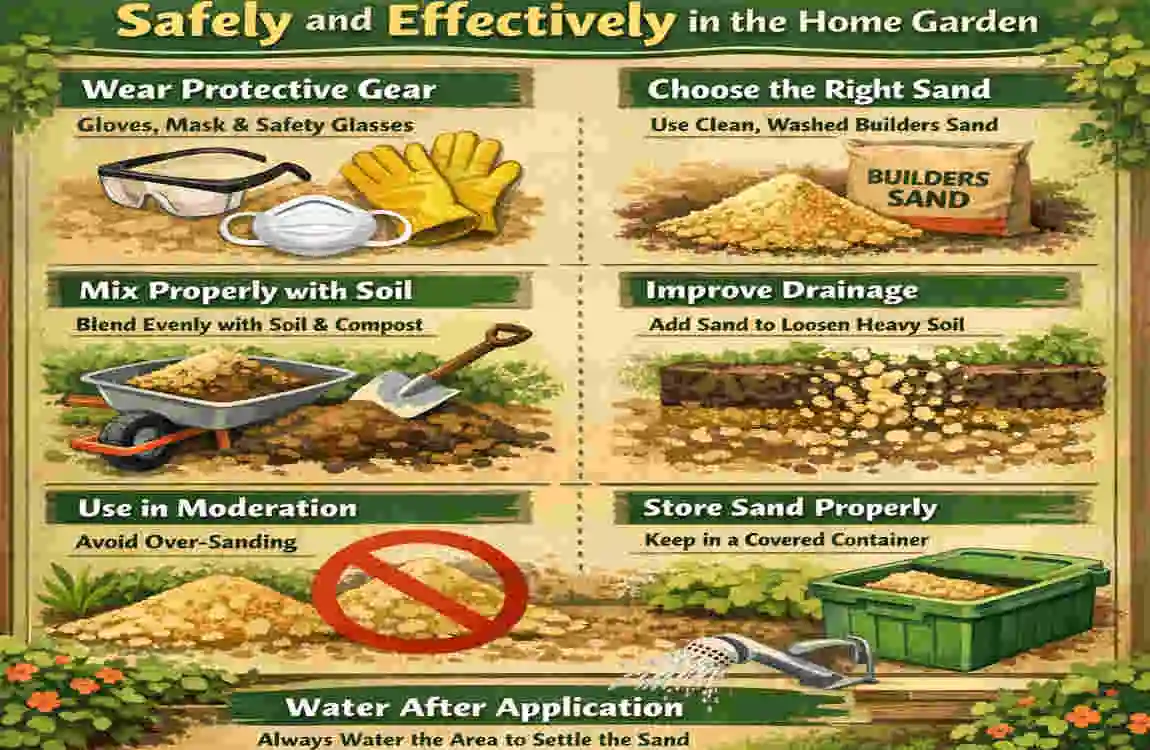
Okay, you have decided to go ahead. You have the sand, you have the garden. How do you do this without ruining your soil? Follow this step-by-step guide.
Preparation Steps: Cleanliness is Key
Source Clean Sand If you are buying it, ask for “washed” sharp sand. If you are using leftovers, ensure the pile hasn’t been contaminated by other construction runoff, such as paint thinner, oil, or cement dust.
The Triple Rinse This is the most important step. Even if the bag says washed, wash it again.
- Put the sand in a wheelbarrow or large bucket.
- Fill it with water and stir it around with a shovel or stick.
- Let the sand settle for a few seconds, then pour off the cloudy water.
- Repeat this process at least three times until the water runs relatively clear. This removes excess salts and the ultra-fine silt that clogs soil pores.
The Test Patch Before amending your whole garden, mix a small batch in a pot and plant a cheap seedling (like a marigold). Monitor it for two weeks. If it thrives, you are good to go. If it turns yellow and dies, your sand might be chemically “hot.”
Best Uses in Your Home Garden
- Lawns: Builders sand is excellent for top-dressing lawns to level out dips and hollows. Mix it 50/50 with topsoil or compost.
- Veggie Beds: Use it to amend soil for root crops (carrots, parsnips, radishes). A ratio of roughly 1 part sand to 4 parts soil works well.
- Paving Base: Obviously, its intended use! But you can also use it to set flagstones in a garden path.
- Pots and Containers: Mix 20% sand into your potting mix for plants that need sharp drainage, like cacti, citrus trees, and herbs (thyme, oregano).
Mixing Ratios and Application: The Golden Formula
Do not eyeball it. Stick to a formula to ensure you maintain soil fertility.
The Ideal Soil Mix:
- 70% Existing Garden Soil
- 20% Organic Compost (leaf mold, manure, mushroom compost)
- 10% Washed Builders Sand
Step-by-Step Application:
- Till the Soil: Loosen your garden bed to a depth of 6 to 8 inches. You want the sand incorporated deep, not just sitting on top.
- Add Compost First: Spread a 2-inch layer of compost over the area. This provides the “sponge” to hold nutrients.
- Add Sand: Sprinkle the sand evenly over the compost.
- Mix Thoroughly: Use a rototiller or a garden fork to turn the soil over multiple times. The goal is a homogenous mix.
- Water and Settle: Water the bed deeply to help the soil settle before planting.
Common Mistakes to Avoid
- Overuse: Exceeding 30% sand content can cause severe drought stress in most plants.
- Skipping Compost: I cannot stress this enough—sand needs organic matter to function in a garden. Sand provides the skeleton; compost provides the muscle. Without compost, you just have dead dirt.
Alternatives to Builders Sand for Gardening
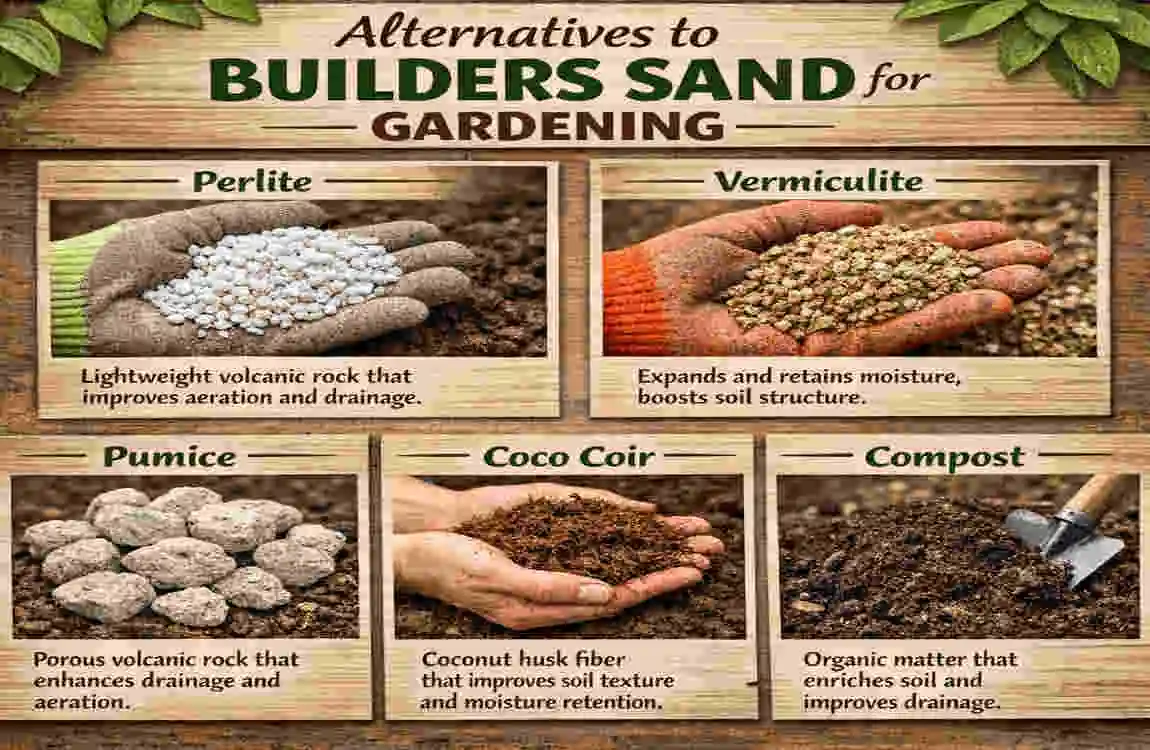
If the risks of builders sand sound too high for your prized rare flower collection, there are safer (albeit more expensive) alternatives.
Horticultural Sand (Silver Sand) This is washed, lime-free, and specifically graded for plants. It is safer for cuttings and seed starting because it is sterile.
Perlite You have seen these little white “popcorn” balls in potting soil. Perlite is volcanic glass heated until it pops. It is sterile, incredibly lightweight, and holds air pockets perfectly. It is better than sand for container gardening because it doesn’t add weight.
Horticultural Grit Larger than sand, grit is essentially tiny stones. It is excellent for mixing into compost for alpines and succulents because it never compacts.
Organic Matter (Compost) Ironically, the best way to improve drainage in clay soil often isn’t sand at all—it’s organic matter. Compost breaks up clay particles chemically and biologically. If you are on the fence about sand, just add more compost. You can never really add too much compost.
FAQ: Using Builders Sand in the Home Garden
Here are some quick answers to the most common questions we get about this topic.
Can you use builders sand in the home garden for vegetables? Yes, absolutely. Root vegetables like carrots, potatoes, and onions love the loose texture provided by sand. Just ensure it is washed to remove salts and mixed with plenty of organic compost.
Is builders sand safe for lawns? Yes, it is the standard material for “top dressing.” It helps level out uneven ground and improves surface drainage. However, avoid using it if your lawn soil is extremely heavy clay, as it can create a hard crust.
How much builders sand should I use? A good rule of thumb is never to exceed 20% of the total soil volume. For general soil amendment, aim for a mix of 1 part sand to 4 parts soil/compost.
Will builders sand change my soil pH? It might. Some builders’ sand contains limestone, which raises the pH (making the soil more alkaline). If you are growing acid-loving plants, test the sand or stick to horticultural grit.
Can I use play sand instead? Play sand is usually too fine. It tends to clump together and can actually worsen drainage issues in garden beds. Builders sand is coarser and generally better for drainage, despite the purity risks.