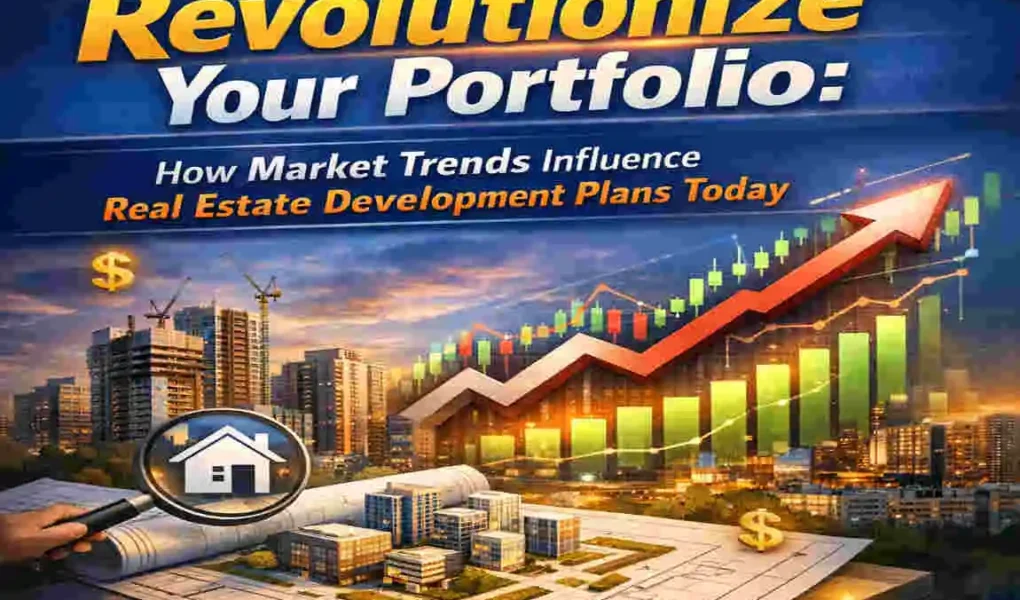
Real estate does not move in a straight line. It moves with the economy, people’s habits, new technology, and the environment around us. In recent years, markets around the world have seen sharp value shifts as developers, investors, and buyers reacted to inflation, changing work patterns, energy costs, and rising demand for smarter spaces. That is why understanding how market trends influence real estate development plans is no longer optional. It is a basic requirement for anyone who wants to protect capital and grow returns.
If you are building, buying, or planning your next project, market trends can shape almost every major decision you make. They affect where you build, what you build, how much you spend, how you finance the project, and who you target. A developer who ignores trends may launch a project that feels outdated before construction even ends. On the other hand, a developer who reads the market well can create properties that attract demand more quickly, rent at higher rates, and hold value longer.
This matters even more in fast-changing markets like Lahore and broader Pakistan, where urban growth, shifting household needs, and affordability concerns are changing the property landscape. Mixed-use communities, mid-income housing, energy-efficient buildings, and tech-enabled sales models are no longer niche ideas. They are becoming practical responses to real market pressure.
Understanding Key Market Trends Shaping Real Estate in 2026
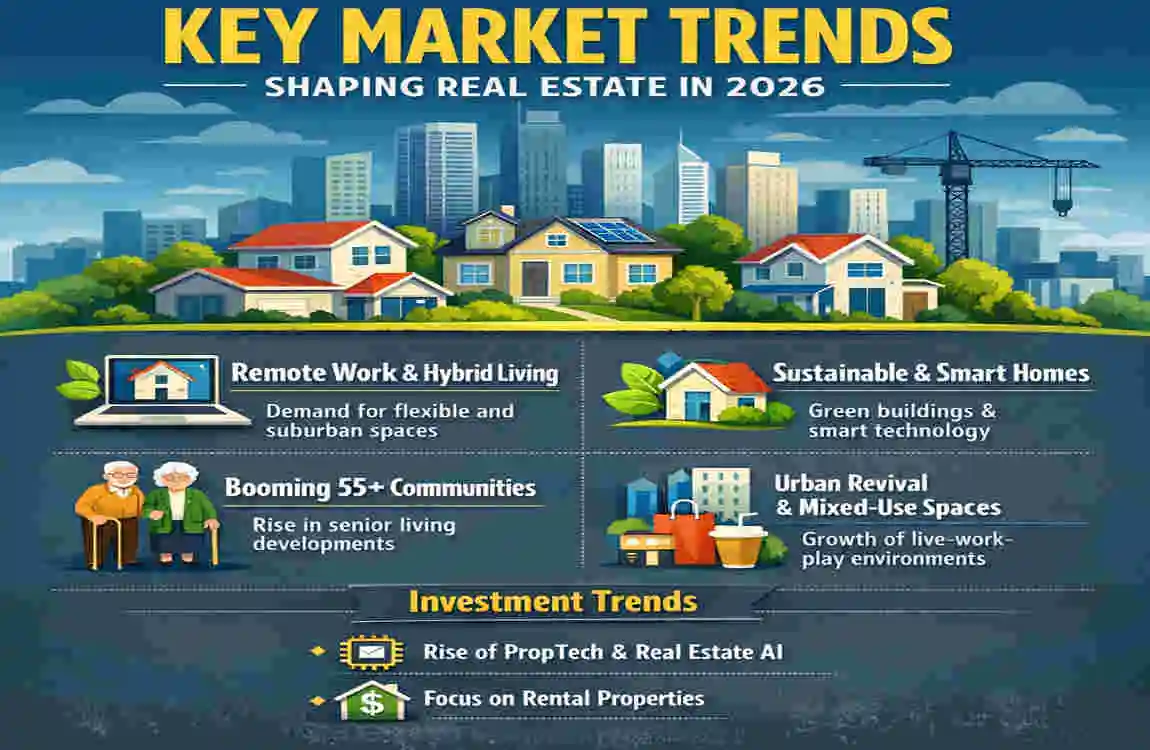
Before we go deep into strategy, it helps to define what “market trends” really mean in real estate.
A market trend is a pattern of change that affects property demand, cost, design, financing, or long-term value. These trends can come from the economy, population growth, government policy, climate pressure, or technology. Some trends move slowly over years. Others can change project plans in a matter of months.
When people ask how market trends influence real estate development plans, they are really asking this: What forces are changing the market, and how should a smart developer respond?
In 2026, several trends stand out. They are shaping land use, project types, tenant expectations, and investment decisions in both developed and emerging markets. For Pakistan, and especially Lahore, these trends are important because the city is growing fast, land values are changing, and buyers are becoming more selective.
Economic Indicators and Their Ripple Effects
Economic conditions sit at the center of most development plans. When inflation rises, construction costs increase. When interest rates go up, borrowing costs increase. When incomes grow, people may upgrade to better housing or commercial spaces. When growth slows down, demand becomes more cautious.
This is one of the clearest ways how market trends influence real estate development plans in practice. Economic indicators tell developers whether to move aggressively, stay defensive, or redesign their plans.
For example, if interest rates are high, a developer may avoid luxury towers that depend on expensive financing and slower buyer decisions. Instead, that developer may shift toward compact apartments, affordable communities, or phased projects that reduce risk. If rates start to ease, larger and more premium projects may become easier to finance and market.
In Pakistan, inflation and financing costs often strongly influence buyer behavior. People focus on installment flexibility, utility costs, and long-term affordability. That means a development plan cannot rely solely on location. It must also match what households and businesses can realistically sustain.
Economic trends also affect commercial real estate. Retail, warehouse, office, and industrial assets all react differently to shifts in spending and production. A slowdown may hurt premium retail, but it may increase demand for logistics hubs if e-commerce continues to grow.
Demographic Shifts Driving Demand
People shape real estate just as much as money does.
Demographic trends tell developers who needs space, what kind of space they want, and where they want to live or work. In many cities, younger buyers prefer convenience, connectivity, and lifestyle features over large homes in isolated areas. At the same time, older populations may seek safer, lower-maintenance properties with nearby healthcare access.
In Lahore and other urban centers in Punjab, population growth and urban migration continue to increase the need for housing, transport-linked communities, and mixed-use developments. Young professionals want shorter commutes, better internet, nearby food and retail, and secure buildings. Many of them also value shared spaces and flexible layouts.
That creates opportunities for:
- Mixed-use developments
- Mid-rise apartment communities
- Co-living or compact living concepts
- Walkable neighborhoods
- Senior-friendly housing options
Millennials and Gen-Z are especially important here. They often care more about convenience, digital access, and monthly affordability than traditional status symbols. That changes everything from parking ratios to common-area design.
Technological Disruptions
Technology has moved from being a support tool to becoming a major driver of project planning.
Developers now use data tools to study buyer behavior, compare neighborhoods, estimate risk, and even improve site selection. Sales teams use virtual tours to reach buyers before a project is physically complete. Facility managers use smart systems to reduce energy waste and improve maintenance.
This is another strong example of how market trends influence real estate development plans. When technology changes customer expectations, developers must adjust the product itself.
A modern buyer may expect:
- Smart access systems
- Digital booking or maintenance requests
- Better energy monitoring
- Virtual project walkthroughs
- Faster and more transparent documentation
In competitive markets, these features no longer feel like extras. They increasingly feel standard.
To make the 2026 trend picture easier to understand, here is a simple overview.
Market Trend What It Means Impact on Development Plans
Rising interest rates Borrowing becomes more expensive Smaller phases, affordable units, flexible payment plans
Urban population growth More people move into cities Higher demand for apartments, mixed-use projects, transport-linked communities
Sustainability pressure Buyers and investors want greener assets Solar systems, efficient materials, climate-resilient design
Proptech growth Tech improves planning, sales, and operations Smart buildings, virtual sales, data-led site selection
Hybrid work People need flexible living and work space Home office layouts, suburban mixed-use projects
Lifestyle change Wellness and convenience matter more Parks, gyms, community spaces, walkable design
These real estate market trends 2026 are not isolated. They connect. That is why the best developers do not react to just one signal. They read the whole environment.
How Economic Trends Influence Real Estate Development Plans
When developers talk about timing, they are usually talking about economics.
The impact of economic trends on property development is direct and immediate. Costs rise. Lending changes. Demand shifts. Buyers become either confident or careful. Investors chase either growth or safety. Every one of those changes affects development plans.
Interest Rates and Financing Strategies
Interest rates shape the cost of money. And in real estate, the cost of money can determine whether a project works or fails.
When rates are low, developers can borrow more cheaply. Buyers also find mortgages or payment plans easier to manage. This usually supports larger projects, premium segments, and faster launches. Luxury towers, branded residences, and big mixed-use communities often perform better in this kind of environment.
When rates rise, the opposite happens. Financing becomes expensive. End-users hesitate. Investors demand better risk control. In that setting, developers often move toward affordable housing, mid-market apartments, or phased construction.
This pattern has shown up in cities across the world. Premium high-rises thrive in easy credit cycles, while practical housing and flexible commercial formats hold up better during tighter periods.
For Lahore developers, this means financing strategy cannot remain fixed. A project designed in one rate environment may need adjustment in another. You may need smaller unit sizes, longer payment plans, or a new funding structure altogether.
A smart response includes blending capital sources. Instead of relying fully on traditional debt, some developers use private investors, joint ventures, phased presales, or income-backed structures. The goal is simple: keep your project moving even when borrowing conditions become tougher.
Supply Chain and Material Costs
Construction costs rarely stay still. Steel, cement, glass, electrical systems, imported fittings, and labor all respond to inflation, exchange rates, and supply chain delays.
This is one of the most practical examples of how economic trends impact property development. A project that looked profitable on paper can become strained when materials prices jump halfway through construction.
Post-inflation markets have made this even more visible. Delays in imported materials, shipping costs, and currency pressure have pushed many developers to rethink their procurement plans. In Pakistan, some developers have reduced risk by switching to local sourcing, simplifying design, or replacing costly imported finishes with more reliable domestic alternatives.
That does not mean quality should drop. It means planning should become smarter.
A developer who tracks material trends early can:
- Lock in prices before costs rise further
- Phase procurement in a more controlled way
- Choose designs that reduce material waste
- Prioritize locally available alternatives
- Build contingency into project budgets
These steps do more than protect margins. They also protect timelines. And in real estate, delays can hurt both reputation and revenue.
Recession-Proofing Your Plans
Every market eventually faces uncertainty. That is why the strongest portfolios include assets that can perform even when growth slows down.
Recession-proofing does not mean avoiding all risk. It means understanding which property types hold demand better during pressure. In many markets, logistics facilities, essential retail, mid-income housing, and warehousing show more resilience than purely luxury assets.
In practical terms, this means a developer should ask: If the market cools, will this project still solve a real need?
A warehouse near a growing delivery route may stay useful in a weak economy. A modest apartment project in a high-demand area may still sell. A luxury concept with weak end-user demand may struggle.
That is exactly how market trends influence real estate development plans. Trends do not just shape growth opportunities. They also reveal where to build defensively.
Here are a few practical ways to stay ahead of economic cycles:
- Monitor inflation and consumer price trends regularly
- Stress-test project budgets against cost increases
- Diversify funding sources
- Use phased development instead of all-at-once expansion
- Keep part of your portfolio in resilient asset classes
If you want stronger long-term returns, treat economic signals as planning tools, not background noise.
The Rise of Sustainability: How Environmental Trends Influence Real Estate Development Plans
Sustainability is no longer just a branding exercise. It now affects approvals, tenant interest, investor confidence, operating costs, and asset value. In many markets, green thinking has moved from optional to expected.
This is why environmental change is now a major part of how market trends influence real estate development plans.
ESG Regulations and Green Building Mandates
Governments, investors, and buyers are all paying more attention to ESG, which stands for environmental, social, and governance standards. In simpler words, ESG asks whether a project is efficient, responsible, and built for long-term impact.
As green standards tighten, developers must think beyond aesthetics. Energy efficiency, water use, waste management, and construction practices now affect project viability. In Pakistan, where energy shortages and rising utility costs remain serious concerns, green design is also becoming a practical business decision.
Buildings with efficient cooling, better insulation, solar support, and smart water systems can reduce operating costs over time. That matters to both owners and tenants. If two similar properties compete in the same area, the one with lower monthly running costs may win more interest.
There is also a rental advantage. Green-certified or energy-smart buildings often attract stronger tenants and better rates because they promise lower utility bills and a more modern user experience.
So when we discuss how market trends influence real estate development plans, sustainability stands out as one of the few trends that supports both cost control and long-term value.
Climate-Resilient Designs
Climate risk is changing how developers think about land and construction. Heat waves, flooding, poor drainage, and infrastructure stress can all reduce a property’s long-term value if they are ignored early.
In Punjab, flood awareness and heat management are becoming more relevant to design planning. Developers must consider drainage systems, elevation, ventilation, shading, water storage, and landscape planning. A project that looks attractive on launch day but struggles under seasonal pressure will face occupancy and reputation problems.
Climate-resilient design includes practical features such as:
- Elevated or better-drained site planning
- Heat-resistant materials
- Natural ventilation strategies
- Solar-integrated systems
- Water-efficient landscaping
- Backup energy solutions
These are not just “green” talking points. They are risk-management tools.
A flood-conscious layout, for example, may reduce future repair costs. A solar-ready community can appeal to buyers worried about power costs. Better ventilation can improve livability and reduce energy use. Small design choices can create major long-term advantages.
Investor Demand for Net-Zero Projects
Institutional investors and larger funds are becoming more selective. Many now prefer projects that align with long-term environmental goals because these assets may face fewer regulatory problems and stay attractive for longer.
That investor preference is a major reason why market trends are influencing real estate development plans to become more sustainability-focused. If capital increasingly flows toward greener assets, developers must adapt to stay financeable.
Net-zero and low-carbon concepts are gaining attention because they address multiple market needs simultaneously. They lower energy use, improve branding, support compliance, and often attract more future-focused buyers.
In Pakistan, the shift may move at a different pace than in Europe or North America, but the direction remains clear. Buyers are more aware of utility costs. Investors want better risk control. Regulators care more about responsible urban expansion.
The result is simple: sustainability is becoming part of mainstream real estate planning, not a niche category.
Tech and Innovation Trends Transforming Development Plans
Technology is now influencing the full property cycle, from land research to project delivery to post-sale management. If you want to understand how market trends influence real estate development plans, you have to include technology in the conversation.
Proptech and Smart Cities
Proptech means property technology. It includes digital tools that make real estate planning, sales, operations, and management more efficient.
Today, developers use data dashboards to evaluate neighborhood growth, pricing trends, and buyer preferences. Smart sensors help buildings monitor energy use, lighting, security, and maintenance needs. Virtual tours help sales teams reach buyers before a site is complete. Construction software improves scheduling and reduces costly errors.
In smart city planning, these tools become even more powerful. Roads, utilities, buildings, parking, and community services can work more closely together. That improves convenience for residents and lowers waste for operators.
For developers, the value is practical. Smart buildings can reduce long-term operating costs. Digital sales tools can speed up presales. Better construction tracking can protect margins.
Remote Work’s Lasting Impact
Remote work did not disappear. It simply evolved.
Many professionals now split their time between the office and home, which has changed both residential and commercial property design. People want homes with study corners, flexible rooms, reliable internet, and nearby daily services. Businesses want offices that support collaboration without wasting excess space.
In Lahore, this trend is helping mixed-use and suburban projects gain attention. Areas that offer a blend of residential comfort, cafés, convenience retail, and business access are becoming more appealing. The demand is no longer only for central office towers. It is also for neighborhoods that support a flexible lifestyle.
That means developers should think carefully about unit layouts, shared work lounges, acoustic planning, and internet infrastructure. These details may directly affect buyer interest.
Blockchain for Transparent Transactions
Blockchain still feels new to many people, but its core promise is simple: more transparent and secure record-keeping.
In real estate, blockchain-based systems can support clearer transaction trails, lower fraud risk, and improve trust in ownership records. Tokenized property models also open conversations around fractional ownership, where investors can buy smaller shares in an asset.
While adoption may still be early in many markets, the idea matters because it shows how fast the sector is changing. Buyers and investors increasingly want speed, proof, and transparency. The more secure and simple the transaction process becomes, the more confidence the market can build.
Here are five proptech tools and systems that are shaping modern development thinking:
- Virtual walkthrough platforms for presales and investor presentations
- Construction management software for tracking costs, labor, and schedules
- Smart building systems for lighting, HVAC, and energy monitoring
- Data analytics platforms for pricing, location, and demand forecasting
- Digital documentation systems for faster approvals and record management
Technology does not replace good judgment. But it does make good judgment easier to apply.
Demographic and Lifestyle Trends Reshaping Real Estate Portfolios
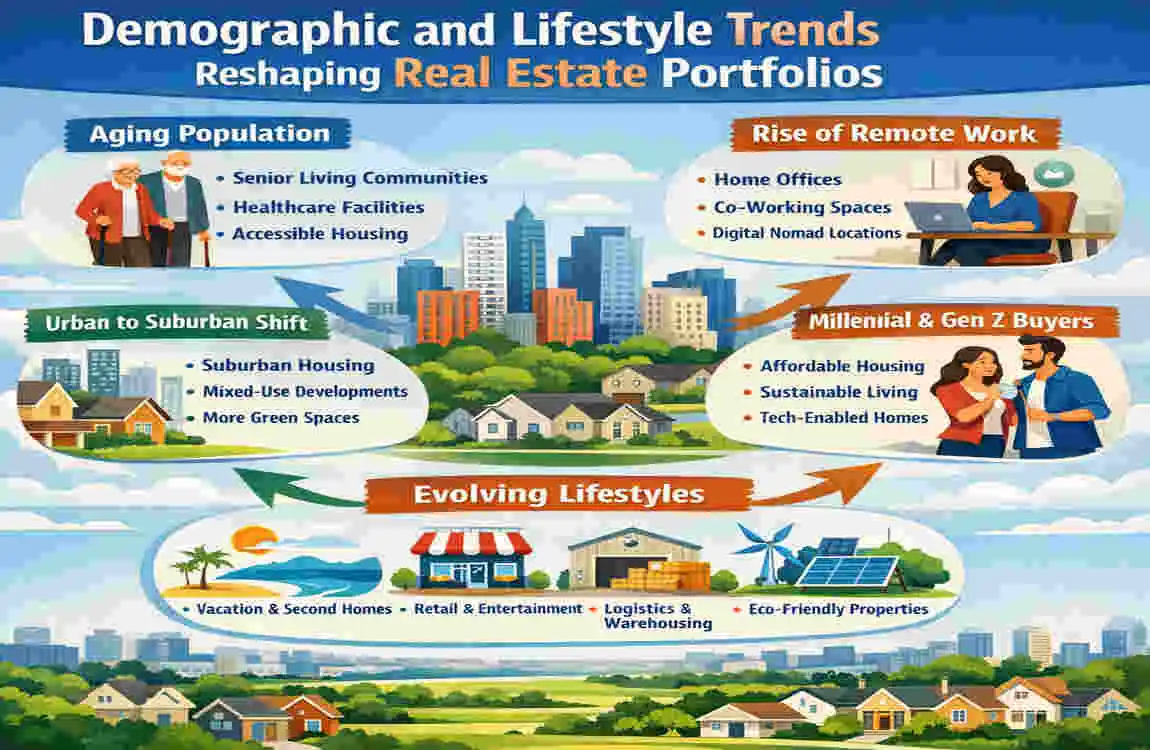
People buy and rent based on how they live, not just what a brochure says. Lifestyle has become a major force in real estate planning, and it is a crucial part of how market trends influence real estate development.
Millennial and Gen-Z Preferences
Younger buyers and renters are influencing everything from apartment size to neighborhood design.
Many millennials and Gen-Z professionals prefer convenience over excess space. They often want locations near work zones, schools, food options, healthcare, and transit routes. They also value digital convenience, security, and lower monthly costs.
This is why developers are focusing more on:
- Walkable communities
- Compact but efficient floor plans
- Shared amenities
- Mixed-use neighborhoods
- Community-oriented spaces
These generations also pay attention to experience. They want more than a unit. They want a lifestyle that feels connected and easy to manage.
In Punjab, where the young workforce remains a powerful market force, this matters a lot. A project that reflects modern routines can stand out more than one built only around older housing assumptions.
Remote Work and Hybrid Living
Hybrid living has changed what “home” means.
Today, many buyers want their homes to support work, rest, and social life in one place. A second bedroom may be used as an office. A lounge corner may become a study zone. Quiet design, natural light, and good internet have become real selling points.
This trend also affects community planning. Projects with business lounges, meeting pods, shared outdoor spaces, and on-site services often feel more appealing because they align with modern routines.
Developers who understand this shift can design homes that feel useful every day, not just visually appealing on launch.
Health-Focused Designs
Health has become a bigger priority in property decisions. People care more about clean air, green spaces, access to fitness, and low-stress environments. That has pushed wellness from a luxury feature into a mainstream development theme.
Health-focused design includes:
- Parks and walking tracks
- Fitness centers
- Better ventilation
- Natural light
- Community gardens
- Open shared spaces
- Reduced noise through smarter planning
This trend matters because it affects both residential and commercial assets. A healthier building can support stronger occupancy, tenant satisfaction, and even productivity.
If you are thinking about how market trends influence real estate development plans, lifestyle trends remind you of one simple fact: property succeeds when it fits real daily behavior.
Case Studies: Real-World Examples of Adapting to Market Trends
Theory is useful, but real examples show how adaptation works on the ground.
UAE’s Sustainable Mega-Projects
The UAE provides a strong example of what happens when a market moves early. As global energy markets changed and cities competed for investment, developers in Dubai pushed beyond traditional luxury to mixed-use communities, tourism-led districts, and more sustainability-focused projects.
Instead of relying on a single type of demand, many projects combined residential, retail, hospitality, and green design. This approach helped developers spread risk and attract a broader buyer base. Sustainability also became part of branding, helping projects appeal to investors who wanted future-ready assets.
The lesson is clear: when market signals change, strong developers do not simply tweak marketing. They redesign the product itself.
Lahore’s Affordable Housing Boom
Lahore has seen its own version of this shift. As financing pressure increased and affordability became more important, many developers moved away from overly premium concepts. They focused on mid-income housing, smaller units, and installment-based payment structures.
This was not just a price adjustment. It was a response to buyer reality.
Developers who understood the market saw that demand remained strong, but it had changed shape. Buyers still wanted security, access, and quality. They just needed more practical pricing and manageable space. Projects that aligned with this demand often performed better than developments that stayed fixed on high-end assumptions.
This is a powerful local example of how market trends influence real estate development plans in Pakistan.
Lessons Learned
Both cases show the same pattern. Markets reward developers who stay flexible and punish those who stay stubborn.
Here are some common mistakes these successful projects avoided:
- Ignoring affordability signals
- Building for yesterday’s buyer
- Overcommitting to one asset class
- Neglecting sustainability and operating costs
- Underestimating lifestyle changes
If you want a better portfolio, study adaptation as carefully as you study land values.
Actionable Strategies to Revolutionize Your Portfolio
Now let’s turn insight into action.
If you truly want to leverage market trends to inform real estate development plans, you need a repeatable process. Good developers do not guess. They review, test, adjust, and act.
A Simple Strategy You Can Apply
- Conduct trend audits every quarter
- Review economic data, buyer preferences, construction costs, financing conditions, and local policy changes. This keeps your plan grounded in reality.
- Use data tools for smarter decisions
- Track search demand, pricing patterns, vacancy trends, demographic shifts, and location performance. Even simple data can reveal powerful signals.
- Diversify your portfolio mix
- A balanced portfolio may include 40% residential, 30% commercial, and 30% alternative assets, such as warehousing, serviced units, or mixed-use formats. The exact mix will differ, but the idea is to avoid overdependence on one segment.
- Partner with local experts
- Especially in Pakistan, local knowledge matters. Regulatory detail, neighborhood behavior, infrastructure changes, and buyer sentiment often vary sharply by area.
- Build flexibility into every project
- Flexible unit sizes, phased launches, adaptable layouts, and varied funding options can protect you when conditions change.
- Prioritize future-ready features
- Energy efficiency, digital convenience, wellness amenities, and hybrid-work design are now practical value drivers, not just marketing extras.
- Create your own 2026 trend checklist
- Track the top factors that affect your target market: rates, inflation, migration, energy costs, lifestyle shifts, and policy updates. Review it before every new land or project decision.
The biggest advantage in real estate often comes from acting early. By the time a trend becomes obvious to everyone, the best opportunities are often already taken.