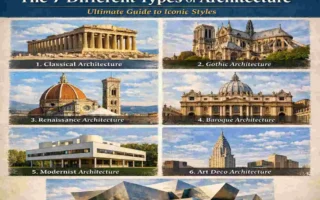
Ever wondered about the difference between architecture and art—why a beautiful painting hangs quietly on a gallery wall. At the same time, a towering skyscraper actively shapes the skyline of a bustling city? It is a fascinating question that many of us ponder when we look at a stunning building and think, “Wow, that is a work of art!”
But is it actually art? Or is it something else entirely? While both fields rely heavily on human creativity, imagination, and a keen eye for design, they serve entirely different purposes in our daily lives. Art is all about expressing raw emotion and capturing a specific moment, feeling, or idea. Architecture, on the other hand, is about solving practical problems, creating safe spaces for us to live and work, and standing strong against the forces of nature.
What Is Architecture? A Quick Overview
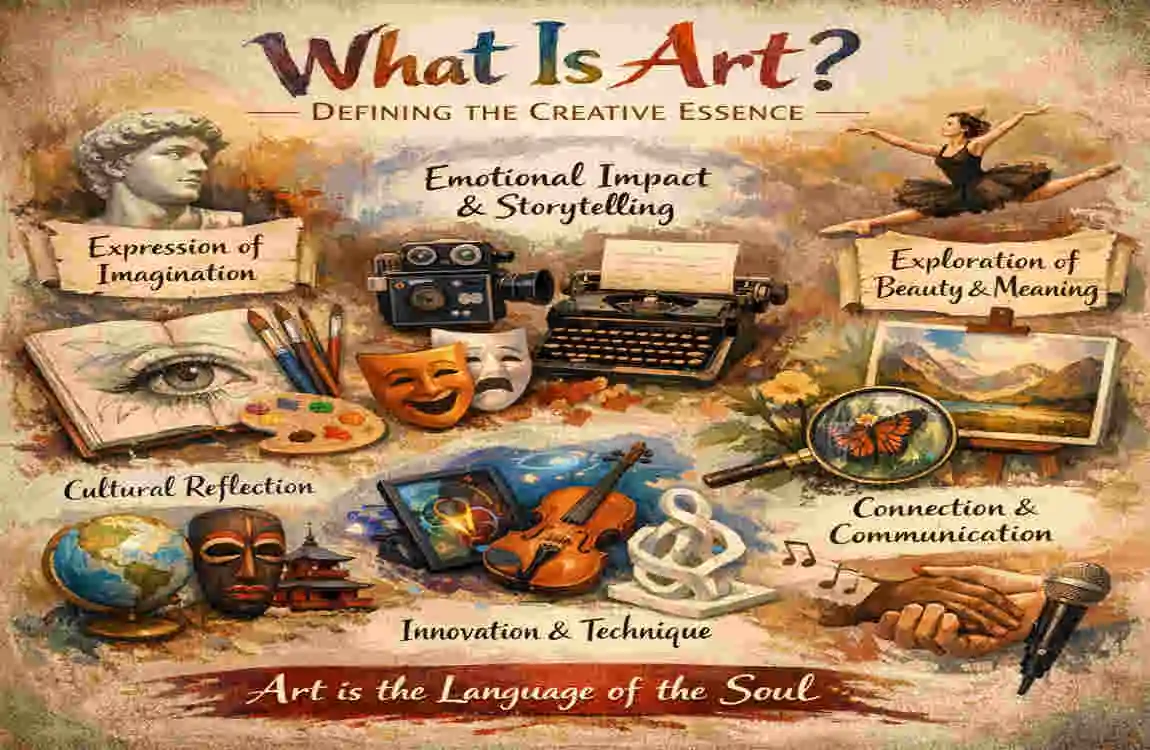
Before we can truly understand the difference between architecture and art, we need to define what each term actually means. So, let us start with architecture. Simply put, architecture is both the art and the science of designing and constructing buildings, bridges, and other physical structures.
However, it is not just about making things look pretty. The core traits of architecture heavily involve functionality, rigorous engineering, and public use. An architect cannot simply draw a beautiful shape and call it a day; they must figure out how to make that shape stand up, keep the rain out, and ensure the people inside are safe and comfortable.
Think about the famous Burj Khalifa in Dubai. It is undeniably a breathtaking sight that pierces the clouds. It looks like a futuristic sculpture. Yet, at its core, it is a highly practical building. It houses thousands of people, contains offices, features complex plumbing and electrical systems, and is engineered to withstand intense desert winds. It is practical, functional, yet absolutely iconic.
What Is Art? Defining the Creative Essence
Now, let us turn our attention to the world of art. Art is fundamentally a subjective human expression. It usually takes form through visual mediums like painting, drawing, sculpture, photography, or even performance.
The key traits of art revolve entirely around aesthetic focus, storytelling, and emotion. Unlike a building, a piece of art requires absolutely no utility or practical function. A painting does not need to provide shelter from a storm. A sculpture does not need to house a corporate office. Art exists to be experienced, to provoke a thought, to make you smile, or to make you cry.
Consider Michelangelo’s David. This towering marble sculpture is a masterpiece of human history. It showcases pure form, incredible detail, and raw emotion. However, you cannot live inside it. You cannot use it to store your groceries. It serves no practical purpose other than to be viewed and admired.
When you look at it this way, the foundations of both fields begin to reveal stark contrasts. Let us break down exactly what sets them apart.
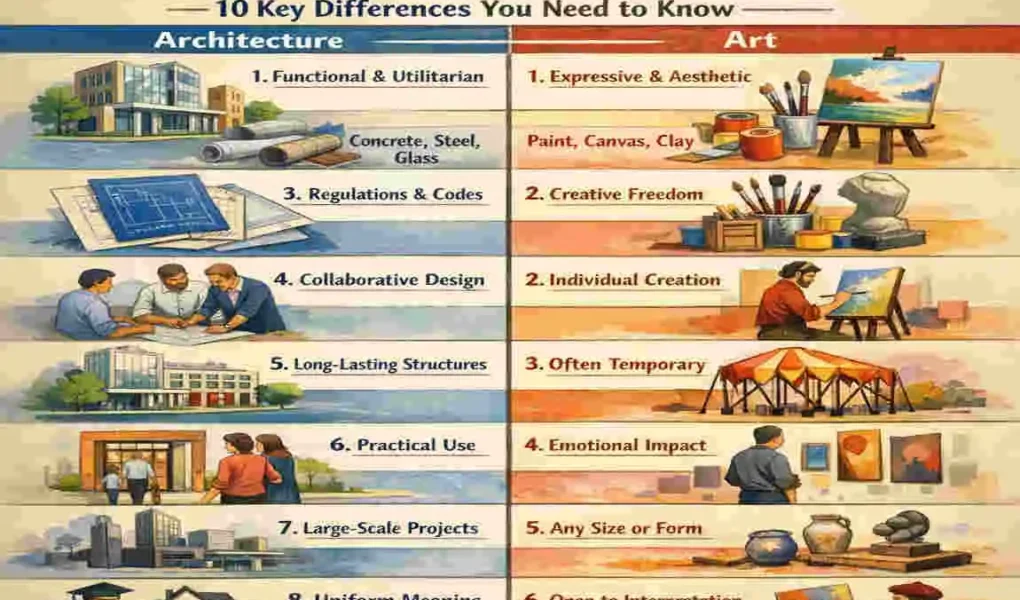
10 Key Differences Between Architecture and Art
To make these complex ideas easier to digest, we have divided them into understandable segments. Here is a detailed look at the core differences.
Purpose: Utility vs. Expression (Difference Between Architecture and Art #1)
The most glaring difference between architecture and art lies in their primary purpose. Architecture serves practical needs, while art evokes feelings.
When a community commissions an architect, they have a specific, functional need. They might need a hospital to treat the sick, a school to educate children, or a bridge to cross a dangerous river. The architect’s primary goal is to fulfill that practical need safely and efficiently. If a building is beautiful but the roof leaks and the stairs collapse, the architecture has failed.
Art, however, is entirely about expression. An artist paints a canvas to express a feeling, tell a story, or challenge a societal norm. If a painting makes you feel sad, happy, or confused, it has successfully done its job. It does not need to serve any practical function in your daily routine.
Scale and Functionality (Difference Between Architecture and Art #2)
Let us talk about size and how we interact with these creations. Generally speaking, buildings are massive and livable, whereas art is often intimate and personal.
Architecture operates on a monumental scale. Even a small house is much larger than a typical human being. We physically enter architecture. We walk through its doors, sleep in its rooms, and navigate its hallways. The scale must be designed around human proportions—doors must be tall enough to walk through, and stairs must be comfortable to climb.
Art is usually much smaller and is meant to be viewed from the outside. You stand in front of a painting or walk around a sculpture. Even monumental art, like giant outdoor installations, are not spaces you generally inhabit. You observe art; you live inside architecture.
Materials and Durability (Difference Between Architecture and Art #3)
The tools of the trade also highlight a major difference between architecture and art. Architecture uses weather-resistant, heavy-duty materials, while art prioritizes aesthetics over sheer strength.
Architects must work with tough, durable materials like steel, reinforced concrete, tempered glass, and heavy timber. These materials are chosen because they can withstand immense weight and harsh weather conditions, such as rain, snow, and the blazing sun, for decades or centuries.
Artists have the freedom to use fragile, temporary, or delicate materials. They can use watercolor on thin paper, soft clay, charcoal, or even everyday objects like cardboard and fabric. Because art is usually kept safe indoors inside museums or homes, it does not need to survive a hurricane.
Engineering vs. Creativity (Difference Between Architecture and Art #4)
While both fields require a creative mind, the application of that creativity is very different. Architects must calculate loads and forces, while artists focus on pure intuition.
The strict laws of physics bind architecture. Gravity is an architect’s biggest challenge. They have to calculate the structural integrity of every single beam and pillar. If an architect ignores gravity or wind resistance in favor of a “cool design,” people could get seriously hurt. Therefore, their creativity must be filtered through mathematics and engineering.
Artists are not bound by gravity in the same way. A painter can draw a floating castle in the sky without ever having to calculate how much it weighs or how to build a foundation for it. Artists are entirely free to follow their imagination wherever it leads, without worrying about structural load-bearing limits.
Public Accessibility (Difference Between Architecture and Art #5)
How we experience these creations in our daily lives is another major factor. Architecture is experienced communally, whereas art is often a personal experience.
Buildings belong to the public realm. Even if a building is privately owned, its exterior shapes the public street. Everyone who walks by experiences the architecture. It dictates a neighbourhood’s vibe and provides a shared backdrop for a community. You cannot simply hide a towering skyscraper.
Art is much more private. A beautiful painting might be locked away in a billionaire’s private collection, unseen by the public for decades. Even in a public museum, viewing art is usually a quiet, solitary experience in which an individual stands alone to reflect on the piece before them.
Time and Cost (Difference Between Architecture and Art #6)
When you look at the logistics of creating these works, the difference between architecture and art becomes very apparent in terms of the resources required. Architectural projects span years and cost millions, while art is generally quicker and cheaper to produce.
Building a modern structure requires a massive amount of capital. It involves buying land, purchasing heavy materials, and paying hundreds of workers. From the initial sketch to the final ribbon-cutting ceremony, the process can take anywhere from a few years to over a decade.
An artist, however, can create a masterpiece in a single afternoon. While some sculptures or large paintings do take time, the financial barrier to entry is very low. You only need a few dollars for a pencil and a sketchpad to create a profound piece of art.
Regulations and Constraints (Difference Between Architecture and Art #7)
Freedom is a massive differentiator here. Strict building codes govern architecture, while art has practically no rules or boundaries.
An architect is constantly fighting against a mountain of rules. They must adhere to local zoning laws, strict fire safety codes, environmental regulations, and wheelchair accessibility requirements. Every doorway, window, and electrical outlet must meet governmental standards.
An artist faces zero government regulations when creating a canvas painting. There are no “paint safety codes” or “canvas zoning laws” they must follow. They are free to express themselves without needing a city planner’s permit.
Permanence and Legacy (Difference Between Architecture and Art #8)
The lifespan and legacy of these creations differ greatly. Structures are designed to endure centuries, but art can easily evolve, be hidden, or decay.
Architecture is built for permanence. Historical buildings like the Colosseum in Rome or the Pyramids in Egypt have stood for thousands of years, leaving a permanent mark on the planet. However, buildings can also be unexpectedly demolished to make way for new shopping malls if they become impractical.
Art, especially fragile art, requires intense preservation. Paintings must be kept in climate-controlled rooms to prevent the canvas from rotting. While art might not be physically as tough as a brick wall, its cultural legacy often survives longer in the human mind, passed down through history books and museums.
Collaboration vs. Individualism (Difference Between Architecture and Art #9)
The way the work gets done is incredibly distinct. Massive teams build architecture, while solo artists dominate the art world.
An architect rarely builds a building alone. The process requires a massive collaborative effort. It involves structural engineers, city planners, interior designers, plumbers, electricians, construction workers, and project managers. The final building is the result of hundreds of people working together.
Art is typically a solo journey. A painter stands alone in their studio with their canvas. A sculptor chips away at stone in solitude. While some modern artists have studio assistants, the core vision and execution usually rely entirely on one individual’s personal touch.
Impact on Society (Difference Between Architecture and Art #10)
Finally, let us look at how they change the world around us. Architecture physically shapes our environments, while art emotionally influences our culture.
The layout of buildings, roads, and public squares literally dictates how human beings move and interact. Good architecture can make a city feel vibrant and walkable. In contrast, bad architecture can make a neighborhood feel isolated and depressing. It physically alters the landscape of our daily lives.
Art influences society by changing how we think. A powerful photograph or an inspiring mural can spark a political movement, bring awareness to a social issue, or bring comfort to a grieving community. It shapes a society’s soul rather than its physical streets.
Summary Breakdown
To help you easily visualize everything we just discussed, here is a quick reference table outlining the core differences.
Feature Architecture Art
Primary Goal Functionality and practical utility Aesthetic expression and emotion
Main Focus Solving human needs (shelter, space) Telling a story or provoking thought
Scale Monumental, meant to be lived in Usually smaller, meant to be observed
Rules Bound by gravity, physics, and codes No physical or legal boundaries
Creation Process Highly collaborative (teams of experts) Highly individual (solo creator)
Cost & Time Very high budget, takes years Low budget, can take hours to months
Experience Public and shared by the community Private and deeply personal
Real-World Examples: Where Architecture Meets Art
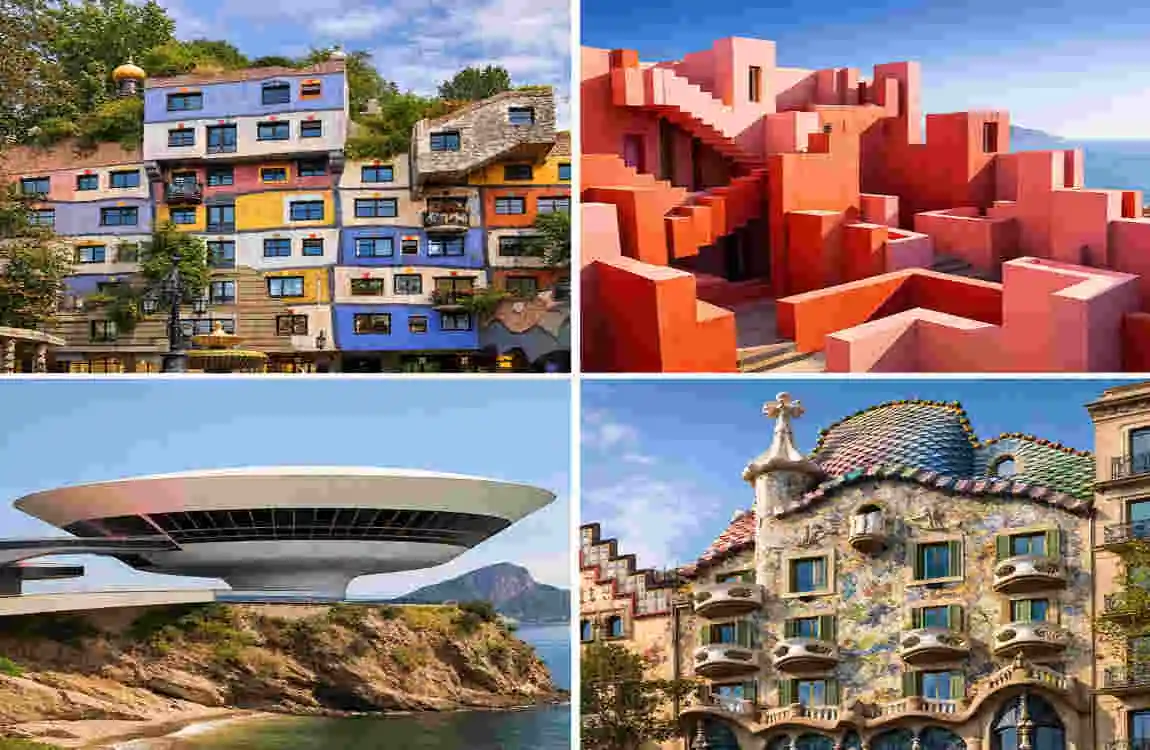
Now that we have clearly defined the difference between architecture and art, it is important to acknowledge that the real world is rarely black-and-white. Sometimes, these two disciplines crash into each other in the most spectacular ways, blurring the lines completely.
Let us bridge the gap by looking at a few examples where buildings become highly artistic.
Consider the Guggenheim Museum in Bilbao, designed by the legendary architect Frank Gehry. If you look at this building, it does not look like a traditional museum. It looks like a giant, chaotic, shining metallic flower blooming by the river. Gehry used highly advanced computer software to engineer these wild, sweeping curves. It serves its function perfectly as a museum (architecture), but its exterior is an undeniable masterpiece of visual sculpture (art).
Another perfect case study is the Sydney Opera House. Its iconic, sail-like white roofs are recognized globally. The architect Jørn Utzon infused the performance venue with incredible artistic flair. When you compare this to Andy Warhol’s famous pop art canvases—which hang on a wall to be looked at—you can see how the Opera House beautifully marries functional shelter with stunning visual expression.
Even locally, in regions rich in history, like Lahore’s famous historical architecture, we see this blend. The stunning tile work and majestic domes of the Badshahi Mosque showcase incredible artistic dedication. Yet, underneath the beautiful mosaics, it is a masterclass in structural engineering designed to hold thousands of worshippers safely.
These structures prove that while architecture must be functional, it can still reach for the stars artistically.
Why Understanding These Differences Matters for Your Home or Business
You might be thinking, “This is all very interesting, but why does the difference between architecture and art matter to me?”
If you are a homeowner looking to renovate or a business owner setting up a new office space, knowing this difference is incredibly practical. It helps you understand exactly who to hire and what to prioritize for your project.
For example, if you are designing a brand-new storefront for your business, you need an architect first and foremost. They will ensure your building is up to code, that the layout flows logically for your customers, and that the roof will not cave in. You hire them for function and safety.
However, once the walls are built, you turn to artists and interior decorators to give the space its soul. You hang paintings, commission murals, or buy sculptures to create a welcoming vibe and establish your brand identity. You use art for decor and emotion. Understanding this balance ensures you spend your budget wisely, creating spaces that are both safe to use and beautiful to behold.
FAQs: Common Questions on Difference Between Architecture and Art
We have covered a lot of ground, but you might still have a few lingering questions. Here are some of the most common questions people ask regarding this topic.
What is the main difference between architecture and art?
The absolute main difference boils down to utility. Architecture must serve a practical, physical purpose—like providing shelter, a place to work, or a safe bridge to cross. It has to function. Art does not need to serve any practical purpose; its only job is to look beautiful, express an idea, or make you feel an emotion.
Can architecture be considered art?
Absolutely! While architecture is heavily rooted in science and engineering, the final visual design is a highly artistic process. When a building goes beyond basic shelter and inspires awe through its shape, materials, and lighting, it elevates into the realm of art. This is often called “functional art.”
What are some examples of architecture that blurs the line with art?
There are many famous structures widely considered large-scale artworks. As mentioned earlier, the Guggenheim Museum in Bilbao and the Sydney Opera House are prime examples. Other examples include the sweeping, futuristic curves of buildings designed by Zaha Hadid, or the nature-inspired, whimsical designs of Antoni Gaudí’s Sagrada Família in Spain.
How does modern design change these differences?
Modern technology, such as 3D printing and advanced computer modelling, is blurring the lines even further. Architects can now easily build crazy, artistic shapes that were impossible to engineer 50 years ago. At the same time, artists are creating massive, interactive installations that people can walk inside, mimicking the feeling of architecture. The boundary between the two is becoming thinner every day.