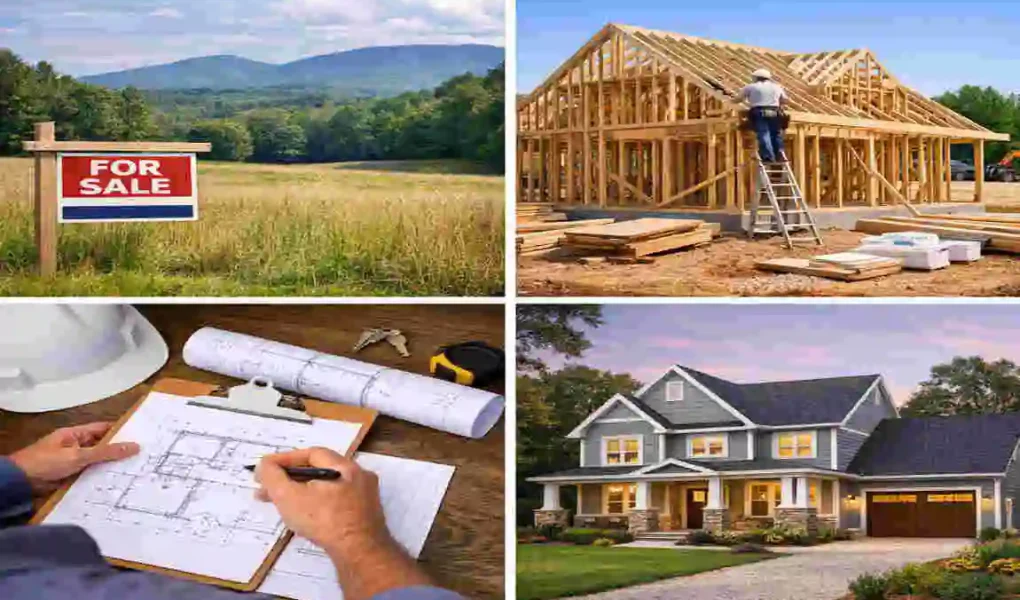
It is a question that sparks a fire in the eyes of many aspiring homeowners. You may have found a perfect, quiet plot of land in the rolling hills of the Shenandoah Valley, or you may have secured a spot in the bustling suburbs of Northern Virginia. You have a vision of a home that is uniquely yours, and you have likely looked at the price tag of hiring a general contractor and thought, “I could do this myself and save a fortune.”
The short answer is yes. Virginia law allows you to act as your own general contractor under specific “owner-builder” exemptions. If you own the land and intend to live in the house yourself, you can bypass the requirement for a contractor’s license.
But—and this is a massive “but”—it is not as simple as buying a hammer and some lumber.
Building your own home is a high-stakes venture. While you can save anywhere from 20% to 40% by eliminating the General Contractor (GC) markup, you are also taking on 100% of the risk. You become the project manager, the hiring department, the purchasing agent, and the person responsible when the county inspector fails your framing job.
Legal Basics: Is It Allowed?
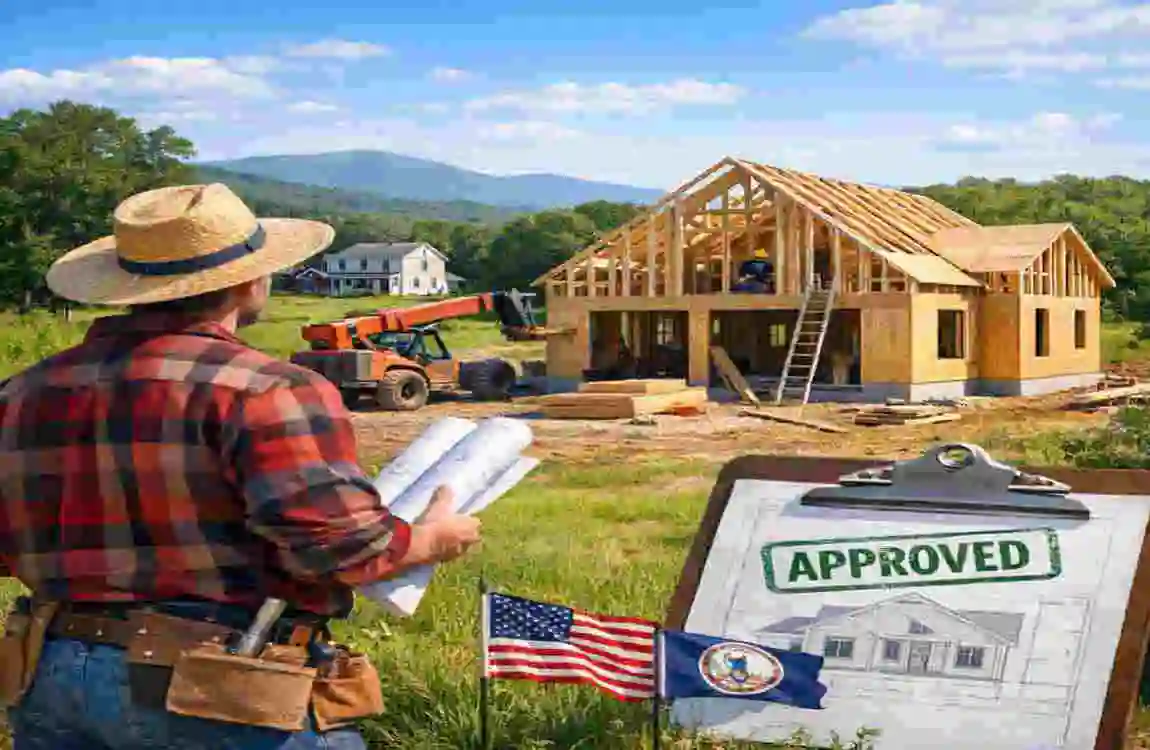
First, let’s clear up the legal confusion. In Virginia, construction is highly regulated to ensure safety. Typically, anyone managing a construction project valued over a certain amount requires a license from the Department of Professional and Occupational Regulation (DPOR).
However, Virginia Code §54.1-1101 provides a specific exemption for property owners.
The Owner-Builder Exemption
Under this law, you do not need a contractor’s license to build a dwelling on your own property, provided that the structure is for your own use or the use of your immediate family. This means you can legally act as the General Contractor (GC). You can hire subcontractors, buy materials, and schedule inspections just like a pro would.
But there are strict conditions you must meet to stay on the right side of the law:
- Personal Occupancy: You must intend to live in the house. You cannot build a house as an owner-builder with the intent to sell it or rent it out immediately. This exemption is not for house flippers or speculative investors.
- The 24-Month Rule: While the law doesn’t give an exact expiration date on how long you must live there, building multiple homes in a short period can trigger an investigation. Generally, you are limited to one owner-builder project every 24 months to prove you aren’t operating as an unlicensed business.
- Supervision: You must supervise the construction yourself. You cannot claim the exemption and then pay an unlicensed “shadow contractor” to run the job for you.
What You Can and Cannot Do
Being an owner-builder gives you the power to manage the project, but it does not make you a magician, nor does it exempt you from trade-specific licensing requirements.
- You CAN: Perform general construction work like framing, painting, tiling, and landscaping yourself (if you have the skills).
- You CAN: Hire licensed subcontractors to do the work you cannot or do not want to do.
- You CANNOT: Perform electrical, plumbing, HVAC, or gas fitting work yourself unless you hold a master’s license in those trades or the locality specifically allows homeowners to do so (which is rare for new construction and requires passing a strict test). In almost all cases in Virginia, you must hire licensed tradespeople for these critical systems.
Owner-Builder vs. Licensed Contractor
To help you decide if this path is right for you, let’s compare the two routes side-by-side.
AspectOwner-Builder (You)Licensed General Contractor
License Required No (Exempt under §54.1-1101) Yes (Class A, B, or C from DPOR)
Project Management: You manage schedules, materials, and subs. They handle all logistics and personnel.
Occupancy Rule: Must live in the home. No restriction; can build to sell/rent.
Subcontractors: You must verify they are licensed/insured. They have a vetted network of pros.
Liability: You are liable for injuries/code violations. They carry liability and workers’ comp insurance.
Cost Savings 20% – 40% (Management fees saved). Full market price (includes their profit).
Zoning and Land Requirements
Before you even think about blueprints, you need to think about dirt. Zoning is the set of laws that dictates what can be built where. Just because you own a piece of land doesn’t mean you can build whatever you want on it.
In Virginia, zoning regulations vary wildly from county to county. What flies in rural Amherst County might get rejected immediately in Fairfax County.
Determining “By-Right” Building
You need to verify that your lot is zoned for residential use.
- Residential Districts: Usually labeled R-1, R-2, etc. These are designed for homes.
- Agricultural Districts: Often labeled A-1. In many rural parts of Virginia, you can build a single-family home on agricultural land, but there may be minimum lot size requirements (e.g., you need at least 5 acres to build).
Setbacks and Easements
Every lot has invisible lines called setbacks. These determine how far your house must be from the road, the rear property line, and your neighbors.
- Example: In a dense suburb, you might only need a 10-foot side setback. In a rural preservation zone, you might need 100 feet.
- Easements: Check your property deed for utility easements. If Dominion Energy has a power line easement running through the middle of your lot, you cannot build your house on top of it.
The Critical “Perc” Test
If your land is not connected to a public sewer system (which is common in rural Virginia), you will need a septic system. Before you buy land, you must get a soil percolation (perc) test.
- This test measures how fast water drains through the soil.
- The Risk: If the soil fails the perc test, you cannot install a standard septic system. You might be forced to install an engineered alternative system, which can cost $20,000 to $40,000 more, or you might not be able to build at all.
Environmental Restrictions
Virginia has a diverse geography, and that brings diverse rules.
- Chesapeake Bay Preservation Act: If you are building in coastal areas or near major rivers, you face strict rules about runoff and land disturbance to protect the bay.
- Flood Zones: In low-lying areas (like parts of Norfolk or near the Potomac), you may need to build on stilts or elevated foundations, driving up costs.
Action Step: Before closing on land, visit the local county zoning office and request a “Zoning Compliance Letter” to confirm a house can be built on that specific parcel.
Permit Process: Step-by-Step Guide
Once you have the land, you enter the paperwork phase. Virginia operates under the Uniform Statewide Building Code (VUSBC). This ensures that a house built in Roanoke is just as safe as one built in Richmond.
As an owner-builder, you are responsible for pulling these permits. Here is the chronological roadmap.
Health Department Approval 2-6 Weeks
You cannot get a building permit without proving you have water and sewer.
- Well and Septic: You submit your soil studies and site plans to the local Virginia Department of Health (VDH) office. They must issue a construction permit for the well and septic system.
- Public Utilities: If you are on city water, you need tap-fee receipts proving you have paid for the connection.
Zoning Permit 1-2 Weeks
This is usually a quick check. You submit a “plat” (a map of your land) showing exactly where the house, driveway, and shed will go. The zoning official checks setbacks and lot coverage limits.
The Building Permit Application 2-4 Weeks
This is the “big one.” You will submit a thick packet of documents to the local Building Commissioner’s office.
- The Owner-Builder Affidavit: This is a crucial legal form where you swear that you own the land, intend to live there, and accept all liability. You are essentially signing a document that says, “I know what I am doing, and if the house collapses, it is on me.”
- Construction Drawings: You need detailed blueprints. This includes floor plans, exterior views (what the house looks like from the outside), and structural details (foundation and framing cross-sections).
- ResCheck: This is a calculation that proves your insulation and windows meet Virginia’s energy efficiency codes.
Trade Permits
Separate permits are usually required for:
- Electrical
- Plumbing
- Mechanical (HVAC)
- Gas
The Inspection Gauntlet
Once construction starts, you are not done with the county. You must call for inspections at specific milestones. Do not cover up work until it has been inspected!
- Footing Inspection: Before concrete is poured for the foundation.
- Foundation Wall Inspection: Before you backfill dirt around the basement/crawlspace.
- Framing/Rough-In: The biggest inspection. They check the wood structure and the “rough” wiring and plumbing inside the walls before drywall goes up.
- Insulation: Checking R-values before walls are closed.
- Final Inspection: The safety check. Smoke detectors, handrails, tempered glass, and final grading.
Timeline Table: What to Expect
Permit/StepEstimated DurationKey Documents Needed
Site & Health 4-8 Weeks Soil Scientist Report, Site plan
Zoning Review 1-2 Weeks Survey Plat, Entrance Permit (VDOT)
Building Permit 2-5 Weeks Blueprints, Affidavit, Energy Calcs
Inspections Ongoing 10+ Site Visits throughout the build
Costs: Budgeting Your Owner-Build
The primary reason people choose the owner-builder route is to save money. By cutting out the General Contractor, you avoid their fee, which typically ranges from 15% to 25% of the total project cost.
However, do not mistake “cheaper” for “cheap.” Building a house is expensive.
Average Costs in 2026
As of 2026, construction costs in Virginia have stabilized but remain high due to material and labor costs.
- Basic Production Style: $250 – $325 per sq. ft.
- Custom / High-End: $325 – $500+ per sq. ft.
If you are an efficient owner-builder, you might be able to push these numbers down to $180-$220 per sq. ft. for a standard build, but this requires savvy negotiation and sweat equity.
Regional Cost Variations
Virginia is economically diverse. Building in the DC suburbs is vastly different from building in the southwest mountains.
RegionCost Per Sq. Ft. (Owner-Builder Est.)Notes on Cost Drivers
Northern Virginia (NoVA) $250 – $400+ Extremely high labor rates; strict regulations; expensive permits.
Richmond / Tidewater $180 – $280 Moderate labor costs; flood insurance costs near coast.
Rural / Shenandoah $150 – $220 Cheaper labor; higher costs for well/septic and long driveways.
Where the Money Goes
It helps to visualize the pie.
- Materials (50%): Lumber, concrete, windows, roofing, finishes.
- Labor (30-35%): Excavators, framers, drywallers, electricians.
- Site Prep (10-15%): Clearing trees, grading, utilities.
- Permits & Fees (5%): County fees, tap fees, and engineering.
The “Hidden” Costs
These are the budget-killers that owner-builders forget:
- Utilities: Running electricity from the road to your house can cost $15-$20 per foot. If your house is 500 feet back, that’s $10,000 just for a wire.
- Mistakes: If you order the wrong size windows, you eat that cost. There is no markup to absorb your errors.
- Construction Loan Interest: Most banks require specific “construction-to-permanent” loans. Interest-only payments during the build can add up to thousands per month.
- Tool Rentals: You will need dumpsters, portable toilets (required by law), and heavy equipment.
Pros, Cons & Real-World Challenges
Is the stress worth the savings? Let’s weigh the reality of being a Virginia owner-builder.
The Pros
- Significant Savings: On a $500,000 home, saving 20% means keeping $100,000 in your pocket. That is instant equity.
- Total Control: You don’t have to argue with a contractor about why you want a specific vintage light fixture. You make every call.
- Satisfaction: There is a primal pride in walking through a home you built. You know exactly what is behind the walls.
The Cons
- Time Commitment: This is a part-time job. Expect to spend 20-30 hours a week calling subs, ordering materials, and visiting the site. If you have a demanding full-time job, burnout is a real risk.
- Financing Difficulty: Many banks are hesitant to lend to owner-builders. They view you as a “high risk” because you lack professional experience. You may need a larger cash down payment.
- No Warranty: If the roof leaks in two years, you can’t call the builder to fix it. You are the builder. You have to chase down the roofing sub or fix it yourself.
Real-World Challenge: The Supply Chain
Even in 2026, supply chains can be fickle. A licensed GC usually has leverage; they buy $1 million in lumber a year, so the lumber yard prioritizes them. You are buying for one house. If there is a shortage of plywood, you might be at the back of the line, delaying your project by weeks.
Case Study: The “Amherst vs. Fairfax” Experience
- The Rural Builder: John built a farmhouse in Amherst. He hired local neighbors to grade and frame. Inspections were straightforward. He saved 35%. Verdict: Success.
- The Urban Builder: Sarah tried to owner-build in Fairfax. The complex permit process alone took 6 months. She struggled to find subs willing to work for a “one-off” client in a busy market. The project dragged on for 2 years. Verdict: She broke even but lost two years of weekends.
Expert Advice for Success
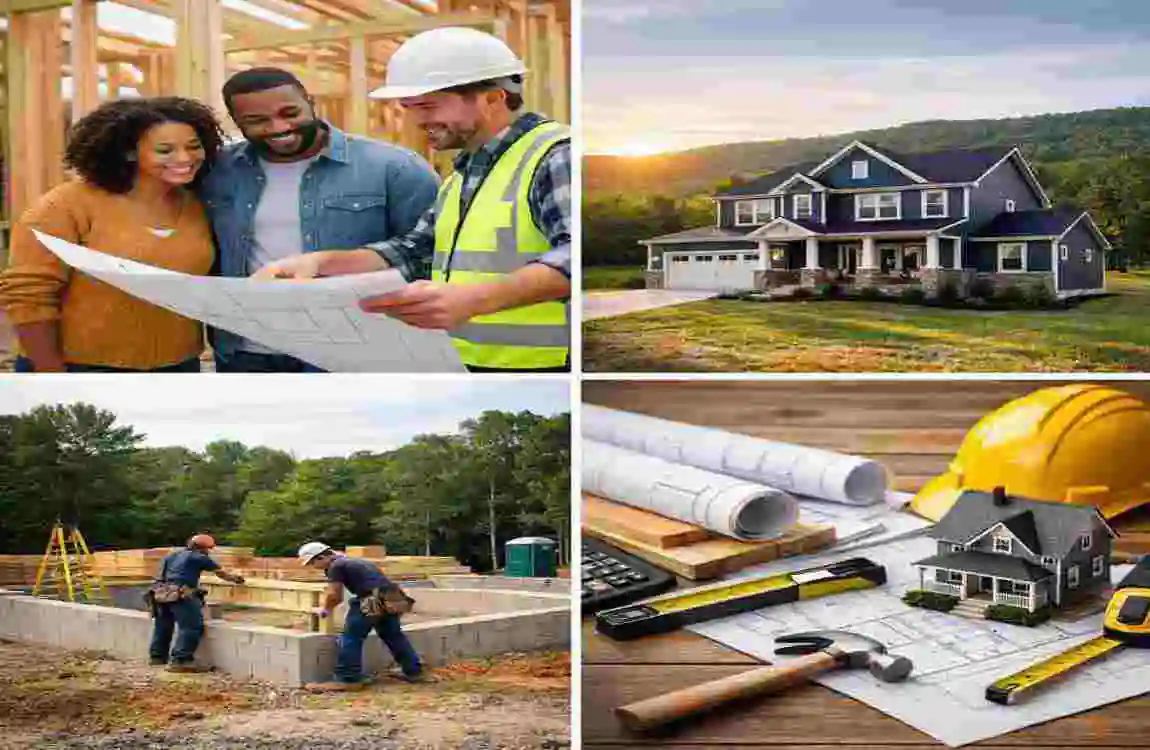
If you are determined to proceed, here are three tips from industry pros to keep your project on track.
Hire a Consultant. You don’t have to go it entirely alone. Consider hiring a residential construction consultant or a retired builder for a flat fee. They can review your schedule, check your budget, and walk the site once a week to catch errors before they become disasters.
Get “Builder’s Risk” Insurance. Regular home insurance won’t cover a house under construction. You need a specific Builder’s Risk policy. This covers theft of materials (lumber theft is real!), fire, and vandalism during the build. Also, ensure you have liability coverage in case a worker gets hurt on your property.
Budget for a 20% Contingency. If your spreadsheet says the house will cost $400,000, secure financing for $480,000. In construction, “unknowns” are guaranteed. You will hit rock when digging the foundation, or lumber prices will spike. Having that financial buffer prevents the project from stalling.
FAQs
Can you build your own house in Virginia without a license? Yes, provided you own the land and the home is for your own personal residence (not for sale or rent). You must sign an affidavit accepting liability.
Do owner-builders need permits in Virginia? Yes. Being an owner-builder exempts you from the contractor license requirement, not the building permit requirement. You must follow the same building codes and pass the same inspections as a professional builder.
How much does it cost to build a house in Virginia in 2026? Costs vary widely by region, but expect to pay between $180 and $300+ per square foot if you manage the project yourself. Northern Virginia will be at the high end of that range, while rural southern Virginia will be at the lower end.
Can I do my own electrical and plumbing work as an owner-builder? Generally, no. Unless you hold a trade license, Virginia law typically requires you to hire licensed electricians, plumbers, and gas fitters for new residential construction to ensure safety.
Is it hard to get a construction loan as an owner-builder? Yes, it is more difficult. Banks view owner-builders as higher risk. You may need a higher credit score, a larger down payment (20-30%), and a detailed cost estimate to get approved.