Yes, you can buy a home on a low income in the UK. Pair a small-deposit route with a lender who accepts your earnings. In England the main options are Shared Ownership (from a 10% share), First Homes (30–50% off), 95% mortgages through the Freedom to Buy scheme, and from 2027 the Your First Home equity loan. Save into a Lifetime ISA while you prepare.
What “low income” means to lenders
Here’s the part most guides skip: nobody sets a minimum salary for buying a home in the UK. The government schemes only set a ceiling. Shared Ownership and First modern homes both cap household income at £80,000, or £90,000 in London. If you’re on a modest wage, you’re comfortably under the line.
The real gatekeeper is the lender. They’ll look at your income, your regular outgoings, your credit file and how big a deposit you’ve got. Lenders commonly work to around 4.5 times income, and the Bank of England treats anything at or above that as a “high loan-to-income” mortgage. So the honest question isn’t “am I low income?” It’s “what size of mortgage can my budget carry, and which route shrinks the amount I need?”
What changed in 2026 (and why it matters to you)
This year has been unusually busy for first-time buyers. Four changes are worth knowing about before you plan anything.
- A new equity loan is coming. “Your First Home” was confirmed at the 28 October Budget. It lets eligible first-time buyers in England buy a new-build with a deposit from 2.5%, topped up by a 20% government-backed equity loan.
- The Lifetime ISA has a successor. A new First Time Buyer ISA is due to replace it for new savers from April 2029. Until then you can still open a Lifetime ISA.
- A penalty got smaller. From 29 October 2026, the Lifetime ISA withdrawal charge for a first real estate home costing more than £450,000 falls from 25% to 20%.
- Lenders have more room to lend. On 28 October the Bank of England and the FCA removed the 15% cap that applied to each individual lender on mortgages at 4.5 times income or more. A market-wide limit replaces it.
None of this means approval gets automatic. It does mean the toolbox is bigger than it was a year ago.
The five routes compared
Pick the route that lowers the one number holding you back, whether that’s the deposit, the mortgage size or the monthly bill.
| Route | Best if… | The catch |
|---|---|---|
| Shared Ownership | Your income is modest and you can’t borrow for a full-price home. | You pay rent on the share you don’t own, plus usually service charges. Check whether the home is on the old or new model, as the 10% minimum share doesn’t apply everywhere yet. |
| First Homes | You want to own outright and a discounted new-build exists nearby. | Selected developments only. Local connection or key-worker rules can apply for the first three months of marketing. After discount the price must not exceed £250,000 (£420,000 in London). |
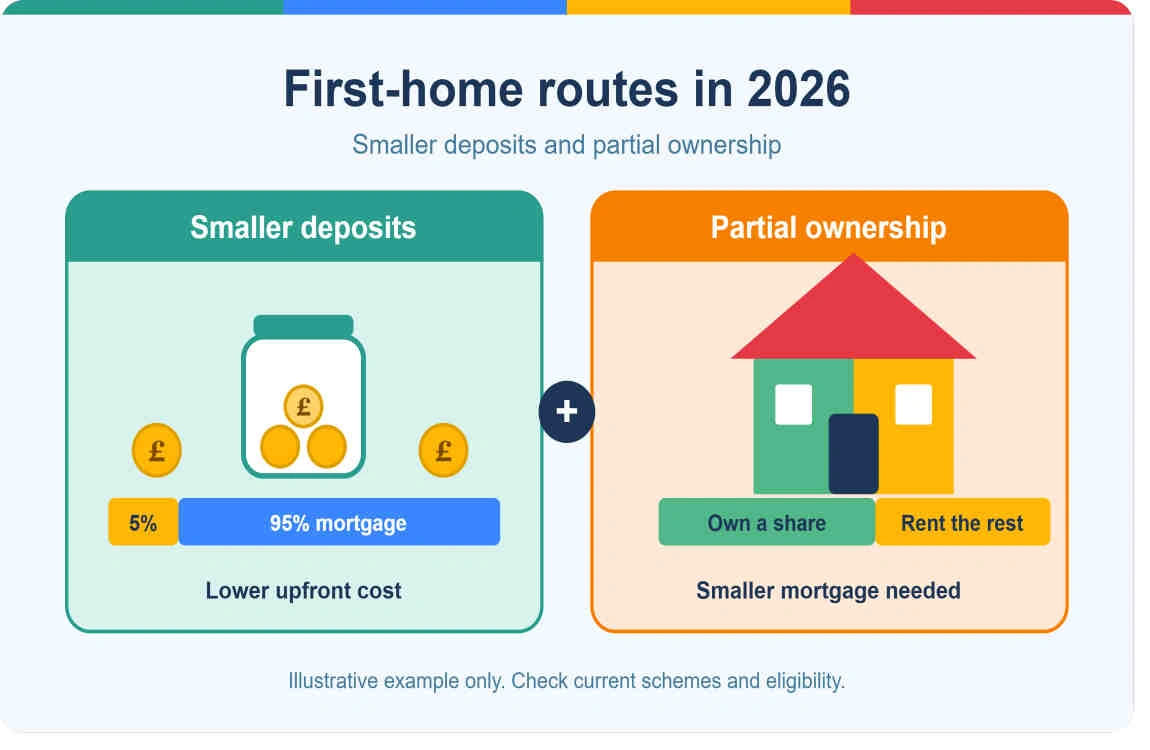
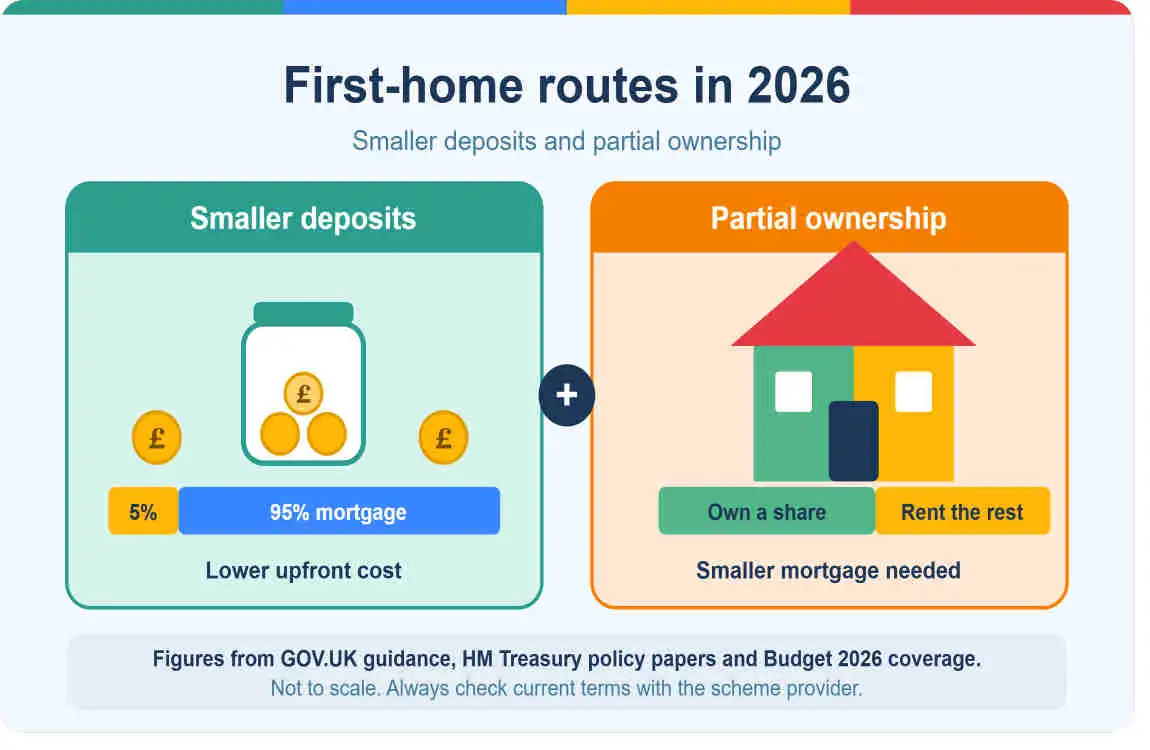
| Freedom to Buy (95% mortgage) | Your income is steady but your savings are small. | Higher loan-to-value deals usually carry fewer lender choices and tighter pricing than 85% or 90% deals. |
| Your First Home | You’re buying a new-build in England and earn up to £110,000 (£140,000 in London). | Not open yet, new-builds only, local price caps, and the loan is interest-free for five years before charges start. |
| Lifetime ISA | You’re 18–39 and can save regularly for a deposit. | A 25% charge applies to most non-qualifying withdrawals. Existing holders can keep going after the new ISA launches. |
You can often stack these. A Lifetime ISA can sit alongside Shared Ownership or First Homes, provided you meet the rules for each, so ask your conveyancer to confirm before you withdraw anything.
Shared Ownership with real numbers
Shared Ownership is the route that most directly answers “I don’t earn much.” You buy a slice of the home, take a mortgage on that slice only, and pay rent to a housing association on the rest. On new-model stunning homes the minimum first share is 10%, and you can buy extra shares later in small steps, as little as 1% a year.
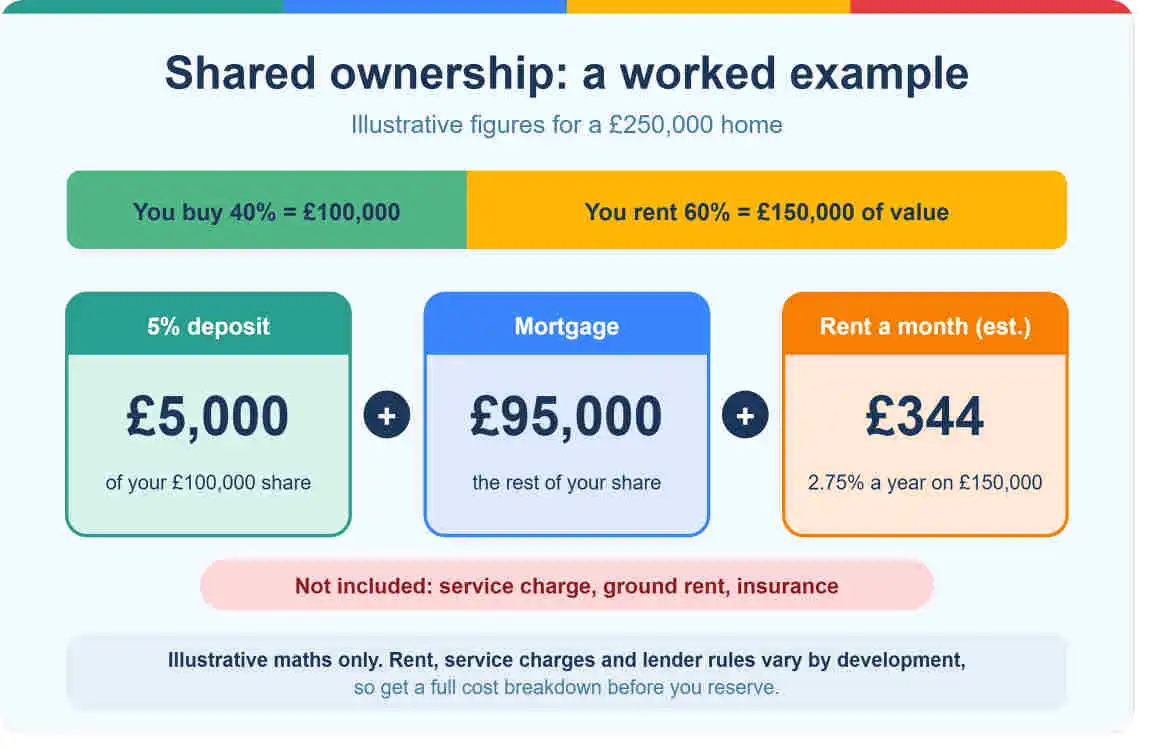
Eligibility is straightforward: household income of £80,000 or less (£90,000 in London), and you can’t afford all of the deposit and mortgage payments for a suitable home on the open market. Some housing associations add their own affordability tests, such as requiring a minimum share of your income to be left after outgoings, so ask for their policy early.
One more route is worth a mention if you’re already renting from a housing association: the Right to Shared Ownership lets some eligible tenants buy a share of the home they live in.
What about Your First Home on a low income?
Be realistic here. On a £300,000 new-build you’d put down £7,500 (2.5%), the government would lend £60,000 (20%), and you’d need a mortgage of £232,500. At around 4.5 times income, that’s roughly a £51,700 household income before lenders weigh your outgoings. So this scheme suits modest-to-middle earners buying cheaper new-builds. If your income is lower, a smaller Shared Ownership share or a lower-priced First Home will usually shrink the mortgage further.
How to get a mortgage on a smaller income
Treat the mortgage application like a job interview. A few habits make the difference between “declined” and “approved”:
- Clean up your credit file first. Check all three credit reference agencies, fix errors, register on the electoral roll and avoid new credit in the months before applying.
- Show a track record. Lenders like regular rent payments, stable employment and low credit-card balances. Cutting your monthly commitments can raise what you can borrow more than a pay rise would.
- Consider a joint application. Two incomes are assessed together, which is also how the scheme income caps work.
- Use a broker. Many lenders treat low-deposit and shared-ownership applications differently, and an independent broker knows who’s currently friendly to your profile.
- Get an agreement in principle before you view. It shows sellers you’re serious and tells you your budget honestly.
The October lending-rule change may widen choice for people who sit near the 4.5x line, though lenders will still decide on affordability and the Bank of England property has been clear the market-wide limit stays. Don’t borrow the maximum just because you can.
Costs beyond the deposit
Your deposit isn’t the only cheque you’ll write. Budget for conveyancing and legal fees, a valuation or survey, mortgage arrangement fees and removals. And, depending on price, stamp duty.
Since 1 April 2025, first-time buyers in England and Northern Ireland pay no stamp duty up to £300,000 and 5% on the slice up to £500,000. The relief is claimed on your Stamp Duty Land Tax return, and GOV.UK explains the process and shared-ownership treatment. Your solicitor normally files it for you.
A six-step plan to go from renting to owning
- Check your credit reports. Dispute errors and settle small defaults where you can.
- Set a budget you could live with. Test it by paying that amount into savings for a few months while you rent.
- Build the deposit. Open a Lifetime ISA if you’re under 40, and ask whether family can gift part of a deposit.
- Pick the scheme that fits. Use the comparison above, then confirm eligibility with the housing association, council or developer.
- Get an agreement in principle. It’s a quick, usually soft-check estimate of what a lender may offer.
- Make an offer and instruct a conveyancer. They’ll handle searches, stamp duty and scheme-specific legal checks.
Mistakes that cost people the house
- Stretching to the maximum. Being approved for a loan isn’t proof you can afford it when rates or bills shift.
- Ignoring the “other” monthly costs. On part-buy homes, rent and service charges count towards affordability, and they’re yours to pay every month.
- Opening new credit mid-application. A new home contract or car finance can change a lender’s answer.
- Assuming schemes are everywhere. First Homes and Your First Home depend on specific developments and participating builders.
- Skipping advice. A free initial chat with a broker costs nothing and can save months.
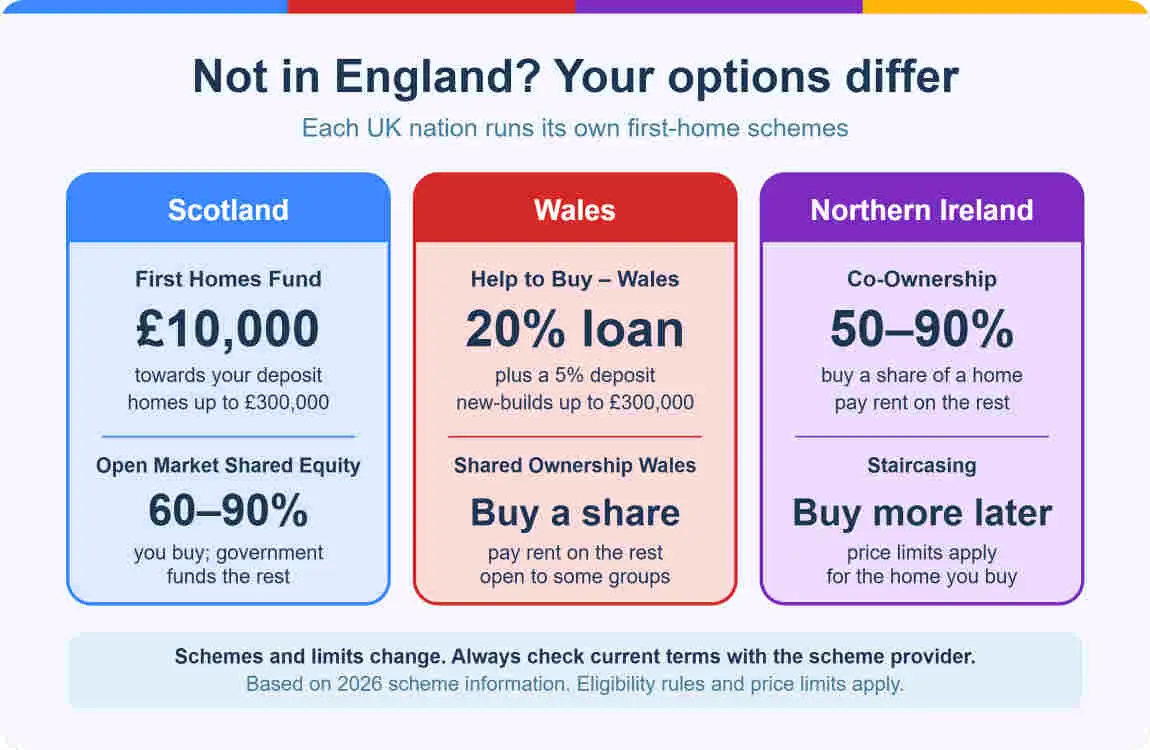
What if you live in Scotland, Wales or Northern Ireland?
Several of the routes above, including the Lifetime ISA and Freedom to Buy mortgages, apply across the UK. But stamp duty, Shared Ownership and equity-loan schemes are devolved. Scotland, for instance, runs its own Low-cost Initiative for First-Time Buyers (LIFT). Check your own government’s housing cost pages before relying on any England-only figure in this guide.
How to Buy a House With a Low Income in the UK:FAQs
Can I buy a house in the UK on a low income?
Yes, it may be possible. Some mortgage lenders offer options for people on lower incomes, depending on their affordability, deposit, credit history, and financial circumstances.
How much deposit do I need to buy a house in the UK?
Many mortgages require a deposit of around 5% to 10% of the property’s purchase price, although requirements vary between lenders.
Can I get a mortgage if I earn minimum wage?
Yes, some people earning minimum wage may qualify for a mortgage. Lenders assess income, regular expenses, existing debts, and affordability.
Can I buy a house in the UK with a low income?
Yes. You may qualify for a mortgage if your income is low but stable and you can afford the monthly repayments.
What is the easiest way to buy a house on a low income?
Consider shared ownership, affordable housing schemes, or a mortgage with a smaller deposit.
Can I buy a house with a 5% deposit?
Yes. Some UK lenders offer 95% mortgages, allowing eligible buyers to purchase a property with a 5% deposit.
Does the UK government help low-income buyers?
Yes. Schemes such as Shared Ownership and First Homes in England can make buying a property more affordable.
Can I buy a house without a large deposit?
Yes. A low-deposit mortgage may be an option, but you will still need to meet the lender’s affordability and eligibility requirements.
Is shared ownership good for people on low incomes?
It can be helpful because you purchase a percentage of the property and pay rent on the remaining share. However, you should consider both payments and other housing costs before applying.
Final Thoughts
Buying a house on a low income in the UK may seem challenging, but it is not impossible. With careful budgeting, a realistic savings plan, and the right mortgage option, you may be able to take your first step onto the property ladder. Explore options such as 95% mortgages, Shared Ownership, and First Homes to make buying more affordable. Before making a decision, compare lenders, check your eligibility, and consider all additional costs. With proper planning and patience, owning your own home can become a realistic goal.