The heavy monsoon rains have just hit Lahore. You are sitting in your living room, listening to the downpour. Still, suddenly you notice water seeping through the edges of your balcony door. Panic sets in. Will your beautiful new floors survive the puddle? If you are a homeowner facing unpredictable weather, or just a busy parent managing a chaotic kitchen, you know that choosing the right flooring is a massive decision.
You want a floor that looks expensive, stays within your budget, and can survive the daily wear and tear of family life. This brings us to the ultimate home improvement debate of 2026: vinyl flooring vs laminate.
For years, homeowners have struggled to choose between these two popular, stylish, and affordable flooring options. Both mimic the gorgeous look of natural hardwood or sleek stone. Both promise an easy installation. But beneath the surface, they are very different materials with distinct strengths.
Understanding the vinyl flooring vs. laminate debate is crucial, especially in climates with high humidity and intense seasonal changes. Making the wrong choice could mean spending thousands on replacements just a few years down the line.
What is Vinyl Flooring?
Before we pit these materials against each other, let us understand exactly what we are dealing with. What is vinyl flooring, anyway?
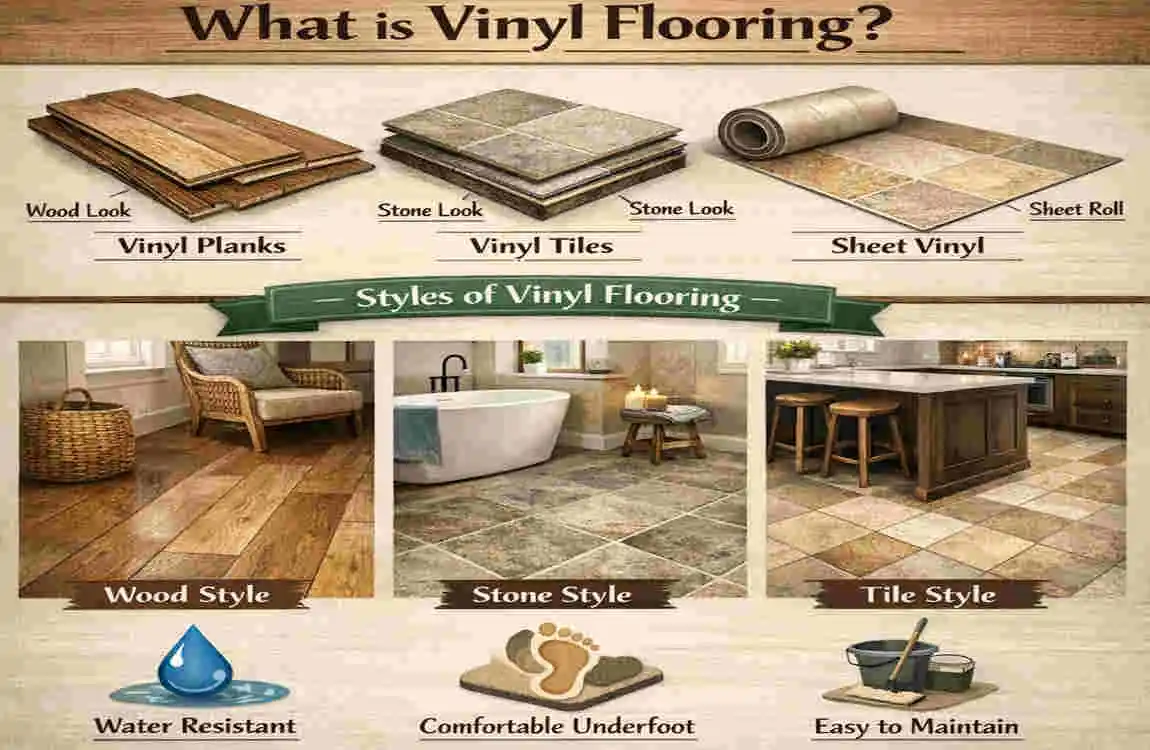
In simple terms, vinyl flooring is a highly durable, multi-layered synthetic product made primarily from PVC (polyvinyl chloride) plastic. When you shop for vinyl, you will usually hear about two main types: Luxury Vinyl Plank (LVP) and sheet vinyl.
Luxury Vinyl Plank is the star of the show in 2026. It comes in thick, rigid planks that snap together just like real wood boards. Manufacturers design these planks with a high-definition photographic layer that perfectly mimics the natural wood grain or the texture of stone.
Here is what makes vinyl flooring so special:
- The Multi-Layer Sandwich: It features a tough backing layer, a solid waterproof core, a high-resolution design layer, and a clear protective wear layer on top.
- Flexibility and Strength: The plastic composition makes it slightly flexible, which helps it absorb impacts without cracking.
- Installation Options: You can choose between glue-down varieties or the extremely popular click-lock floating systems that require no messy adhesives.
What is Laminate Flooring?
Now, let us flip the coin and look at the challenger. What is laminate flooring?
Laminate flooring is an engineered product that has been a favourite in home design for decades. Like vinyl, it is built in multiple layers, but the materials used are vastly different.
The heart of a laminate floor is its core. Instead of plastic, laminate uses a core made of High-Density Fiberboard (HDF). This fiberboard is essentially recycled wood fibers compressed tightly together with resin.
Let us break down the anatomy of laminate:
- The Base: A bottom balancing layer prevents the board from bowing.
- The HDF Core: This provides a rigid, sturdy feel underfoot, very similar to real hardwood.
- The Image Layer: A highly detailed photographic applique sits over the core. Laminate is famous for having incredibly realistic wood and stone visuals.
- The Wear Layer: A tough, clear melamine resin coating protects the image from scratches and fading.
Laminate floors almost exclusively use a click-lock floating system. This means the planks lock together and “float” over your subfloor without being nailed or glued down.
Vinyl Flooring vs Laminate: Head-to-Head Comparison
Choosing the right floor means looking closely at how these materials perform in the real world. You need a floor that fits your wallet, withstands your lifestyle, and looks amazing while doing so. Let us dive deep into the ultimate vinyl flooring vs laminate comparison.
Cost Breakdown: Which is Cheaper Long-Term?
When you start a home renovation, the budget is usually the first thing on your mind. You want a floor that looks like a million bucks but costs a fraction of that. When comparing vinyl vs laminate costs, you have to look beyond just the price tag on the box. You must consider installation and long-term value.
Material Costs In general, both options are highly affordable compared to solid hardwood. However, prices vary based on quality.
- Laminate Material: Laminate tends to be slightly cheaper upfront. You can find decent-quality laminate for $1 to $5 per square foot. In local Pakistani markets like those in Lahore, laminate is an incredibly attractive option for budget-conscious builders.
- Vinyl Material: Luxury vinyl, especially rigid-core varieties, costs a bit more. You can expect to pay between $2 and $7 per square foot. The extra cost goes directly into that waterproof plastic core.
Installation Costs This is where the numbers start to shift.
- Vinyl Installation: Vinyl is incredibly DIY-friendly. You can score and snap the planks with a simple utility knife. If you hire a professional, installation usually runs about $1 to $3 per square foot because it is fast and requires minimal heavy tools.
- Laminate Installation: Laminate requires a power saw (such as a mitre or table saw) to cut the rigid fiberboard planks. This creates sawdust and takes more skill. Professional installation for laminate generally costs between $2 and $4 per square foot.
Lifetime Value and ROI Think about the future. If you buy a cheap floor now but have to replace it in five years, it wasn’t really cheap, was it?
- Laminate Lifetime: With good care in a dry room, laminate can last 10 to 20 years. However, one bad water leak can destroy it instantly, requiring a full replacement.
- Vinyl Lifetime: Luxury vinyl is incredibly resilient. It routinely lasts 10 to 25 years. Because it survives water spills and heavy traffic, its Return on Investment (ROI) is generally much higher.
Cost Comparison Chart
Feature Laminate Flooring Vinyl Flooring (LVP)
Material Cost (per sq ft) $1 – $5 $2 – $7
Install Cost (per sq ft) $2 – $4 $1 – $3
Tools Needed Power saws, spacers Utility knife, mallet
Expected Lifespan 10 – 20 Years 10 – 25 Years
Long-Term Value Moderate (vulnerable to water) High (highly durable)
The Cost Winner: Vinyl flooring. While laminate might save you a few pennies at the cash register today, the easy installation and long-lasting durability of vinyl make it the undisputed champion for long-term savings, especially in high-traffic homes.
Durability Face-Off: Scratches, Dents, and Wear
Your floors take a beating every single day. Think about the heavy grocery bags dropped in the hallway, the dining chairs scraping back and forth, and the kids racing their toy cars across the living room. When evaluating vinyl flooring vs laminate, durability is paramount.
Scratch Resistance: The Battle of the Wear Layer Both vinyl and laminate protect their designs with a clear wear layer, but they behave differently.
- Laminate’s Armor: Laminate features an aluminum oxide wear layer that is exceptionally hard. This makes laminate highly resistant to surface scratches from pet claws or light furniture scraping. However, because it is so rigid, heavy impacts can chip or crack the surface.
- Vinyl’s Shield: Vinyl wear layers are measured in “mils” (thousandths of an inch). A high-quality LVP floor will have a thick 20-30 mil wear layer. While the plastic surface is technically slightly softer than laminate (meaning you might see micro-scratches in bright light), it will never chip or flake off.
Impact and Dents: Soft vs Rigid What happens when you accidentally drop a heavy cast-iron pan in the kitchen?
- Laminate: The rigid HDF core does not absorb shock well. A heavy, sharp impact can dent the fiberboard and crack the protective top layer, leaving a permanent, unfixable scar.
- Vinyl: The PVC-based composition makes it slightly pliable. It acts almost like a shock absorber. When a heavy object hits vinyl, the floor can often compress and recover without breaking the surface.
Traffic Suitability If you have a bustling household with active kids and large dogs, vinyl is your best friend. It handles the chaotic, heavy-traffic lifestyle beautifully. Laminate is better suited to quieter spaces, such as adult bedrooms or home offices, where traffic is low and predictable.
Real Tests and Forums If you browse home improvement forums from Lahore to London, you will see a common theme. Users frequently conduct “drop ball experiments” (dropping steel balls from a height). Laminate consistently chips, while vinyl merely bounces the ball away.
The Durability Winner: Vinyl edges out laminate. While laminate fights off light scratches slightly better, vinyl’s overall resilience against drops, dents, and heavy foot traffic makes it the tougher contender.
Water Resistance: Kitchen, Bathroom, and Flood-Prone Areas
Here is where the vinyl flooring vs laminate debate truly heats up. If you live in an area prone to humidity, sudden monsoon rains, or if you simply want a floor for your kitchen and bathroom, pay close attention to this section. Water is the ultimate enemy of most floors.
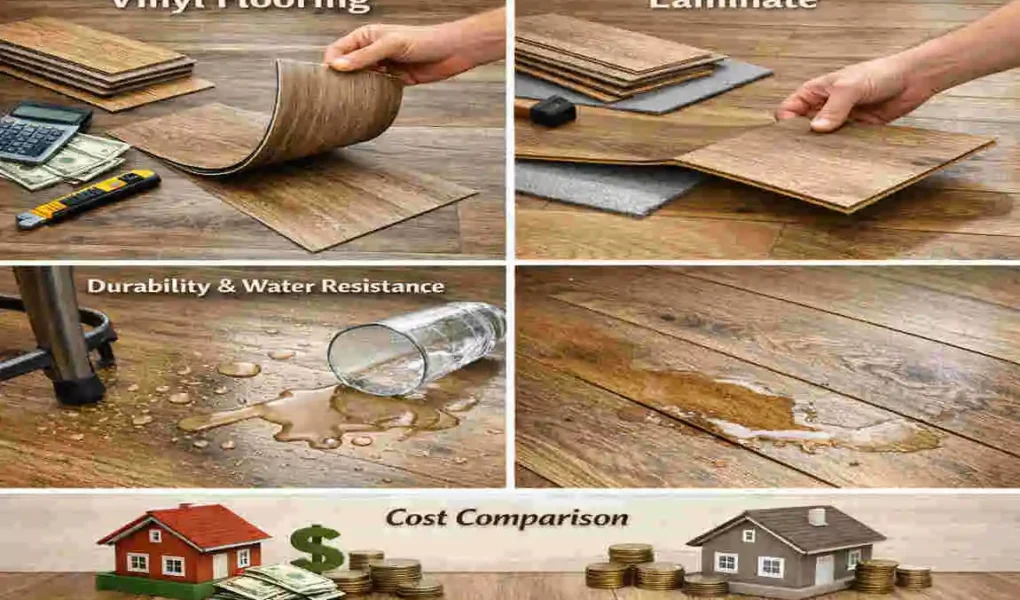
The Laminate Weakness: The Sponge Effect Remember how we discussed laminate’s core? It is made of High-Density Fiberboard (wood fibers). What happens to wood when it gets wet? It swells. Laminate is engineered to be water-resistant on its top surface. If you spill a glass of water and wipe it up in five minutes, you will be fine. But water is sneaky. It finds its way into the seams between the planks. Once water reaches that HDF core, the fiberboard absorbs the moisture like a sponge. The edges of the planks will swell, buckle, and permanently warp. No amount of drying will shrink them back down. If a pipe bursts or a monsoon floods your ground floor, your laminate is ruined.
The Vinyl Superpower: 100% Waterproof Vinyl flooring is made entirely of synthetic plastic materials. Plastic does not absorb water. It is that simple. High-quality Luxury Vinyl Plank is 100% waterproof. You can take a piece of vinyl flooring, submerge it in a bucket of water for a week, pull it out, dry it off, and install it. It will not warp, swell, or lose its structural integrity.
Spill Tests and Real-Life Scenarios Imagine an overflowing washing machine or a slow leak under the kitchen sink.
- In a 24-hour spill test, a puddle left on laminate will seep through the joints, causing irreversible bubbling at the seams.
- In the same 24-hour test, a puddle on vinyl simply sits there, waiting for you to mop it up. The sealed core acts as a complete barrier.
Best Uses for Wet Zones Because of these distinct characteristics, the rules for where you can install these floors are strict. Laminate should only be installed in dry, climate-controlled rooms (bedrooms, living rooms, hallways). Vinyl can go absolutely anywhere—including high-moisture zones like full bathrooms, kitchens, laundry rooms, and basement levels.
Water Resistance Scores
Feature Laminate Flooring Vinyl Flooring (LVP)
Top Surface Water-resistant Waterproof
Core Material Wood fibers (absorbs water) Solid PVC (repels water)
Seam Vulnerability High risk of swelling No risk of swelling
Wet Room Approved? NO (keep out of bathrooms) YES (ideal for all rooms)
Overall Water Score 3 / 10 10 / 10
The Water Resistance Winner: Vinyl completely dominates. For households in humid climates or anyone wanting peace of mind in the kitchen and bath, vinyl’s waterproof nature is an absolute game-changer.
Appearance and Style Options
We all want our homes to look beautiful. If a floor is durable but ugly, it fails the test. When we look at vinyl flooring vs laminate purely from an aesthetic standpoint, the competition is incredibly tight.
The Realism of Laminate For a long time, laminate was the undisputed king of fake wood. Because it uses a rigid fiberboard core, manufacturers can press deep, realistic “embossed” textures into the surface. When you run your hand over high-quality laminate, you can feel the grooves of the wood grain perfectly matching the photographic image beneath. It looks and feels remarkably like real, expensive hardwood.
The Printed Depth of Vinyl Early versions of vinyl looked like cheap, shiny plastic. But welcome to 2026! Today’s Luxury Vinyl Plank utilizes 3D printing technology. While the texture might not be as deeply embossed as laminate, the printed layer’s visual depth is stunning.
Variety and Trends Both materials offer endless varieties of oak, hickory, maple, and even stone or concrete looks. Current 2026 trends for modern Pakistani homes lean heavily toward light, neutral tones—think warm greys, bleached woods, and natural, raw oak finishes. Both vinyl and laminate deliver these trends perfectly. However, vinyl offers a wider variety of stone-look patterns that are safe for bathrooms.
The Appearance Winner: It is a tie. Laminate holds a slight edge for the physical “feel” of real wood. Still, vinyl’s high-definition visuals look stunning in any setting.
Ease of Installation and Maintenance
You have chosen your design, and the boxes have arrived. Now, how hard is it to get these planks onto your floor, and how hard is it to keep them clean?
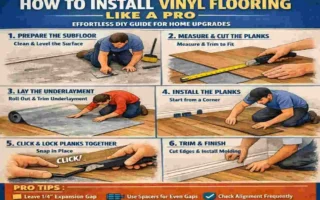
The DIY Installation Experience Both floors champion the click-lock floating system. You simply angle one plank into another, click it down, and move on.
- Laminate is very fast to click together, but as mentioned earlier, it requires a power saw to cut the planks to fit the edges of your room. You also need to install a foam underlayment first.
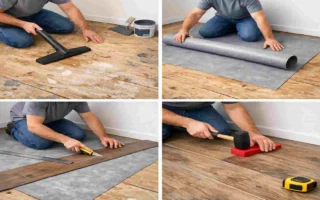
- Vinyl is the ultimate DIY dream. Many LVPs come with an underlayment pad already attached to the back. To cut a plank, you just score the surface with a heavy-duty box cutter and snap the board in half. No power tools, no sawdust.
Everyday Cleaning and Maintenance Maintenance for both floors is beautifully simple. You only need a soft-bristle broom and a damp mop.
- Laminate Cleaning: Be careful. Never use a soaking wet mop on laminate, or you risk water seeping into the seams. Use a slightly damp microfiber mop and dry it quickly.
- Vinyl Cleaning: Vinyl handles moisture effortlessly. You can confidently wet-mop a vinyl floor to clean up sticky kitchen spills without a single worry about water damage.
The Installation & Maintenance Winner: Vinyl flooring. The lack of power tools for installation and the stress-free mopping routine make vinyl much easier to live with.
Pros and Cons: Quick Reference Tables
Are you feeling overwhelmed by all this information? Do not worry. We have broken down the pros and cons of vinyl vs laminate 2026 into two simple, scannable tables. Use these to quickly weigh what matters most to your home.
Vinyl Flooring Pros and Cons
Vinyl ProsVinyl Cons
100% Waterproof: Perfect for kitchens, baths, and basements. The “Feel” Factor: Can sometimes feel slightly synthetic compared to real wood underfoot.
Highly Durable: Resists impacts, drops, and dents without cracking. Subfloor Prep: Requires a very smooth subfloor; imperfections will show through thinner vinyl.
DIY Friendly: Easy to score and snap; no heavy power tools needed. Off-Gassing: Cheaper quality vinyl can emit mild VOCs (chemical smells) when first unboxed.
Easy Maintenance: Safe to wet-mop freely without fear of damage. Removal: Glue-down vinyl versions are notoriously difficult to remove later.
Quiet Underfoot: Absorbs sound better, reducing the “hollow” clicking sound. Fading: Direct, intense sunlight over years can cause some fading.
Laminate Flooring Pros and Cons
Laminate ProsLaminate Cons
Authentic Look & Feel: Deep textures closely mimic the grain of real hardwood. Not Waterproof: HDF core swells and ruins the floor if exposed to water leaks.
Budget-Friendly: One of the cheapest ways to get a high-end wood look. Installation Mess: Requires power saws, generating significant sawdust.
Scratch Resistant: A tough aluminium oxide top layer resists pet claws. Hollow Sound: Can sound loud and clicky when walking with hard shoes.
Fades Less: Highly resistant to fading from UV sunlight. Unforgiving: Rigid core cracks under heavy impact (like dropping a heavy tool).
Eco-Friendly Core: Made from recycled wood fiber materials. Strict Cleaning: Cannot be wet-mopped; requires special care.
Which is Best for Your Home? Room-by-Room Guide
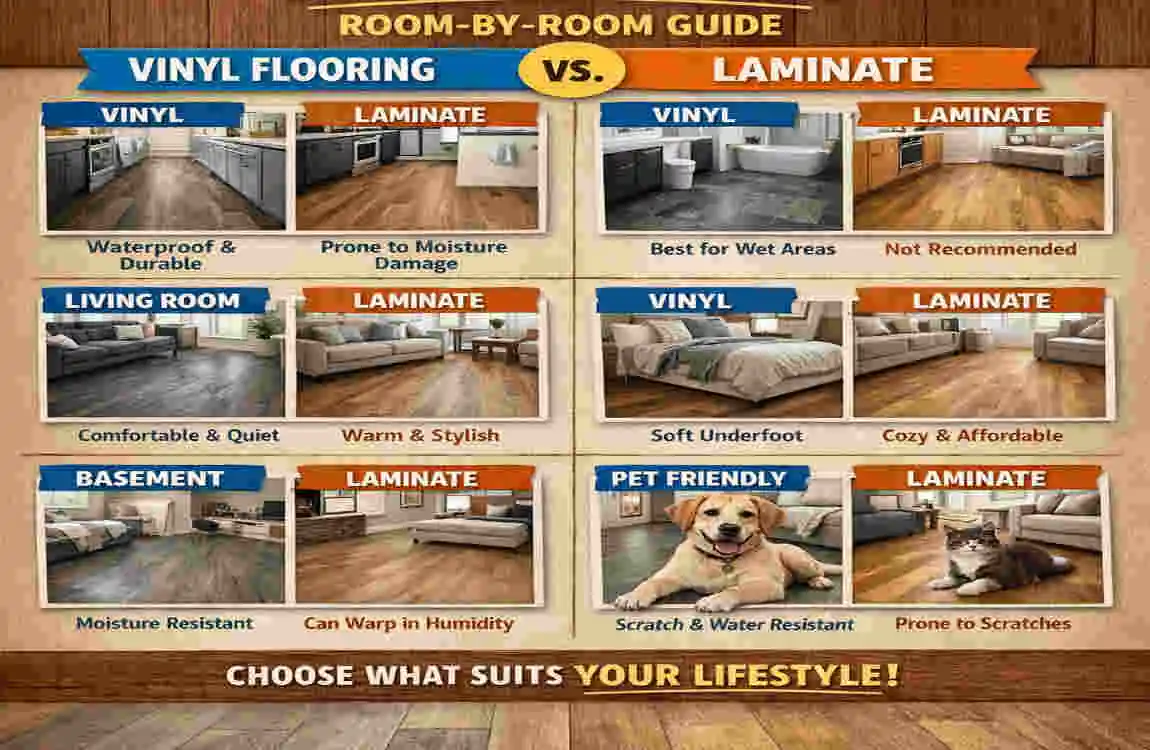
Still sitting on the fence? The truth is, the winner of the vinyl flooring vs laminate debate depends entirely on where you plan to put it. What works perfectly in your bedroom might be a disaster in your bathroom.
Let us take a walk through your house and determine the best flooring for each space.
Kitchens and Bathrooms
- The Winner: Vinyl Flooring
- Why: This is a no-brainer. Kitchens face dropped pots, spilled juices, and leaking dishwashers. Bathrooms deal with steam, splashing tubs, and wet footprints. Laminate will eventually fail in these environments. Vinyl’s 100% waterproof core ensures your floor stays pristine no matter how messy life gets.
Living Rooms and Bedrooms
- The Winner: Laminate Flooring (with a catch)
- Why: These are dry, climate-controlled spaces. If you want the most realistic, textured wood look to impress guests in your formal living room, laminate is the choice. It is also incredibly cost-effective for large, dry bedrooms. The catch: If you prefer a single, continuous floor running through your entire house (including wet zones), choose vinyl for a seamless flow.
High-Traffic Areas (Hallways, Kids’ Playrooms, Pets)
- The Winner: Vinyl Flooring
- Why: Kids and pets are tough on floors. Dogs race down hallways, and kids drop heavy toys. The rigid surface of laminate can chip under these harsh impacts, and dogs’ nails can slide on its slick surface. Vinyl is slightly softer, offering better grip for paws, and it bounces back from heavy impacts. It also muffles the sound of running feet much better than loud, hollow laminate.
Budget Homes and First-Time Renovators in Lahore
- The Winner: Laminate as a Starter, Vinyl as an Upgrade
- Why: If you are a young couple moving into your first apartment in a local neighborhood and every Rupee counts, laminate offers a beautiful, immediate upgrade over bare concrete. However, if you are looking to invest in a forever home and want to avoid replacing the floor when monsoon humidity sets in, spending a little extra on luxury vinyl is the smartest long-term financial decision.
The Eco-Factors
We must also consider the environment and indoor air quality.
- Laminate is made from natural, recycled wood fibres, making it a sustainable material choice. However, the resins used to bind the core can sometimes contain formaldehydes, so you must look for low-emission brands.
- Vinyl is entirely a synthetic plastic derived from petroleum. However, high-quality vinyl in 2026 is highly recyclable, and many top brands have eliminated toxic phthalates, ensuring safe indoor air quality.
Your Quick Decision Tree:
Ask yourself these three simple questions to decide instantly:
- Does the room have plumbing (sinks, tubs, dishwashers)? If YES, choose Vinyl.
- Are you on a strict, tight budget for a dry room? If YES, choose Laminate.
- Do you have large, indoor pets and chaotic kids? If YES, choose Vinyl.
Installation Tips and Common Mistakes
Whether you decide to tackle the project yourself or hire a professional, knowing the process helps you avoid costly disasters. Let us look at some essential tips for both floors.
Tools of the Trade
- For Laminate: You will absolutely need a tape measure, a pencil, a tapping block, a pull bar, a rubber mallet, spacers, and a power saw (miter or circular).
- For Vinyl (LVP): You only need a tape measure, a pencil, a straight edge, a heavy-duty utility knife, spacers, and a rubber mallet.
Pro vs. DIY Costs in Pakistan: In Pakistan’s local markets, daily labour wages are relatively affordable. Hiring a local carpenter or laminate flooring installer might cost around Rs. 50 to Rs. 100 per square foot depending on the city. Because vinyl requires no heavy machinery, you can easily save that labor cost by turning it into a weekend DIY project with a friend.
The Biggest Mistakes to Avoid
- Ignoring the Subfloor: Vinyl is flexible. If you install it on an uneven, bumpy concrete floor, the vinyl will mould to those bumps over time, making it look terrible. Ensure the floor is perfectly level.
- Forgetting the Moisture Barrier: If you install laminate over a concrete ground floor without first laying a plastic vapour barrier, moisture from the earth will seep up and rot the laminate from the bottom.
- Skipping the Expansion Gap: Both floors expand and contract with temperature changes. You must leave a 1/4-inch gap around the edges of the walls (hidden by baseboards), or the floor will buckle in the summer heat.
Real User Reviews and Case Studies
Do not just take our word for it. Let us look at how these floors hold up in the real world by examining some typical homeowner experiences.
The Flood Survival Case A recent review shared on a popular Pakistani e-commerce group highlighted a dramatic real-world test. A homeowner in DHA Lahore had installed premium laminate in their living room and luxury vinyl plank in their adjacent dining area. During an unexpected summer monsoon, water entered through a poorly sealed window, flooding both rooms to an inch deep.
- The Laminate Result: Within hours, the edges of the laminate planks swelled up like cardboard. The entire living room floor was ruined, so it had to be ripped up and thrown away.
- The Vinyl Result: The homeowner simply swept the water out of the dining room, ran a fan to dry the surface, and the vinyl floor looked brand new. Not a single plank shifted or warped.
Everyday Life with Kids Another user review detailed life with toddlers. “We put laminate in our last house, and within a year, my son had chipped a plank by dropping a heavy metal toy truck on it. In our new house, we went with vinyl. He drops things all day long, and there isn’t a single dent. Plus, it’s so much easier to clean up his spilled juice boxes.”
The consensus from real users is clear: Laminate is beautiful for quiet adults, but vinyl is the ultimate protector against the chaos of real life.
Frequently Asked Questions (FAQs)
Is vinyl flooring vs laminate better for water and humidity? Yes, absolutely. Vinyl flooring is made of synthetic PVC, making it 100% waterproof from top to bottom. It will not warp or swell. Laminate has a wood-fiber core that absorbs moisture and will permanently warp if exposed to standing water or high humidity.
What is the vinyl vs laminate cost per sq ft in Pakistan? While prices fluctuate, standard laminate generally costs between Rs. 300 to Rs. 1500 per square foot, making it very budget-friendly upfront. Luxury Vinyl Plank (LVP) is a slightly more expensive option, ranging from Rs. 600 to Rs. 2000+ per square foot. Still, it offers better long-term savings due to its durability.
Which flooring lasts longer? Vinyl flooring outlasts laminate in almost every scenario. A high-quality vinyl floor can last 15 to 25 years because it resists water damage and heavy impacts. Laminate typically lasts 10 to 15 years but can be ruined in an instant by a single plumbing leak.
Can I install laminate or vinyl over existing tiles? Yes, both can be installed over existing ceramic or porcelain tiles, provided the tiles are firmly attached and perfectly level. However, if your tile grout lines are very deep, you may need to fill them in with a leveling compound first so the new planks do not sink into the grooves.
Does laminate scratch easier than vinyl? Laminate actually has a harder top wear layer (aluminum oxide) than vinyl, making it slightly more resistant to light surface scratches like pet claws. However, vinyl is more resistant to deep gouges, impacts, and dents from dropped heavy objects.
Which floor is better for resale value? Historically, true hardwood holds the highest resale value. However, between vinyl and laminate, high-quality, rigid-core Luxury Vinyl Plank (LVP) is currently more sought after by homebuyers in 2026 due to its waterproof guarantees and premium look.