Imagine this scenario: It is a humid Tuesday night in Lahore. The streetlights are dim, and the neighbourhood is quiet. You are fast asleep, enjoying the cool breeze from your air conditioner. Suddenly, a silent signal zips through a fibre-optic cable at the speed of light. Your phone buzzes on the nightstand, and a siren begins to wail before a potential intruder even manages to pry open the window lock. The intruder flees, terrified by the noise and the sudden floodlights. You wake up, check your phone, and see exactly which sensor was triggered. You are safe. Your family is safe.
This is not a scene from a movie; it is the reality for thousands of homeowners who have switched to KY Fib house alarms. In a world where security concerns are rising—especially in bustling urban centres like DHA, Gulberg, and Model Town—relying on a simple padlock is no longer enough. You need a system that is smarter, faster, and tough enough to handle our local environment.
If you have recently purchased one of these systems, or are considering it, you probably have one big question: “KY Fib house alarms and how to use them for unbreakable protection?”
You have come to the right place. KY Fib (short for KY Fibreglass/Fibre-optic Hybrid Systems) has become a household name in Pakistan because these alarms are built differently. Unlike cheap plastic units that crack in the scorching June heat or malfunction in the monsoon humidity, KY Fib units are reinforced with fibreglass composites. They are built to last.
What Are KY Fib House Alarms? Key Features Breakdown
Before we dive into the buttons and settings, it is important to understand what you are actually putting on your walls. When we talk about KY Fib house alarms and how to use them, we are talking about a hybrid system.
Most old-school alarms were entirely wired (messy and expensive to install) or entirely wireless (prone to signal jamming). KY Fib bridges this gap. It uses a fibreglass-reinforced control panel (the brain) that communicates with wireless sensors using a high-frequency, encrypted signal. This makes the alarm system incredibly difficult for hackers or jamming devices to compromise.
The Core Components
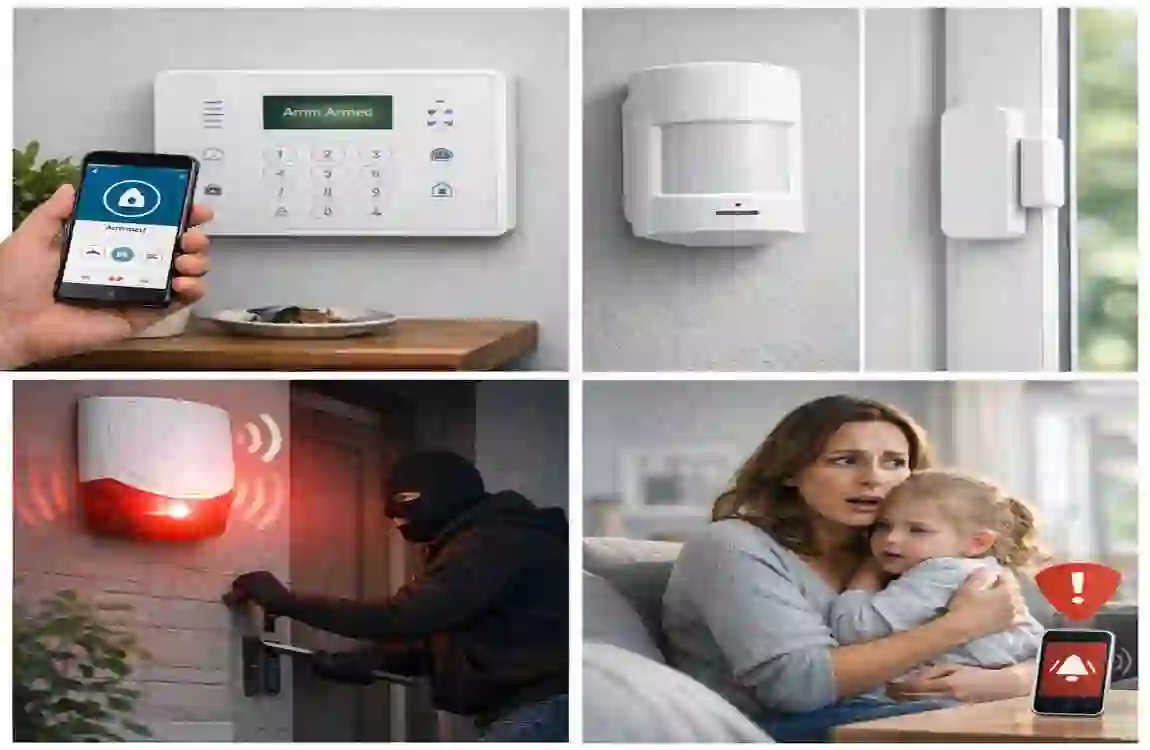
Every standard KY Fib kit comes with a few essential pieces of hardware. Here is what you will find in the box:
- The Control Panel (The Hub): This is the heart of the system. It connects to your WiFi and usually has a SIM card slot for 4G backup. It is encased in KY Fib’s signature durable material.
- Door and Window Sensors: These are two-part magnetic devices. One part goes on the frame, the other on the door. When the magnetic field is broken (the door opens), the alarm trips.
- Motion Detectors (PIR): Passive Infrared sensors that detect body heat moving across a room.
- The Siren: A high-decibel speaker that gets loud enough to wake the neighbours.
- Key Fobs: Small remotes for your keychain to arm or disarm the system without a phone.
Why Are These Features Special?
You might be wondering, “Why should I choose this over a generic alarm from a hardware store?” The answer lies in durability and range.
Fibreglass Durability (IP65 Rated): Electronics hate heat and dust. In Punjab, we have plenty of both. The KY Fib housing is rated IP65, meaning it is dust-tight and water-resistant. It won’t warp or crack at 45°C.
4G Backup and Long Range: If your internet goes down (a common occurrence), the system switches to a 4G SIM card instantly. Plus, the sensors have a range of up to 100 meters, making them perfect for large 1-Kanal or 2-Kanal villas where the gate is far from the house.
Zone Customisation: You can name specific areas. Instead of “Zone 1,” your phone will say “Kitchen Window” or “Servant Quarter Gate.”
Comparison: KY Fib vs The Competition
To give you a clearer picture, let’s look at how KY Fib stacks up against other options available in the local market.
FeatureKY Fib SystemGeneric “China” AlarmHoneywell / DSC (Imported)
Housing Material Fibreglass Reinforced Standard Plastic Hard Plastic
App Control Free (Lifetime) Often Paid/Subscription Free or Paid
Weather Resistance High (Heat/Humidity) Low (Prone to cracking) Medium
Estimated Price PKR 15,000 – 30,000 PKR 8,000 – 12,000 PKR 40,000+
Installation DIY Friendly DIY Friendly Professional Required
KY Fib House Alarms and How to Use: Complete Buyer’s Guide
So, you are convinced that this is the right system for you. But where do you start? Buying security equipment can be overwhelming because there are so many boxes that look the same. Let’s simplify the buying process for you.
Where to Buy in Lahore and Pakistan
You generally have two reliable options for purchasing genuine KY Fib systems:
- Physical Electronics Markets: If you are in Lahore, places like Hafeez Centre or Hall Road are goldmines. You can physically inspect the build quality. Look for the holographic seal on the box to ensure it is not a copy.
- Online Marketplaces: Platforms like Daraz or specialised security websites often stock these. The benefit here is that you can read user reviews before you buy. Just make sure the seller has a high rating.
Understanding the Cost
Budgeting is crucial. A “Starter Kit” usually costs around Rs. 18,000. This typically includes the hub, one motion sensor, and two door sensors. This is great for an apartment or a small portion.
If you have a full house, you will likely need the “Pro Setup,” which can cost Rs. 25,000 or more. This adds extra sensors for back doors, balcony sliders, and perhaps a smoke detector integration.
Variants: Basic vs Smart
When shopping, you will see two main types:
- The Basic Variant: a standalone alarm. It makes noise and might send an SMS. It is simple and robust.
- The Smart Variant: This connects to your WiFi. It lets you use the mobile app and often integrates with Google Home or Amazon Alexa. For 2026, we highly recommend the Smart Variant for that remote monitoring capability.
Step-by-Step: KY Fib House Alarms Installation and Setup
This is the part that scares most people. But don’t worry—you do not need to be an electrical engineer to set this up. The beauty of KY Fib house alarms and how to use them lies in their simplicity.
Here is your foolproof, step-by-step guide to getting your home secured in under an hour.
Unboxing and Powering Up
Open the box and lay everything out. Find the main Control Hub. Plug it into a central power outlet in your home, near your WiFi router. Turn it on. You should see a green LED light indicating it is charging its internal backup battery.
The App Setup
While the hub powers up, grab your smartphone. Go to the Google Play Store or Apple App Store and search for the KY Fib security app. Download it.
- Open the app and create an account using your email or phone number.
- Tap “Add Device” or the “+” sign.
- Scan the QR code located on the back of your Control Hub.
- Follow the prompts to connect the Hub to your home WiFi password.
Pairing Your Sensors
Now, take your sensors. Pull the little plastic tab out of the battery compartment to activate them.
- In the app, select “Add Sensor.”
- Trigger the sensor (pull the magnet away from the door sensor, or wave your hand in front of the motion sensor).
- The Hub will beep to confirm it has found the sensor.
- Name it immediately. Call it “Front Door” or “Lounge Motion”, so you don’t get confused later.
Mounting the Sensors
You don’t necessarily need a drill. Most KY Fib sensors come with industrial-strength 3M double-sided tape.
- Door/Window Sensors: Stick the larger piece on the door frame and the smaller piece on the moving door. Make sure the arrows on the two pieces align and are less than 1cm apart when the door is closed.
- Motion Sensors (PIR): These go in the corner of the room, about 7-8 feet high.
Lahore Pro Tip: If you are mounting sensors near a window or outside, use a small dab of silicone glue around the edges of the adhesive tape. The extreme heat in June can sometimes make the sticky tape melt, causing sensors to fall off.
The “Walk Test”
Before you declare victory, you must test the system.
- Set the alarm to “Arm” Mode via the app.
- Wait 30 seconds for it to activate.
- Open the front door.
- The siren should scream, and your phone should get a notification instantly.
- Disarm it quickly to save your ears!
Integrate Backups
If you bought a SIM card for the security system, insert it into the slot on the Hub now. This ensures that if PTCL or your fibre internet goes down, the alarm can still send you SMS alerts.
Daily Use: KY Fib House Alarms and How to Use for Everyday security
Congratulations! Your system is installed. But buying a treadmill doesn’t make you fit; you have to use it. The same applies to security. Here is how to integrate the KY Fib system into your daily life.
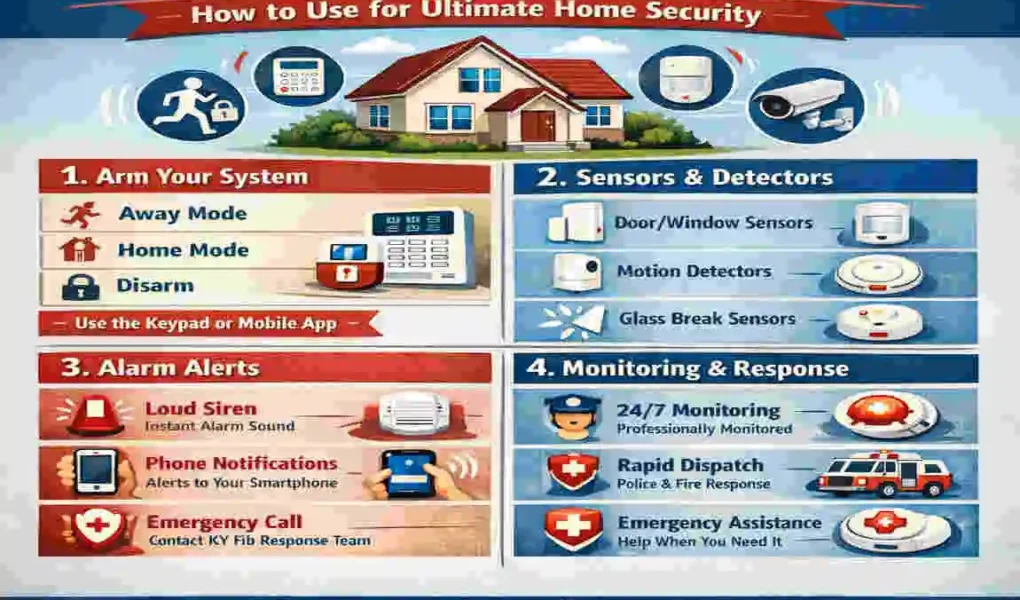
Understanding the Arming Modes
Your app usually has three big buttons. Knowing the difference is key.
- Away Arm (Full Arm): Use this when nobody is home. All sensors, including door sensors and interior motion detectors, are active. If a cat walks through the living room, the alarm goes off.
- Home Arm (Stay Mode): Use this when you are sleeping inside. This activates the perimeter sensors (doors and windows) but turns off the interior motion detectors. You can walk to the kitchen for a glass of water without triggering the siren, but if someone tries to pry open a window, the alarm sounds.
- Disarm: This turns everything off, except for “24-hour zones” like smoke detectors or panic buttons.
Creating Scenarios
To get the most out of KY Fib house alarms and use them effectively, build them into your routine.
- The Morning Routine: As soon as you wake up, use your phone or the key fob to “Disarm” the system so you can open the windows for fresh air.
- The Vacation Setting: If you are going to Murree or travelling abroad, use the “Away Arm.” Also, add a “Guest User” in the app for a trusted neighbour. This allows them to receive alerts and check on your house without you having to give them your main password.
Using the App Dashboard
Make it a habit to check the app once a day. The dashboard will show the battery status for each sensor. If a sensor says “Low Battery,” change it immediately. The app also keeps a History Log that shows exactly when doors were opened or closed. This is great for keeping track of when domestic staff arrive or leave.
Advanced Tips: Maximise KY Fib for Ultimate Home security
You have mastered the basics. Now, let’s look at the power-user features that make KY Fib a true game-changer for Pakistani homes.
Smart Home Integration
Did you know your KY Fib system can talk to other devices? If you have smart lights, you can create a routine that turns on all the lights in the house security when the alarm is triggered. This is a massive deterrent for burglars who prefer the dark.
Custom Zoning for Large Homes
In larger homes with separate servant quarters or annexes, you can set up Partitions.
- Partition 1: Main House.
- Partition 2: Servant Quarter. You can keep the Servant Quarter armed while the Main House is disarmed, or vice versa. This gives you flexible control over different areas of your property.
Managing Power Outages (Load Shedding)
While the Hub has a built-in battery, it usually lasts 4-6 hours. In severe load shedding, this might not be enough. Pro Tip: Plug your KY Fib Hub into your home’s main UPS or solar inverter line. Since the device consumes very little power (less than a mobile charger), it won’t drain your batteries while staying online 24/7.
Common KY Fib House Alarm Problems and Fixes
Even the best technology can have a bad day. Here are the most common issues users face with KY Fib house alarms and how to troubleshoot them.
False Alarms
- The Issue: The siren goes off, but nobody is there.
- The Fix: Check your Motion Sensors. Are they pointing at a window where sunlight hits directly? Rapid temperature changes from the sun can trick the sensor. Also, check for spiders or geckos crawling on the lens.
Sensor “Offline” Notification
- The Issue: The app says “Front Door Offline.”
- The Fix: The sensor is likely too far from the Hub, or the battery is dead. Try moving the Hub closer or replacing the CR2032 battery in the sensor.
App Not Sending Notifications
- The Issue: The alarm triggers, but your phone is silent.
- The Fix: Go to your phone’s settings. Ensure that “Notifications” are allowed for the KY Fib app and that your phone is not in “Do Not Disturb” Mode. Also, check if the Hub is connected to WiFi.
Real User Stories: KY Fib Success in Lahore Homes
Does it actually work? Let’s hear from the people on the ground.
The Model Town Incident: Mr Ahmed, a resident of C-Block Model Town, installed a KY Fib system last winter. “We were away at a wedding,” he recalls. “Around 11 PM, my phone buzzed. The ‘Back Lounge Window‘ sensor had been tripped. I immediately checked my cameras and saw two men trying to enter. The siren was already blaring, and the neighbours came out. The thieves ran away before they could steal a single thing. Best investment I ever made.”
Peace of Mind in Bahria Town. Mrs Zoya lives alone with her children in Bahria Town. “I used to be scared at night,” she says. “Now, I put the system on ‘Home Arm’ every night. Seeing that green light on the panel gives me such peace of mind. I know that if a door opens, I will know instantly.”
KY Fib vs Other Systems: Is It Right for Your Home?
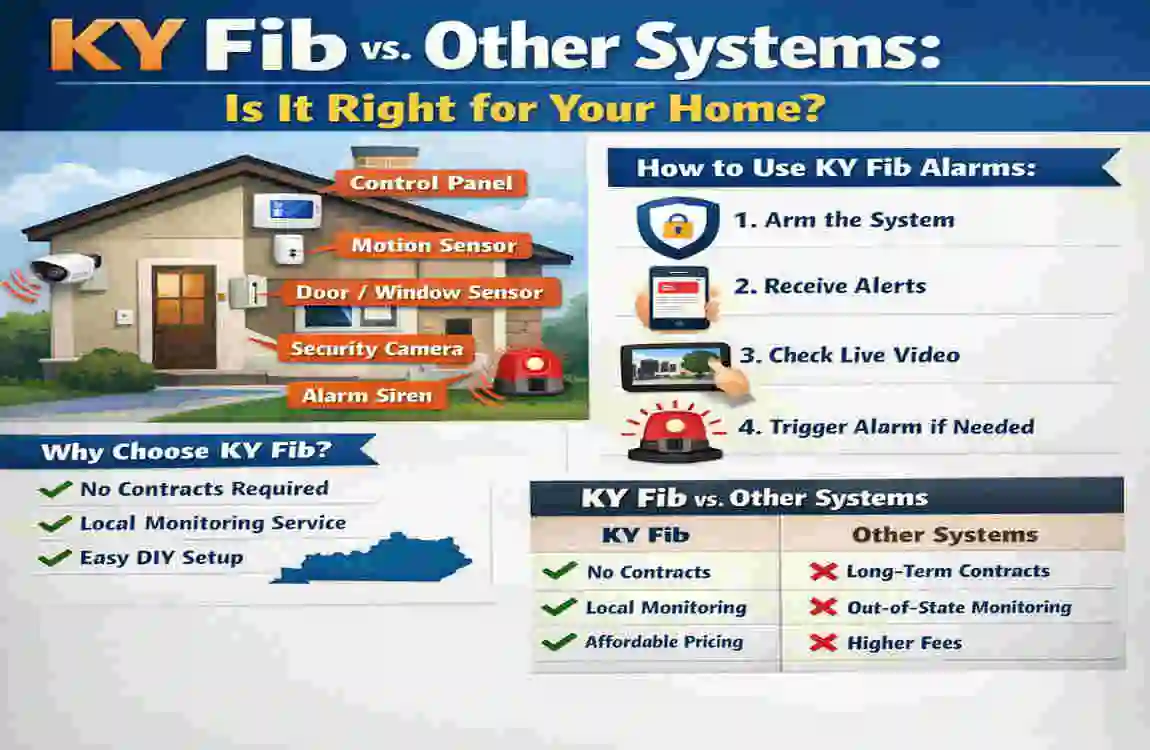
Is KY Fib the perfect solution for everyone? Almost, but let’s weigh the pros and cons one last time.
AspectKY Fib ProsKY Fib Cons
Affordability: Very budget-friendly compared to imported brands. It is more expensive than basic generic alarms.
Ease of Use: The app is intuitive and easy to learn. There is a slight learning curve for older people.
Monitoring You self-monitor via your phone (free). It does not include a 24/7 call centre service.
Durability Built specifically for harsh weather. Design is functional, not necessarily “luxury home” looking.
FAQs: KY Fib House Alarms Answered
Here are the quick answers to the most frequent questions we get.
1. What are KY Fib house alarms, and how to use the app? KY Fib alarms are fibreglass-reinforced security systems. You use the app by downloading it, scanning the QR code on your hub, and then using the dashboard to arm, disarm, and monitor your sensors remotely.
2. What is the KY Fib house alarms installation cost in Pakistan? If you do it yourself (DIY), it is free! If you hire a technician from Hall Road or your local electrician, they will typically charge between Rs. 2,000 and Rs. 5,000, depending on the number of sensors.
3. How to reset KY Fib alarms? If the system is acting up, look for a small “Reset” hole on the back of the Hub. Use a pin to press and hold the button inside for 10 seconds. The device will beep and return to factory settings. You will need to pair your sensors again.
4. Are KY Fib alarms wireless? Yes and no. The connection between the sensors and the hub is wireless. However, the main Hub usually needs to be plugged into a power socket to work continuously.
5. KY Fib vs Ring—which is better for Lahore? The ring is excellent but requires high-speed, stable internet and a subscription in USD. KY Fib is better for Lahore because it is cheaper, works with local SIM cards for backup, and withstands the heat better.
6. What is the battery life of KY Fib sensors? The coin batteries in the door sensors usually last 12 to 18 months. The motion sensors use slightly larger batteries and typically last about 1 year. The app will warn you when they are low.
7. Can I use KY Fib for apartments? Absolutely. In fact, it is perfect for apartments because you don’t need to run wires through the walls. You can install it without damaging the paint, making it renter-friendly.