
Imagine this scenario: It’s a sunny Saturday morning. While other buyers are fighting tooth and nail at a crowded open house, stressing over bidding wars and escalating prices, you are casually walking through a stunning property that no one else knows about. There is no “For Sale” sign in the yard. There is no Zillow listing. It’s just you, the seller, and a quiet opportunity to snag your dream home.
This isn’t a fantasy. This is the world of off-market real estate.
But it begs the question that brings so many confused buyers to Google: if a house is off-market, what does that mean?
In simple terms, if a house is off the market, what does it mean? It means the property is not publicly listed on the Multiple Listing Service (MLS) or popular real estate portals, but it may still be available for sale through private networks.
In the competitive landscape of the 2026 real estate market, where inventory is tight and interest rates are fluctuating, finding these hidden gems is like finding a secret menu at your favorite restaurant. According to recent data, inventory constraints are still a major hurdle for buyers. By looking where others aren’t, you save time, reduce stress, and potentially save a significant amount of money.
What Does “Off Market” Really Mean in Real Estate?
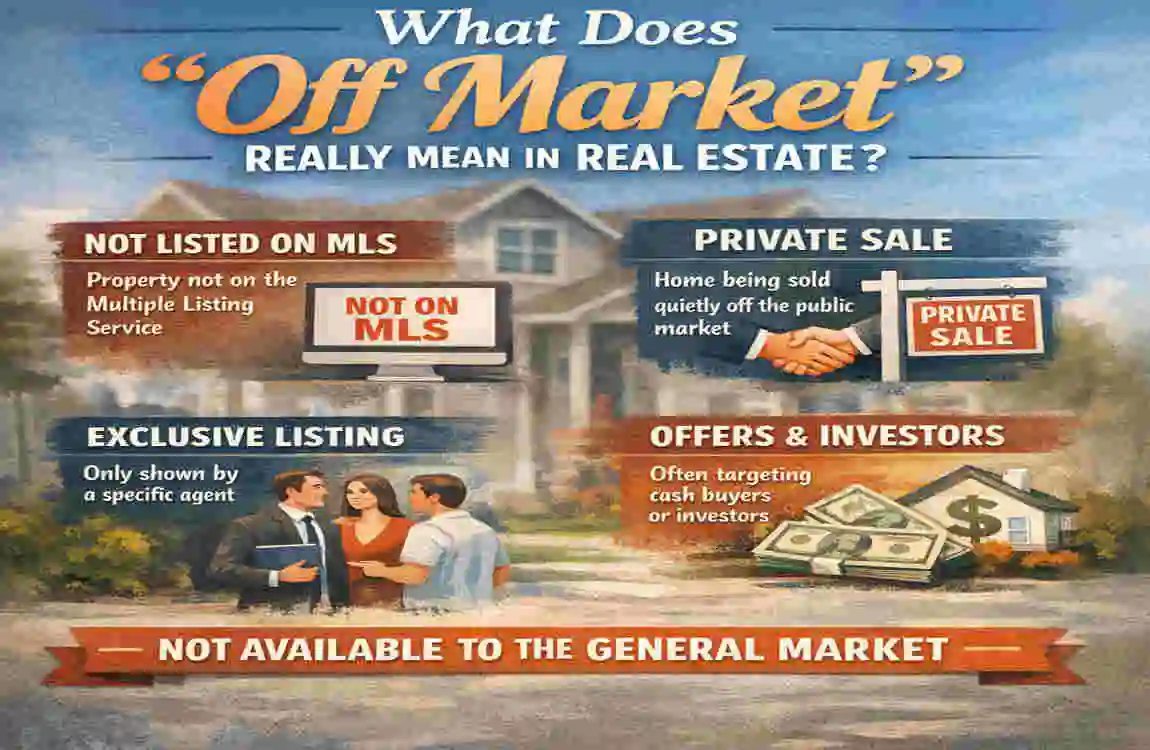
To truly master this strategy, you need to understand the terminology. In real estate, “off-market” can refer to two distinct things, depending on the context.
Defining Off-Market Properties
First, it can simply mean a house that is not for sale. The owners are happy, living their lives, and have no intention of moving. This is the literal definition.
However, in the context of buying and selling, what does it mean when we ask whether a house is off-market? We are usually referring to “pocket listings” or private sales. These are homes where the seller wants or needs to sell, but hasn’t broadcast it to the world. They aren’t on Realtor.com, Redfin, or the local MLS.
Think of it like an exclusive club. You have to know the right people or have the right information to get in.
Off-Market vs. On-Market vs. Contingent
To clear up the confusion, let’s look at how these properties stack up against what you usually see online.
StatusPublicly Listed? Who Can Buy It? Competition Level
On-Market Yes (MLS, Zillow, etc.) Anyone with internet access , High (Bidding wars common)
Off-Market No Buyers with private networks Low (Often 1-on-1 negotiation)
Contingent, yes, but under contract. Backup offers only Medium (Waiting game)
As you can see, the off-market category is the only one where you aren’t competing with the entire general public. This is where the “deal” aspect often comes into play.
The Legal Context: Pocket Listing Rules
You might be wondering, “Is this allowed?” Yes, but the rules have changed recently.
In the past, real estate agents would keep listings secret to find a buyer themselves and keep the full commission. This is often called a “pocket listing.” However, organizations like the National Association of Realtors (NAR) implemented policies (like the Clear Cooperation Policy) requiring listings to be added to the MLS within one business day of marketing them to the public.
So, in 2026, legitimate off-market deals are often truly private. They are sold within brokerages (called “office exclusives”) or directly by owners (FSBO), without ever being technically “marketed” to the broader public. This nuance is why having a connected real estate agent is more important today than ever before.
Why Do Houses Go Off-Market? 7 Common Reasons
It might seem counterintuitive. Why would a seller want fewer people to know about their house? Don’t more eyeballs mean more money? Not always. Here are seven reasons why a seller might prefer a quiet sale.
- Seller Privacy: This is huge for celebrities, politicians, or even just private individuals. They don’t want photos of their bedrooms on the internet, and they definitely don’t want strangers walking through their home during an open house.
- Testing the Market: Sometimes, a seller wants to see what price they could get without the commitment of an official listing. If they get their “magic number,” they sell. If not, no harm done.
- Avoiding “Days on Market” Stigma: If a house sits on Zillow for 60 days, buyers assume something is wrong with it. By selling off-market, sellers avoid this ticking clock.
- Family or Employee Sales: A landlord might sell a rental home to the tenant, or a parent might sell to a child. These transactions don’t need the MLS.
- Distress Situations: Financial trouble is embarrassing. A seller facing pre-foreclosure or divorce might want a quick, quiet sale to get cash fast without the neighbors knowing their business.
- Condition of the Home: If a house needs a new roof or major repairs, it might not qualify for traditional financing. Sellers know it won’t pass a standard inspection, so they look for cash buyers off-market.
- Builder Inventory: Sometimes developers have inventory they want to move quickly before the official launch of a new phase.
Real-Life Example: The “Private” Villa
Let’s look at a case study. Ahmed, a savvy investor in Lahore, was looking for a property in a high-demand area. Everything online was overpriced. Through a friend of a friend, he heard about a family who was urgently moving abroad. They didn’t have time to stage the house or host viewings.
Because the house was off-market, Ahmed was the only person they negotiated with. He offered a fair price that was 15% lower than similar listed homes because he could close quickly with cash. The sellers were relieved to avoid the hassle, and Ahmed got an incredible deal. This is the power of the private market.
Types of Off-Market Homes You Can Target
When you ask if a house is off-market, what does it mean? The answer often depends on which type of off-market deal you are looking at. Not all are created equal.
Here is a breakdown of the specific types you can hunt for in today’s market:
- Pocket Listings: These are technically listed with an agent, but the agent is keeping them within their own brokerage or private circle. You need to be on that agent’s email list to see these.
- “Pocket Pockets”: These are even quieter. These are just whispers. “Hey, I think the Johnsons might sell next spring.” There is no paperwork yet, just an intention. This is the ground floor.
- Pre-Foreclosures/Short Sales: These are homeowners who have missed mortgage payments. The bank hasn’t taken the house yet, but the clock is ticking. They are motivated to sell to avoid ruining their credit.
- FSBO (For Sale By Owner) Privates: Some owners try to sell on their own to avoid paying a commission. They might stick a sign in the yard, but never put it online. If you don’t drive by, you’ll never know.
- Estate Sales: When an older homeowner passes away, the heirs often want to liquidate the assets and split the money. They often prefer a quick off-market sale over dragging out the process.
- Investor Wholesalers: Wholesalers are people who find distressed properties, get them under contract, and then sell the contract to a buyer for a fee. These deals are almost exclusively off-market.
- New Construction Pre-Sales: Builders often sell the first few units of a development at a discount to get momentum going before the official marketing launch.
- Relocation Properties: When an employee is transferred for work, the company sometimes buys their house to help them move. The company then wants to dump that house fast, often off-market.
Which Type Fits Your Budget?
- Bargain Hunters: Look for Pre-foreclosures and Wholesales. These usually require work (sweat equity) but offer the biggest discounts.
- Luxury Buyers: Focus on Pocket Listings and Pocket Pockets. High-end sellers value privacy over speed.
Pros and Cons of Buying Off-Market Homes
Is buying a secret home always a good idea? Not necessarily. While the benefits are high, there are risks you must be aware of.
Top 5 Benefits
- Less Competition: This is the golden ticket. Instead of fighting 20 other buyers, it’s often just you.
- Negotiation Leverage: Without backup offers piling up, the seller is more likely to listen to your terms.
- Privacy: Just like the seller, maybe you don’t want the world knowing what you paid or where you are moving.
- Speed: These deals often close faster because the sellers are motivated.
- Price Potential: While not guaranteed, many off-market homes sell for 5-10% below market value because no agent commissions or bidding wars are driving the price up.
Key Risks and How to Mitigate
The lack of public scrutiny means you have to be sharper.
Potential Risk: How to Mitigate It
Limited Information: Never skip a professional home inspection. Dig into public records for liens.
Incorrect Pricing. Since there is no “market” bidding to validate the price, run your own rigorous “comps” (comparables).
Financing Hurdles: Some off-market homes are in poor condition. Have cash or “hard money” loans ready.
Always use a title company or a closing attorney to handle the money transfer.
How to Find Off-Market Houses Step-by-Step Guide
Now that we have answered whether a house is off-market, what does that mean? Let’s get to the actionable part: How do you find them?
You can’t just sit back and refresh a webpage. You have to be proactive.
Build Your Network The Human Element
Connect with Local Agents: Not all agents are equal. Find the “top producers” in your target neighborhood. Call them and say, “I am a serious buyer looking for X. Do you have any office exclusives or upcoming listings?”
Join Investor Groups: Websites like BiggerPockets or local Real Estate Investor Associations (REIAs) are goldmines. Go to the meetups. Shake hands. Tell people you are looking to buy. Wholesalers hang out here.
The “Driving for Dollars” Method: This is old school, but it works. Drive through the neighborhoods you like. Look for signs of distress: tall grass, boarded-up windows, or peeling paint. These owners might be ready to sell but haven’t listed the house. Write down the address and send them a letter.
Digital Tools and Hacks
Use Off-Market Apps: In 2026, technology is your friend. Apps like DealMachine or PropStream let you look up owner data by taking a picture of a house or clicking a map. You can see if they have high equity or are in pre-foreclosure.
Social Media Sleuthing: Join local community Facebook groups (e.g., “Living in [city Name]”). Search for posts where people ask for realtor recommendations—they are about to sell! DM them first. Also, follow local agents on Instagram; they often post “Coming Soon” teasers in their stories.
Direct Mail: It sounds outdated, but sending a handwritten note saying, “I love your house and want to buy it,” has a high success rate. Target owners who have owned their homes for 20+ years or absentee owners (landlords).
Advanced Tactics The Lahore/International Angle
If you are operating in markets like Pakistan (Lahore, Islamabad), the approach is slightly different. Here, personal relationships are king.
- Utilize platforms like Graana.com or Zameen.com, but don’t just look at listings. Look at the agents posting the listings. Call them and ask for their “files” that aren’t online yet.
- In these markets, word of mouth travels faster than the internet. Letting your family network know you are looking can unearth deals from distant relatives or friends.
Step-by-Step: How to Buy an Off-Market Home
You found a potential deal. Now, how do you actually buy it without the safety net of the MLS?
Verify Availability and Price: Contact the owner or agent. Confirm they are actually willing to sell and get a ballpark price.
Sign an NDA (If Needed): For high-end or celebrity homes, you might be asked to sign a Non-Disclosure Agreement before you can even see the property. This is standard.
Secure Your Financing: Off-market sellers usually want speed. If you need a mortgage, get a rock-solid Pre-Approval letter. If the home is distressed, look into Hard Money Loans (short-term, high-interest loans based on property value) or Renovation Loans (like the FHA 203k).
Due Diligence: Do not skip this. Get a home inspection. Get an appraisal. Check the title for liens (unpaid taxes or contractor bills). Since the house isn’t on the market, the seller hasn’t done the usual prep work so you might find surprises.
Negotiate Like a Pro: Since you aren’t fighting other buyers, you can start lower. A common tactic is to start 10% below what you think it’s worth. Use the inspection report to negotiate repair credits.
Close Quietly: Once the price is agreed upon, the process looks like a normal sale. You go to a title company, sign the papers, and get the keys.
Off-Market Success Stories and Stats
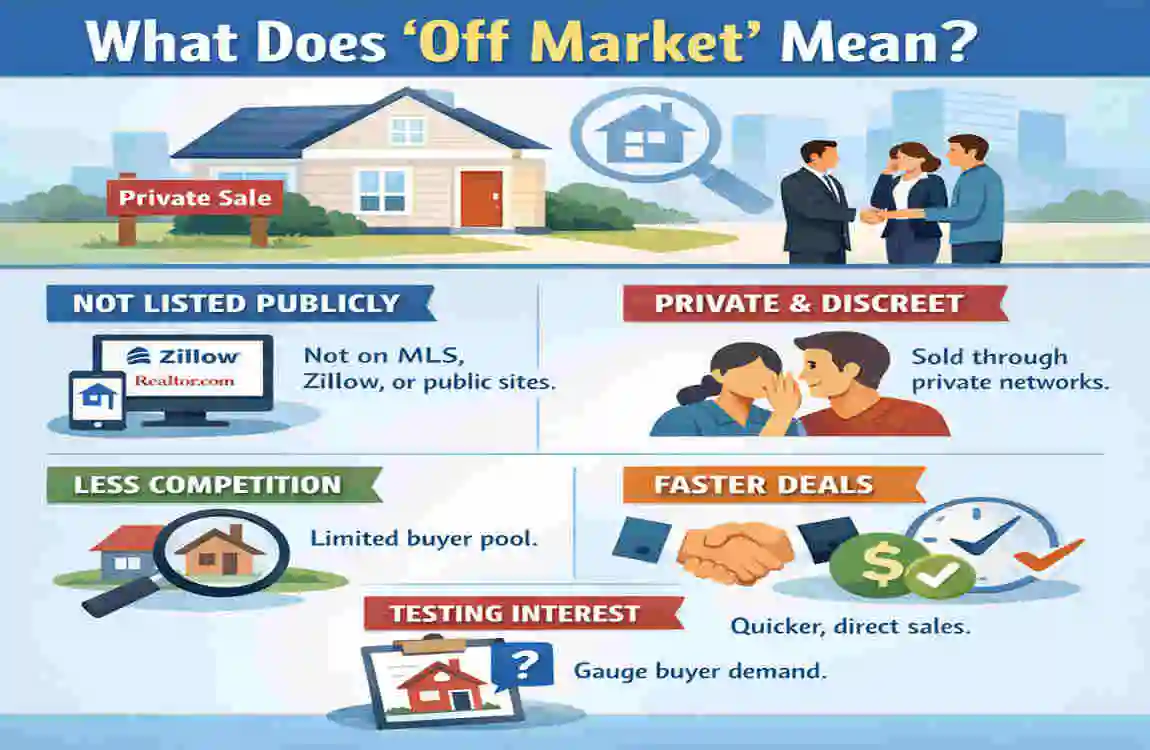
To prove this isn’t just theory, let’s look at what is happening in the real world.
- The US Flipper: Sarah, a flipper in Austin, Texas, found a home through a direct-mail campaign. The owner was inheriting a hoarding situation and just wanted out. Sarah bought it for $50,000 under market value, cleaned it up, and sold it for a massive profit.
- The First-Time Buyer: Mark and Lisa were tired of losing bidding wars in Seattle. They posted on their personal Facebook page that they were looking for a job. A coworker saw the post and connected them with her aunt, who was moving into assisted living. They bought the luxury house with zero competition.
- The Local Investor: In Lahore, Mr. Khan utilized a “pocket listing” from a trusted agent to buy a commercial plot in DHA. Because the deal never hit the open market, he avoided a price war that usually happens with prime commercial real estate, securing the asset for a great long-term hold.
The Stats: According to industry data from Inman, approximately 25% of real estate transactions in 2025 were off-market or private sales. That is a quarter of the market you are missing if you only look at Zillow!
FAQ: Quick Answers to “If a House Is Off Market, What Does It Mean?”
Here are quick answers to the most common questions we get about this topic.
Q: If a house is off the market, what does it mean regarding price? A: It often means the price is negotiable. While some sellers want a Premium for exclusivity, many are willing to discount the price in exchange for a quick, hassle-free sale without agent fees.
Q: Are off-market homes always cheaper? A: Not always. Some are priced higher because the seller isn’t motivated to sell. However, the potential for a deal is much higher because there is no competition driving the price up.
Q: How do I find pocket listings? A: You must build relationships with local real estate agents. Ask them specifically about “office exclusives” or “coming soon” properties.
Q: Is it legal to sell a house off-market? A: Yes, absolutely. Homeowners have the right to sell their property to anyone they choose, without listing it publicly, provided they comply with fair housing laws.
Q: What is the difference between “Off-Market” and “Coming Soon”? A: “Coming Soon” is a specific MLS status where the home is listed but not yet ready for showings. “Off-Market” usually means it is not on the MLS.