Have you ever looked at a home with a sleek, slightly angled roof and wondered what makes it unique? Or perhaps you are planning a home addition, a new garage, or a covered porch, and your contractor mentioned using a specific roof pitch. Ever wondered what a 3/12 roof means for your home’s look and function?
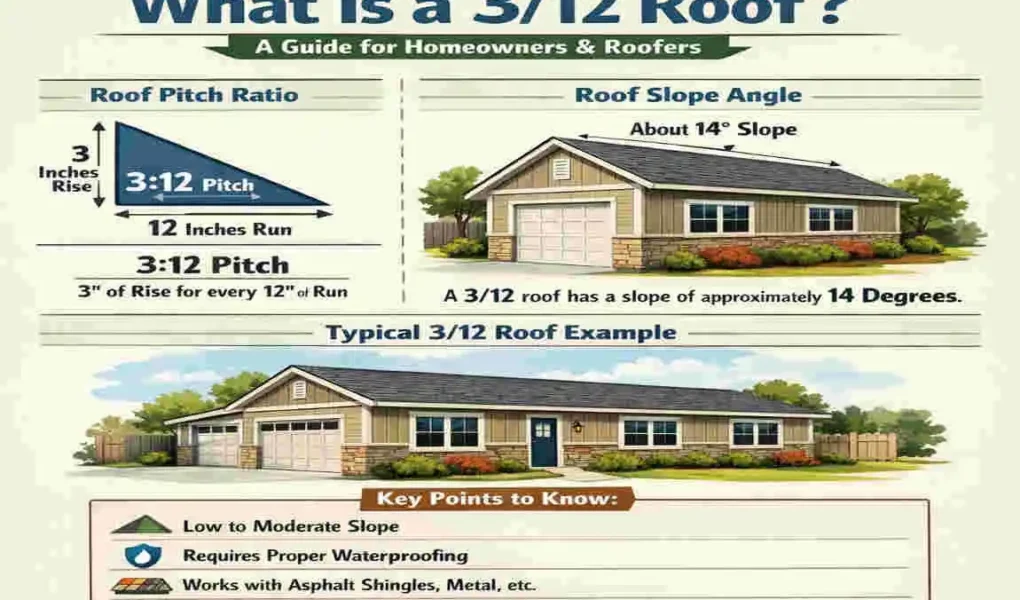
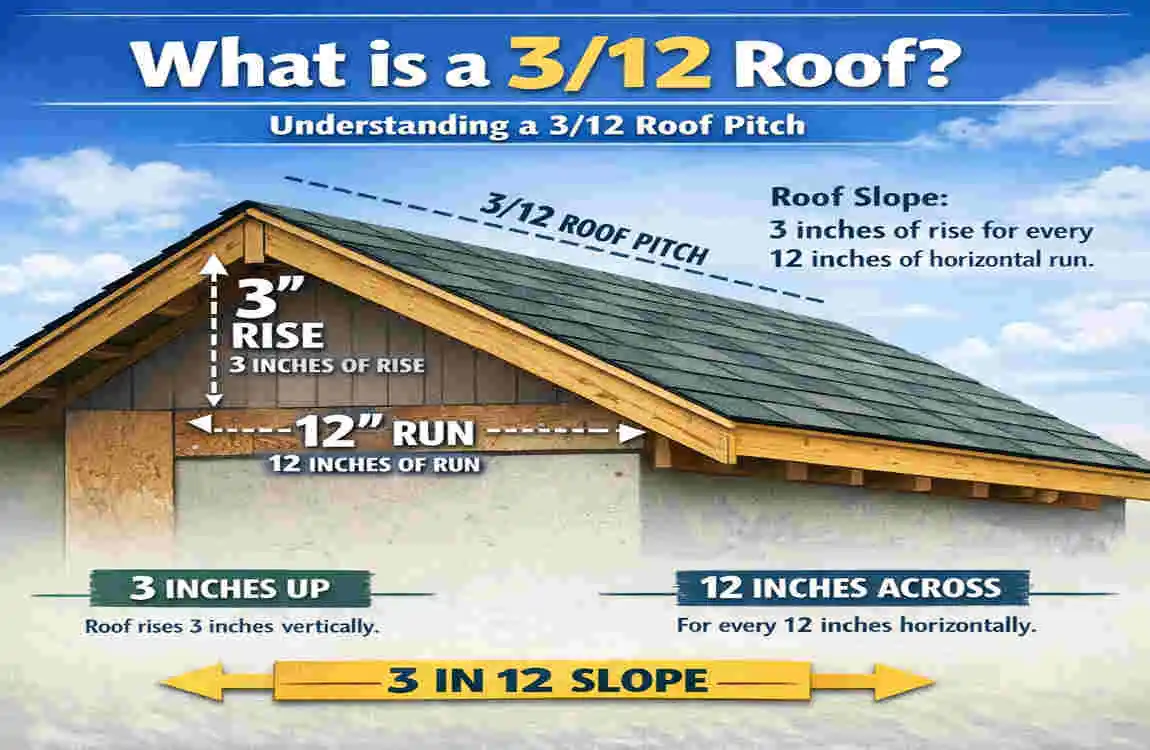
If you are diving into the world of roofing, you will quickly encounter a lot of numbers and technical jargon. But do not worry; we are here to simplify it all for you. In the roofing industry, the term “pitch” is just a fancy way of describing how steep your roof is. A 3/12 roof pitch simply means that for every 12 inches the roof extends horizontally, it rises 3 inches vertically.
| Topic / Term | Explanation | Why It Matters |
|---|---|---|
| Definition of 3/12 | The roof rises 3 inches vertically for every 12 inches (1 foot) of horizontal run. This is also written as 3:12, 3 over 12, or “three‑twelve.” | It’s the standard way roofers describe how steep a 3/12 roof is. |
| Angle (approx.) | About 14 degrees from horizontal. | Shows why it feels “low‑slope” compared with steeper roofs like 6/12 (≈27°). |
| Is it low‑slope? | Yes; 3/12 is classified as a low‑slope roof, between nearly flat (1/12–2/12) and standard pitched (5/12–6/12). | Affects material choice, underlayment requirements, and local code rules. |
| Typical uses | Ranch‑style homes, garages, sheds, porches, and many modern low‑slope designs. | Helps homeowners recognize where 3/12 pitches are commonly used. |
| Water drainage | Gentle slope; water sheds but not as quickly as steeper roofs (e.g., 6/12 or 9/12). | Needs good underlayment, flashings, and clean gutters to avoid pooling or leaks. |
| Snow load behavior | Snow tends to sit longer instead of sliding off rapidly because of the shallow angle. | Requires adequate structural design and careful underlayment to handle snow and ice dams. |
| Common materials | Asphalt shingles (with proper underlayment), metal roofing (standing‑seam or low‑profile), and some modified‑bitumen membranes. | Certain materials require special prep or may not be allowed on very low slopes. |
| Safety for workers | Easier and generally safer to walk on vs steeper roofs, but still needs fall protection per code. | Affects labor time, cost, and contractor planning. |
| Installation considerations | Extra attention to valleys, flashing, and sealing at penetrations; often thicker underlayment or double‑felting. | Helps prevent leaks that are more likely on low‑slope roofs than on steep ones. |
| Maintenance | Can work well with modern materials but may need more frequent inspection of flashings and gutters. | Catching small leaks early is critical on any low‑slope roof. |
Defining Roof Pitch: Getting to Know the Basics
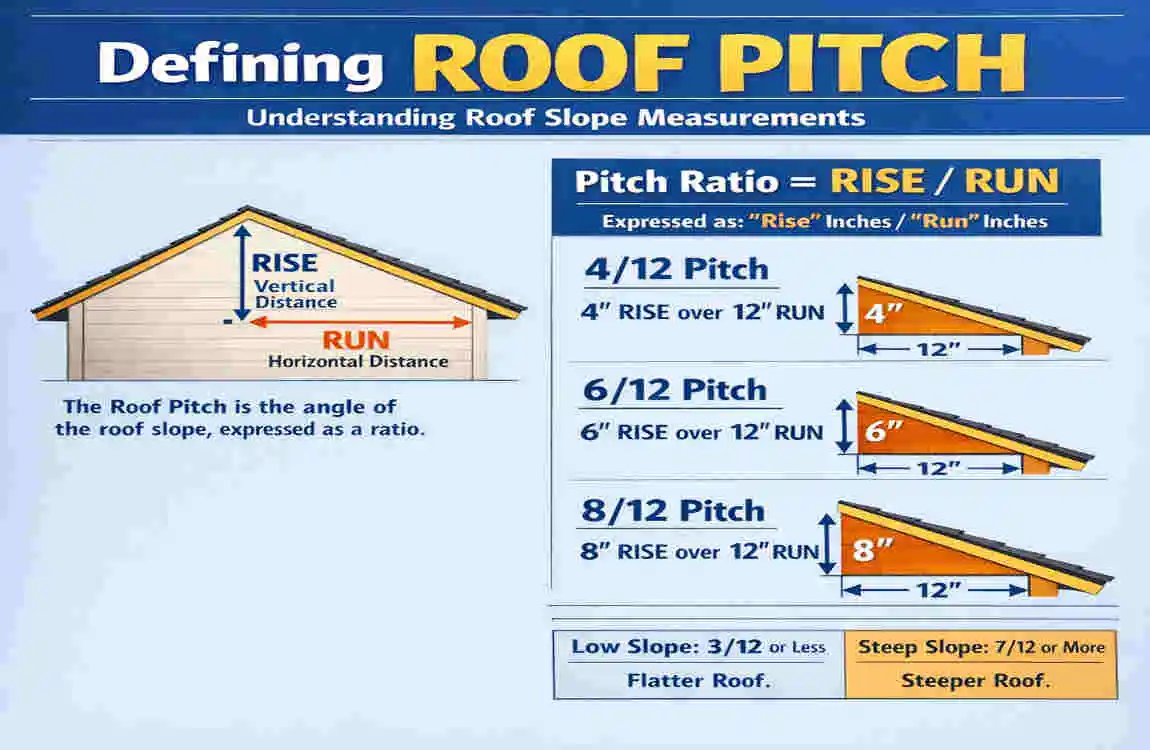
Before we can fully understand the benefits of a 3/12 roof slope, we need to break down the core concept of roof pitch. Understanding the math behind your roof is not just for architects and builders; you as a homeowner need to make informed decisions about materials, maintenance, and overall costs.
What “Rise Over Run” Means in Simple Terms
When roofers talk about pitch, they almost always use the phrase roof rise over run. This simple ratio dictates the angle of your roof. Let’s break those two words down:
- The Run (Horizontal): This is the horizontal distance from the outside edge of your wall to the center of your house (the peak of the roof). The standard unit of measurement for the “run” in the roofing industry is always 12 inches (or 1 foot).
- The Rise (Vertical): This is how high the roof goes up vertically for every 12 inches of horizontal run.
So, when we ask, “what is a 3 12 roof?” we are describing a structure where the vertical rise is exactly 3 inches for every 12 inches of horizontal run. Mathematically, this is expressed as a 3:12 ratio, which translates to a 25% slope.
Let’s visualize this with a real-world example. Imagine you are building a new detached garage, and the total horizontal run from the edge to the center peak is 24 feet. Because the roof rises 3 inches for every single foot of that run, you simply multiply 24 by 3. This gives you a total vertical rise of 72 inches, or exactly 6 feet at the very center of the garage. It is a straightforward calculation that gives you an instant idea of your attic space and the overall building height.
3/12 vs. Other Common Roof Pitches
To truly understand where the 3/12 pitch sits in the roofing world, it helps to compare it to other common roof styles. Roofs generally fall into three categories: flat (or very low), low-slope, and steep-slope.
Here is a quick breakdown to show you how a 3/12 roof compares to the rest of the neighborhood:
Pitch Ratio Approximate Angle Roof Category Best Suited For
1/12 to 2/12 Less than 10° Very Low-Slope / Flat Commercial buildings, TPO/EPDM membrane roofing
3/12 14° Low-Slope Residential homes, moderate rain, metal and special shingle applications
5/12 to 6/12 22° to 27° Medium / Standard Most suburban homes, standard asphalt shingles, all weather
10/12 to 12/12 40° to 45° Steep-Slope Snow-heavy regions, Victorian-style homes, attics with living space
This table clearly shows why a 3/12 pitch is widely considered the “sweet spot” for many modern suburban homes, ranch-style houses, and extensions. It is gentle enough to walk on comfortably, yet functional enough to shed water without requiring the heavy-duty industrial membranes used on completely flat commercial roofs.
Pros and Cons of a 3/12 Roof
Like any architectural feature, choosing a 3/12 low-slope roof comes with distinct advantages and potential drawbacks. It is highly practical, but not perfect for every environment or aesthetic preference. Let’s weigh the pros and cons so you can decide if this pitch is the right fit for your property.
The Advantages of Going Low-Slope
Highly Cost-Effective Materials and Labor One of the biggest selling points of a 3/12 roof is the cost savings. Because the slope is gentle, you use significantly fewer materials than you would on a steep 10/12 roof. The wooden rafters are shorter, you need fewer sheets of plywood for the decking, and the total roofing material square footage is smaller. In the construction industry, we use a “pitch factor” to calculate material quantities. For a 3/12 roof, the pitch multiplier is only 1.03, meaning the roof surface is barely larger than the flat footprint of the house! Furthermore, because the roof is not dangerously steep, roofers can work faster and more safely, significantly lowering labor costs.
A Sleek, Modern Aesthetic If you love mid-century modern architecture, contemporary designs, or classic ranch-style homes, a 3/12 roof is visually perfect. It provides a long, low profile that hugs the landscape rather than dominating it. It is also the go-to pitch for home additions, sunrooms, and wrap-around porches, as it can easily tie into your home’s existing roofline without covering second-story windows.
Ideal for Solar Panel Installation Are you thinking about going green? A 3/12 roof pitch is fantastic for solar panel installations. The gentle 14 degree roof angle is naturally well-positioned to catch sunlight throughout the day. More importantly, the low profile reduces the risk of “wind uplift”—a phenomenon where high winds get underneath the solar panels and pull them off the roof.
Safety and Walkability If you are a DIY enthusiast who likes to clean your own gutters or inspect your roof after a storm, a 3/12 pitch is incredibly user-friendly. It is generally considered highly walkable, meaning you will not feel like you are scaling the side of a mountain when you go up there.
The Disadvantages to Keep in Mind
Slower Water Drainage Gravity is not pulling water off a 3/12 roof as aggressively as it does on a steeper pitch. Because drainage is slower, water is more likely to pool in slight depressions or back up under the shingles. This means you are at a higher risk for leaks if the roof is not waterproofed correctly. Installing a high-quality ice and water shield is absolutely mandatory.
Vulnerability to Debris and Snow Buildup In areas with heavy foliage, pine needles, leaves, and twigs will not simply roll off a 3/12 roof. They tend to sit there, retaining moisture and potentially causing rot if not cleared regularly. Furthermore, in frigid climates, heavy snow will accumulate rapidly. A steep roof sheds snow naturally; a low-slope roof holds onto it, meaning the underlying structure must be strong enough to bear the heavy weight of winter storms.
Limited Material Options You cannot just throw any roofing material on a low-slope roof. Traditional materials like wooden cedar shakes are highly discouraged because they rely on steep angles to shed water and dry out. If used on a 3/12 pitch, wood shakes will absorb moisture and rot prematurely. Even standard asphalt shingles require special installation techniques to be viable.
Suitable Materials for a 3/12 Roof Pitch
Because water moves slower on a 14 degree roof angle, your choice of materials is the most critical decision you will make. You need a system that prioritizes waterproofing over simple water-shedding. Let’s look at the best roofing options and the underlayment essentials that keep your home bone-dry.
Top Roofing Options for Low Slopes
Metal Roofing: The Gold Standard When it comes to a 3/12 roof, metal is arguably your best friend. Specifically, standing seam metal roofing excels in this environment. The panels run vertically from the ridge to the eaves, and the seams where they connect are raised above the roofline. Because there are no horizontal seams for water to seep into, and because metal has a slick surface, rainwater and snow slide off much faster than they would on a textured surface. While the upfront cost is higher, a metal roof on a low slope will outlast almost anything else.
Asphalt Shingles: Possible, but Requires Care Can you use standard asphalt shingles on a 3/12 pitch? Yes, but you must follow strict building codes. Standard installation will not cut it. Because wind can easily blow rain backward under the shingle flaps on a low slope, you must use special starter strips and specialized overlapping techniques. We will discuss the mandatory underlayment requirements for shingles in just a moment.
TPO and Rubber Membranes: Seamless Protection Thermoplastic Polyolefin (TPO) and Ethylene Propylene Diene Monomer (EPDM) are rubberized membrane roofs typically used on flat commercial buildings. However, they are fantastic for residential 3/12 roofs, especially over areas like flat garages or modern home designs. These materials are rolled out in massive sheets and the seams are heat-welded or chemically sealed, creating an impenetrable, waterproof bathtub effect on top of your house.
Underlayment Essentials: Your Invisible Shield
On a steep roof, the shingles do 90% of the work. On a 3/12 roof pitch, the underlayment is the true hero. Underlayment is the protective barrier installed directly on the wooden roof deck before the final roofing material is applied.
If you are choosing to install asphalt shingles on a 3/12 roof, the building code strictly requires a double layer of underlayment. You cannot just use a single layer of traditional 15-pound roofing felt.
Furthermore, you must invest heavily in an Ice and Water Shield. This is a self-adhering, rubberized membrane that sticks directly to the wood deck. It should be applied generously along the eaves (the bottom edges of the roof), in the valleys (where two roof slopes meet), and around any penetrations like chimneys and vent pipes. In colder climates, this prevents ice dams—blocks of ice that form at the roof’s edge and force melting water to back up under the shingles.
Installation Guide: Building a 3/12 Roof
Whether you are a homeowner wanting to understand what your contractors are doing, or an apprentice roofer learning the ropes, understanding the installation process is key. Building a 3/12 low-slope roof requires precision, careful math, and a heavy focus on waterproofing.
Measuring Your Roof Like a Pro
Before any framing or laying of shingles begins, you need to verify your pitch. Here is how you can measure your roof’s rise over run:
Gather Your Tools You will need a standard 2-foot carpenter’s level, a tape measure, and a pencil. Alternatively, modern roofers often use smartphone pitch gauge apps, but the manual way is foolproof.
Measure the Run Go into your attic (or place your level on the roof surface if it is safe). Hold the level perfectly horizontally. Measure exactly 12 inches along the bottom of the level. Mark that 12-inch spot. This is your “run.”
Measure the Rise At that exact 12-inch mark, use your tape measure to measure straight down to the roof surface (or the rafter if you are in the attic). If the distance from the level down to the roof is exactly 3 inches, congratulations, you have confirmed a 3/12 pitch!
Step-by-Step Installation for Roofers
If you are actively building or replacing a 3/12 roof, here is the chronological workflow.
Framing the Rafters When cutting the lumber for the roof structure, roofers use a “pitch factor.” For a 3/12 roof, the pitch factor is 1.03. To find the exact length of the rafter you need to cut, you multiply the horizontal run of the building by 1.03. This ensures the wood perfectly spans the distance at a 14-degree angle. Plumb cuts (the vertical cuts at the ends of the rafters) are also set to this specific angle so they sit flush against the ridge board.
Installing the Heavy-Duty Underlayment Once the plywood decking is nailed down, the waterproofing begins. Roll out the self-adhering ice and water shield along the bottom edges of the roof, extending it at least 24 inches inside the exterior wall line. Next, apply a double layer of synthetic underlayment over the rest of the roof, making sure to overlap the seams by at least 19 inches. Pay special attention to the valleys—these are high-traffic areas for water and require extra layering.
Laying the Starter Course and Materials If using shingles, apply a specialized starter strip along the eaves to seal the very first row of shingles down tight against wind. Then begin nailing your shingles, making sure you use the correct nail placement to prevent water from wicking down the nail shafts. If installing metal, ensure your clips are screwed down tightly and that your standing seams are securely crimped or snapped together.
Flashing the Penetrations Water is sneaky on a low slope. Use high-quality metal flashing and heavy-duty roofing cement around every single plumbing vent, chimney, and skylight.
Maintenance Tips to Protect Your Roof
Because a 3/12 roof pitch doesn’t shed water and debris as aggressively as a steep roof, it requires a little more TLC. Staying proactive with your maintenance will prevent minor issues from turning into major, costly leaks.
Conduct Annual Visual Inspections At least once a year, preferably in the late spring after heavy storms have passed, get up on a ladder (or carefully walk the roof) to do a visual check. Look for areas where water might be pooling, creating small “ponds.” If you have asphalt shingles, look closely for granule loss—bald spots indicate they are aging and losing their waterproofing.
Clean Your Gutters Quarterly Gutters are the lifeline of a low-slope roof. Because water runs off the roof more slowly, it relies entirely on clear gutters to carry it away from the fascia boards. If your gutters are clogged with leaves, the water will quickly back up under the first row of shingles, rotting out your roof deck. Clean them every three months, and consider installing gutter guards.
Prevent Ice Dams in the Winter If you live in a snowy climate, ice dams are your worst enemy. Use a roof rake to safely pull heavy snow off the bottom three feet of your roof after a blizzard. This prevents the snow from melting, running down to the cold edge, and refreezing into an ice block.
Pro Tip: Use Enhanced Sealants For areas around chimneys, skylights, and vents, standard caulking will degrade quickly in the sun. Ask your roofer to use enhanced polyurethane sealants or specialized flashing tapes. Keeping these penetrations sealed can easily extend the life of your low-slope roof to 20+ years.
The Good News: Cost Savings on Maintenance. Because the 14-degree roof angle is relatively flat and easy to access, hiring professionals for maintenance is much cheaper than for steep roofs. Roofers do not have to set up complex safety scaffolding or charge “steep-charge” premiums. Routine maintenance and minor repairs on a 3/12 roof typically cost only $500 to $ 1,000 a year, saving you thousands over the roof’s lifespan.
Cost Breakdown for a 3/12 Roof Replacement
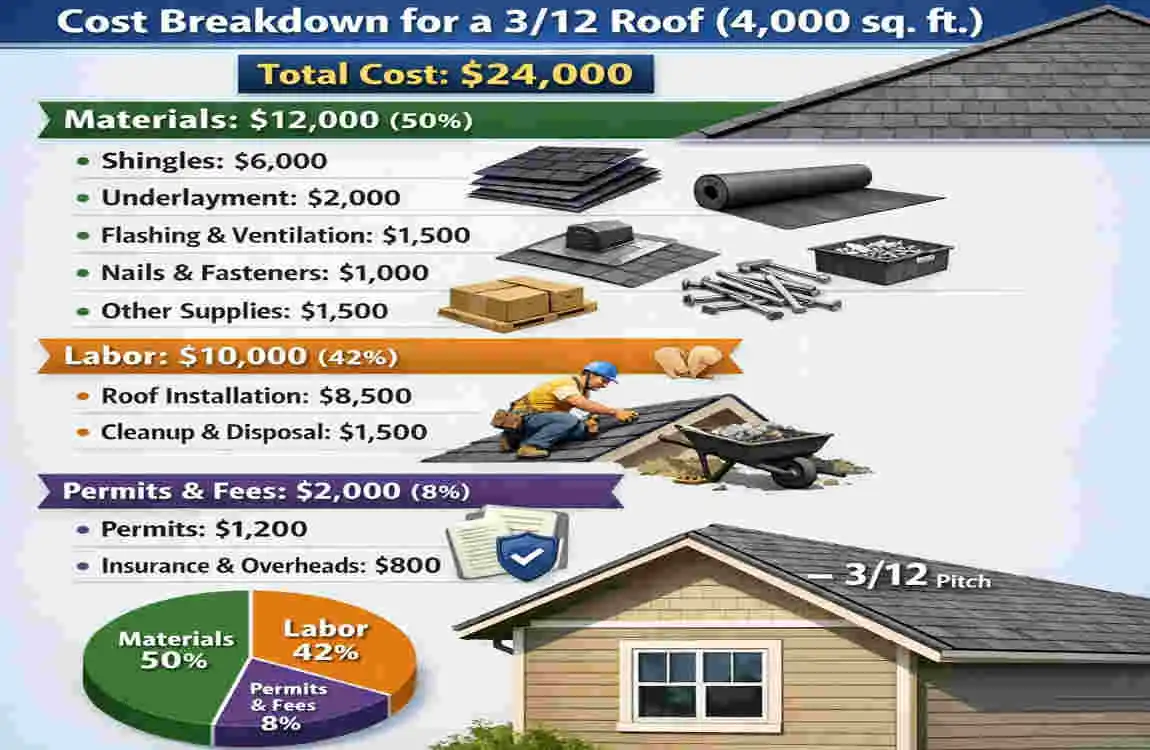
Budgeting for a new roof can be stressful, but the 3/12 pitch actually works in your favor financially. Because it requires less surface area material than a steep roof and is safer for crews to navigate, your overall quotes should be highly competitive.
Here is a general cost breakdown you can expect when replacing a 2000-square-foot 3/12 roof:
Cost Factor Average Cost (per sq ft)Important Notes & Details
Roofing Materials $4.00 – $8.00 Asphalt is cheaper upfront; metal costs more but offers superior longevity on low slopes.
Labor & Installation $3.00 – $6.00 Labor is faster and cheaper on a walkable 3/12 pitch compared to steep slopes.
Underlayment/Permits $1.00 – $2.00 Double underlayment and ice shields add a slight premium for low slopes.
Total Estimate (2000 sq ft) $14,000 – $28,000 Total varies based on chosen material (shingle vs. metal) and your geographic region.
Factors That Influence Your Price: Your physical location plays a massive role in the final bill. For instance, if you live in an area with moderate rain and mild winters, a standard 3/12 roof with asphalt shingles will sit on the lower end of that budget. Conversely, if you live in a region that experiences heavy snowfall, you will need to invest in premium ice and water shields, heavy-duty underlayment, and perhaps standing seam metal to ensure the roof survives the winter weight, pushing you toward the higher end of the scale. The size and complexity of the roof (number of skylights, chimneys, and valleys) will also dictate the final labor costs.
Frequently Asked Questions (FAQs)
To wrap up the technical details, let’s answer some of the most common questions homeowners and DIYers ask when researching the 3/12 roof pitch.
What is a 3 12 roof in degrees? A 3/12 roof pitch translates to approximately a 14-degree angle (specifically 14.04 degrees). It is categorized as a low-slope roof, offering a gentle incline that is highly walkable while still providing adequate water drainage.
Can I install asphalt shingles on a 3/12 pitch? Yes, you absolutely can! However, standard installation methods are not allowed. Because water drains slower on this low slope, building codes require you to install a double layer of underlayment (roofing felt or synthetic) beneath the shingles, along with specialized starter strips to prevent wind-driven rain from lifting the tabs.
Is a 3/12 roof good for snowy climates? It is considered moderate for snow. Because the 14-degree angle isn’t steep enough to naturally shed heavy snow loads, snow will accumulate. Your home’s framing must be built to support this weight. To prevent damage and ice dams, it is highly recommended to install premium ice and water shields and consider adding electric heat cables along the eaves to facilitate melting.
How do I calculate the rafter length for a 3/12 roof? To find your rafter length, use the pitch multiplier (or pitch factor). For a 3/12 roof, the multiplier is exactly 1.03. Simply take the horizontal run of your roof and multiply it by 1.03 to get the total length of the rafter needed from the ridge to the exterior wall.
What is considered a “low slope” roof? In the roofing industry, any pitch between 2/12 and 4/12 is officially categorized as a low-slope roof. Anything below 2/12 is considered a flat roof, and anything 5/12 or above is considered a standard or steep slope.
What is the absolute best material for a 3/12 roof? While TPO membranes and modified asphalt work well, the absolute best material for longevity and performance on a 3/12 roof is standing seam metal. It provides a sleek aesthetic, sheds water and snow efficiently due to its smooth surface, and has raised seams that make it virtually impenetrable to water.