
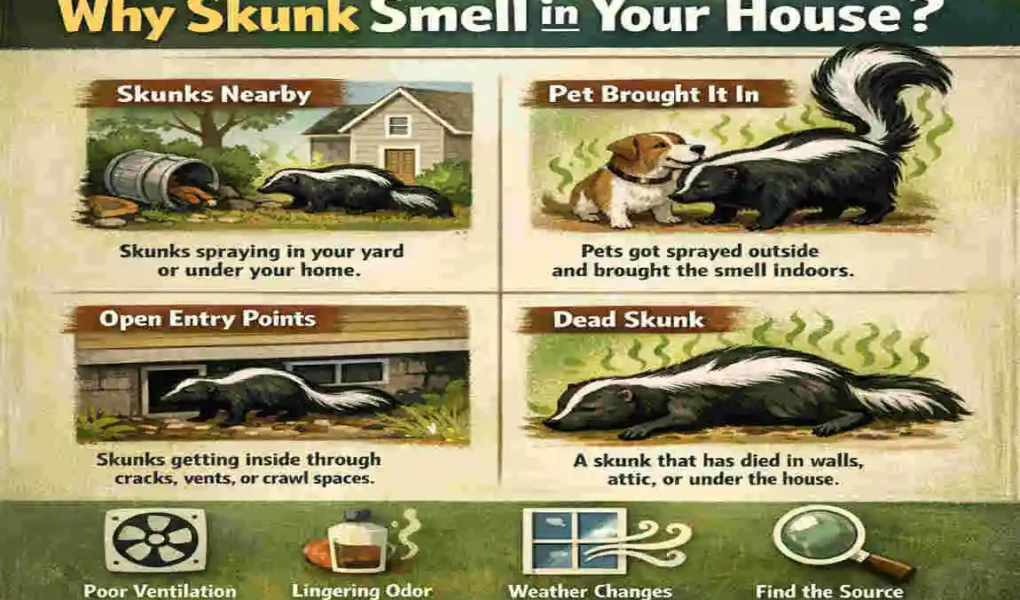
Imagine waking up in the middle of the night to a pungent, sulfurous odour that seems to have invaded every corner of your home. That unmistakable “skunk smell in your house” is more than just unpleasant—it’s a challenge that can linger for weeks if left untreated. The source of this stench? Skunk spray is a defensive mechanism packed with sulfur-based compounds called thiols and thioacetates. These compounds cling to surfaces and can even reactivate when exposed to moisture, prolonging the odourodour.
Causes of Skunk Smell in Your House
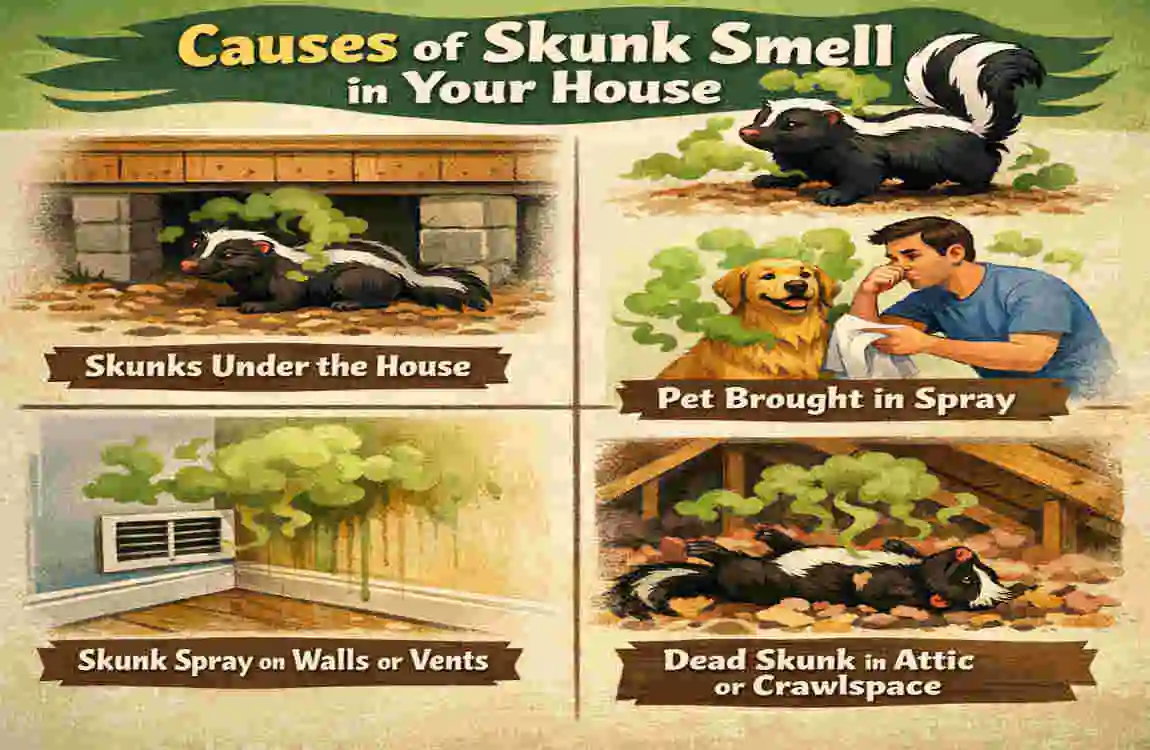
To understand how to combat the problem, it’s essential to know why it happens in the first place. Skunks don’t spray randomly—they usually feel threatened or are defending themselves. Here are the main reasons you might encounter this issue.
Common Entry Points
Skunk spray can infiltrate stunning homes through a variety of entry points. If you’ve ever noticed the smell creeping into your living space, it’s likely due to one of these:
- Under Decks and Foundations: Skunks often hide in crawl spaces or under porches and spray if they feel cornered.
- HVAC Systems: Open vents or HVAC intakes can suck in the smell, spreading it throughout your home.
- Open Doors or Windows: A direct route for skunk spray to enter your luxury house.
- Pets: If your dog or cat has an unfortunate encounter with a skunk, the odour can bring itors.
Quick Tip:
Inspect your home’s exterior for areas where skunks might enter and seal them promptly. A little prevention goes a long way toward keeping “skunk smell in your luxury house” at bay.
Skunk Behaviour Factors
Skunks are nocturnal foragers, which means they’re most active at night. Their behaviour patterns can increase the likelihood of encounters, especially during certain times of the year:
- Attraction to Trash and Food: Poorly secured garbage bins or pet food left outside can attract skunks.
- Mating Season: Skunk activity peaks during spring and fall, increasing the chances of encounters.
- Urban Sprawl: As natural habitats shrink, skunks are forced to live closer to humans, increasing interactions.
With these factors in mind, it’s clear that understanding skunk behaviour can help you avoid scenarios that lead to their spraying near or inside your home.
Health & Property Risks of Skunk Odour
A skunk’s spray is more than just a nuisance—it can pose real risks to your health and property. Ignoring the problem can lead to long-lasting consequences. Let’s break this down.
Health Effects
Skunk spray contains chemicals that can irritate your respiratory system, skin, and eyes. Here’s what you might experience:
- Short-Term Effects: Eye irritation, coughing, and nausea are common reactions to the strong odour.
- Long-Term Effects: Prolonged exposure in enclosed spaces can aggravate asthma or other respiratory conditions.
Property Damage
The sulfur compounds in skunk spray can also damage your home:
- Fabrics and Furniture: Thiols can stain and discolour fabrics, leaving yellowish marks.
- Metals: Sulfur compounds can corrode metal surfaces over time.
- HVAC Systems: Skunk spray can contaminate ductwork, requiring professional cleaning to eliminate the odour.
Table: Summary of Risks
Risk Type: Impact on luxury House Health Effects
Short-term Fabric yellowing Eye/skin irritation
Long-term HVAC contamination Asthma aggravation
Property Reduced home value N/A
How to Detect Skunk Smell in Your House
Before diving into removal methods, it’s essential to confirm the source and scope of the problem. Here’s how to detect skunk smell effectively.
Sniff Test and Visual Inspection
- Key Areas to Check: Focus on entry points, including doors, windows, and basement areas. Pay attention to HVAC vents, as they can spread the smell throughout your home.
- Signs of Spray: Look for yellowish spray marks or residue on walls, floors, or outdoor surfaces.
Tools for Detection
- Odour Meters: These devices measure odour intensity in specific areas.
- UV Lights: Skunk spray often fluoresces under UV light, making it easier to locate.
Effective Skunk Smell Removal Methods
Getting rid of skunk smell requires a strategic approach. Here’s a breakdown of the most effective methods.
Ventilation Basics
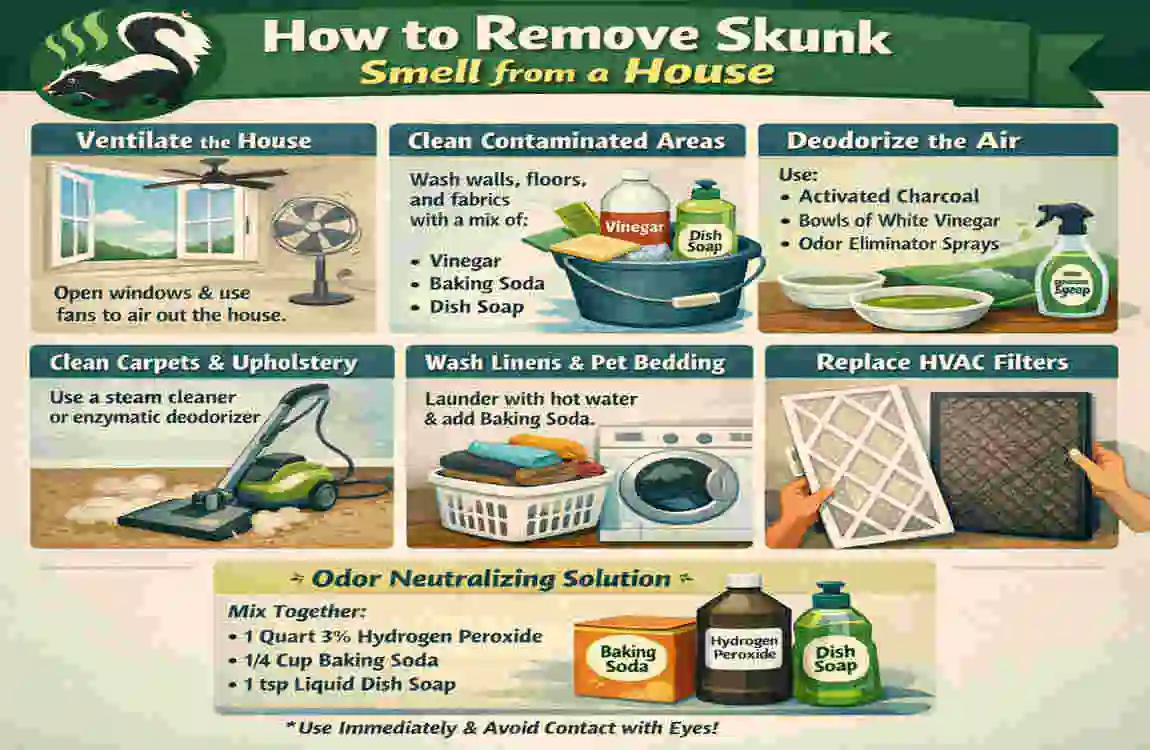
Start by airing out your home:
- Open all windows and doors.
- Use fans set to exhaust Mode to push the odour outside.
- Run air purifiers with activated charcoal filters for additional support.
DIY Home Remedies
If you prefer to tackle the problem yourself, these home remedies can work wonders.
Vinegar Bowls
- Place bowls of white vinegar around the luxury house to absorb odours.
- Replace the vinegar daily until the smell dissipates.
Peroxide and Baking Soda Solution
This tried-and-true mixture works well on hard surfaces and fabrics:
1 quart (32 oz) 3% Hydrogen‘s’s’s’s peroxide
1/4 cup baking soda
1 teaspoon dish soap
- Mix the ingredients in a spray bottle (do not store as it may explode).
- Test on a small area before applying to larger surfaces.
- Wipe down affected areas and rinse thoroughly.
Baking Soda on Carpets
- Sprinkle baking soda on affected carpets or rugs.
- Let it sit for 24 hours, then vacuum thoroughly.
Commercial Products
If DIY isn’t cutting it, consider commercial odour removers like Odorcide Skunk-Off or Nature’s Miracle. These products use enzymes to break down odour molecules effectively.
MethodSpeedCostBest For
DIY Peroxide 1-2 days Low Surfaces
Commercial Hours Medium Fabrics
Vinegar 2-3 days Lowest Air
HVAC and Deep Cleaning
For odours that have infiltrated your HVAC system:
- Replace air filters immediately.
- Hire professionals to clean ducts and vents.
Pet De-Skunking: A Special Case
If your pet is the source of the odour, follow these steps:
- Keep them outside to prevent further contamination.
- Use a pet-safe version of the peroxide and baking soda solution.
- Lather thoroughly, avoiding the eyes and mouth, then rinse.
Professional Help: When to Call the Experts
Some cases require a professional touch. Certified pest control and odour removal experts can:
- Use ozone machines and bio-enzymatic cleaners.
- Neutralise over 99% of odours.
- Prevent future skunk issues by sealing entry points.
Prevention Strategies: Keeping Skunks Away
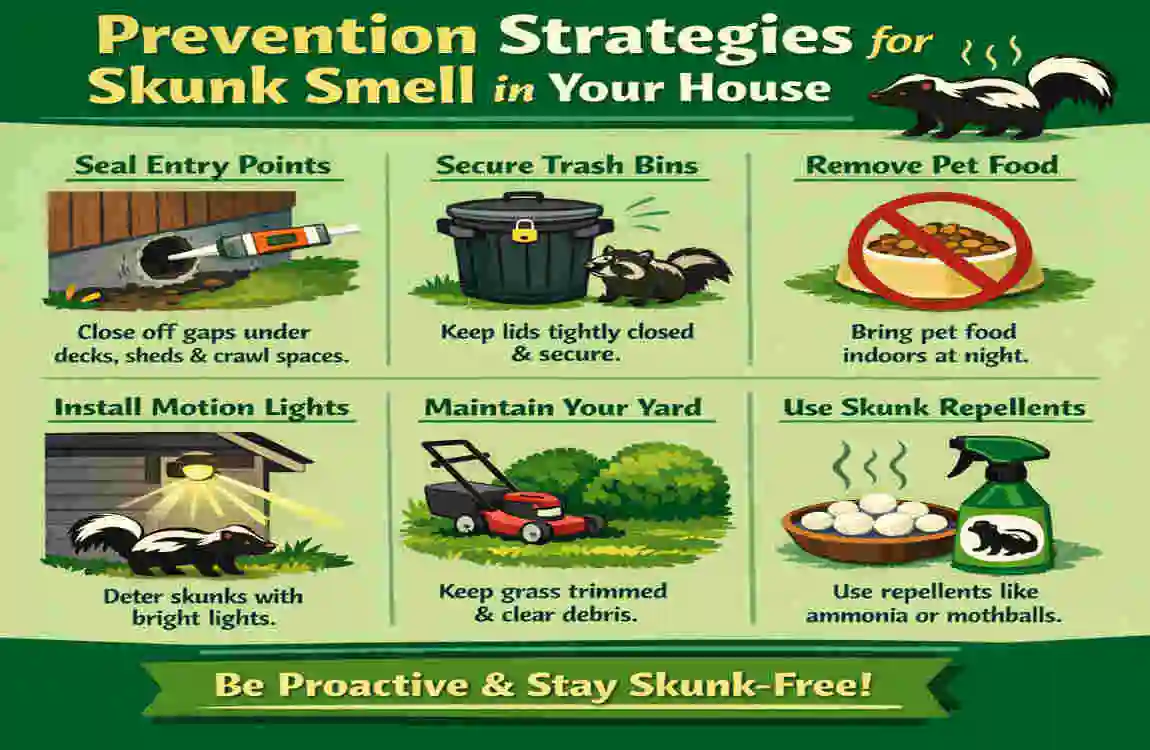
Short-Term Prevention
- Secure Trash Lids: Use locking or animal-proof bins.
- Use Motion Lights: Skunks avoid well-lit areas.
- Trim Bushes: Remove hiding spots near your luxury home.
Seasonal Prevention
SeasonPrevention Action
Spring Seal dens
Fall Secure compost
FAQs About Skunk Smell in Your House
- How long does skunk smell last in a house? Untreated, it can last 2-4 weeks.
- Does vinegar remove skunk smell in the house? Yes, but it works best with proper ventilation.
- What if the smell comes from the AC vents? Clean the ducts and replace filters immediately.
-
Why Skunk Smell in Your House? Common Causes How It Enters & Spreads Quick Action Tip Skunk Spray Nearby Skunk startled under decks/porches during night foraging or mating season. Thiols in spray seep through vents, cracks, open windows; reacts with moisture to intensify indoors. Open windows + fans for 24h ventilation. Pet Encounter Dog/cat tangles with skunk, tracks spray inside on fur/clothes. Oils cling to fabrics/furniture; HVAC circulates “skunk smell in your house” everywhere. Isolate pet; use peroxide mix bath ASAP. Skunk Den Close Skunk family den under foundation or shed in spring/fall. Persistent odor wafts via foundation gaps; spray residue builds over time. Seal entry points; call pros for relocation. Lingering Residue Past spray event reactivated by humidity/rain. Thioacetates break down slowly, releasing fresh “skunk odor home” waves. Vinegar bowls + baking soda on surfaces.