
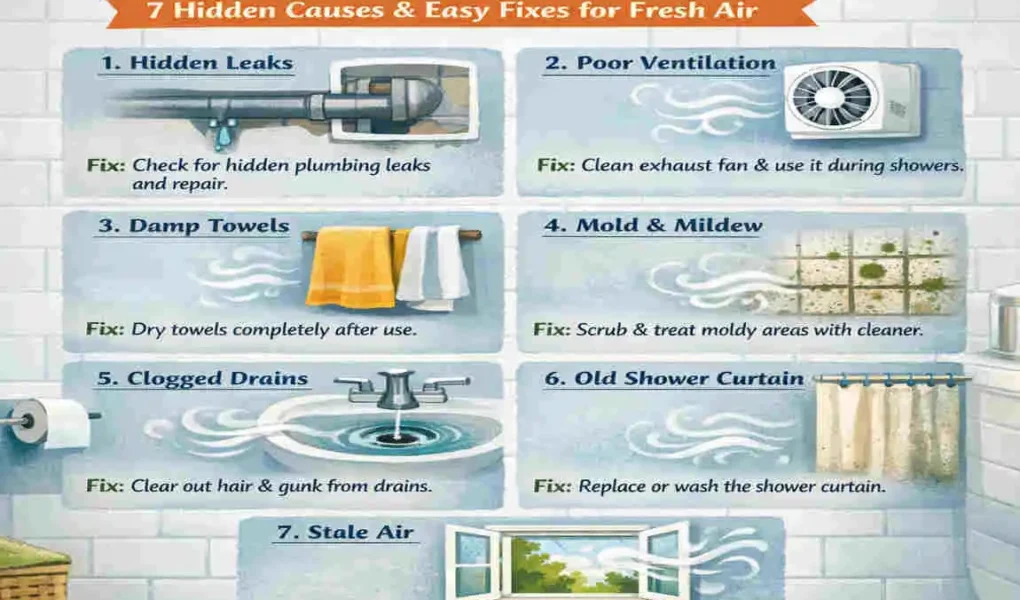
You have just spent your Saturday morning scrubbing your bathroom from top to bottom. The tiles are gleaming, the mirror is streak-free, and you have even replaced the hand towels. You close the door, satisfied with your hard work. But when you walk back in an hour later, it hits you—that heavy, damp, earthy odor that no amount of lemon-scented air freshener seems to mask. You find yourself asking, why does the bathroom smell musty despite my best cleaning efforts?
7 Hidden Causes of Musty Bathroom Odors
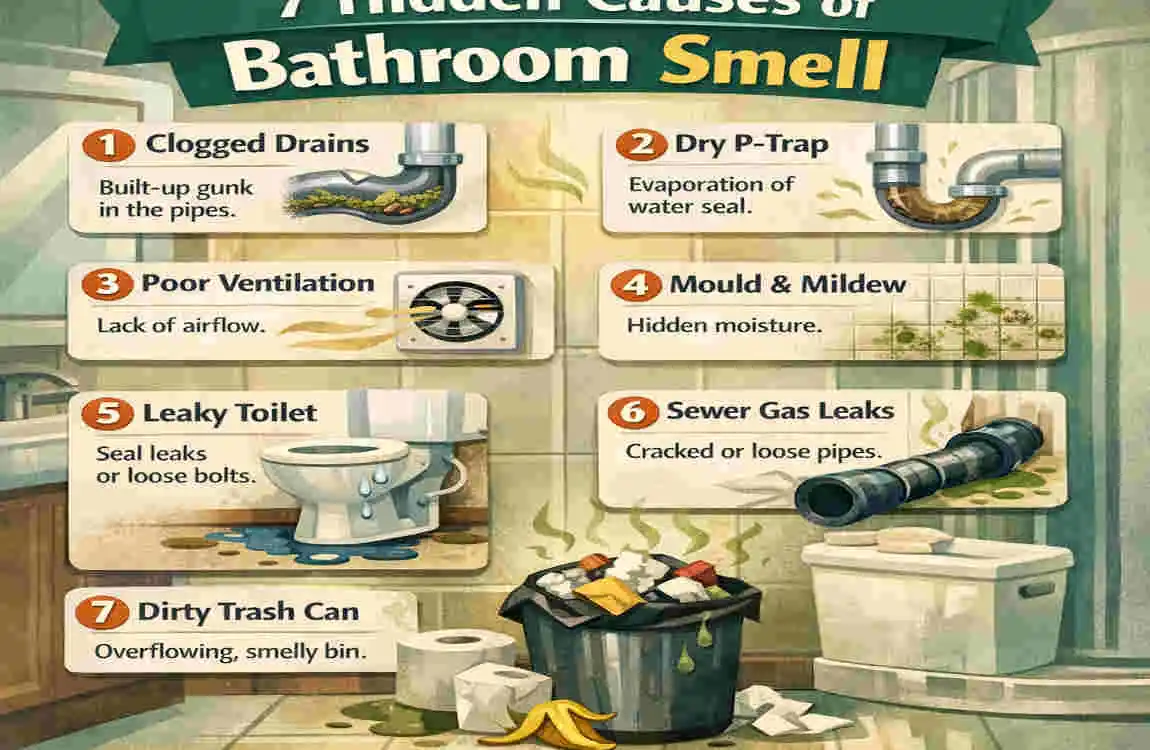
If you are constantly battling odors, you need to identify the root source. It is usually not just one thing, but a combination of factors that creates the perfect storm for unpleasant smells. Here are the top 7 reasons why the bathroom smells musty.
Poor Ventilation and High Humidity
The most frequent offender when investigating why the bathroom smells musty is simply a lack of airflow. Bathrooms are functional wet rooms. Every time you take a hot shower or a bath, you are introducing a massive amount of steam into a confined space.
Why it happens: After a shower, the relative humidity in a bathroom can skyrocket to 80-90%. If your bathroom fan is undersized, broken, or not turned on, that moisture has nowhere to go. It settles on your cold tiles, mirrors, and painted walls. This condensation creates a damp environment that lingers for hours, soaking into porous materials like drywall and grout.
Signs to look for:
- Foggy mirrors that stay clouded for an hour or more after you leave the room.
- Condensation dripping down the walls (often called “weeping walls”).
- Paint that is beginning to bubble or peel near the ceiling.
- A heavy, thick feeling to the air when you walk in.
This stagnant, humid air is the primary breeding ground for the bacteria and fungi that produce that characteristic bathroom mildew odor.
Mold and Mildew Growth
If moisture is the fuel, mold and mildew are the fire. These fungi are the direct source of the volatile organic compounds (VOCs) that our noses register as “musty.”
Why it happens: Mildew thrives in environments with relative humidity above 60%. In a poorly vented bathroom, you are providing them with an all-you-can-eat buffet. Mildew is typically a surface fungus that grows on wet, warm areas like shower curtains and grout lines. Mold, however, can penetrate deeper.
Signs to look for:
- Black or pink spots appear in the caulk around your tub or sink.
- Fuzzy white or gray patches in corners or on the ceiling.
- An earthy odor that smells like wet dirt or rotting leaves, which peaks right after a shower when humidity rises.
Often, the growth is hidden. It might be behind the toilet tank, under the sink, or even on the backside of your vanity cabinet. This hidden growth is a major reason why the bathroom smells musty even after you have cleaned the visible surfaces.
Hidden Water Leaks
Sometimes the moisture is not coming from your shower steam, but from the plumbing itself. A small, slow leak can release gallons of water over a year, soaking into subflooring and cabinetry without you ever noticing a puddle.
Why it happens: Plumbing seals degrade over time. The wax ring under your toilet, the supply line to your faucet, or the drainage pipe in the wall can develop hairline fractures. The water seeps into wood and drywall, which act like a sponge. As these materials stay perpetually wet, they begin to rot and grow mold in dark, unventilated spaces.
Signs to look for:
- Warped cabinets or vanity doors that do not close properly.
- Unexplained discoloration or “coffee stains” on the ceiling below the bathroom.
- Flooring that feels soft or spongy near the toilet or tub.
- Loose tiles or cracking grout.
If you smell mustiness but cannot find mold, a hidden leak is a high-probability suspect.
Blocked Drains and Sewer Gas
Your drains are designed to carry waste away, but they can also act as traps for organic matter. This buildup is a frequent cause of bathroom mildew odor.
Why it happens: Over time, a slurry of hair, soap scum, body oils, and skin cells collects inside your drain pipes (the P-trap). This creates a sticky substance known as biofilm. Bacteria love to feed on this biofilm, and as they digest it, they release foul-smelling gases. Additionally, if a drain is unused (like in a guest bath), the water in the P-trap can evaporate, allowing sewer gases to rise directly into your home.
Signs to look for:
- Slow drains where water pools around your feet during a shower.
- Gurgling sounds coming from the sink or toilet.
- A smell that is a mix of musty and rotten eggs.
Wet Towels, Mats, and Fabrics
We often overlook the soft surfaces in our bathrooms. Bathmats, towels, and robes are highly absorbent and can hold onto moisture for days if not dried properly.
Why it happens: Fabrics can retain up to 90% moisture. When you bundle up a wet towel and throw it in a hamper, or leave a thick cotton bathmat on a damp floor, air cannot circulate through the fibers. This creates a warm, wet pocket where bacteria multiply rapidly—essentially fermenting within the fabric.
Signs to look for:
- A sharp, sour odor is coming from piles of laundry.
- Bathmats that feel damp to the touch even hours after use.
- Visible mildew spots on the underside of rugs.
Dirty Shower Curtains and Accessories
That vinyl or plastic shower liner is a magnet for soap scum and body oils.
Why it happens: The bottom hem of a shower curtain often sits in a wet tub. Because the folds of the curtain trap water, it never fully dries between uses. This constant moisture promotes the growth of “pink mold” (Serratia marcescens) and bacterial slime. Even your toothbrush holder or loofah can harbor these smells if not cleaned weekly.
Signs to look for:
- Yellow or orange staining along the bottom edge of the curtain.
- A slimy feeling on the inside of the liner.
- Discoloration at the bottom of cups and soap dishes.
Trash and Infrequent Use
Finally, the source might be as simple as your waste bin or a lack of use.
Why it happens: Bathroom trash often contains wet items—makeup wipes, dental floss, sanitary products, and tissues. In a humid room, this organic waste begins to decompose and rot very quickly. Conversely, in a guest bathroom that is rarely used, the air stagnates. Without movement, dust settles, water in traps evaporates, and a stale, musty smell develops simply due to a lack of circulation.
Signs to look for:
- A distinct odor emanates from the waste bin.
- The smell is worse in a bathroom that hasn’t been used in weeks.
Bathroom Odor Risk Assessment Table
To help you troubleshoot quickly, here is a summary of the causes and their key indicators.
Cause Key Signs Risk Level
Poor Ventilation , Damp walls, foggy mirrors, peeling paint , High
Mold/Mildew Black/white spots, earthy smell, allergy flare-ups High
Hidden Leaks , stains on ceilings, warped wood, soft floors , High
Blocked Drains , Slow water drainage, gurgling sounds , Medium
Wet Fabrics Sour odor from laundry piles or mats Medium
Dirty Curtains , Slimy buildup on liners, pink stains , Low-Medium
Trash/Infrequent Use Bin rot, stagnant air in guest baths , Low
Quick Fixes for Each Cause
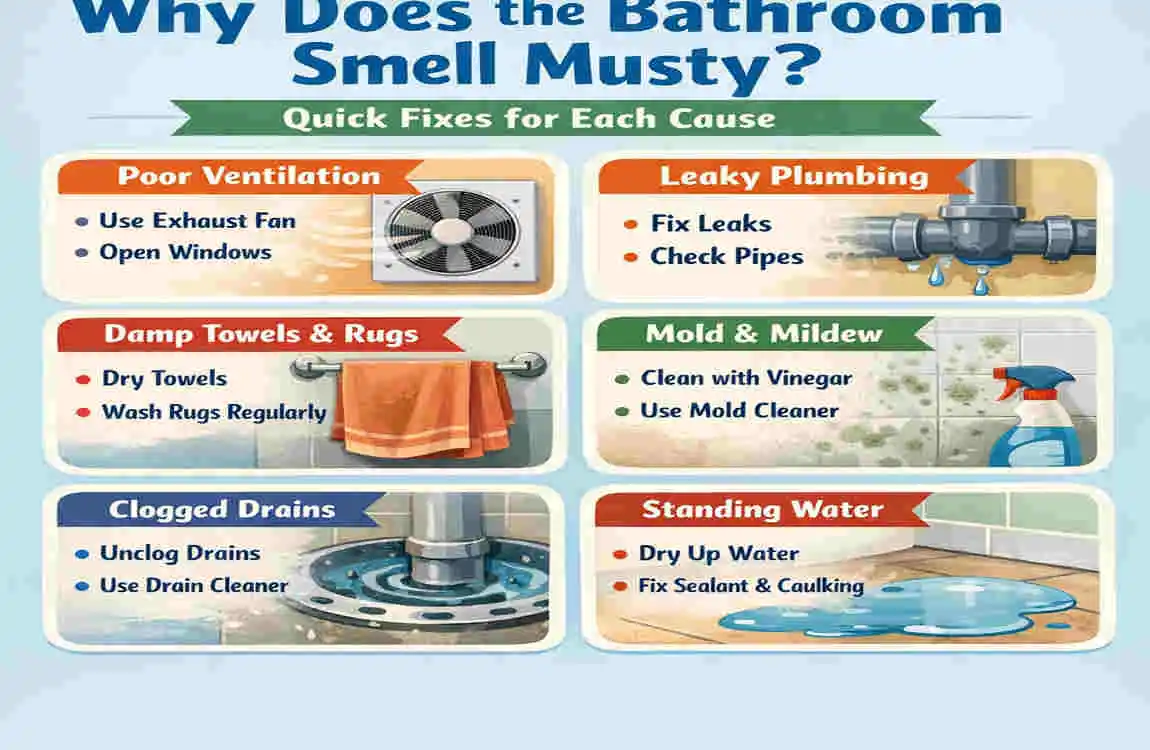
Now that we have answered “why does the bathroom smell musty,” let’s look at how to fix musty bathroom smell issues immediately. Here are effective, step-by-step solutions.
Fix the Ventilation
You need to get the moist air out—fast.
- The Fan Rule: Run your exhaust fan during your shower and for at least 20-30 minutes afterward. If you don’t have a fan, you must crack a window.
- Upgrade: Consider installing a humidity-sensing exhaust fan (costs roughly $50-$100). It turns on automatically when moisture levels rise, removing human error from the equation.
- Check the flow: Hold a square of toilet paper up to the fan while it’s on. If the fan doesn’t hold the paper up, it’s too weak or clogged with dust.
Banish Mold and Mildew
Stop the spores from spreading.
- The Vinegar Solution: Mix white distilled vinegar with water (1:1 ratio) in a spray bottle. Spray it generously on moldy areas and let it sit for 10 minutes. Vinegar kills 82% of mold species. Scrub with a stiff brush.
- Bleach Caution: Bleach removes stains but doesn’t always kill the roots of mold on porous surfaces. Use it for white grout, but rely on vinegar or specialized fungicides for deep cleaning.
- HEPA Vacuum: After scrubbing and drying, vacuum the area with a HEPA filter vacuum to catch airborne spores.
Address Leaks Immediately
Do not wait on this one.
- Tighten Up: Check the P-trap under the sink. Often, the slip nuts need a quarter-turn tightening by hand.
- The Tissue Test: Place dry toilet paper around the base of the toilet and under pipes. Check back in an hour. If it’s crinkled or wet, you have a leak.
- Call a Pro: If you see warped floors or soft drywall, call a plumber. This is beyond a DIY cleaning fix.
Deep Clean Drains
Clear the biofilm without harsh chemicals.
- Baking Soda & Vinegar: Pour 1/2 cup of baking soda down the drain, followed by 1/2 cup of white vinegar. Cover the drain with a cloth while it fizzes for 15 minutes. Flush with a kettle of boiling water.
- Enzyme Cleaners: For maintenance, use enzyme-based drain sticks or liquids weekly. These eat the organic matter rather than just burning through it like lye-based cleaners.
Managing Fabrics
Stop the laundry fermentation.
- Hang to Dry: Never leave wet towels bunched up. Spread them out fully on a rack.
- Wash Weekly: Wash bathmats and towels in hot water (at least 140°F/60°C) every week to kill bacteria.
- Switch Materials: Consider bamboo or quick-dry microfiber towels if your bathroom has poor airflow.
Refresh Curtains and Bins
- Soak the Curtain: Throw your plastic liner in the washing machine with a couple of towels (to act as scrubbers) and a cup of baking soda. Hang it back up to dry. Replace cheap liners every 6 months.
- Bin Hygiene: Use a small trash bag or liner. Empty it daily if you dispose of wet items. Sprinkle baking soda at the bottom of the bin to absorb odors.
Long-Term Prevention Strategies
Solving the immediate problem is great, but preventing the return of that bathroom mildew odor is better. Adopting a few simple habits can save you from costly mold remediation (often $500+) down the road.
- Squeegee After Every Shower: It takes 30 seconds. Squeegeeing the water off your glass and tiles directs it down the drain rather than letting it evaporate into the air. This drastically lowers humidity levels.
- Seal Your Grout: Grout is porous. Apply a penetrating grout sealer once a year to prevent water from soaking behind your tiles.
- Use a Dehumidifier: If your bathroom has no window and a weak fan, a small electric dehumidifier is a game-changer. Look for a model that can handle 20-30 pints.
- Keep the Door Open: Whenever the bathroom is not in use, keep the door open to allow HVAC airflow to circulate through the room.
FAQs
Why does the bathroom smell musty after showering? This is caused by steam mobilizing dormant mold spores or bacteria. The heat and humidity “wake up” the biofilm in your drains or mildew on your walls, releasing gases. You must ventilate immediately to stop this.
How to get rid of musty bathroom smell fast? For a quick emergency fix, open all windows, run the fan, and place a bowl of white vinegar or a container of activated charcoal in the room to absorb odors. Then, clean your drains with baking soda and vinegar.
Is a musty bathroom dangerous? Yes, it can be. A persistent musty smell indicates active mold growth. Breathing in mold spores can trigger allergies, asthma attacks, and other respiratory issues.
Can plants help with musty odors? Certain plants like Peace Lilies, Boston Ferns, and Spider Plants can absorb some moisture and toxins from the air, but they cannot fix a major humidity problem on their own.
Does a musty smell always mean black mold? Not always. It often indicates mildew (which is surface-level) or bacterial drain buildup. However, if the smell persists despite cleaning, you should inspect for toxic black mold inside the walls or under the floors.
When should I call a professional? If you have fixed ventilation, cleaned thoroughly, and cleared drains but the smell remains—or if you see signs of water damage like soft floors—call a plumber or mold remediation specialist immediately.