Have you ever wondered, “Are mobile home faucets different from standard residential ones?” The short answer is yes! Mobile home faucets are uniquely designed to meet the specific needs of manufactured housing. From their mounting hardware to supply line connections, these faucets differ in ways that can significantly impact installation, replacement, and overall functionality.
Understanding Mobile Home Plumbing Basics
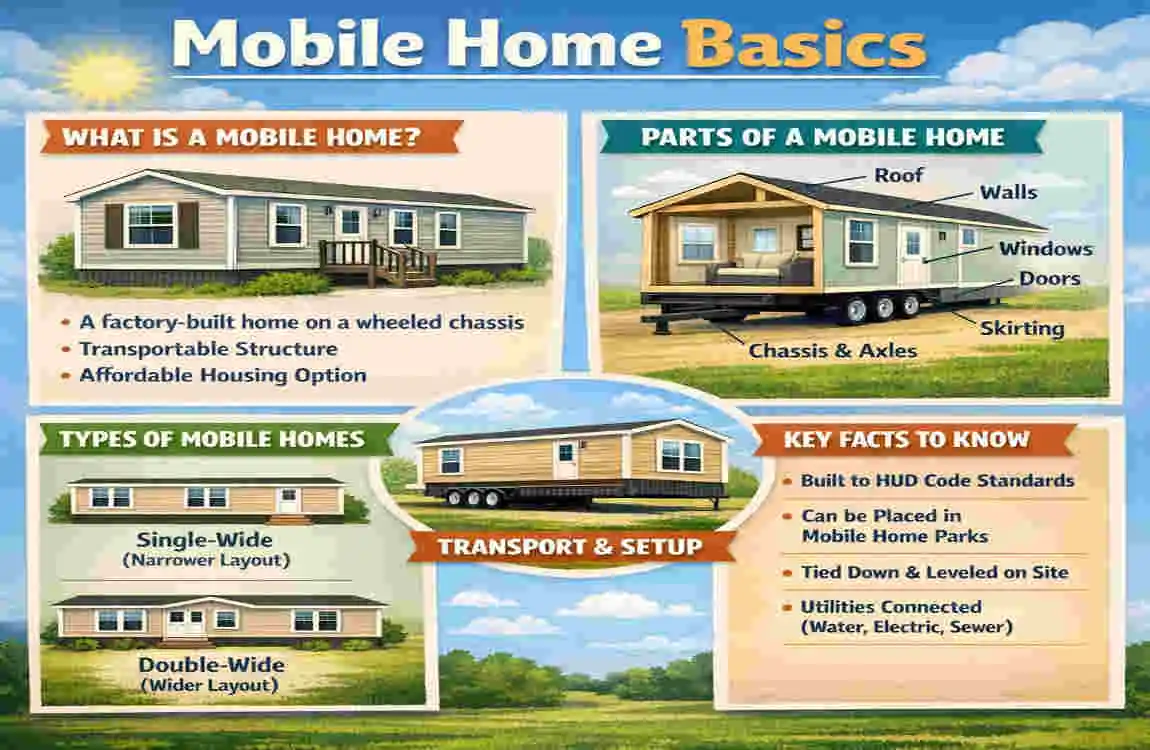
Before diving into the specifics of faucets, it’s essential to understand the unique plumbing systems in mobile homes. Unlike traditional homes, mobile homes are built under the HUD (Housing and Urban Development) code, which often results in lighter and more compact plumbing systems.
Why Mobile Home Faucets Are Different
Mobile homes are designed with efficiency and space-saving in mind. This means their plumbing systems, including faucets, are tailored to fit thinner sinks, lighter materials, and specific water-pressure requirements. These differences ensure compatibility with the unique structure of mobile homes.
A Brief History of Mobile Home Plumbing
In the past, mobile homes relied on rigid copper pipes and basic plumbing fixtures. Over time, advancements like PEX (cross-linked polyethylene) pipes and ABS (acrylonitrile butadiene styrene) fittings have made mobile home plumbing more flexible and durable. However, these changes have also influenced faucet design, making them distinct from standard residential models.
Common Faucet Locations in Mobile Homes
- Kitchen Sinks: Often feature single-handle or pull-out sprayer designs for convenience.
- Bathroom Sinks: Compact and lightweight, ideal for smaller vanities.
- Tubs and Showers: Typically include dual-handle setups or diverters for space efficiency.
Core Differences Between Mobile Home and Standard Faucets
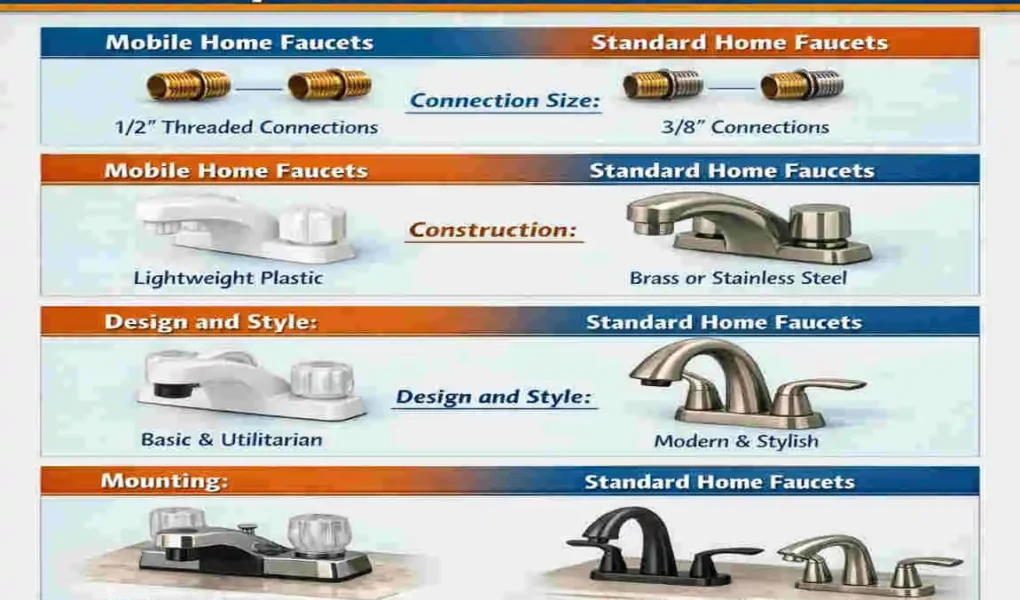
To better understand the distinctions, let’s compare mobile home faucets with standard residential faucets in a detailed table:
Feature Mobile Home FaucetsStandard Residential Faucets Impact on Replacement
Mounting Shank Shorter, designed for thin sinks (1-2mm) . Longer, for thicker sinks (4-6mm) . Adapters may be required for swaps.
Supply Connections 3/8″ compression, PEX, or plastic tubes 1/2” braided lines Mismatched connections can cause leaks.
Hole Spacing Single-hole or 8″ centers 4″ or variable Drilling may be needed for compatibility.
Material/Weight Lightweight plastic or composite Heavy metal or chrome Easier to install but less durable.
Water Pressure Fit Optimized for low-pressure systems Designed for high-pressure systems Ensures better flow in mobile setups.
Analysis of Key Differences
- Mounting Shank Length: Mobile home faucets feature shorter shanks to accommodate thinner sinks, helping prevent wobbling or instability.
- Supply Line Connections: The use of 3/8″ compression fittings and PEX tubing in mobile homes contrasts with the 1/2″ braided lines in standard homes, requiring adapters for compatibility.
- Hole Spacing: Mobile home sinks often have unique hole spacing, which can complicate installing standard faucets.
- Material and Weight: Lightweight materials make mobile home faucets easier to handle but may compromise durability.
- Water Pressure Optimization: Mobile home faucets are designed to function efficiently with the lower water pressure often found in manufactured housing.
Mounting Hardware: Why Sink Thickness Matters
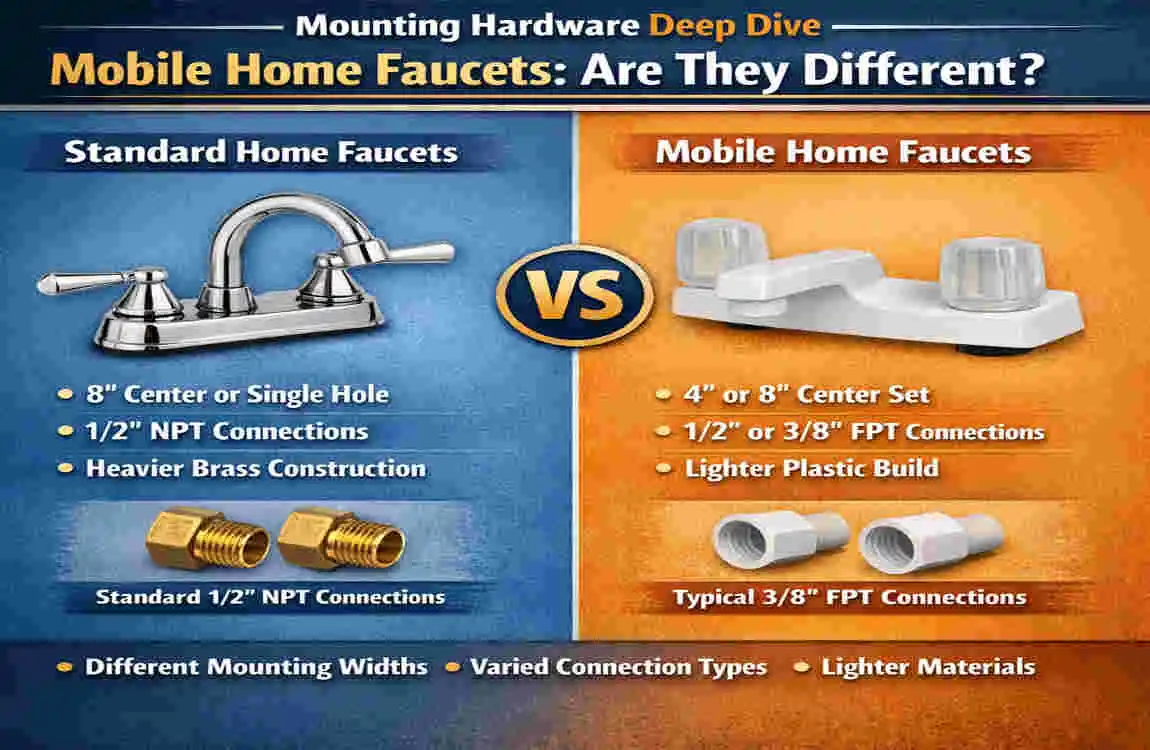
One of the most critical aspects of mobile home faucets is their mounting hardware. The sink’s thickness plays a significant role in determining which faucet you need.
Types of Mounting Systems
- Single-Hole Faucets: Ideal for minimalist designs and easy one-hand control.
- Three-Hole Faucets: Traditional setups that offer more stability and style options.
Common Installation Challenges
- Incorrect Measurements: Failing to measure the sink thickness can lead to improper installation.
- Base Clearance Issues: Failing to account for the required clearance around the faucet base can lead to leaks or instability.
Pro Tip: Always measure your sink’s thickness and hole spacing before purchasing a faucet. If you’re unsure, consider using adapters to bridge compatibility gaps.
Supply Line Variations: What You Need to Know
The supply lines in mobile homes are another area where differences become apparent. These lines connect the faucet to the water supply and are crucial for proper functionality.
Key Differences in Supply Lines
- Mobile Home Faucets: Use 3/8″ compression fittings or integrated plastic tubes.
- Standard Faucets: Typically rely on 1/2″ braided lines.
Steps to Ensure Compatibility
- Inspect the shutoff valve to determine the type of connection.
- Use PEX converters or adapters if necessary.
- Test the connections for leaks before finalizing the installation.
Warning: Using the wrong fittings can lead to water damage and costly repairs. Always double-check compatibility before proceeding.
Handle and Style Options
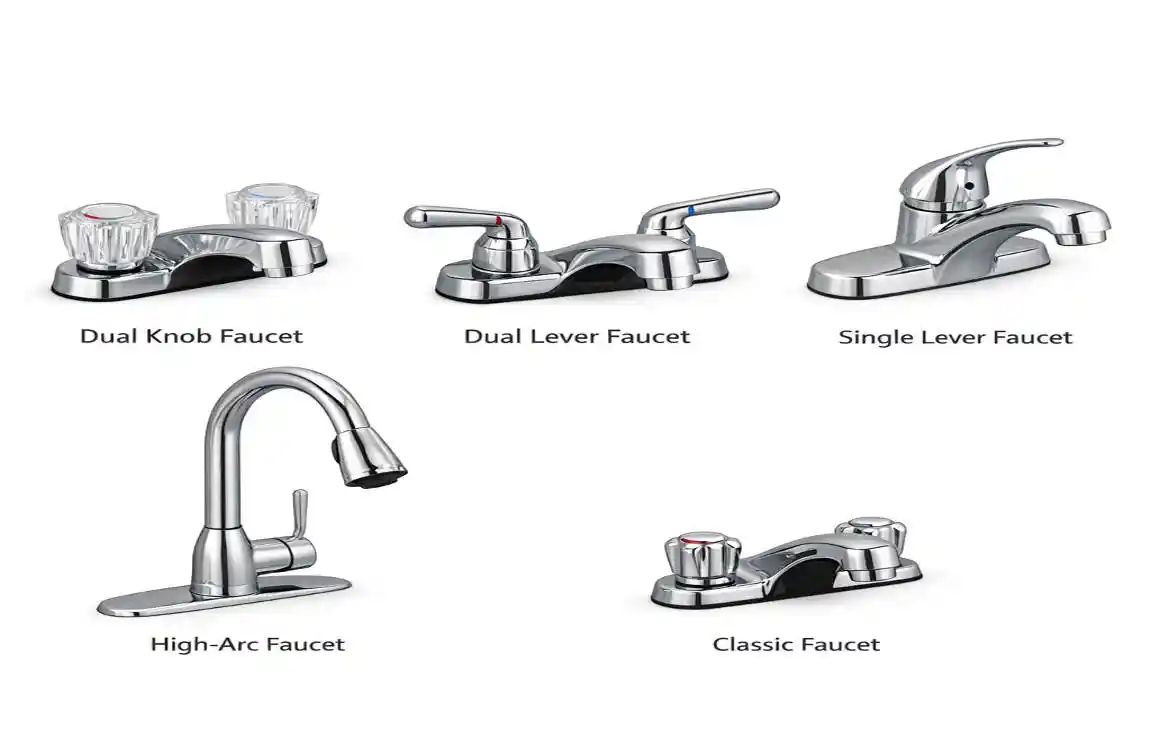
When it comes to aesthetics and functionality, mobile home faucets offer a variety of handle and style options to suit different needs.
Popular Handle Types
- Single-Handle Faucets: Simplify temperature control and are space-efficient.
- Two-Handle Faucets: Provide more precise control over hot and cold water.
Trends in Mobile Home Faucet Design
- Touchless Faucets: Increasingly popular for their convenience and hygiene benefits.
- Pull-Out Sprayers: Adapted for low countertops and compact spaces.
Can You Replace Mobile Home Faucets with Standard Ones?
The good news is that you can often replace mobile home faucets with standard ones, but modifications may be required.
Pros and Cons of Swapping Faucets
Swap Type Ease Cost Durability
Mobile-Specific High Low Standard
Standard Faucet Medium Medium Higher
Universal Adapter Low High Variable
How to Replace a Mobile Home Faucet
- Measure the sink’s hole spacing and thickness.
- Purchase the necessary adapters or converters.
- Test-fit the faucet before securing it in place.
Buying Guide: Choosing the Right Faucet
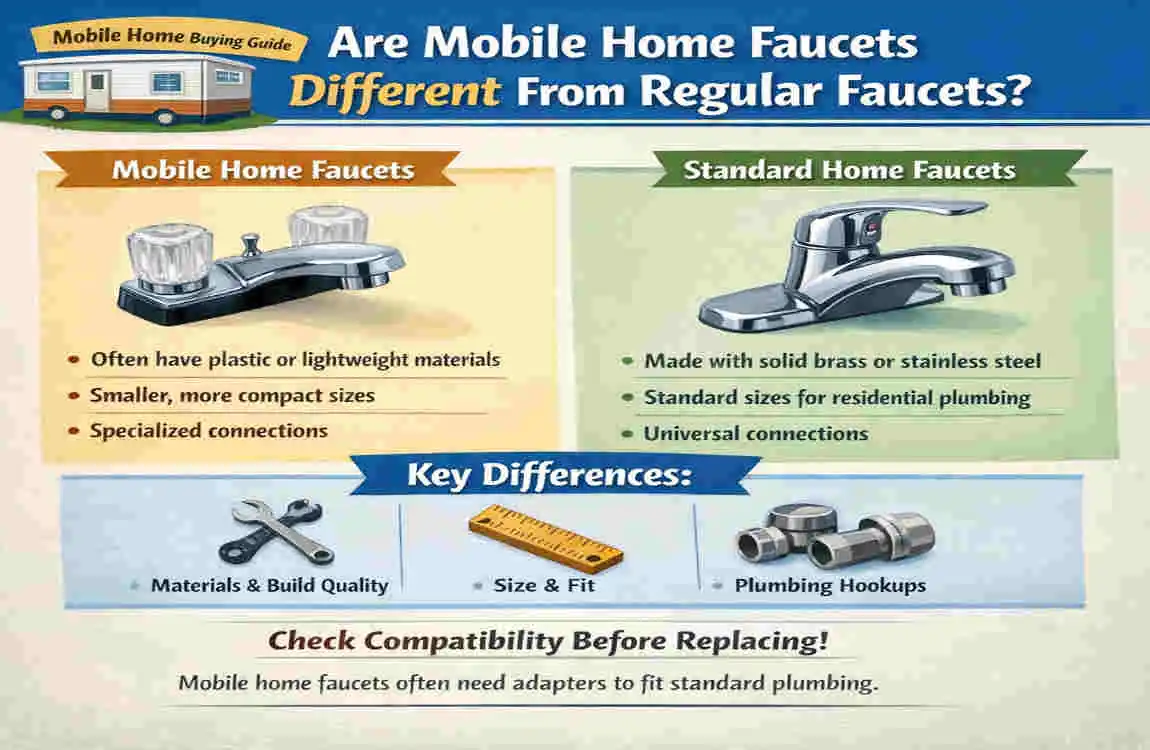
When shopping for a mobile home faucet, keep the following factors in mind:
Checklist for Buyers
- Verify the hole spacing (4-8″).
- Ensure compatibility with PEX or other supply lines.
- Set a budget between $20 and $100, depending on the material and features.
Top Tip: Look for brands that specialize in mobile home plumbing, as they often offer the best compatibility and durability.
Installation Tips for DIY Enthusiasts
Installing a mobile home faucet can be a straightforward process if you follow these steps:
- Gather the necessary tools, including a basin wrench and plumber’s tape.
- Shut off the water supply before starting.
- Follow the manufacturer’s instructions carefully to avoid common pitfalls.
Frequently Asked Questions
Q: Are mobile home faucets different?
A: Yes, they differ in mounting hardware, supply connections, and materials.
Q: Can standard faucets replace mobile home faucets?
A: Often, but you may need adapters or converters for compatibility.
Q: What’s the best faucet for low water pressure?
A: Single-handle mobile-specific models are ideal for low-pressure systems.