
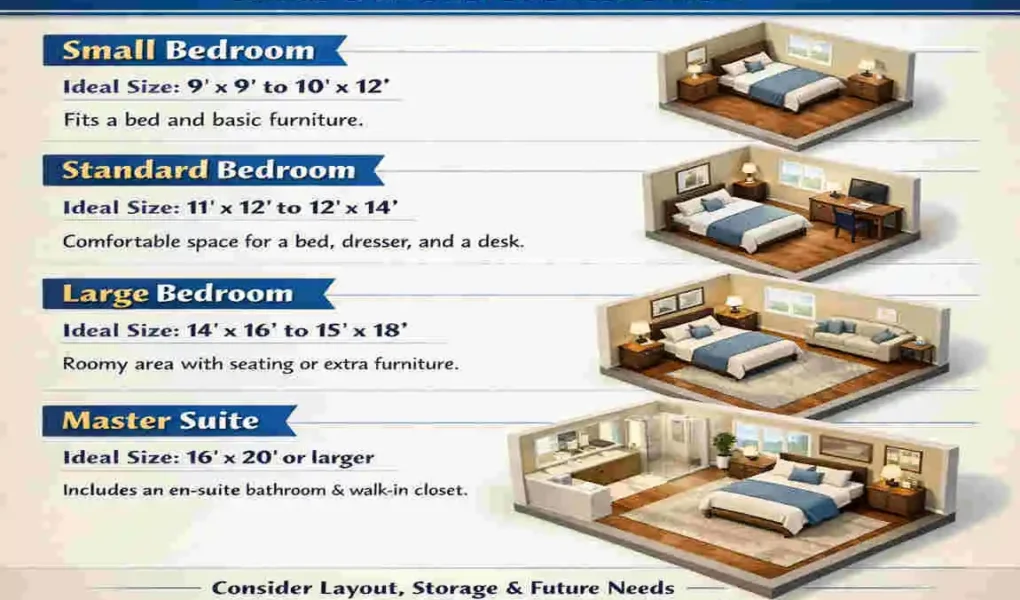
Choosing the size of your bedroom is one of the most important decisions when designing or renovating your home. A bedroom that’s too small can feel cramped and uncomfortable, while one that’s too large might waste precious space and budget. So, how do you find the perfect balance?
Standard Bedroom Dimensions
Why Size Matters for Everyday Use
The size of your bedroom impacts more than just how much furniture you can fit. It affects comfort, movement, and overall functionality. A well-sized bedroom should comfortably hold a bed, nightstands, and a dresser, with enough room to walk around easily.
Building codes often set minimum requirements to ensure spaces are livable. For example, many places require bedrooms to be at least 70 to 120 square feet to be legally considered habitable. Falling below this can lead to cramped, claustrophobic rooms that reduce your home’s value and your own comfort.
Average Bedroom Sizes by Region
Bedroom sizes can vary widely depending on where you live. Here’s a quick comparison:
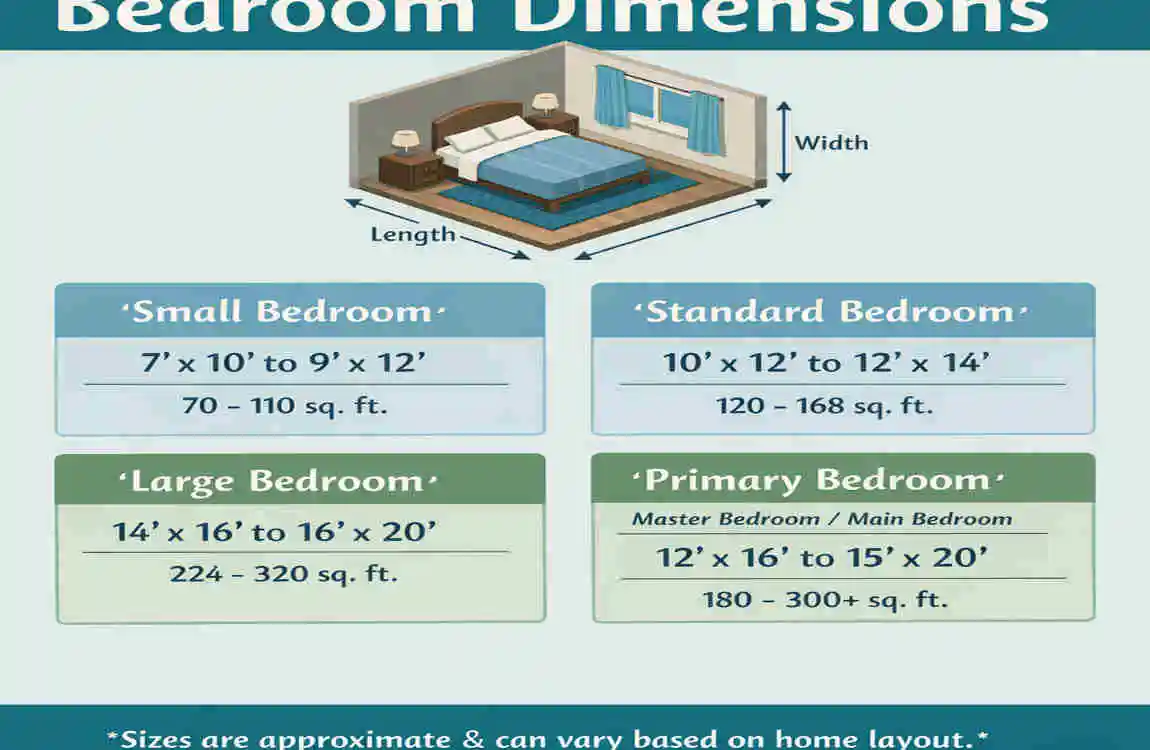
Bedroom Size Dimensions (Feet)Square Footage Notes
Small Bedroom 8 x 10 80 sq ft Suitable for single beds
Standard Bedroom 11 x 12 132 sq ft Fits a queen bed comfortably
Spacious Bedroom 12 x 14 168 sq ft Extra space for seating
- In the U.S., a typical standard bedroom is about 10 x 12 feet, or roughly 120 sq ft.
- In the UK and Europe, bedrooms are often measured in square meters, with doubles averaging around 10.5 square meters (~113 sq ft).
Furniture Fit Guide
Understanding bed sizes helps in planning your room’s layout:
- Twin bed: Requires a minimum of 70 sq ft.
- Full bed: Needs at least 90 sq ft.
- Queen bed: Requires 100 sq ft or more, plus clearance.
Clearance rules are crucial for comfort. Experts recommend at least 36 inches of walking space around the bed to avoid bumping into furniture.
Master Bedroom Ideal Sizes
Luxury vs. Practical Master Bedrooms
The main bedroom is often the largest and most important sleeping space in the home. For many, it serves as a private retreat with an en-suite bathroom and sometimes a sitting area.
- The average main bedroom in the U.S. measures about 14 x 16 feet (224 sq ft).
- Luxury master suites can exceed 350 square feet and often include extras such as walk-in closets, seating nooks, and larger bathrooms.
Dimensions Breakdown
Master Bedroom Type Dimensions (Feet)Square Footage Best For
Cozy Master 12 x 14 168 sq ft Couples
Standard Master 14 x 16 224 sq ft Family heads
Luxury Suite 16 x 20+ 350+ sq ft Includes sitting area, extras
Layout Tips for Master Bedrooms
- Bed placement: Position the bed opposite or adjacent to the door to create a welcoming focal point.
- Closet space: Allocate about 20% of the bedroom area to closets or walk-ins.
- Traffic flow: Maintain clear walkways of 24-36 inches around furniture to facilitate movement.
Kids’ and Guest Bedroom Sizing
Age-Appropriate Standards for Kids’ Rooms
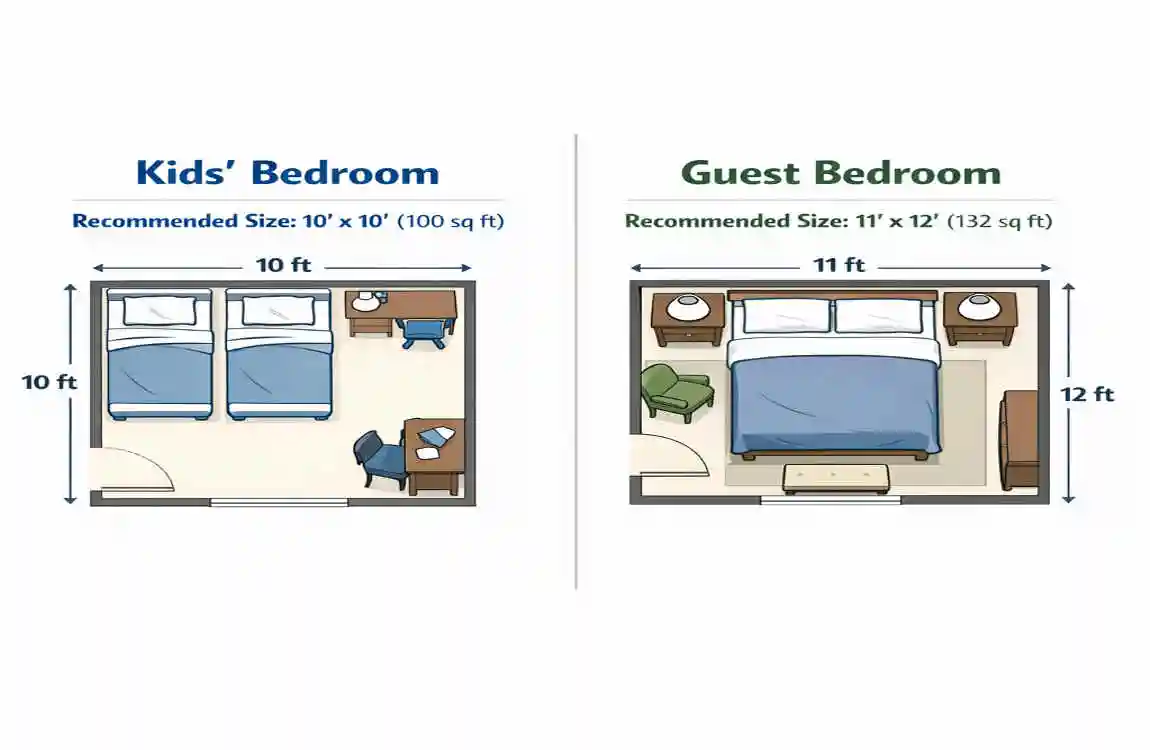
Kids’ bedrooms require a careful balance between sleeping space and play or study areas.
- A typical kids’ bedroom ranges from 8 x 10 feet (80 sq ft) to 10 x 12 feet (120 sq ft).
- This space comfortably fits a twin or full bed plus room for a small desk or toy storage.
Guest Room Essentials
Guest rooms should feel welcoming without taking up excessive space.
- Ideal guest bedroom sizes range from 10 x 10 feet (100 sq ft) to 10 x 15 feet (150 sq ft).
- Use pull-out sofas or daybeds to maximize flexibility.
Five Must-Haves for Kids and Guest Bedrooms
- Good ventilation: Fresh air is essential for comfort.
- Adequate storage: Closets or shelves prevent clutter.
- Multi-use flexibility: Consider a desk or fold-out bed.
- Natural light: Windows brighten the space.
- Safety: Avoid rooms smaller than 70 sq ft to meet habitability codes.
Bedroom Sizes by House Type
Small Homes and Townhouses
Space is at a Premium in smaller homes, so bedrooms often range from 100 to 132 sq ft. Here, clever solutions like Murphy beds and built-in storage help maximize every inch.
Family Homes
In larger homes, secondary bedrooms typically range from 150 to 200 sq ft. This allows space for additional furniture and personal touches.
Luxury Estates
Luxury homes feature bedrooms from 200 to over 600 sq ft, often incorporating sitting areas, large closets, and private bathrooms.
Comparison Table: Bedroom Sizes by House Type
House Size Bedroom Average SizeKey Adaptations
Less than 1500 sq ft , 100 sq ft Vertical storage, compact use
2000 – 3000 sq ft 150 sq ft Shared closets, flexible space
4000+ sq ft 250+ sq ft En-suites standard, luxury
Building Codes and Legal Minimums
Global Snapshot of Bedroom Requirements
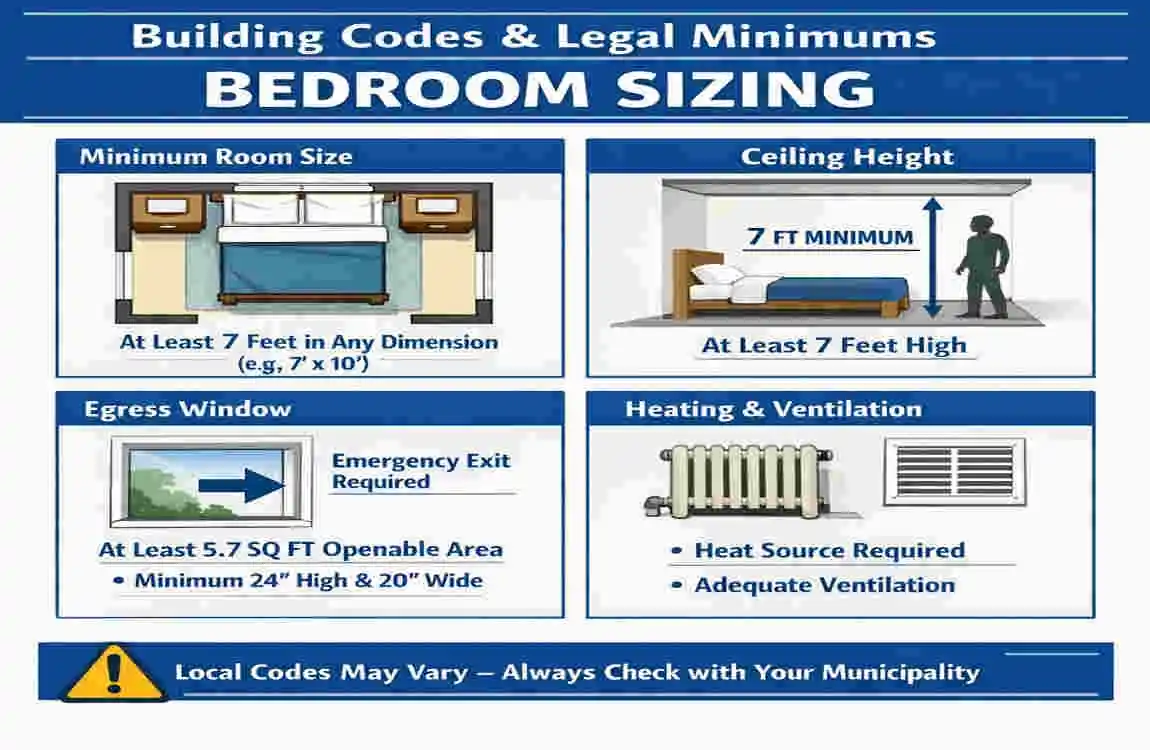
Building codes ensure bedrooms are safe and habitable. Here’s a quick look:
- U.S.: Minimum 70 sq ft for a single bedroom, 100 sq ft for doubles, with at least 7 feet in width.
- UK: Minimum bedroom size is roughly 6.5 square meters (70 sq ft).
Egress and Safety Standards
- Windows: Must provide emergency exits and natural light.
- Ceiling height: Usually a minimum of 7 feet 6 inches.
- Accessibility: Doors at least 36 inches wide for wheelchair access.
Bedroom Compliance Checklist
- Ventilation: Minimum 5% operable window area.
- Electrical outlets: Positioned every 6 feet for convenience.
- Compliance with ADA (Americans with Disabilities Act), where applicable.
Design Tips to Maximize Any Size Bedroom
Space-Saving Hacks
If your bedroom is small, don’t worry! There are plenty of ways to make it feel spacious:
- Use wall beds to free floor space.
- Install floating shelves instead of bulky furniture.
- Choose multifunctional furniture, like ottomans with storage.
Layout Formulas for Comfort
- Center the bed and keep pathways between 24 and 36 inches wide.
- Use rugs or lighting to define zones within the room.
Seven Pro Tips to Optimize Small Bedrooms
- Use mirrors to create an illusion of more space.
- Choose light, neutral colors to brighten the room.
- Maximize vertical storage with tall shelves.
- Keep furniture minimal and multipurpose.
- Use under-bed storage containers.
- Declutter regularly to maintain openness.
- Bring in natural light with sheer curtains.
FAQ
What size bedroom for your house is ideal?
Typically, between 120 and 200 sq ft for most bedrooms.
What is the minimum legal bedroom size?
Usually 70 sq ft for a single bedroom, though this varies by location.
What are standard master suite dimensions?
At least 224 sq ft, with luxury suites starting around 350 sq ft.